IṢẸ́ ỌNÀ
ẸWÀ ÀTI ÌLERA
IṢẸ́ ỌWỌ́
ÀṢÀ ÀTI ÌTÀN
ÌṢERÉ
ÀYÍKÁ
OÚNJẸ ÀTI OHUN MÍMU
REVERSE ENGINEERING
SÁYẸ́ǸSÌ
ERÉ ÌDÁRAYÁ
ÌMỌ̀-Ẹ̀RỌ
ÀWỌN OHUN WÍWỌ̀
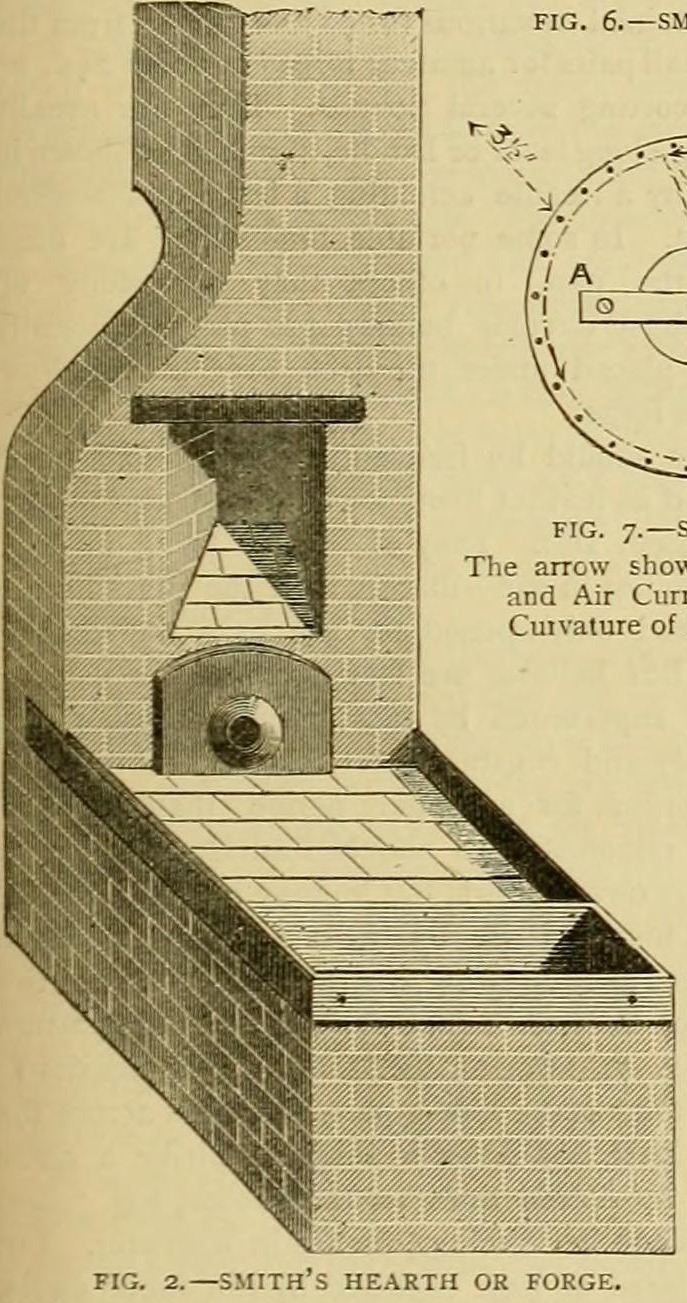


Brick Smith's Hearth: Stone Base, Firebrick Top in an Iron Rim, a Cannon-Shot Tuyere and a Slake Trough (Edwinson, 1886)
The fixed smith's hearth George Edwinson told Amateur Work readers to build (1886): stone below, firebrick in fireclay on top, every course bound with hoop iron, a 4 in. iron rim forming the hearth pan, a fire back and tuyere made from a 1 in. plate and a bored 14-pounder iron shot, a slanting flue, a 10 x 10 x 22 in. slake trough, and a clinker floor.
Àárín
Two to three days of building
Ìlànà
1
1
His sizes
His sizes
Ń ṣí ìwé Jupyter…
2
2
Read Edwinson
Read Edwinson
"The foundation of this structure up to within one foot of the top may be of stone, but the finishing courses should be of firebrick."
3
3
Build the base
Build the base
Build the hearth in stone up to 1 ft (30 cm) below the top, binding every course with pieces of hoop iron. Leave an arch at the back for the coal pit and the blast pipe (figs. 4, 5). Overall size is ours: fit it to your shop.
Àwọn ohun èlò fún ìgbésẹ̀ yìí:
 Bulọ́ọ̀kù òkúta1 ẹyọ
 Ìdìmọ́ irin1 ẹyọ
 Amọ̀ Tí Ń Fara Da Iná1 ẹyọ
Àwọn irinṣẹ́ tí a nílò:
 Ohun èlò amọ̀-bíríkì (tùróòlù)
 Ìwọ̀n Ìtẹ́jú
4
4
Make the fire back and tuyere
Make the fire back and tuyere
Bore a 3/4 in. hole through a 14-pounder iron shot and open it to a 1 in. taper on one side. Cut and countersink a hole in a 1 in. iron plate to take a third of the shot, and drill four 1/2 in. holes to bolt the plate through the wall with nuts and fish plates. (Or buy a fire back and tue-iron.)
Àwọn ohun èlò fún ìgbésẹ̀ yìí:
 Ẹ̀yà irin (ìwúwo ìdọ́gba)1 ẹyọ
 Pẹpẹ irin1 ẹyọ
 Àkójọ bọ́ọ̀lù onígun mẹ́fà1 ẹyọ
Àwọn irinṣẹ́ tí a nílò:
 Ẹ̀rọ Ìlùkòkò Onídúró
 Ìléru alágbẹ̀dẹ
 Òòlù
5
5
Firebrick top and back
Firebrick top and back
Lay the top courses and the back wall round the tuyere in firebrick bedded and jointed with fireclay, still binding each course with hoop iron. Build in the fire back with the shot as the tuyere, and leave a slanting flue hole just above it (fig. 5).
Àwọn ohun èlò fún ìgbésẹ̀ yìí:
 Bíríkì Tí Ń Kojú Iná1 ẹyọAmọ̀ Tí Ń Fara Da Iná1 ẹyọÌdìmọ́ irin1 ẹyọ
Àwọn irinṣẹ́ tí a nílò:
Ohun èlò amọ̀-bíríkì (tùróòlù)Ìwọ̀n Ìtẹ́jú6
6
Fit the slake trough
Fit the slake trough
Before the last course, set in a water trough 10 in. deep and wide and 22 in. long, of sheet iron, cast iron or stone, inside the rim line; bolt a sheet-iron one to the rim. A sheet-iron division riveted across gives a coal trough too.
Àwọn ohun èlò fún ìgbésẹ̀ yìí:
 Ìwé Irin Pẹ́lẹ́1 ẹyọ
 Ìṣó irin1 ẹyọ
 Omi1 ẹyọ
Àwọn irinṣẹ́ tí a nílò:
Ẹ̀rọ Ìlùkòkò OnídúróÒòlù7
7
Bind with the rim
Bind with the rim
Bind the top course with a rim of 1/4 x 4 in. iron, half below the brick edge and half above it to make the hearth pan, its ends bolted to the back wall with 3/8 in. bolts built into the brickwork.
Àwọn ohun èlò fún ìgbésẹ̀ yìí:
Pẹpẹ irin1 ẹyọÀkójọ bọ́ọ̀lù onígun mẹ́fà1 ẹyọÀwọn irinṣẹ́ tí a nílò:
Ìléru alágbẹ̀dẹ Ìdí Alágbẹ̀dẹÒòlùẸ̀rọ Ìlùkòkò Onídúró
8
8
Connect the blast
Connect the blast
Bring the pipe from a fan or bellows under the arch to the back of the tue-iron. He reckons about 150 cu ft (4.2 m3) of air a minute for a welding heat: a 9 in. fan at about 360 rpm or a double-action bellows.
Àwọn irinṣẹ́ tí a nílò:
 Ẹ̀rọ afẹ́fẹ́
9
9
Lay the floor
Lay the floor
Ram wetted smiths', foundry or boiler clinkers sprinkled with a little Portland cement hard and level, with a thin layer of smithy cinder ashes beaten on top. Stone or ordinary concrete floors misbehave when hot iron is dropped on them.
Àwọn ohun èlò fún ìgbésẹ̀ yìí:
 Símẹ́ǹtì Portland1 ẹyọOmi1 ẹyọ
Àwọn irinṣẹ́ tí a nílò:
Òòlù10
10
Troubleshooting
Troubleshooting
Hearth troubleshooting.
Flow
Loading...
11
11
History and honest limits
History and honest limits
From George Edwinson, "Smithing and Forging" I, **Amateur Work, Illustrated**, vol. V (1886), pp. 161-162 and figs. 2, 4, 5 (checked on the archive.org scan amateurworkillus05lond). He gives no overall hearth size; that and the metric figures and tools are ours.
Àwọn ohun-èlò
11- 1 ẹyọÀyè
- 1 ẹyọÀyè
- Àyè
- Àyè
- 2 ẹyọÀyè
- Àyè
- 1 ẹyọÀyè
- 1 ẹyọÀyè
- 1 ẹyọÀyè
- 2 ẹyọÀyè
- 1 ẹyọÀyè
Ìtọ́nisọ́nà yìí ń ṣe
Blueprint tó jọra
Àwọn blueprint wọ̀nyí pín ìmọ̀ — ọ̀nà, ohun-èlò tàbí ìlànà
CC0 Àgbègbè Gbogbogbò
Blueprint yìí ti jáde lábẹ́ CC0. O lè ṣe àdàkọ, yí padà, pín, àti lò láìsí ìyọ̀ǹda.
Ṣàtìlẹ́yìn Olùṣẹ́dá nípa rírà àwọn ọjà nipasẹ̀ Blueprint wọn Ẹ̀san Olùṣẹ́dá tí àwọn Olùtajà gbé kalẹ̀, tàbí ṣẹ̀dá àtúnṣe tuntun ti Blueprint yìí kí o sì fi sínú Blueprint rẹ gẹ́gẹ́ bí ìsopọ̀ láti pín owó-wíwọlé.