IṢẸ́ ỌNÀ
ẸWÀ ÀTI ÌLERA
IṢẸ́ ỌWỌ́
ÀṢÀ ÀTI ÌTÀN
ÌṢERÉ
ÀYÍKÁ
OÚNJẸ ÀTI OHUN MÍMU
REVERSE ENGINEERING
SÁYẸ́ǸSÌ
ERÉ ÌDÁRAYÁ
ÌMỌ̀-Ẹ̀RỌ
ÀWỌN OHUN WÍWỌ̀
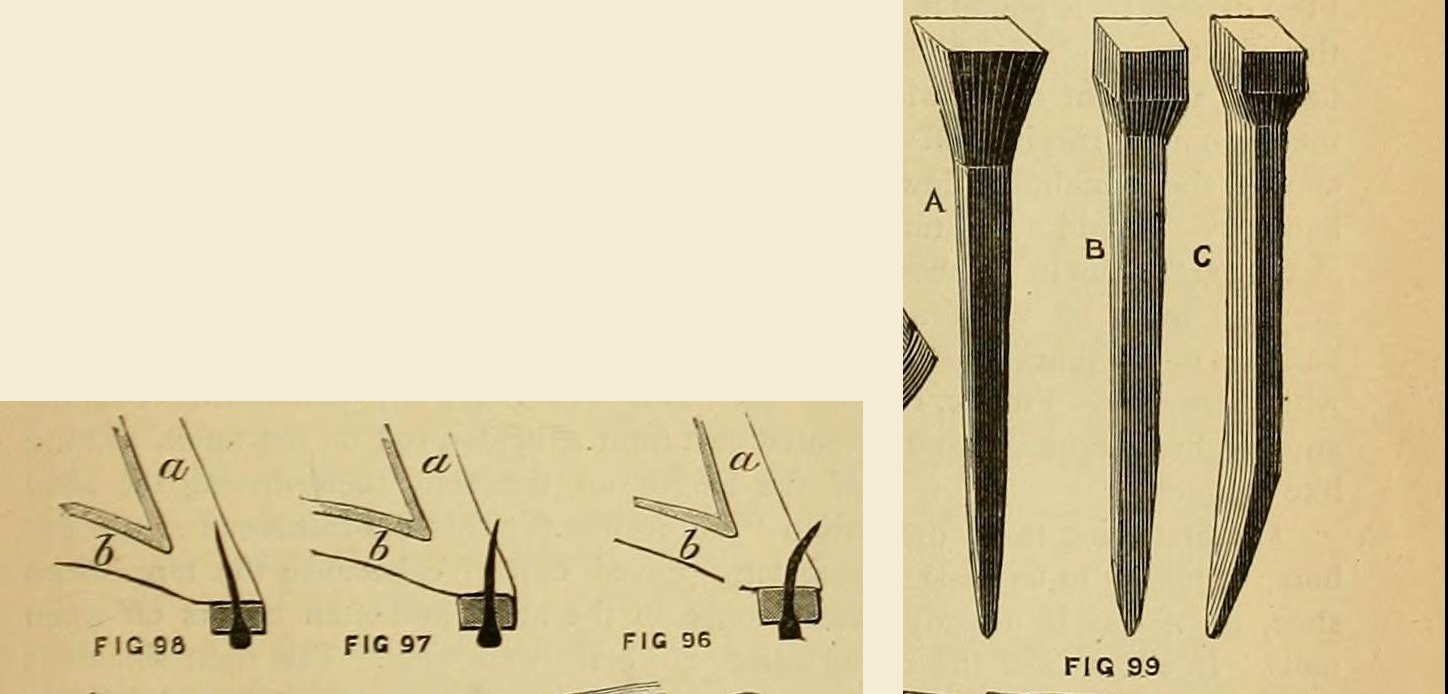


Hand-Forged Horseshoe Nails: Drawn from Nail Rod, Cut on the Sett, Headed in a Nail-Former, Point Set Cold (Edwinson, 1886)
How country smiths made their own horseshoe nails, from George Edwinson's farriery chapter in Amateur Work (1886): the best nail rod (or rod welded up from old nails) drawn to a point, cut off on the sett, headed in a nail-former with a shallow countersink, cooled slowly in the scale, then finished cold with the point bent slightly so it clenches in the right place.
Àárín
A few minutes per nail once practised
Ìlànà
1
1
His lengths
His lengths
Ń ṣí ìwé Jupyter…
2
2
Read Edwinson
Read Edwinson
"The worthy smiths used to make their own horse-shoe nails, either from the very best nailing rods ... or from nail rods made by themselves."
3
3
Get nail rod
Get nail rod
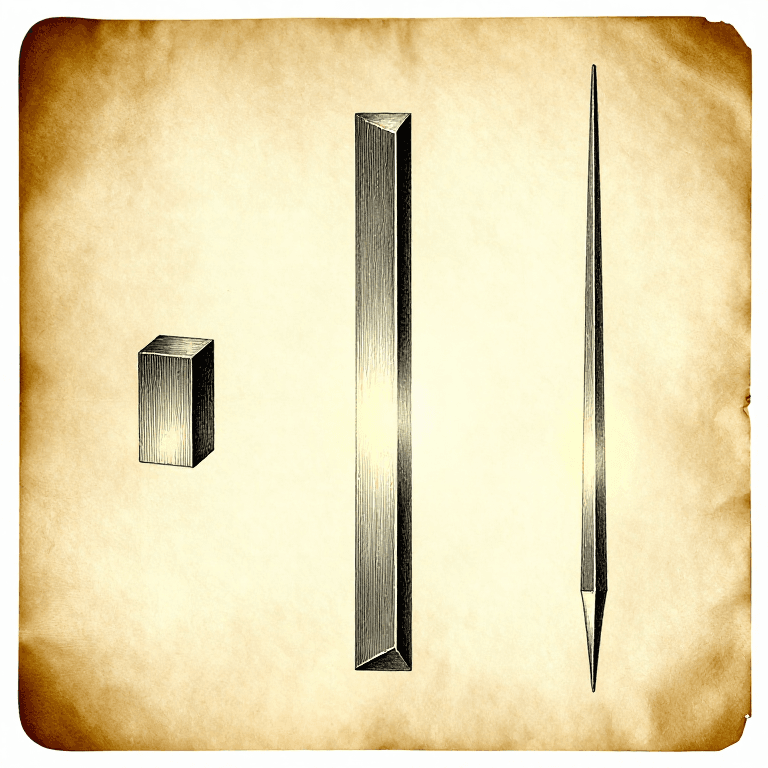
Use the best nail rod, sized to the upper part of the nail head. Or make it: faggot old horseshoe nails with scraps of nail rod, bound with iron wire, weld the faggot in the forge and draw it out into rod.
Àwọn ohun èlò fún ìgbésẹ̀ yìí:
 Ọ̀pá róbótó irin lílù1 ẹyọ
 Wáyà irin1 ẹyọ
Àwọn irinṣẹ́ tí a nílò:
 Ìléru alágbẹ̀dẹ
 Ìdí Alágbẹ̀dẹ
 Òòlù
 Ẹmú alágbẹ̀dẹ
4
4
Draw and cut
Draw and cut
Heat the rod and draw the nail shank to shape on the anvil. Hold it on the sett and cut it off with one blow, nicking off just enough metal above the shank to form the head. Usual lengths 1 1/2, 1 3/4, 1 7/8, 2 and 2 1/2 in. (38-64 mm).
Àwọn irinṣẹ́ tí a nílò:
Ìléru alágbẹ̀dẹÌdí Alágbẹ̀dẹÒòlù Ọ̀bẹ ìgé lórí ìdí alágbẹ̀dẹ
5
5
Head it
Head it
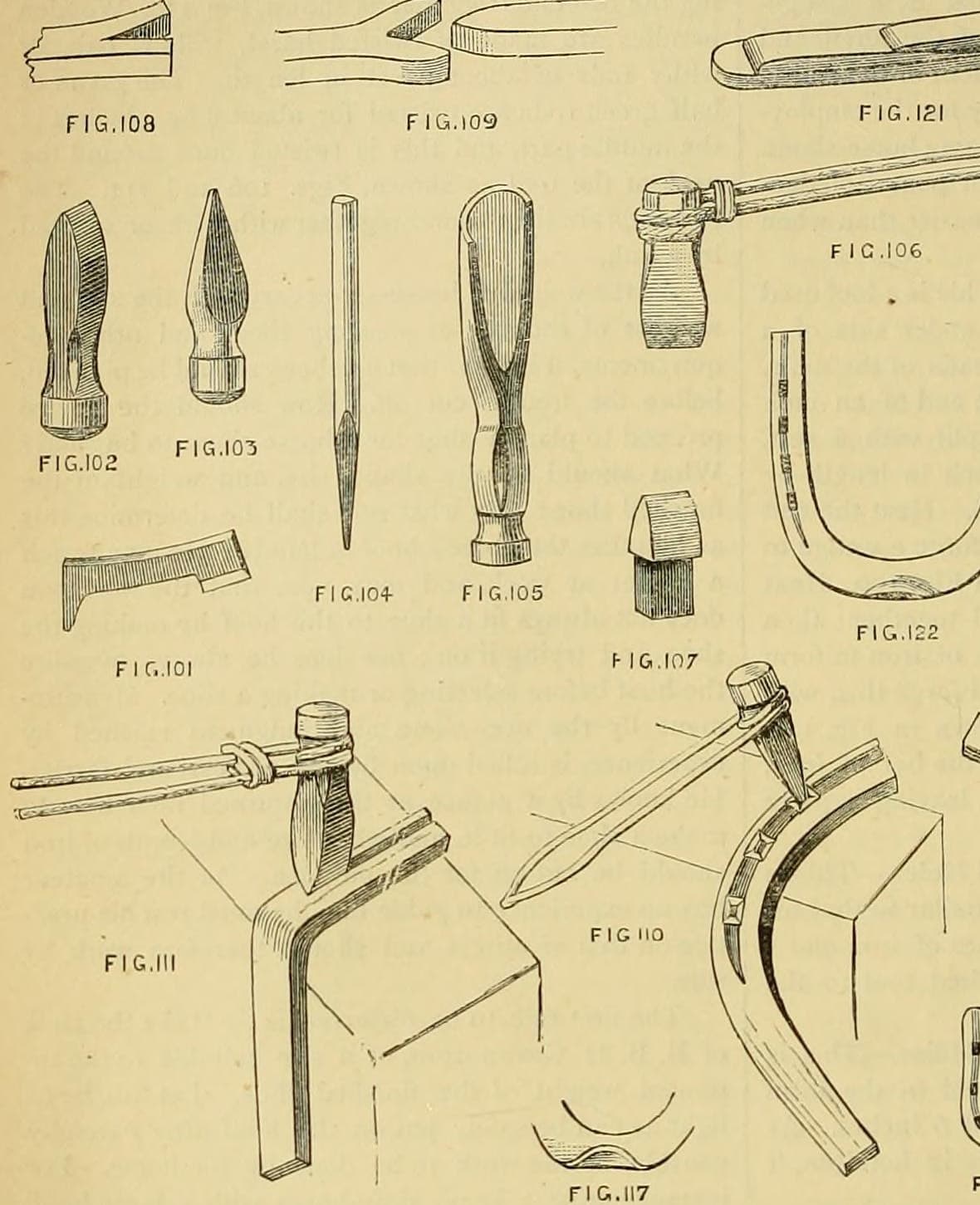
Drive the head into a nail-former with a shallow countersink, not a steep one: a tapered head wears loose and breaks off (his fig. 99, A old style, B right). Expert smiths shape the shoulders with the hammer and sett alone.
Àwọn irinṣẹ́ tí a nílò:
 Pẹpẹ orí ìṣóÒòlù
6
6
Cool slowly
Cool slowly
Let each nail fall among the scale at the foot of the anvil block and scatter them on scale or ashes. Never let them fall on iron or cool in a heap: they turn brittle.
Àwọn irinṣẹ́ tí a nílò:
Ìdí Alágbẹ̀dẹ7
7
Finish cold
Finish cold
On a small anvil held in the vice, touch the heads into shape with a light hammer, sharpen the points by hammering, and bend each point a little (fig. 99 C) so it comes out at the right height on the hoof wall for the clench (fig. 100).
Àwọn irinṣẹ́ tí a nílò:
 Ìdìmú TábìlìÌdí Alágbẹ̀dẹÒòlù
8
8
Troubleshooting
Troubleshooting
Horseshoe nail troubleshooting.
Flow
Loading...
9
9
History and honest limits
History and honest limits
From George Edwinson, "Smithing and Forging" VI, **Amateur Work, Illustrated**, vol. V (1886), pp. 509-511 and figs. 96-100 (checked on the archive.org scan amateurworkillus05lond), drawing in part on W. J. E. Crane, The Smithy and Forge. He gives no nail rod section; the metric figures and tools are ours.
Ìtọ́nisọ́nà yìí ń ṣe
Blueprint tó jọra
Àwọn blueprint wọ̀nyí pín ìmọ̀ — ọ̀nà, ohun-èlò tàbí ìlànà
CC0 Àgbègbè Gbogbogbò
Blueprint yìí ti jáde lábẹ́ CC0. O lè ṣe àdàkọ, yí padà, pín, àti lò láìsí ìyọ̀ǹda.
Ṣàtìlẹ́yìn Olùṣẹ́dá nípa rírà àwọn ọjà nipasẹ̀ Blueprint wọn Ẹ̀san Olùṣẹ́dá tí àwọn Olùtajà gbé kalẹ̀, tàbí ṣẹ̀dá àtúnṣe tuntun ti Blueprint yìí kí o sì fi sínú Blueprint rẹ gẹ́gẹ́ bí ìsopọ̀ láti pín owó-wíwọlé.