IṢẸ́ ỌNÀ
ẸWÀ ÀTI ÌLERA
IṢẸ́ ỌWỌ́
ÀṢÀ ÀTI ÌTÀN
ÌṢERÉ
ÀYÍKÁ
OÚNJẸ ÀTI OHUN MÍMU
REVERSE ENGINEERING
SÁYẸ́ǸSÌ
ERÉ ÌDÁRAYÁ
ÌMỌ̀-Ẹ̀RỌ
ÀWỌN OHUN WÍWỌ̀
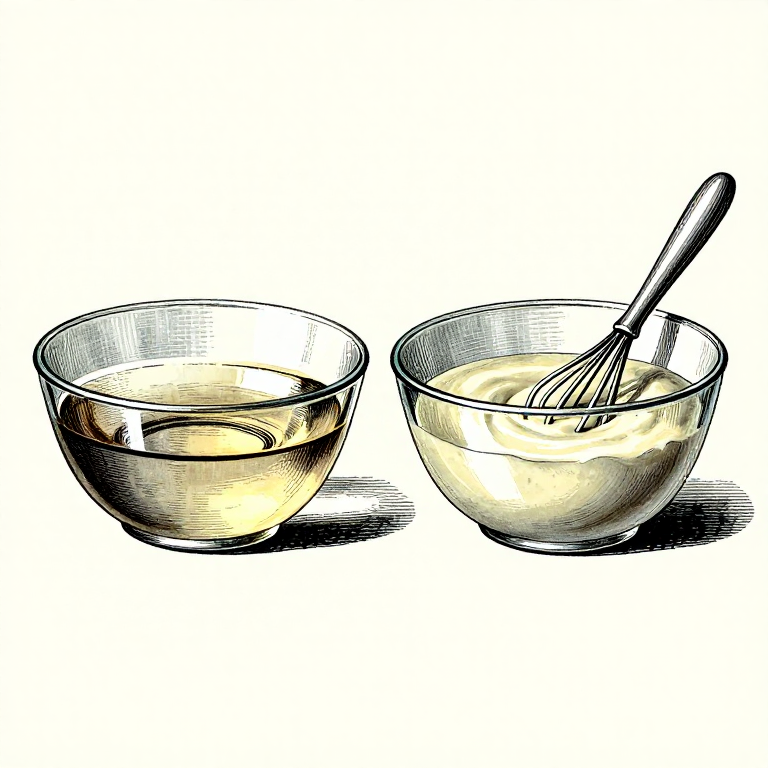

Emulsions: Oil and Water Held Apart by Something Standing Between Them
Oil and water do not mix, and no amount of whisking changes that. What whisking does is break the oil into droplets so small that they take a long time to find each other again — and an EMULSIFIER then stands between them so they never do.
Egg yolk is the classic one: lecithin molecules with a water-loving end and an oil-loving end, which sit on the surface of every droplet facing both ways at once. Mustard, honey, garlic paste and the starch in pasta water all do versions of the same job.
Which makes a split sauce diagnosable rather than mysterious. Either there was not enough emulsifier for the amount of oil, or the oil went in faster than it could be broken up, or heat or cold drove the droplets back together.
Àárín
2 hours
Ìlànà
1
1
Start with the water phase and the emulsifier
Start with the water phase and the emulsifier
Put the egg yolk, mustard, lemon juice or vinegar in the bowl FIRST, and whisk them together before a drop of oil goes near them. The emulsifier has to be dispersed and ready before there is anything to emulsify.
Everything at room temperature. A cold yolk straight from the fridge emulsifies badly, which is the single commonest reason a first mayonnaise fails.
Steady the bowl with a damp cloth underneath, exactly as with a cutting board. Both hands are about to be busy — one whisking, one pouring — and a bowl that spins is why people add the oil too fast.
Àwọn ohun èlò fún ìgbésẹ̀ yìí:
 Ẹyin1 ẹyọ
 Omi lẹ́mọ́ọ̀nù (tuntun)1 ẹyọ
 Sodium chloride (iyọ̀)1 ẹyọ
Àwọn irinṣẹ́ tí a nílò:
 Àwokòtò ńlá dígí
 Ẹ̀rọ ìlù okùn irin
2
2
Add the oil slowly at first, faster later
Add the oil slowly at first, faster later
The first spoonful of oil goes in drop by drop, whisking constantly. At that stage there is very little water phase to break the oil into, so oil arriving faster than it can be dispersed simply pools — and once it pools, the emulsion never starts.
Once it has visibly thickened, the pace can increase to a thin steady stream. There is now a large emulsion to absorb new oil, and the process becomes forgiving.
One egg yolk will hold a surprising amount of oil — well over 200 ml — but not an unlimited amount. Past its capacity the droplets are packed so tightly that they touch and merge, and the sauce breaks no matter how carefully you are working.
Àwọn ohun èlò fún ìgbésẹ̀ yìí:
 Òróró òlífì extra virgin1 ẹyọẸyin1 ẹyọ
Àwọn irinṣẹ́ tí a nílò:
Ẹ̀rọ ìlù okùn irinÀwokòtò ńlá dígí Ṣíbí ńlá
3
3
Bringing a split sauce back
Bringing a split sauce back
A split sauce is not ruined — the ingredients are all still there, just in the wrong arrangement. Start a NEW emulsion and feed the broken one into it as though it were oil.
In practice: a fresh yolk, or a teaspoon of mustard, or a tablespoon of warm water in a clean bowl, whisked, and then the split sauce added drop by drop at first. The same rule as before, for the same reason.
For a hot butter sauce that has split, a splash of cold water and hard whisking off the heat is often enough on its own. Heat was usually the cause, so removing it is half the cure.
Àwọn ohun èlò fún ìgbésẹ̀ yìí:
Ẹyin1 ẹyọ Omi1 ẹyọ
Àwọn irinṣẹ́ tí a nílò:
Àwokòtò ńlá dígíẸ̀rọ ìlù okùn irin Ìdìpọ̀ abọ́ ìdàpọ̀
4
4
The emulsions you make without noticing
The emulsions you make without noticing
Pasta water thickens a sauce because of dissolved STARCH, which stabilises fat and water together — which is why the water is saved and why the sauce is finished in the pan with the pasta rather than poured over it.
A pan sauce is the same trick: the fond dissolved in stock, then cold butter whisked in off the heat so the milk solids and the liquid hold together. Too hot and the butter melts and separates instead of emulsifying.
Vinaigrette is the unstable case, deliberately. Oil and vinegar shaken together separate within minutes unless there is mustard or honey in there — which is exactly why the classic recipe includes one, and why shaking it again just before it goes on the salad is a real technique rather than laziness.
Àwọn ohun èlò fún ìgbésẹ̀ yìí:
Òróró òlífì extra virgin1 ẹyọOmi1 ẹyọSodium chloride (iyọ̀)1 ẹyọÀwọn irinṣẹ́ tí a nílò:
Ẹ̀rọ ìlù okùn irinṢíbí ńláÀwokòtò ńlá dígíÀwọn ohun-èlò
5- 1 ẹyọÀyè
- Àyè
- Àyè
- Àyè
- 2 ẹyọÀyè
Blueprint tó jọra
Àwọn blueprint wọ̀nyí pín ìmọ̀ — ọ̀nà, ohun-èlò tàbí ìlànà
Heat Control: The Pan Is Not the Hob, and It Does Not Follow the Dial
láti ọwọ́ TheChef
Oúnjẹ
49
0
0
0
0
0
Salt: Measure It by Weight, and Add It Early Enough to Travel
láti ọwọ́ TheChef
OÚNJẸ ÀTI OHUN MÍMU
51
0
0
0
0
0
Browning Is a Reaction, Not a Colour: What Stops It, and How to Stop Stopping It
láti ọwọ́ TheChef
Oúnjẹ
33
0
0
0
0
0
CC0 Àgbègbè Gbogbogbò
Blueprint yìí ti jáde lábẹ́ CC0. O lè ṣe àdàkọ, yí padà, pín, àti lò láìsí ìyọ̀ǹda.
Ṣàtìlẹ́yìn Olùṣẹ́dá nípa rírà àwọn ọjà nipasẹ̀ Blueprint wọn Ẹ̀san Olùṣẹ́dá tí àwọn Olùtajà gbé kalẹ̀, tàbí ṣẹ̀dá àtúnṣe tuntun ti Blueprint yìí kí o sì fi sínú Blueprint rẹ gẹ́gẹ́ bí ìsopọ̀ láti pín owó-wíwọlé.