IṢẸ́ ỌNÀ
ẸWÀ ÀTI ÌLERA
IṢẸ́ ỌWỌ́
ÀṢÀ ÀTI ÌTÀN
ÌṢERÉ
ÀYÍKÁ
OÚNJẸ ÀTI OHUN MÍMU
REVERSE ENGINEERING
SÁYẸ́ǸSÌ
ERÉ ÌDÁRAYÁ
ÌMỌ̀-Ẹ̀RỌ
ÀWỌN OHUN WÍWỌ̀
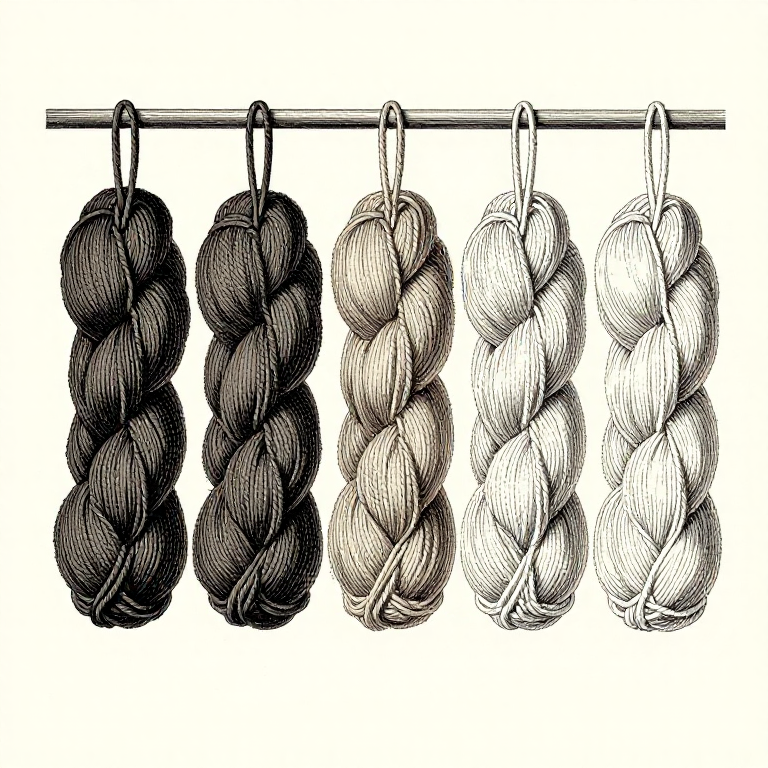


Exhaust Baths: The Shade Ladder Is Free, the Matched Set Is Not
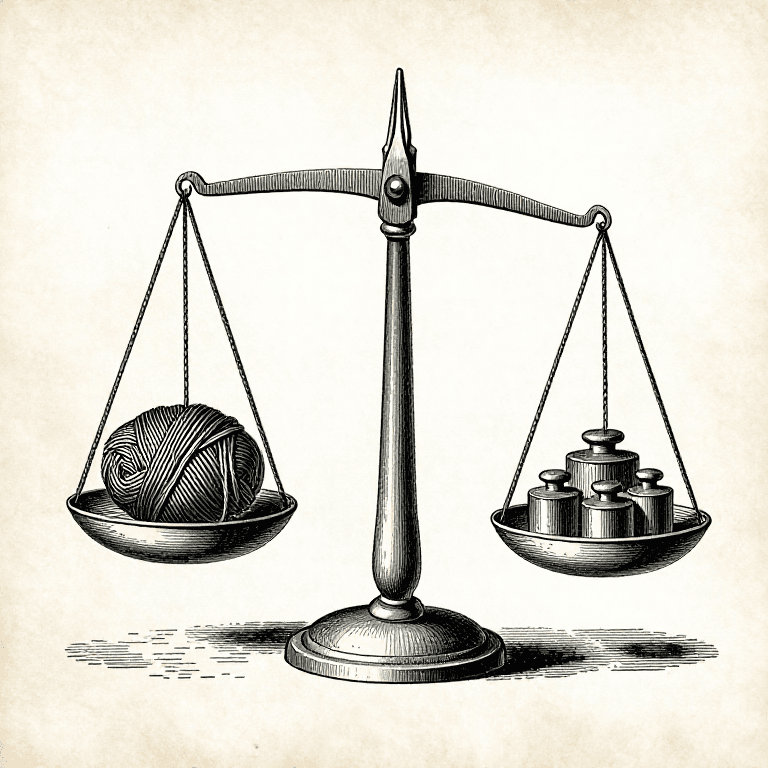
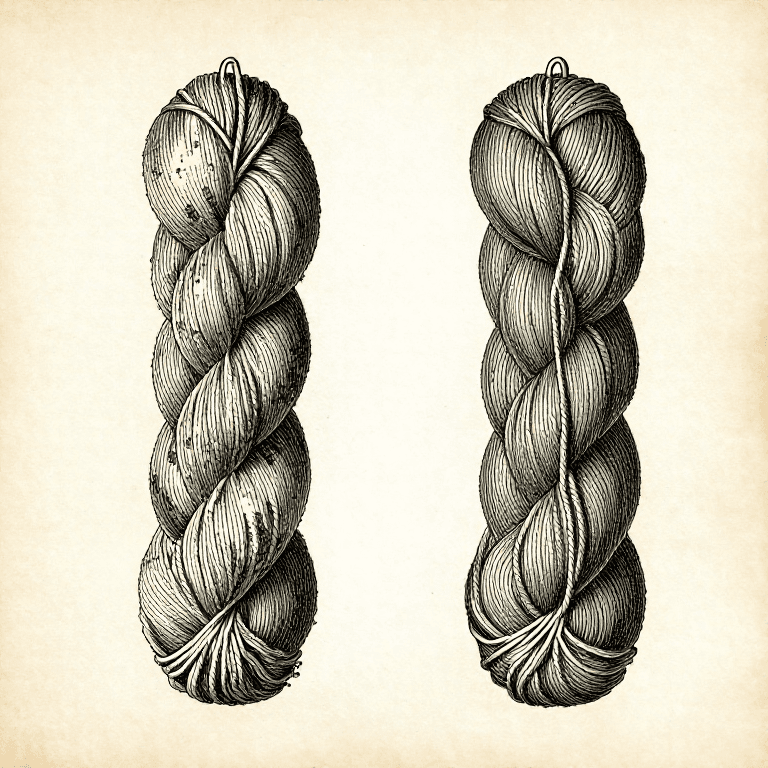
A dyebath is rarely used up by one skein. Put a second skein in and it comes out paler; a third paler still. Worked deliberately, that gives a ladder of related shades from one pot of dyestuff, and it is one of the real pleasures of natural dye — the shades are all the same colour, so they always go together.
Worked accidentally, it is the reason a dyer cannot match the skein they made last month.
This rung works out how the ladder falls, why it is geometric rather than linear, and what it actually costs to hold several skeins at the same depth instead.
Àárín
5 hours
Ìlànà
1
1
Running the ladder
Running the ladder
Dye the first skein as the recipe says. Lift it, rinse it, and put the next one into the same bath while it is still hot.
Two things change down the ladder, and only one of them is depth:
**The shade gets paler**, obviously, because there is less dye.
**The hue can shift as well.** A dyestuff is a mixture of compounds with different affinities for the fibre, and the ones that strike hardest go first. Madder's later baths are pinker and less orange, because the stronger orange components have already gone. Cochineal's later baths go towards rose. This is not a fault and it cannot be avoided by technique.
Label each skein with its bath number as it comes out. By the fourth they are hard to tell apart wet, and impossible to reconstruct dry.
Àwọn ohun èlò fún ìgbésẹ̀ yìí:
 Okùn irun àgùntàn tí a kò dá aró sí4 ìdì okùn
Àwọn irinṣẹ́ tí a nílò:
 Ìkòkò ńlá
 Ẹ̀mú
Ẹ̀mú Àwọn káàdì àkọsílẹ̀
 Àká Ìgbẹ
2
2
How the ladder falls
How the ladder falls
Ń ṣí ìwé Jupyter…
Àwọn irinṣẹ́ tí a nílò:
 Kọ̀ǹpútà Tábìlì
3
3
Making the bath in the first place
Making the bath in the first place
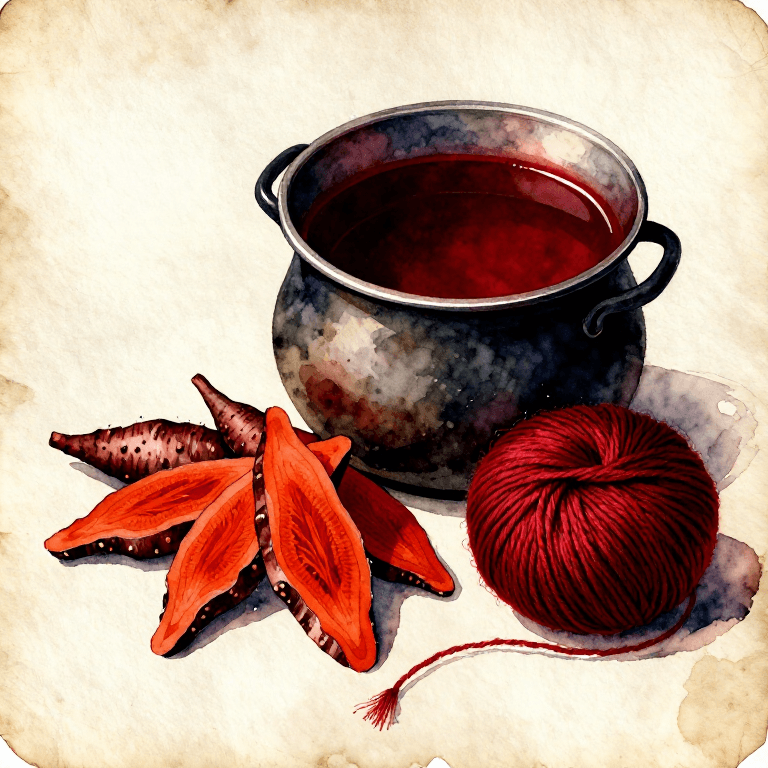
Most dyestuffs are extracted before the fibre goes anywhere near them, and the extraction is a separate operation from the dyeing.
**Soak, then simmer, then strain.** Chopped or ground material soaked overnight gives up far more than the same material simmered straight away. Simmer at 80 to 90 C rather than boiling — the same limit as the dyebath, and for the same reason.
**Strain the plant material out**, or dye it as well. Loose bark, root and petals pressed against a skein leave darker marks exactly where they sat. If it cannot be strained cleanly, tie it in a cloth bag.
**Extract more than once.** The plant material has its own ladder: a second and third extraction of the same madder root give further usable dye, and combining them gives a stronger bath than one long boil would.
The whole extraction keeps in a lidded jar in a cool place for a few days. Longer than that and it ferments, which for some dyes is ruin and for others — indigo, woad — is the actual process.
Àwọn ohun èlò fún ìgbésẹ̀ yìí:
Okùn irun àgùntàn tí a kò dá aró sí1 ìdì okùnÀwọn irinṣẹ́ tí a nílò:
Ìkòkò ńlá Ajọ Kékeré
 Ìgò Gílásì Onídìí
 Ẹ̀rọ Ìwọ̀n Ooru
 Ọ̀pá Ìrúwé
4
4
When a bath really is finished
When a bath really is finished
A bath that still looks strongly coloured can be finished, and a bath that looks weak can still have plenty in it. Colour in the water is not the test, because what is left may be the fraction with no affinity for the fibre.
**The test is a sample.** Put a small piece of mordanted fibre in for ten minutes and look at it. If it takes visible colour, the bath is worth another skein.
Three ways to get more out of a tired bath, in order of how much they change the colour:
**Longer and cooler.** An overnight soak in a cooling bath takes up dye that a one-hour hold left behind, and changes nothing else.
**Shift the pH.** Many dyes take up differently in acid or alkali. This changes the hue as well, which may or may not be wanted.
**Add a modifier.** An iron dip after a weak bath gives a useful grey or olive out of a colour that was too pale to keep. That is the iron-saddening blueprint and it rescues a great many disappointing baths.
When it is genuinely done, a spent alum or plant bath can go on the compost or the garden. An iron bath should be diluted well first.
Àwọn ohun èlò fún ìgbésẹ̀ yìí:
Okùn irun àgùntàn tí a kò dá aró sí1 ìdì okùn Ferrous sulfate1 ẹyọ
Àwọn irinṣẹ́ tí a nílò:
Ìgò Gílásì Onídìí Ìbò pHẸ̀múÀwọn káàdì àkọsílẹ̀
Àwọn ohun-èlò
2- 6 ìdì okùnÀyè
- 1 ẹyọÀyè
Blueprint tó jọra
Àwọn blueprint wọ̀nyí pín ìmọ̀ — ọ̀nà, ohun-èlò tàbí ìlànà
CC0 Àgbègbè Gbogbogbò
Blueprint yìí ti jáde lábẹ́ CC0. O lè ṣe àdàkọ, yí padà, pín, àti lò láìsí ìyọ̀ǹda.
Ṣàtìlẹ́yìn Olùṣẹ́dá nípa rírà àwọn ọjà nipasẹ̀ Blueprint wọn Ẹ̀san Olùṣẹ́dá tí àwọn Olùtajà gbé kalẹ̀, tàbí ṣẹ̀dá àtúnṣe tuntun ti Blueprint yìí kí o sì fi sínú Blueprint rẹ gẹ́gẹ́ bí ìsopọ̀ láti pín owó-wíwọlé.