IṢẸ́ ỌNÀ
ẸWÀ ÀTI ÌLERA
IṢẸ́ ỌWỌ́
ÀṢÀ ÀTI ÌTÀN
ÌṢERÉ
ÀYÍKÁ
OÚNJẸ ÀTI OHUN MÍMU
REVERSE ENGINEERING
SÁYẸ́ǸSÌ
ERÉ ÌDÁRAYÁ
ÌMỌ̀-Ẹ̀RỌ
ÀWỌN OHUN WÍWỌ̀
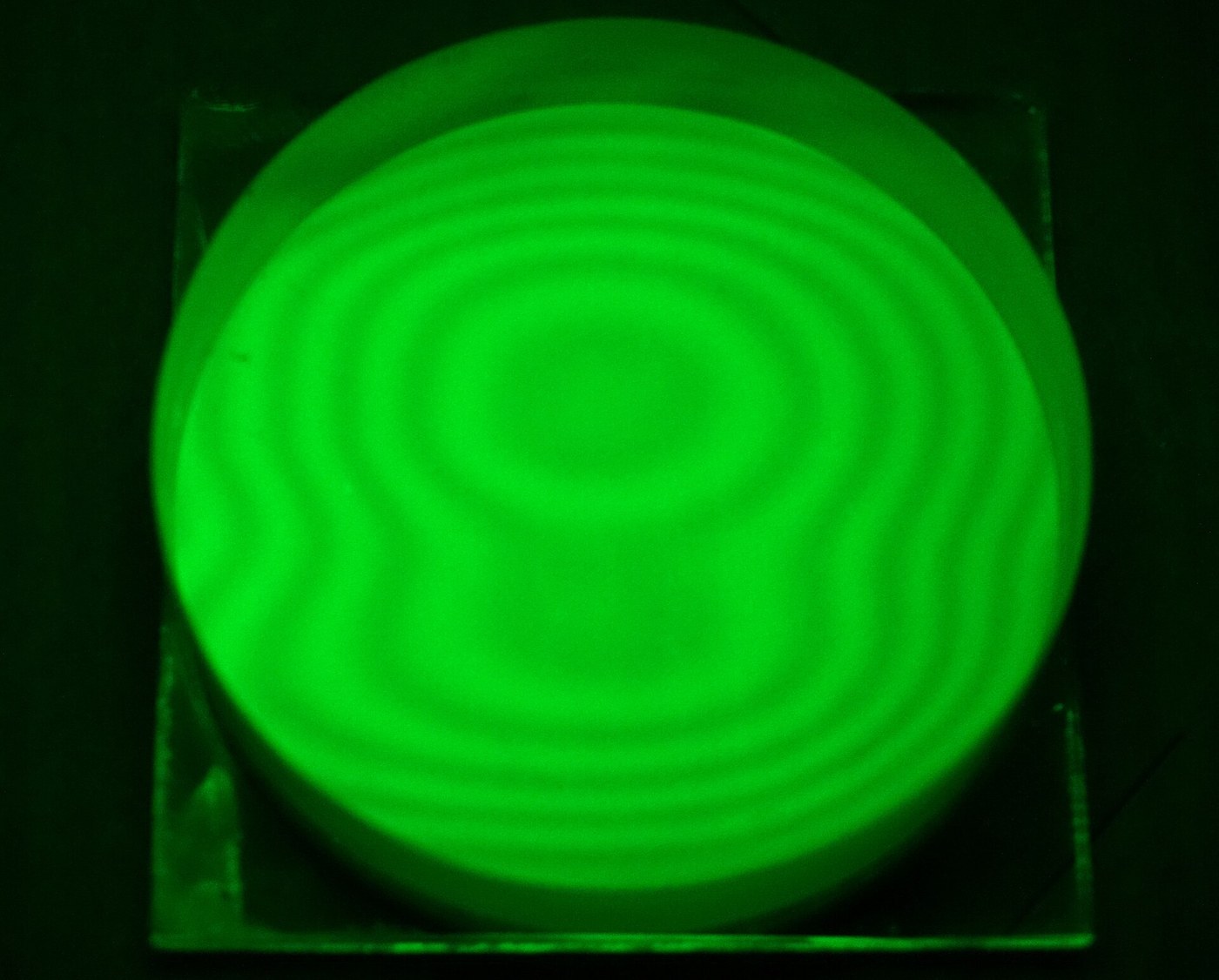


The Fizeau Wedge and the Optical Flat
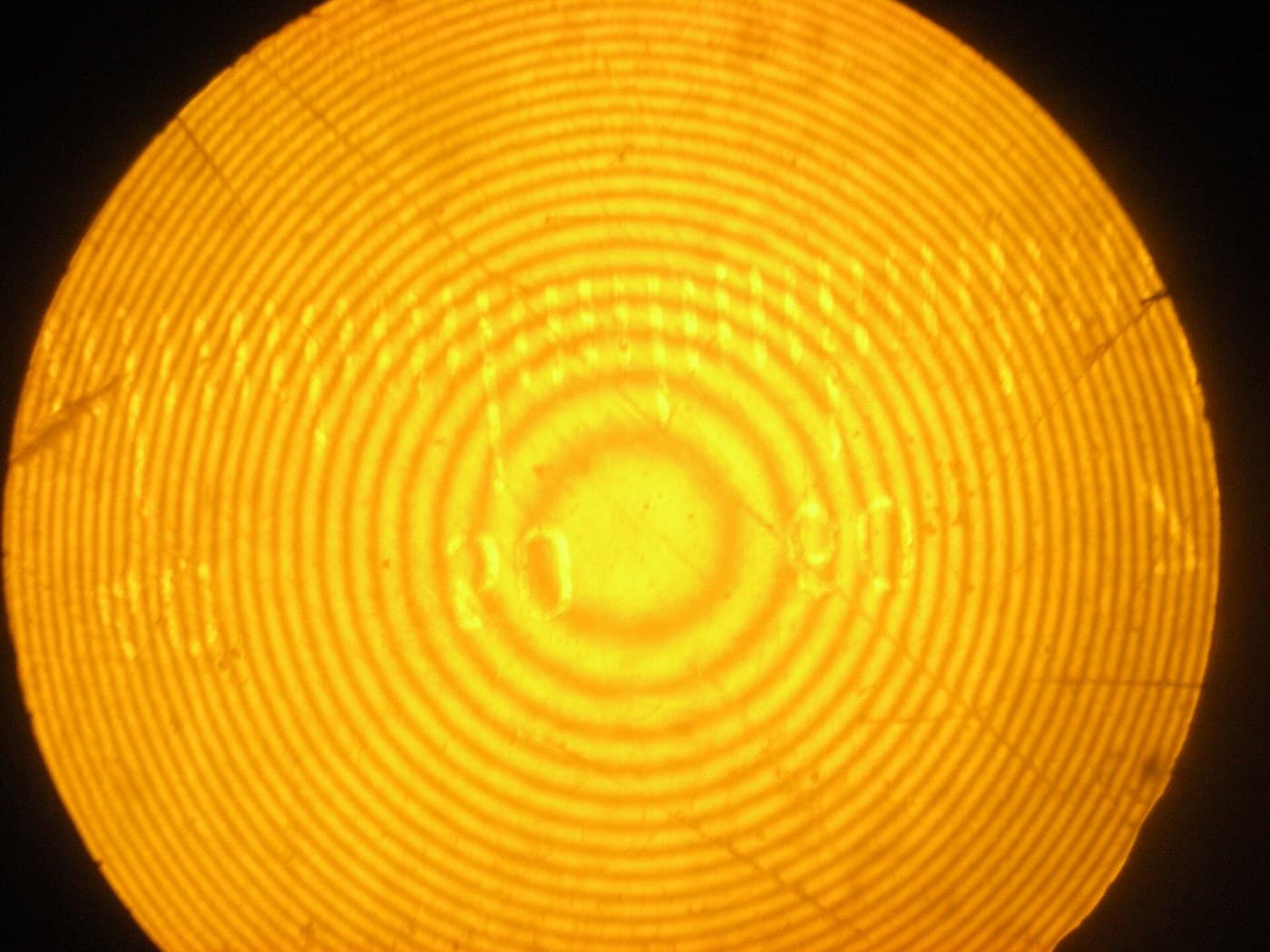
Newton's rings happen between a curve and a flat. Put two nearly FLAT surfaces together instead, with a hair's tilt between them, and the fringes become straight lines — one for every half wavelength of gap. Hippolyte Fizeau formalised this in 1862, and it turned interference from a philosophical demonstration into a shop-floor instrument.
What makes it useful is that a fringe is a CONTOUR LINE. The pattern is a height map of the gap, drawn in steps of about three hundred nanometres, and you read the surface directly: straight fringes mean flat, curved fringes mean the surface bows, and the amount they curve measured against their own spacing IS the departure from flat.
That last point is the whole reason it survives. You are not measuring against a ruler that could be wrong — you are measuring the fringes against each other. The tilt you introduced cancels out, and what remains is the surface.
Every gauge block, seal face, mirror blank and lens surface made anywhere is checked this way, and the apparatus is two pieces of glass and a monochromatic lamp. It is the cheapest thing in metrology that produces a NUMBER rather than an opinion.
Olùbẹ̀rẹ̀
2 hours
Ìlànà
1
1
Make the wedge
Make the wedge
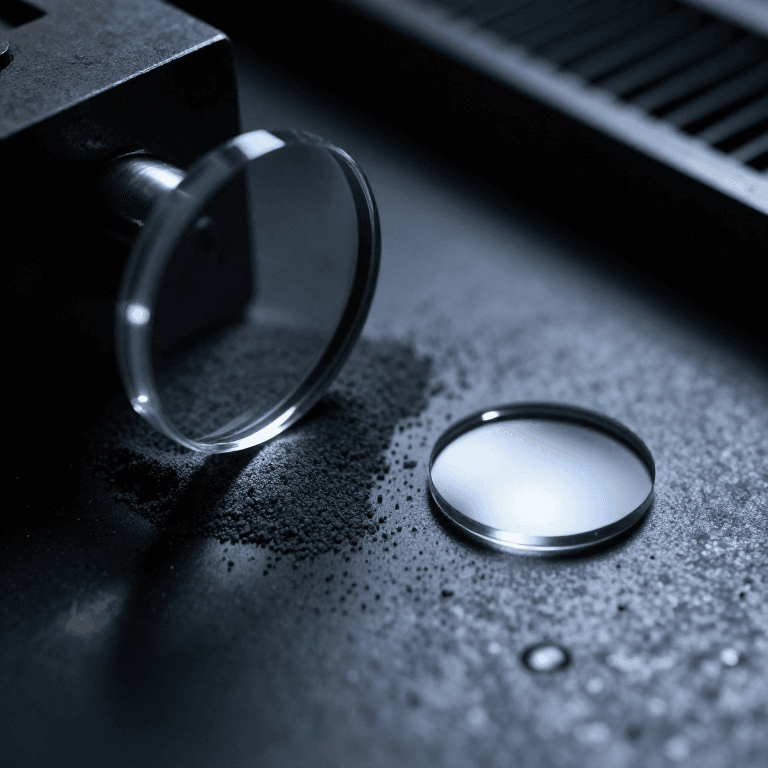
Clean both flats with isopropyl alcohol. Rest the reference flat on the test surface and press one edge very lightly to introduce a slight tilt.
Illuminate with the sodium lamp or a filtered LED from directly above and look straight down. A set of dark bands appears. Press harder and they widen; press elsewhere and they rotate. That responsiveness is how you know you are seeing interference and not a reflection.
Àwọn ohun èlò fún ìgbésẹ̀ yìí:
 Ojú pẹ̀lẹ́bẹ́ optiki (ìtọ́kasí)1 ẹyọ
 Ọtí Isopropyl 99 %30 ml
 Bébà ìnukàn1 àkópọ̀
Àwọn irinṣẹ́ tí a nílò:
 Orísun ìmọ́lẹ̀ LED
 Gílásì Ìgbéga Ọwọ́ 10x
 Ìbọ̀wọ́ Nítírílì
2
2
Read the bow, not the tilt
Read the bow, not the tilt
Photograph the fringes square-on. Lay a straightedge along one dark band in the image and measure two things: the spacing between adjacent bands, and the greatest departure of a band from the straightedge.
Divide the second by the first. That ratio, in fringe widths, is your surface error — multiply by half a wavelength for nanometres. The tilt cancels because it affects both numbers equally.
Àwọn irinṣẹ́ tí a nílò:
 Ìdíwọ̀n
 Kọ̀ǹpútà Tábìlì
3
3
Convert to nanometres, and pick your instrument
Convert to nanometres, and pick your instrument
Ń ṣí ìwé Jupyter…
Àwọn irinṣẹ́ tí a nílò:
Kọ̀ǹpútà Tábìlì4
4
Compendium: wringing, and what a flat is worth
Compendium: wringing, and what a flat is worth
WRINGING, AND WHY IT IS NOT GLUE. Two surfaces flat to a fraction of a wavelength and scrupulously clean will ADHERE when slid together, strongly enough to hang a weight from. Nobody is entirely certain of the mechanism — molecular attraction, a residual film of moisture, and air pressure all contribute — but the effect is what makes a stack of gauge blocks behave as one block of the summed length. It is also why a flat left resting on a surface overnight can be difficult and expensive to separate.
THE LIMIT THAT SENDS YOU TO BLUEPRINT 7. Fringes of equal thickness need the two surfaces nearly in contact, so a Fizeau tests flats against flats and cannot look at a lens, a prism or an assembled telescope at all. Putting the test optic into one ARM of an interferometer removes the constraint entirely — that is Twyman and Green's 1916 change, and it costs about two orders of magnitude more money.
Àwọn ohun-èlò
3- Àyè
- 30 mlÀyè
- 1 àkópọ̀Àyè
Àwọn irinṣẹ́ tó nílò
5- Àyè
Blueprint tó jọra
Àwọn blueprint wọ̀nyí pín ìmọ̀ — ọ̀nà, ohun-èlò tàbí ìlànà


CC0 Àgbègbè Gbogbogbò
Blueprint yìí ti jáde lábẹ́ CC0. O lè ṣe àdàkọ, yí padà, pín, àti lò láìsí ìyọ̀ǹda.
Ṣàtìlẹ́yìn Olùṣẹ́dá nípa rírà àwọn ọjà nipasẹ̀ Blueprint wọn Ẹ̀san Olùṣẹ́dá tí àwọn Olùtajà gbé kalẹ̀, tàbí ṣẹ̀dá àtúnṣe tuntun ti Blueprint yìí kí o sì fi sínú Blueprint rẹ gẹ́gẹ́ bí ìsopọ̀ láti pín owó-wíwọlé.