IṢẸ́ ỌNÀ
ẸWÀ ÀTI ÌLERA
IṢẸ́ ỌWỌ́
ÀṢÀ ÀTI ÌTÀN
ÌṢERÉ
ÀYÍKÁ
OÚNJẸ ÀTI OHUN MÍMU
REVERSE ENGINEERING
SÁYẸ́ǸSÌ
ERÉ ÌDÁRAYÁ
ÌMỌ̀-Ẹ̀RỌ
ÀWỌN OHUN WÍWỌ̀
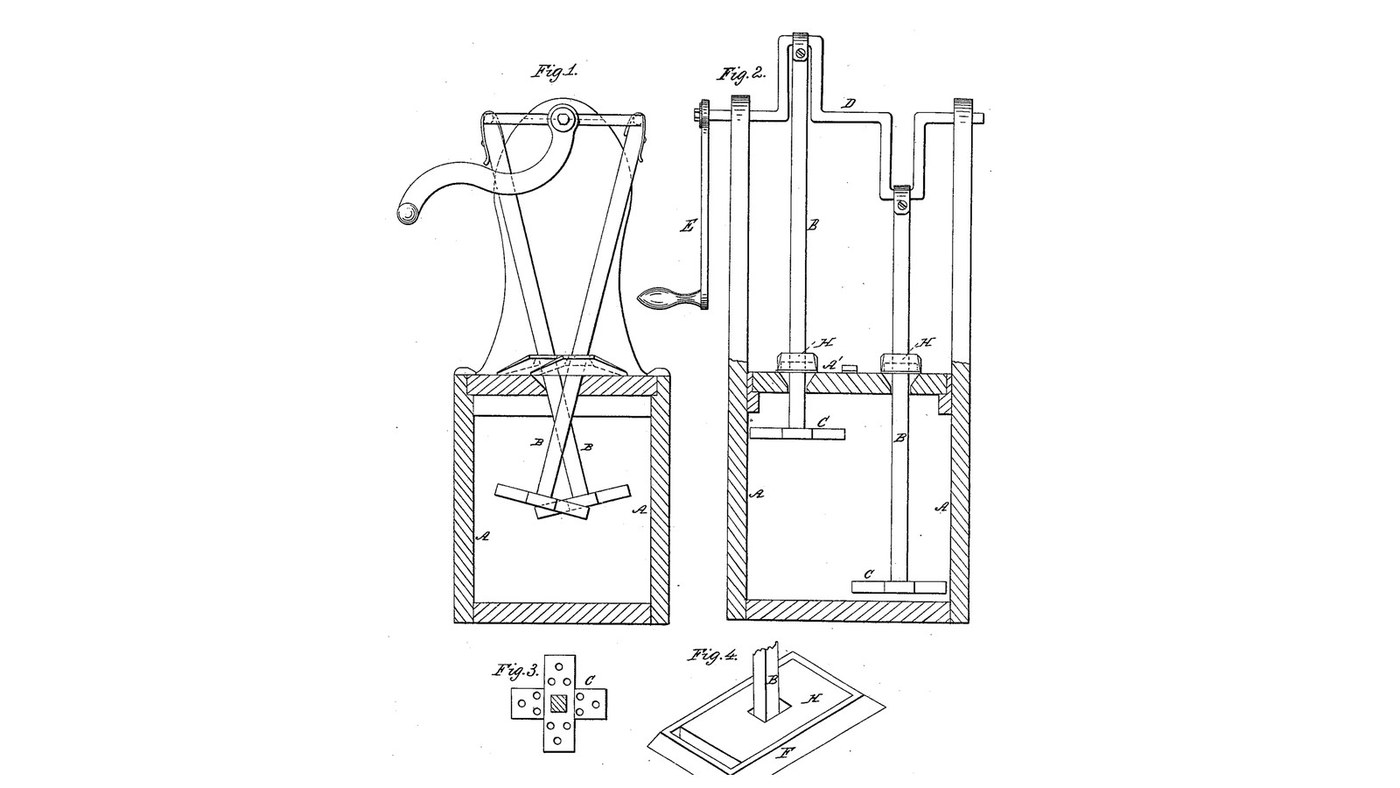

Twin-Crank Slide-Top Churn: Two Dashers on a Bent Crank Shaft, Sliding Plates Keep the Milk In
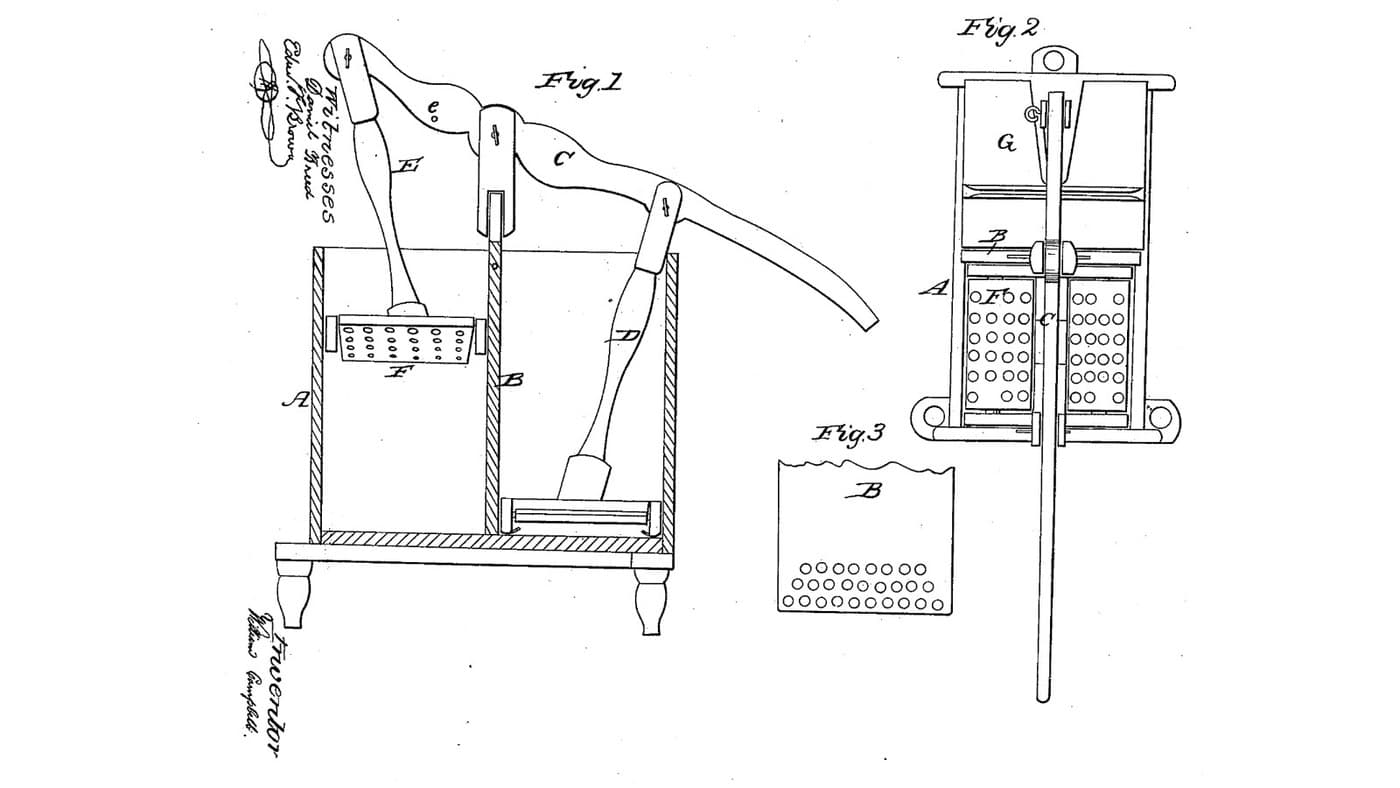
Cable L. Gilpatrick of Saco, Maine, received US 25,405, dated 13 September 1859, for a churn. A crank shaft bent into two opposite cranks rides on two posts above a box and works two dashers, so one goes down as the other comes up. Each dasher is two boards crossed and bored with holes. The staffs pass through holes in two slides that move in casings on the top, following the staffs so the milk cannot splash out.
The patent gives no sizes; every size here is ours.
Àárín
About 2 days, plus printing
Ìlànà
1
1
One up, one down
One up, one down
Ń ṣí ìwé Jupyter…
2
2
Two dashers in one box, a few weeks before
Two dashers in one box, a few weeks before
Campbell rocked his two dashers on a lever. Gilpatrick drives his from a bent crank shaft and covers the top with slides.
3
3
Read US 25,405
Read US 25,405
"Motion is then communicated to the dashers by means of the crank-shaft. As one dasher descends, the other ascends. Thus the milk is kept in contant agitation, which is necessary in order to churn expeditiously. The slides being operated upon by the dasher-staffs prevents the milk from splashing out, as it otherwise would do."
4
4
Print the staff collars
Print the staff collars
Each collar is two halves round a crank pin: the lower half with a 30 mm square socket for the staff, and a cap; two M5 screws close them. Print two sets. PETG, 0.2 mm layers, 40 % infill, 4 walls.
5
5
Box A and its posts
Box A and its posts
From 20 mm hardwood make a box 400 x 360 mm and 450 mm deep inside, with a bottom. Make the two 400 mm sides 170 mm taller, narrowed to posts 120 mm wide above the box, and bore each post 13 mm, 600 mm above the bottom's underside, for the shaft. Glue and screw a cleat 20 mm square along the inside of each post side, 30 mm below the rim, for the top. Fill the box with water overnight so it swells tight, then empty it.
Àwọn ohun èlò fún ìgbésẹ̀ yìí:
 Pátákó Igi Líle3 ẹyọ
 Ìdìpọ̀ Igi1 ẹyọ
 Ìṣó igi30 ẹyọ
Àwọn irinṣẹ́ tí a nílò:
 Ayùn tábìlì
 Ayùn Ọwọ́
 Ẹ̀rọ Ìlùkòkò Aláìlókùn
 Àkójọ Orí Ìlùkòkò
 Ìdìmú oní-ọ̀pá
 Igun-òsùwọ̀n tí ó dúró
 Okùn Ìdíwọ̀n
 Omi
6
6
Crank shaft D and crank E
Crank shaft D and crank E
Cut 12 mm stainless rod about 750 mm long. Heat each bend red with the torch and bend it in the vise into two cranks of 50 mm throw, pointing opposite ways, each crank pin 50 mm long, their middles 180 mm apart. Check the journals line up by rolling the shaft on the bench. Thread one end through a post, the collars' lower halves onto the pins, and the other end through the other post. Fix a hardwood crank E, 160 mm long with a handle, on the end that sticks out.
Àwọn ohun èlò fún ìgbésẹ̀ yìí:
 Ọ̀pá irin tí kò ń yá1 ẹyọPátákó Igi Líle1 ẹyọ
 Àwọn dowel igi líle1 ẹyọÌdìpọ̀ Igi1 ẹyọ
Àwọn irinṣẹ́ tí a nílò:
 Ọ̀pá Iná Pùróféènì
 Ìdìmú Tábìlì
 Òòlù
 Ìbọ̀wọ́ Tí Ń Fara Da Ooru
 Ayùn Irin
 Àwọn Ìfá (Ìfá Ọwọ́)Ẹ̀rọ Ìlùkòkò AláìlókùnÀkójọ Orí ÌlùkòkòOkùn Ìdíwọ̀n
7
7
Top A', casings F and slides H
Top A', casings F and slides H
Cut the top to drop onto the cleats, with two slots 140 x 50 mm across it, under the cranks, and a finger hole. Over each slot build a casing F: two rails 20 x 26 mm, 370 mm long, 80 mm apart, with a strip on each that overhangs the inside by 8 mm, and an end block at each end, leaving 346 mm inside. Cut each slide H 240 x 79 mm from 18 mm hardwood, so it slides under the strips, with a hole 34 mm square in its middle, 4 mm bigger than the staff.
Àwọn ohun èlò fún ìgbésẹ̀ yìí:
Pátákó Igi Líle2 ẹyọÌdìpọ̀ Igi1 ẹyọÌṣó igi24 ẹyọÀwọn irinṣẹ́ tí a nílò:
Ayùn tábìlì Ẹ̀rọ ìgbẹ́ igi
 Ìṣó ihò ìdì
 Òòlù IgiẸ̀rọ Ìlùkòkò AláìlókùnÀkójọ Orí Ìlùkòkò
 Bébà ÌfáÌdìmú oní-ọ̀pá
8
8
Staffs B and dashers C
Staffs B and dashers C
Cut two staffs 30 mm square, 480 mm long. For each dasher, half-lap two boards 180 x 50 x 15 mm into a cross, bore eight 12 mm holes, cut a 30 mm square hole in the middle, and glue the staff's end into it. Set the top on its cleats, pass each staff up through its slide's hole, and bolt the collar's cap over its pin and onto the staff's top, turning the cross so its arms point to the box's corners.
Àwọn ohun èlò fún ìgbésẹ̀ yìí:
Pátákó Igi Líle1 ẹyọÌdìpọ̀ Igi1 ẹyọ Skurú ẹ̀rọ4 ẹyọ
 Wáṣà Pẹrẹsẹ4 ẹyọ
 Ẹ̀kù Ìdìmú Onínáílọ́ọ̀nù4 ẹyọ
 Okùn PETG1 ẹyọ
Àwọn irinṣẹ́ tí a nílò:
 Ẹ̀rọ ìtẹ̀ 3D oníwàyà (FDM)Ayùn tábìlìÌṣó ihò ìdìÒòlù IgiẸ̀rọ Ìlùkòkò AláìlókùnÀkójọ Orí Ìlùkòkò
 Ìṣù àwọn ohun ìyí skurúBébà Ìfá
9
9
The build in 3D
The build in 3D
FreeCAD model of this build, one side and the lower part of one post cut away: the box, the bent crank shaft on its posts with crank E, the two staffs in their collars, the dashers, and the slides in their casings on the top. The crank was turned through 24 positions.
10
10
Churn
Churn
Lift the collars' caps off, take out the top, pour in about 15 litres of heavy cream at about 15 °C, checked with the thermometer, and put the top and caps back. Turn the crank steadily, timing it. When the butter comes, take the top out, lift out the butter, drain the buttermilk, wash the butter in cold water until it runs clear, work in a pinch of salt and weigh it.
Àwọn ohun èlò fún ìgbésẹ̀ yìí:
 Ọ̀rá wàrà tó nípọn15 l
 Iyọ̀ Òkun Rúkèrúdò1 ẹyọOmi1 ẹyọ
Àwọn irinṣẹ́ tí a nílò:
 Ẹ̀rọ ìwọ̀n ooru oníhun tí ó dúró sí inú
 Aago Ìdúró
 Òṣùwọ̀n Díjítà Ilé Ìdáná
 Àwo ìdàpọ̀ ńlá ti irin tí kò ń yáÌṣù àwọn ohun ìyí skurú
11
11
Troubleshooting
Troubleshooting
Twin-crank churn troubleshooting.
Flow
Loading...
12
12
History and honest limits
History and honest limits
**Cable L. Gilpatrick** of Saco, Maine, US 25,405, 13 September 1859, "Churn". He claimed the crank shaft D and staffs B with the top A', "when said top is provided with boxes (F,) in which play slides, through which the staffs pass". The patent gives no sizes; every size here is ours. His collars are not described beyond "passing around said cranks"; ours are printed and split so the top can come out.
Àwọn ohun-èlò
12- 3 ẹyọÀyè
- 4 ẹyọÀyè
- 54 ẹyọÀyè
- 1 ẹyọÀyè
- 1 ẹyọÀyè
- 4 ẹyọÀyè
- 4 ẹyọÀyè
- Àyè
- 1 ẹyọÀyè
- Àyè
- 1 ẹyọÀyè
- 1 ẹyọÀyè
Àwọn irinṣẹ́ tó nílò
24- 1 vendor sell this, none ship to you yetÀyè
- Àyè
- 1 vendor sell this, none ship to you yetÀyè
- 1 vendor sell this, none ship to you yetÀyè
- Àyè
- Àyè
- Àyè
- Àyè
- Àyè
- Àyè
- Àyè
- Àyè
Àwọn fáìlì àpẹrẹ
2Ìtọ́nisọ́nà yìí ń ṣe

Blueprint tó jọra
Àwọn blueprint wọ̀nyí pín ìmọ̀ — ọ̀nà, ohun-èlò tàbí ìlànà
Hinged-Float Double-Dasher Churn: Floats That Close Going Down and Fall Open Coming Up
láti ọwọ́ Buttercup
Iṣẹ́ Igi
12
0
0
0
0
0
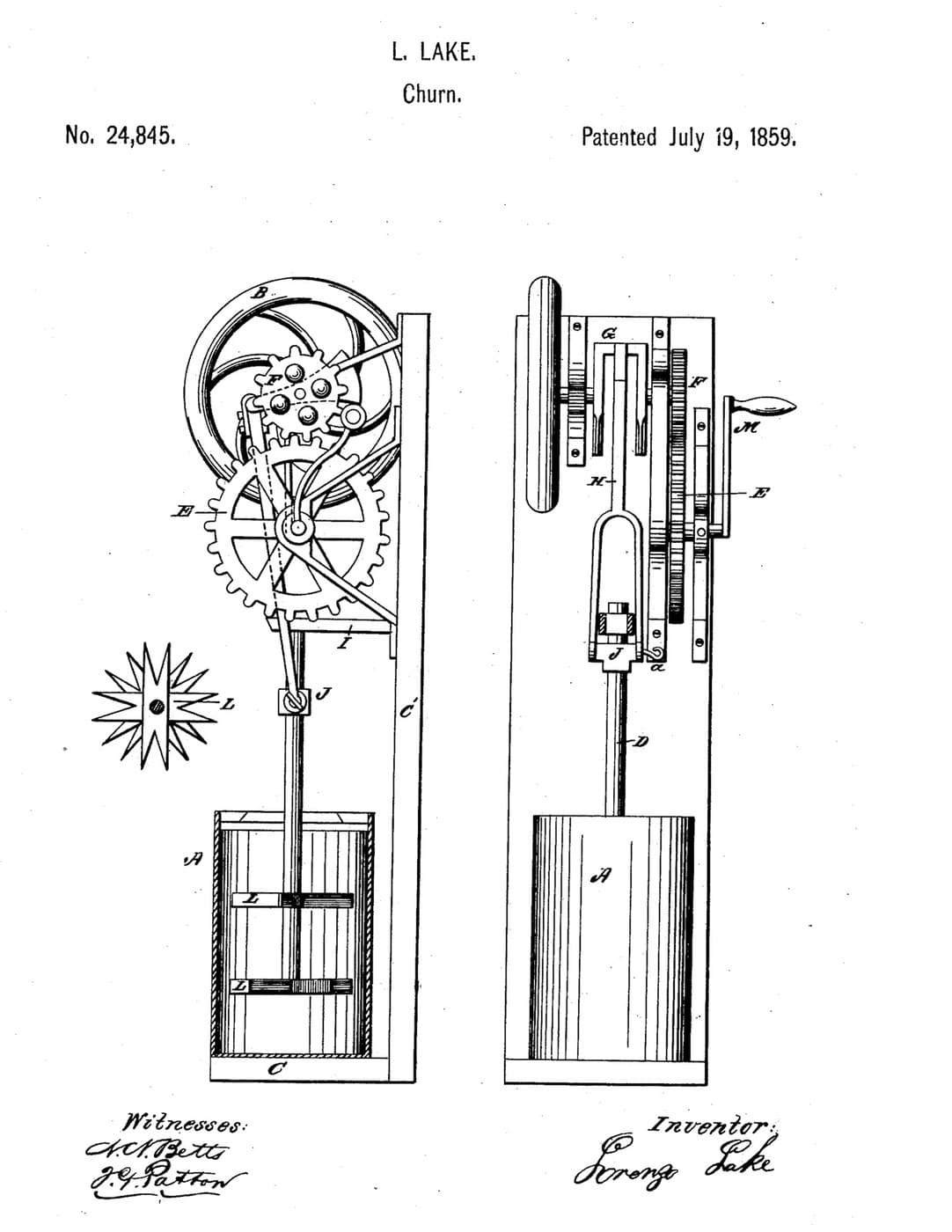
Star-Dasher Crank Churn: Geared Crank and Flywheel Drive Two Notched Dashers Set Point Over Gap
láti ọwọ́ Martin
Iṣẹ́ Igi
14
0
0
0
0
0
Churning Butter from Cream — The 5,000-Year-Old Fat Separation
láti ọwọ́ TheChef
IṢẸ́ ỌWỌ́
63
0
0
0
0
0
CC0 Àgbègbè Gbogbogbò
Blueprint yìí ti jáde lábẹ́ CC0. O lè ṣe àdàkọ, yí padà, pín, àti lò láìsí ìyọ̀ǹda.
Ṣàtìlẹ́yìn Olùṣẹ́dá nípa rírà àwọn ọjà nipasẹ̀ Blueprint wọn Ẹ̀san Olùṣẹ́dá tí àwọn Olùtajà gbé kalẹ̀, tàbí ṣẹ̀dá àtúnṣe tuntun ti Blueprint yìí kí o sì fi sínú Blueprint rẹ gẹ́gẹ́ bí ìsopọ̀ láti pín owó-wíwọlé.