IṢẸ́ ỌNÀ
ẸWÀ ÀTI ÌLERA
IṢẸ́ ỌWỌ́
ÀṢÀ ÀTI ÌTÀN
ÌṢERÉ
ÀYÍKÁ
OÚNJẸ ÀTI OHUN MÍMU
REVERSE ENGINEERING
SÁYẸ́ǸSÌ
ERÉ ÌDÁRAYÁ
ÌMỌ̀-Ẹ̀RỌ
ÀWỌN OHUN WÍWỌ̀
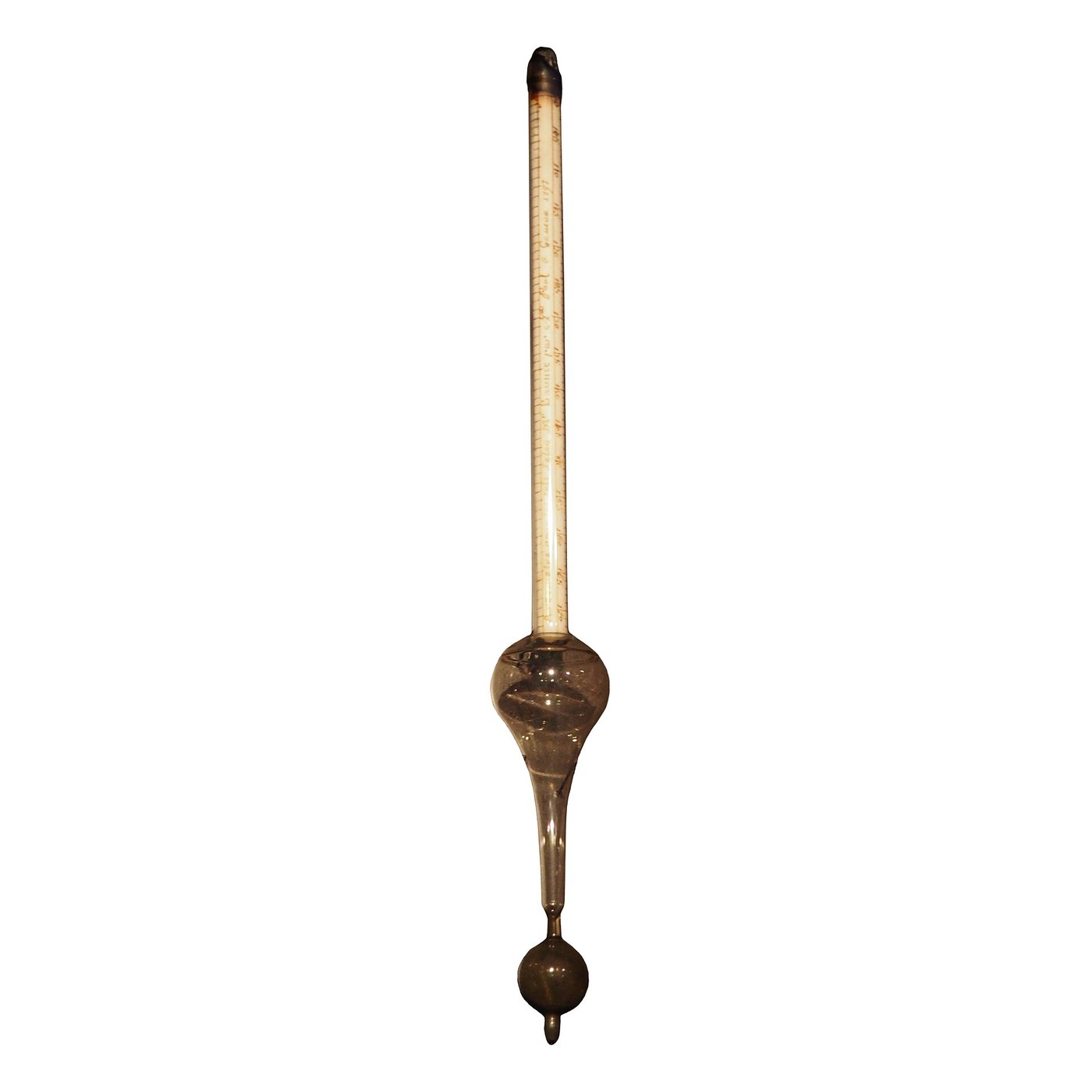


Glass Hydrometer: Blown, Weighted with Shot, Calibrated in Known Liquids
A hydrometer is a glass float with a thin stem: it sinks deeper in light liquids and rides higher in dense ones, so a scale on the stem reads specific gravity. Baumé fixed his scale at two points, pure water and 15 % brine (Ure, 1839); here the scale is marked in sugar solutions of known strength, giving degrees Brix, and in liquids weighed for their specific gravity.
The picture: an old glass hydrometer with a paper scale inside its stem and a ballast bulb below.
Ilọsíwájú
A day
Ìlànà
1
1
Blow the float
Blow the float
On a tube, blow an elongated bulb, then a small second bulb below it for ballast, and draw the tube above into a thin, even stem.
Àwọn ohun èlò fún ìgbésẹ̀ yìí:
 Àkójọpọ̀ Páìpù Gíláàsì1 ẹyọ
Àwọn irinṣẹ́ tí a nílò:
 Ọ̀gọ̀ ìfẹ́ dígí orí tábìlì
 Gíláàsì ààbò
 Ìbọ̀wọ́ Tí Ń Fara Da Ooru
2
2
Ballast and scale paper
Ballast and scale paper
Drop small lead shot into the lower bulb until the float stands upright in water with most of the stem out. Slide a paper strip into the stem.
Àwọn ohun èlò fún ìgbésẹ̀ yìí:
 Ìṣù Òjé50 g
 Bébà1 ẹyọ
Àwọn irinṣẹ́ tí a nílò:
 Òǹwọ̀n ìdọ́gba
3
3
Seal the top
Seal the top
Heat the top of the stem and draw it closed. Check that it floats upright and does not leak.
Àwọn irinṣẹ́ tí a nílò:
Ọ̀gọ̀ ìfẹ́ dígí orí tábìlìGíláàsì ààbò4
4
Mark the water point
Mark the water point
Float it in water at room temperature in the cylinder and mark where the surface cuts the stem: specific gravity 1.000 and 0 °Brix.
Àwọn ohun èlò fún ìgbésẹ̀ yìí:
 Omi1 lítà
Àwọn irinṣẹ́ tí a nílò:
 Silinda òǹwọ̀n
 Ẹ̀rọ Ìwọ̀n Ooru
 Abẹ́rẹ̀ Ìkọ̀wé Dáyámọ́ndì
5
5
Mark the other points
Mark the other points
Make sugar solutions by weight (see the notebook) and salt brines; float the hydrometer in each and mark the stem. Weigh 100 mL of each liquid to write its specific gravity beside the mark. Copy the marks onto the paper strip in ink and reseal if you opened it.
Àwọn ohun èlò fún ìgbésẹ̀ yìí:
 Ṣúgà funfun0.3 kg
 Iyọ̀0.3 kgOmi2 lítà
 Yíǹkì Irin àti Ìwú Igi Óákù2 ml
Àwọn irinṣẹ́ tí a nílò:
Òǹwọ̀n ìdọ́gbaSilinda òǹwọ̀n Kálámù Ìyẹ́
6
6
Calibration liquids
Calibration liquids
Ń ṣí ìwé Jupyter…
7
7
Limits
Limits
Ure's two-point Baumé principle and the Brix definition are sourced; the bulb form, shot ballast and weighing method are ours. Read at the temperature you calibrated at; this hydrometer has no potential-alcohol scale.
Àwọn ohun-èlò
7- Àyè
- 50 gÀyè
- 1 ẹyọÀyè
- 3 lítàÀyè
- 0.3 kgÀyè
- 0.3 kgÀyè
- Àyè
Àwọn irinṣẹ́ tó nílò
8- Àyè
- Àyè
Ìtọ́nisọ́nà yìí ń ṣe
Blueprint tó jọra
Àwọn blueprint wọ̀nyí pín ìmọ̀ — ọ̀nà, ohun-èlò tàbí ìlànà

CC0 Àgbègbè Gbogbogbò
Blueprint yìí ti jáde lábẹ́ CC0. O lè ṣe àdàkọ, yí padà, pín, àti lò láìsí ìyọ̀ǹda.
Ṣàtìlẹ́yìn Olùṣẹ́dá nípa rírà àwọn ọjà nipasẹ̀ Blueprint wọn Ẹ̀san Olùṣẹ́dá tí àwọn Olùtajà gbé kalẹ̀, tàbí ṣẹ̀dá àtúnṣe tuntun ti Blueprint yìí kí o sì fi sínú Blueprint rẹ gẹ́gẹ́ bí ìsopọ̀ láti pín owó-wíwọlé.