
IṢẸ́ ỌNÀ
ẸWÀ ÀTI ÌLERA
IṢẸ́ ỌWỌ́
ÀṢÀ ÀTI ÌTÀN
ÌṢERÉ
ÀYÍKÁ
OÚNJẸ ÀTI OHUN MÍMU
REVERSE ENGINEERING
SÁYẸ́ǸSÌ
ERÉ ÌDÁRAYÁ
ÌMỌ̀-Ẹ̀RỌ
ÀWỌN OHUN WÍWỌ̀
Twin-Saw Table: A Rip Saw and a Crosscut Saw at Opposite Corners, One Motor, Each Depth Set by Tilting the Top (Gottschalk, 1926)
Forge

Ṣẹ́dá nipasẹ̀

Forge

13. Oṣù Kọkànlá 2026NO
10
0
0
0
0

Twin-Saw Table: A Rip Saw and a Crosscut Saw at Opposite Corners, One Motor, Each Depth Set by Tilting the Top (Gottschalk, 1926)

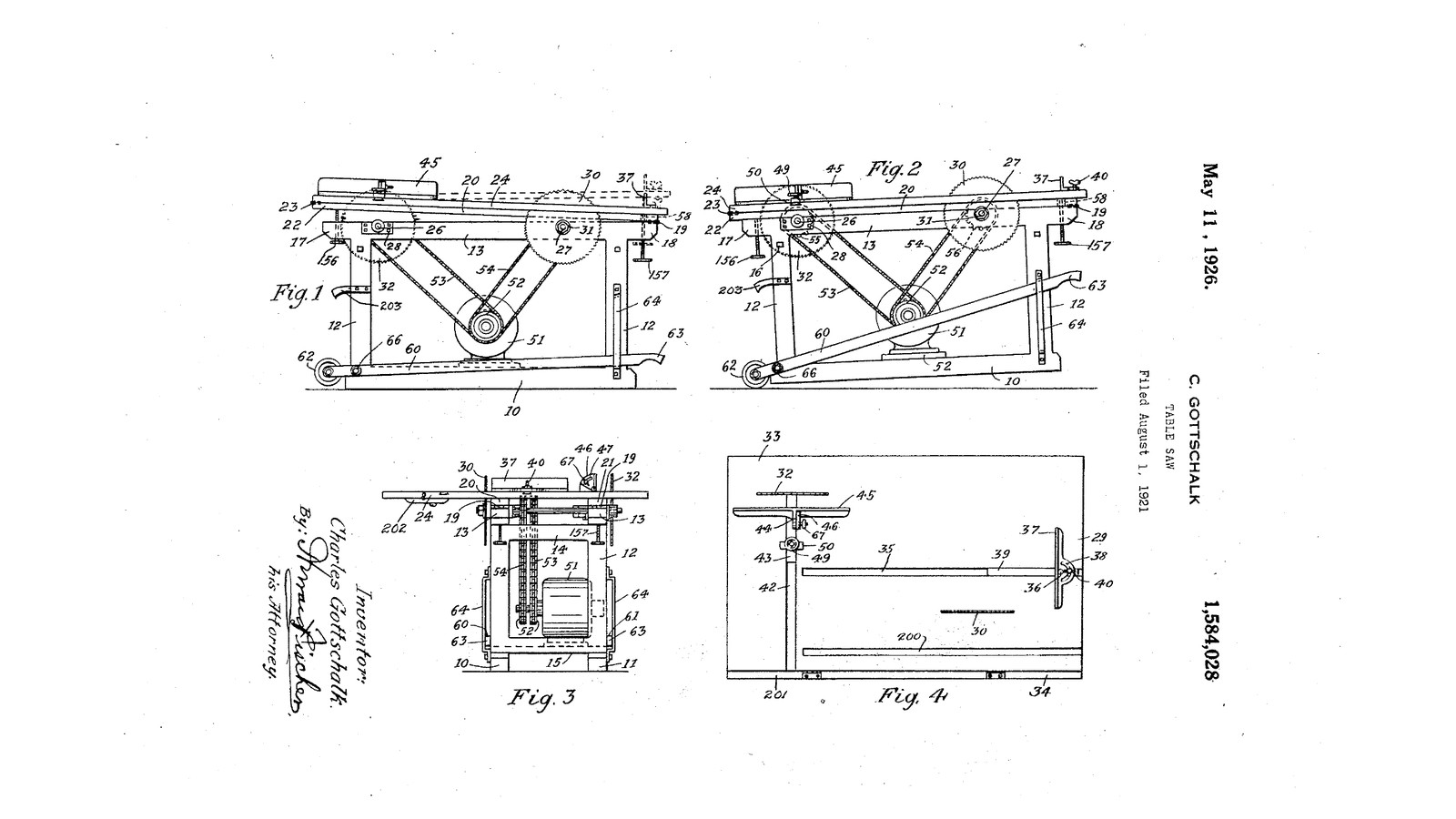
Charles Gottschalk of St. Paul, Minnesota, received US 1,584,028, dated 11 May 1926, for a table saw with two saws. A crosscut saw and a rip saw stand at opposite corners of one table, so either or both can be used without changing blades. An electric motor inside the frame drives both through two chains. The top is hinged twice and lifted by a hand screw at either end, which sets each saw's depth of cut on its own. A lever with wheels lets two people truck the whole machine about. The patent gives no sizes; every size here is ours.
Ilọsíwájú
About 1 week

Ìlànà

1

Setting each saw's depth

Ń ṣí ìwé Jupyter…
2

Read US 1,584,028

"Inasmuch as the saws are positioned fairly close to the hinges 19 and 23 the movement of the table for one of the saws does not appreciably affect the positioning of the same in regard to the other saw so that the depth of cut of either of the two saws may be adjusted independently or simultaneously if desired."
3

Frame on skids

From 45 x 95 mm pine: two skids 10, 11 1200 mm long; four uprights 12 775 mm long; two top rails 13 1300 mm long, their ends 50 mm past the uprights (17 at the rear, 18 at the front); cross rails 14, 15 between the uprights; a motor bed 52 across the skids. Glue and bolt the joints with carriage bolts, square and level, so the rails' tops stand 820 mm above the floor and 600 mm apart.

Àwọn ohun èlò fún ìgbésẹ̀ yìí:

Igi pineIgi pine10 ẹyọ
Bọ́ọ̀tù orí róbótóBọ́ọ̀tù orí róbótó24 ẹyọ
Wáṣà PẹrẹsẹWáṣà Pẹrẹsẹ24 ẹyọ
Nọ́ọ̀tì Onígun Mẹ́fàNọ́ọ̀tì Onígun Mẹ́fà24 ẹyọ
Ìdìpọ̀ IgiÌdìpọ̀ Igi1 ẹyọ

Àwọn irinṣẹ́ tí a nílò:
Ayùn JígísòAyùn Jígísò
Ẹ̀rọ Ìlùkòkò AláìlókùnẸ̀rọ Ìlùkòkò Aláìlókùn
Àkójọ Orí ÌlùkòkòÀkójọ Orí Ìlùkòkò
Àkójọ orí kànnàkànnàÀkójọ orí kànnàkànnà
Kọ́kọ́rọ́ tí a lè ṣàtúnṣeKọ́kọ́rọ́ tí a lè ṣàtúnṣe
Ìdìmú oní-ọ̀páÌdìmú oní-ọ̀pá
Igun Àpapọ̀Igun Àpapọ̀
Okùn Ìdíwọ̀nOkùn Ìdíwọ̀n
4

Turn the two arbors

From 30 mm steel bar turn two arbors 26, 27, each 400 mm long. On one end of each turn a collar 40 mm across and 6 mm thick 30 mm from the end, and screw-cut the last 25 mm M20 on the lathe; turn a loose flange 60 mm across with a 20 mm bore for each. Drill and tap the sprockets' hubs for set screws if they have none.

Àwọn ohun èlò fún ìgbésẹ̀ yìí:

Ọ̀pá rírọ irin rírọ̀Ọ̀pá rírọ irin rírọ̀2 ẹyọ
Nọ́ọ̀tì Onígun Mẹ́fàNọ́ọ̀tì Onígun Mẹ́fà4 ẹyọ

Àwọn irinṣẹ́ tí a nílò:

Ẹ̀rọ Ìyí IrinẸ̀rọ Ìyí Irin
Ìmú ẹ̀rọ ìyípo oníka mẹ́taÌmú ẹ̀rọ ìyípo oníka mẹ́ta
Ohun ìgé ẹ̀rọ ìyíOhun ìgé ẹ̀rọ ìyí
Òṣùwọ̀n Kálípà Díjítà Ìnṣì 6Òṣùwọ̀n Kálípà Díjítà Ìnṣì 6
Ayùn IrinAyùn Irin
Ẹ̀rọ Ìlùkòkò OnídúróẸ̀rọ Ìlùkòkò Onídúró
Àkójọ Orí ÌlùkòkòÀkójọ Orí Ìlùkòkò
Ìtò irinṣẹ́ ìgé iháÌtò irinṣẹ́ ìgé ihá
Ìdìmú ìyí ihá inúÌdìmú ìyí ihá inú
Gíláàsì ààbòGíláàsì ààbò
5

Mount the arbors and the saws

Bolt two 30 mm flange bearings 28 to the outsides of the rails for each arbor, its centre 30 mm below the rails' tops: the crosscut saw's arbor 27 250 mm from the front ends, the rip saw's arbor 26 250 mm from the rear ends. Push the arbors through so the crosscut saw's threaded end stands out past the left rail and the rip saw's past the right one, seen from the front. Fix a 17-tooth #40 sprocket on each arbor between the rails. Put each 250 mm blade on its collar, the teeth at the top pointing to the front, then the loose flange, a nut and a second nut locked against it.

Àwọn ohun èlò fún ìgbésẹ̀ yìí:

Bẹ́ríìngì onífíláǹjìBẹ́ríìngì onífíláǹjì4 ẹyọ
Kẹ̀kẹ́ ẹ̀wọ̀nKẹ̀kẹ́ ẹ̀wọ̀n2 ẹyọ
Circular Saw Blade SetCircular Saw Blade Set1 ẹyọ
Àkójọ bọ́ọ̀lù onígun mẹ́fàÀkójọ bọ́ọ̀lù onígun mẹ́fà16 ẹyọ
Ìsúrù ìdúró olójú kòtòÌsúrù ìdúró olójú kòtò4 ẹyọ

Àwọn irinṣẹ́ tí a nílò:

Kọ́kọ́rọ́ tí a lè ṣàtúnṣeKọ́kọ́rọ́ tí a lè ṣàtúnṣe
Ìdìpọ̀ kọ́kọ́rọ́ igun mẹ́fàÌdìpọ̀ kọ́kọ́rọ́ igun mẹ́fà
Ẹ̀rọ Ìlùkòkò AláìlókùnẸ̀rọ Ìlùkòkò Aláìlókùn
Àkójọ Orí ÌlùkòkòÀkójọ Orí Ìlùkòkò
6

Motor and chains

Bolt the motor 51 to its bed between the skids under the arbors, its shaft parallel to them, and fit two 17-tooth sprockets 52 on its shaft, each in line with one arbor's sprocket. Fit a #40 chain 53, 54 from each to its arbor, tensioned by sliding the motor in slotted bolt holes. Have the motor wired to a switch within reach at the front. Oil the chains.

Àwọn ohun èlò fún ìgbésẹ̀ yìí:

Mọ́tò iná mànàmánáMọ́tò iná mànàmáná1 ẹyọ
Kẹ̀kẹ́ ẹ̀wọ̀nKẹ̀kẹ́ ẹ̀wọ̀n2 ẹyọ
Ẹ̀wọ̀n onírọ́làẸ̀wọ̀n onírọ́là2 ẹyọ
Switch ìtàn/ìpaSwitch ìtàn/ìpa1 ẹyọ
Epo ẹ̀rọEpo ẹ̀rọ1 ẹyọ

Àwọn irinṣẹ́ tí a nílò:

Kọ́kọ́rọ́ tí a lè ṣàtúnṣeKọ́kọ́rọ́ tí a lè ṣàtúnṣe
Ìdìpọ̀ kọ́kọ́rọ́ igun mẹ́fàÌdìpọ̀ kọ́kọ́rọ́ igun mẹ́fà
7

The hinged members and the top

Cut two hardwood members 20, 21 20 x 70 mm, 1340 mm long, to lie flat on the rails; hinge their front ends to the rails' front ends 19 and let them reach 40 mm past the rear 22. Cut the 18 mm plywood top 24 1400 x 800, with a slot over each blade, and hinge its rear edge to the members' rear ends 23. Rout a square groove 35 for the crosscut guide parallel to the crosscut saw and a second groove 200 on its other side, and a groove 42 across the top for the rip guide's bar.

Àwọn ohun èlò fún ìgbésẹ̀ yìí:

Pátákó Igi LílePátákó Igi Líle2 ẹyọ
Àwo igi tí a lẹ̀ pọ̀Àwo igi tí a lẹ̀ pọ̀1 ẹyọ
Ìdìmú ẹnu-ọ̀nàÌdìmú ẹnu-ọ̀nà4 ẹyọ
Ìṣó igiÌṣó igi40 ẹyọ

Àwọn irinṣẹ́ tí a nílò:

Ayùn JígísòAyùn Jígísò
Ẹ̀rọ ìgbẹ́ igiẸ̀rọ ìgbẹ́ igi
Àkójọ orí ẹ̀rọ ìgbẹ́Àkójọ orí ẹ̀rọ ìgbẹ́
Ẹ̀rọ Ìlùkòkò AláìlókùnẸ̀rọ Ìlùkòkò Aláìlókùn
Àkójọ Orí ÌlùkòkòÀkójọ Orí Ìlùkòkò
Ìdìmú oní-ọ̀páÌdìmú oní-ọ̀pá
Igun Àpapọ̀Igun Àpapọ̀
Okùn Ìdíwọ̀nOkùn Ìdíwọ̀n
8

The depth screws

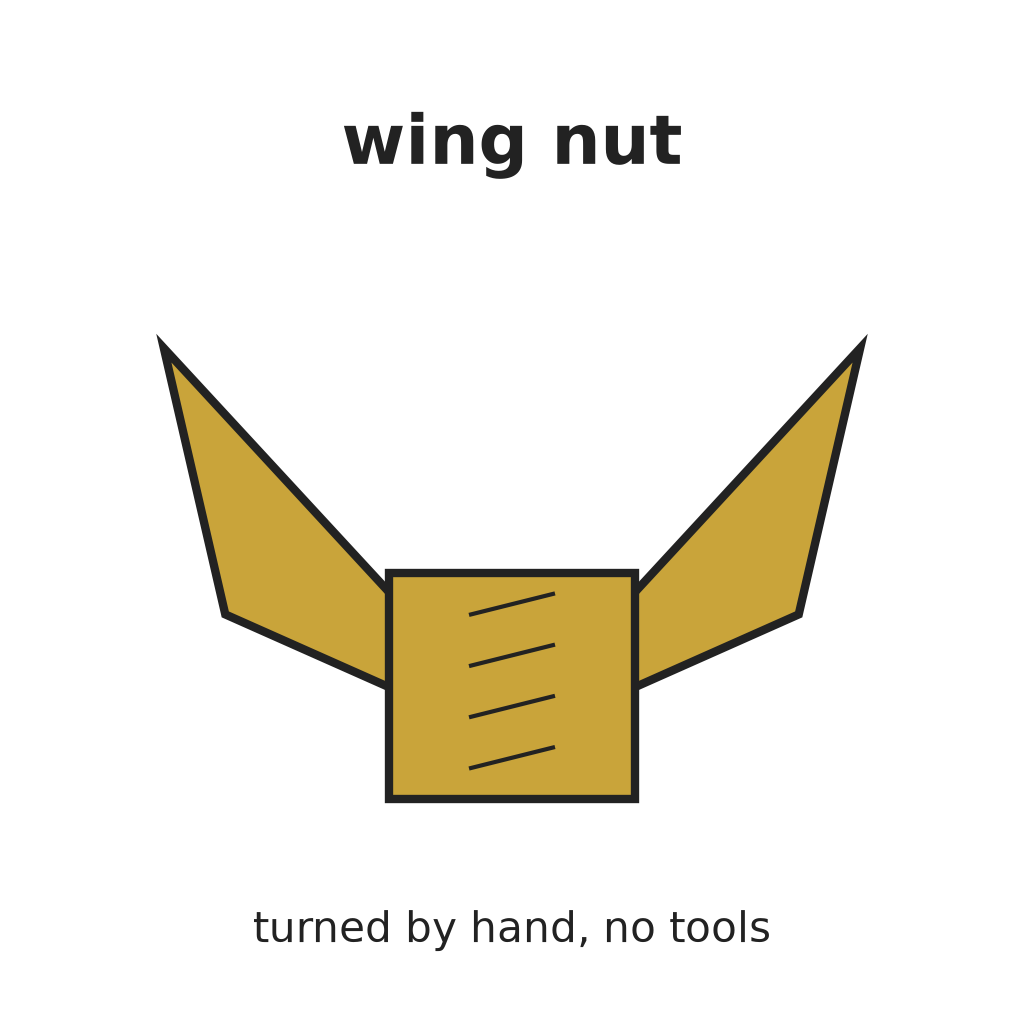
Screw a 6 mm steel plate under each rail's projecting end, drilled and tapped M12. Run a 150 mm M12 threaded rod up through each, with a wing nut locked on its lower end as a handle. The rear pair 156 push up under the members' rear ends 22, lifting members and top on the front hinges 19: this sets the rip saw. The front pair 157 pass through holes 58 in the members and push the top alone up on its rear hinges 23: this sets the crosscut saw.

Àwọn ohun èlò fún ìgbésẹ̀ yìí:

Ọ̀pá Pẹrẹsẹ Irin Pẹ́lẹ́Ọ̀pá Pẹrẹsẹ Irin Pẹ́lẹ́1 ẹyọ
Ọ̀pá oníṣọ̀kanỌ̀pá oníṣọ̀kan4 ẹyọ
Nọ́ọ̀tì apáNọ́ọ̀tì apá4 ẹyọ
Nọ́ọ̀tì Onígun Mẹ́fàNọ́ọ̀tì Onígun Mẹ́fà4 ẹyọ
Ìṣó igiÌṣó igi16 ẹyọ

Àwọn irinṣẹ́ tí a nílò:

Ayùn IrinAyùn Irin
Ẹ̀rọ Ìlùkòkò OnídúróẸ̀rọ Ìlùkòkò Onídúró
Àkójọ Orí ÌlùkòkòÀkójọ Orí Ìlùkòkò
Ìtò irinṣẹ́ ìgé iháÌtò irinṣẹ́ ìgé ihá
Ìdìmú ìyí ihá inúÌdìmú ìyí ihá inú
Kọ́kọ́rọ́ tí a lè ṣàtúnṣeKọ́kọ́rọ́ tí a lè ṣàtúnṣe
9

The guides

Crosscut guide: a hardwood bar 39 sliding in groove 35, with an angle fence 37 pivoted on it at 36 and clamped at any angle by a wing nut 40 through an arc slot 38. Rip guide: a bar 43 sliding in groove 42, held by a hand screw 49 through a plate 50, carrying a fence 45 hinged on a bracket 44 and tilted by a wing nut 67 in an arc slot 47.

Àwọn ohun èlò fún ìgbésẹ̀ yìí:

Pátákó Igi LílePátákó Igi Líle1 ẹyọ
Bọ́ọ̀tù orí róbótóBọ́ọ̀tù orí róbótó4 ẹyọ
Nọ́ọ̀tì apáNọ́ọ̀tì apá3 ẹyọ
Ọ̀pá Pẹrẹsẹ Irin Pẹ́lẹ́Ọ̀pá Pẹrẹsẹ Irin Pẹ́lẹ́1 ẹyọ

Àwọn irinṣẹ́ tí a nílò:

Ayùn JígísòAyùn Jígísò
Ẹ̀rọ Ìlùkòkò AláìlókùnẸ̀rọ Ìlùkòkò Aláìlókùn
Àkójọ Orí ÌlùkòkòÀkójọ Orí Ìlùkòkò
Igun Àpapọ̀Igun Àpapọ̀
10

The truck

Pivot two hardwood arms 60, 61 to the rear ends of the skids at 66, with a wheel 62 on the end of each beyond the pivot. Their front ends 63 are handles sliding in keepers 64 on the front uprights. With the handles down, the wheels are off the floor; lift the handles and the wheels take the weight so the saw can be wheeled away.

Àwọn ohun èlò fún ìgbésẹ̀ yìí:

Pátákó Igi LílePátákó Igi Líle2 ẹyọ
Àkójọ kẹ̀kẹ́ rọ́bàÀkójọ kẹ̀kẹ́ rọ́bà1 ẹyọ
Àkójọ bọ́ọ̀lù onígun mẹ́fàÀkójọ bọ́ọ̀lù onígun mẹ́fà4 ẹyọ
Ìṣó igiÌṣó igi8 ẹyọ

Àwọn irinṣẹ́ tí a nílò:

Ayùn JígísòAyùn Jígísò
Ẹ̀rọ Ìlùkòkò AláìlókùnẸ̀rọ Ìlùkòkò Aláìlókùn
Àkójọ Orí ÌlùkòkòÀkójọ Orí Ìlùkòkò
Kọ́kọ́rọ́ tí a lè ṣàtúnṣeKọ́kọ́rọ́ tí a lè ṣàtúnṣe
11

Try it

Wind both screw pairs down and check each blade stands square to the top and parallel to its groove. Set the rip saw's depth with the rear screws and the crosscut's with the front screws, each about 10 mm above the wood. Wearing glasses and ear defenders, rip a board along the rip guide, then cut the end off another against the crosscut guide.

Àwọn irinṣẹ́ tí a nílò:

Igun Àpapọ̀Igun Àpapọ̀
Okùn Ìdíwọ̀nOkùn Ìdíwọ̀n
Gíláàsì ààbòGíláàsì ààbò
Ààbò etí (ìbòjú etí, SNR 30 dB)Ààbò etí (ìbòjú etí, SNR 30 dB)
12

Troubleshooting

Twin-saw table troubleshooting.

Flow

Loading...
13

History and honest limits

**Charles Gottschalk** of St. Paul, Minnesota, US 1,584,028, dated 11 May 1926, filed 1 August 1921. He claimed a frame with two rails, longitudinal members hinged to the rails at one end, a single top hinged to them at the other, a crosscut saw at one end and a rip saw at the other through the top, and means to oscillate the members and top together, and the top alone, "so as to vary the relative depth of cut of either of said saws". He says a gasoline engine may drive it instead of the motor. His grooves are dovetailed; ours are square. He gives no sizes, speeds or sprocket sizes; all of those are ours.

Àwọn ohun-èlò

23

Àwọn irinṣẹ́ tó nílò

21

Ìtọ́nisọ́nà yìí ń ṣe

CC0 Àgbègbè Gbogbogbò

Blueprint yìí ti jáde lábẹ́ CC0. O lè ṣe àdàkọ, yí padà, pín, àti lò láìsí ìyọ̀ǹda.

Ṣàtìlẹ́yìn Olùṣẹ́dá nípa rírà àwọn ọjà nipasẹ̀ Blueprint wọn Ẹ̀san Olùṣẹ́dá tí àwọn Olùtajà gbé kalẹ̀, tàbí ṣẹ̀dá àtúnṣe tuntun ti Blueprint yìí kí o sì fi sínú Blueprint rẹ gẹ́gẹ́ bí ìsopọ̀ láti pín owó-wíwọlé.

Ìfọ̀rọ̀wérọ̀

(0)

Wọlé láti dara pọ̀ mọ́ ìfọ̀rọ̀wérọ̀

Ń gbé àwọn ọ̀rọ̀ wọlé...