IṢẸ́ ỌNÀ
ẸWÀ ÀTI ÌLERA
IṢẸ́ ỌWỌ́
ÀṢÀ ÀTI ÌTÀN
ÌṢERÉ
ÀYÍKÁ
OÚNJẸ ÀTI OHUN MÍMU
REVERSE ENGINEERING
SÁYẸ́ǸSÌ
ERÉ ÌDÁRAYÁ
ÌMỌ̀-Ẹ̀RỌ
ÀWỌN OHUN WÍWỌ̀
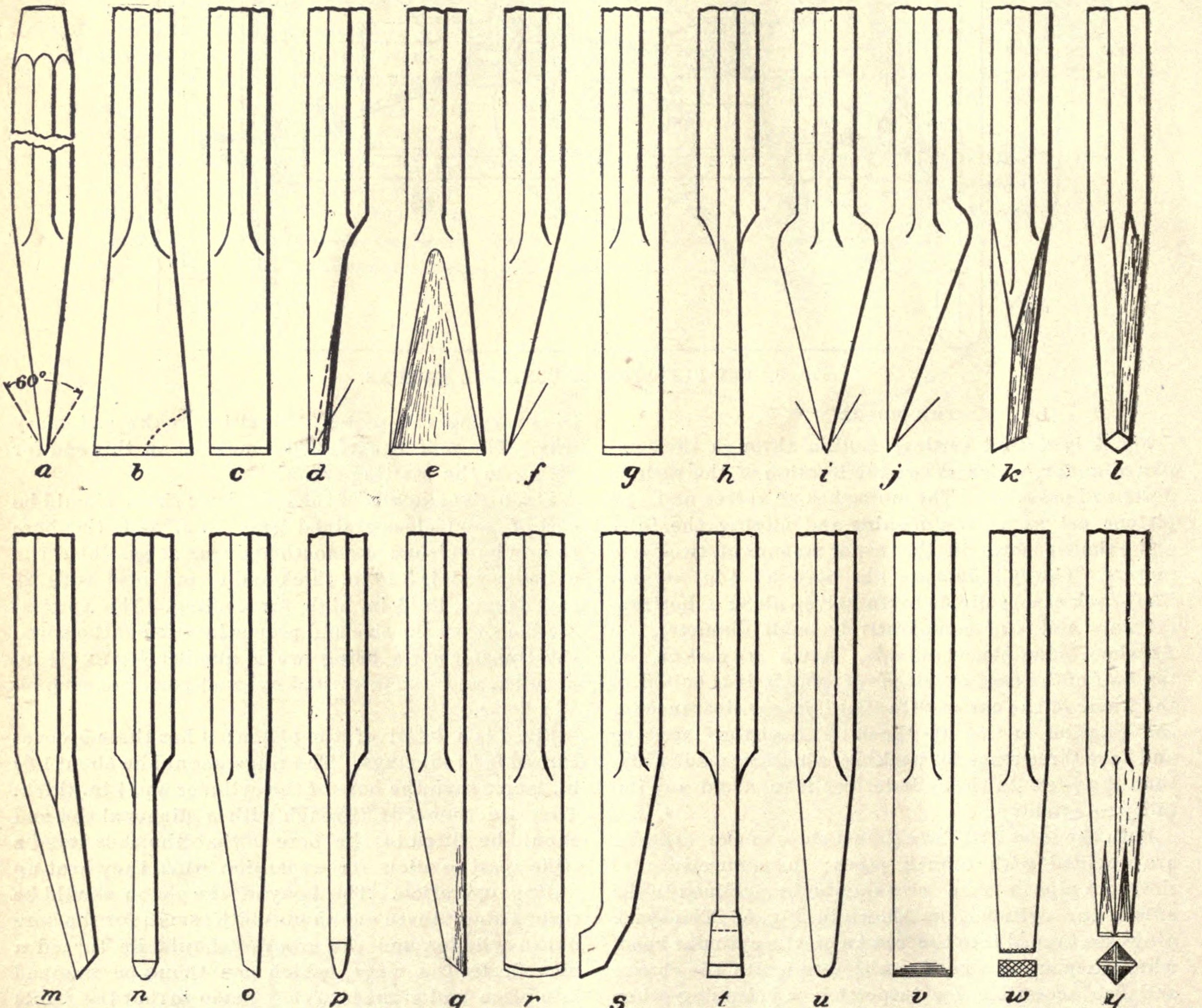


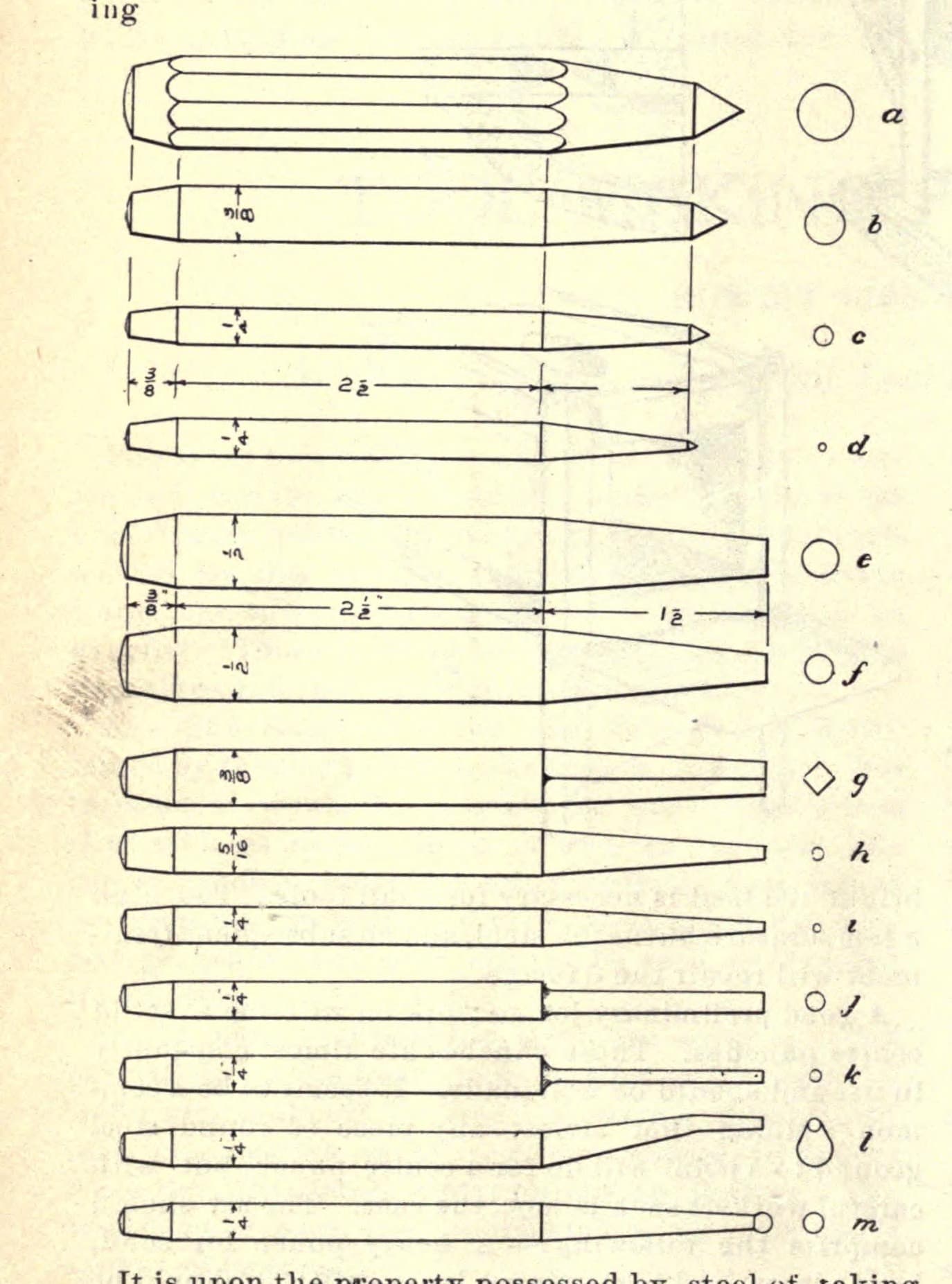
A Set of Cold Chisels: Flat, Gouge, Side, Cape, Diamond-Point and Round-Nose, Edge Hardened Only, Tempered Purple (Griswold, 1904)
Robert Gibson Griswold's working set of cold chisels from Amateur Work (Boston, 1904): octagonal tool steel or old files forged about 5 in. long, flat chisels 3/8 to 1 in. with a 60 degree edge, plus gouges, side, cape, diamond-point and round-nose chisels; only the last 1/8 in. of the edge hardened, tempered light purple for steel or dark purple for iron.
Àárín
Two or three days for the set
Ìlànà
1
1
His sizes
His sizes
Ń ṣí ìwé Jupyter…
2
2
Read Griswold
Read Griswold
"When the tool is forged the edge only must be hardened for about 1/8 in., the metal above being left softer to withstand the shock."
3
3
Forge the blanks
Forge the blanks
From octagonal tool steel (or old files) forge each chisel about 5 in. (127 mm) from head to edge with a gradual taper to the edge, and forge the head down so it does not broom. Forging steps are ours: forge at a bright red only, as in his part I.
Àwọn ohun èlò fún ìgbésẹ̀ yìí:
 Ọ̀pá onígun mẹ́jọ irin irinṣẹ́1 ẹyọ
Àwọn irinṣẹ́ tí a nílò:
 Ìléru alágbẹ̀dẹ
 Ìdí Alágbẹ̀dẹ
 Òòlù
 Ẹmú alágbẹ̀dẹ
4
4
Shape the edges
Shape the edges
Flat chisels 3/8, 1/2, 5/8 and 1 in. wide; gouges 1/4-5/8 in. with the bevel inside; side chisels 1/4, 3/8, 1/2 in. with the edge in one flat side; cape chisels 3/16 and 1/4 in. with the stock behind slightly thinner; a diamond point about 1/8 in. on the square (bent version for flat work); round-nose chisels, heavy and a long-tapered drawing chisel (his fig. 1).
Àwọn irinṣẹ́ tí a nílò:
Ìléru alágbẹ̀dẹÌdí Alágbẹ̀dẹÒòlù Àwọn Ìfá (Ìfá Ọwọ́)
5
5
Harden the edge only
Harden the edge only
Heat the edge and harden only about 1/8 in. (3 mm) of it in water, leaving the body softer: a chisel hard too far up cracks off on a line under a heavy blow.
Àwọn ohun èlò fún ìgbésẹ̀ yìí:
 Omi1 ẹyọ
Àwọn irinṣẹ́ tí a nílò:
Ìléru alágbẹ̀dẹẸmú alágbẹ̀dẹ Bàkẹ́ẹ̀tì
6
6
Temper purple
Temper purple
Brighten the edge with emery cloth and let the heat run the colour down: light purple (530 F) for chisels used on steel, dark purple (550 F) for cast and wrought iron; then cool.
Àwọn ohun èlò fún ìgbésẹ̀ yìí:
 Aṣọ emery1 ẹyọOmi1 ẹyọ
Àwọn irinṣẹ́ tí a nílò:
Bàkẹ́ẹ̀tì7
7
Grind
Grind
Grind the flat chisel edges to about 60 degrees (45-75: blunter for heavy work), keeping the edge from blueing.
Àwọn irinṣẹ́ tí a nílò:
 Ẹ̀rọ ìfá orí tábìlì
8
8
Troubleshooting
Troubleshooting
Cold chisel troubleshooting.
Flow
Loading...
9
9
History and honest limits
History and honest limits
From Robert Gibson Griswold, "Tool Making for Amateurs" II, **Amateur Work** (Boston), vol. III (1903-04), pp. 304-305 and fig. 1 (checked on the archive.org scan amateurwork03bostrich); temper temperatures from his part I table. Forging heats, metric figures and tools are ours.
Ìtọ́nisọ́nà yìí ń ṣe

Blueprint tó jọra
Àwọn blueprint wọ̀nyí pín ìmọ̀ — ọ̀nà, ohun-èlò tàbí ìlànà
CC0 Àgbègbè Gbogbogbò
Blueprint yìí ti jáde lábẹ́ CC0. O lè ṣe àdàkọ, yí padà, pín, àti lò láìsí ìyọ̀ǹda.
Ṣàtìlẹ́yìn Olùṣẹ́dá nípa rírà àwọn ọjà nipasẹ̀ Blueprint wọn Ẹ̀san Olùṣẹ́dá tí àwọn Olùtajà gbé kalẹ̀, tàbí ṣẹ̀dá àtúnṣe tuntun ti Blueprint yìí kí o sì fi sínú Blueprint rẹ gẹ́gẹ́ bí ìsopọ̀ láti pín owó-wíwọlé.