IṢẸ́ ỌNÀ
ẸWÀ ÀTI ÌLERA
IṢẸ́ ỌWỌ́
ÀṢÀ ÀTI ÌTÀN
ÌṢERÉ
ÀYÍKÁ
OÚNJẸ ÀTI OHUN MÍMU
REVERSE ENGINEERING
SÁYẸ́ǸSÌ
ERÉ ÌDÁRAYÁ
ÌMỌ̀-Ẹ̀RỌ
ÀWỌN OHUN WÍWỌ̀
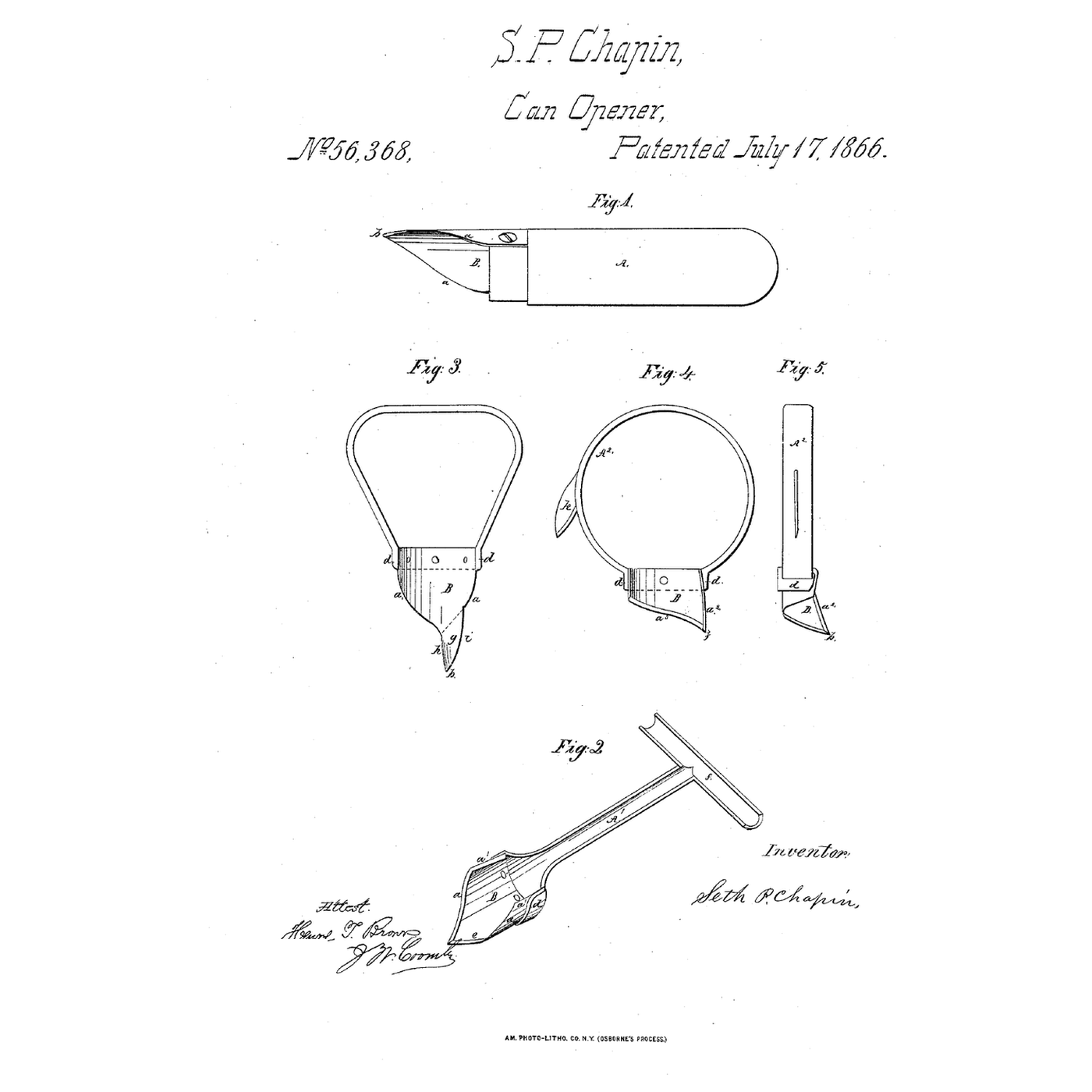


Half-Round Can Opener: Push the Cutter In and Twist
Opening a sardine box or tin with a flat knife takes many strokes and leaves a ragged edge.
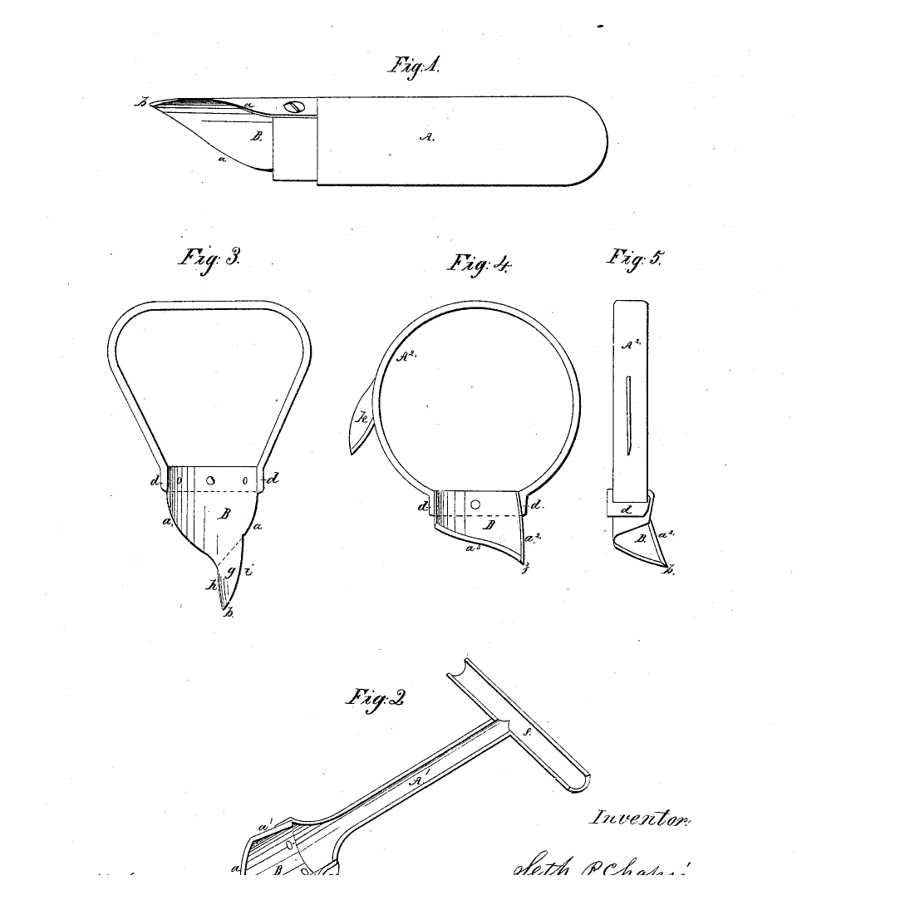
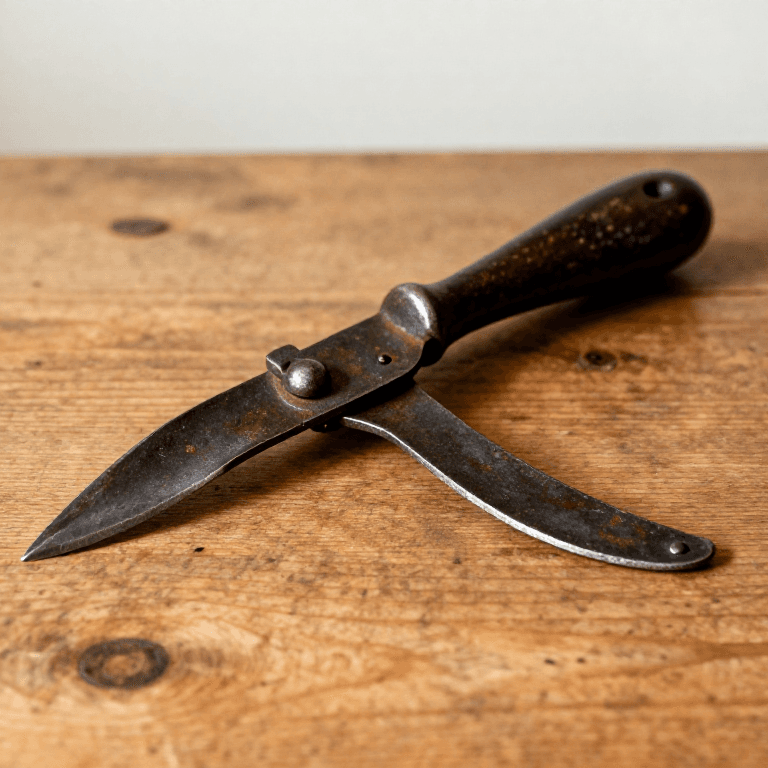
Seth P. Chapin of Atlantic, New Jersey, received US 56,368, dated 17 July 1866, for an implement for opening sheet-metal cans and boxes: a cutter semicircular in section with sloping edges to a point, bevelled inside, on a handle; forced in nearly to the handle and twisted, it cuts a circle the size of its own curve, and a guard at its top keeps it in position and stops it going too deep.
This rung works out how many twists a hole takes, then files the cutter from steel tube and opens a can.
Olùbẹ̀rẹ̀
About 2 hours
Ìlànà
1
1
Twists for a full circle
Twists for a full circle
Ń ṣí ìwé Jupyter…
2
2
A cutter turned round before it
A cutter turned round before it
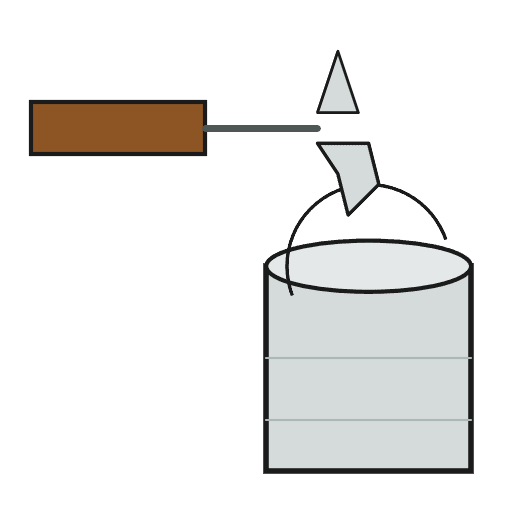
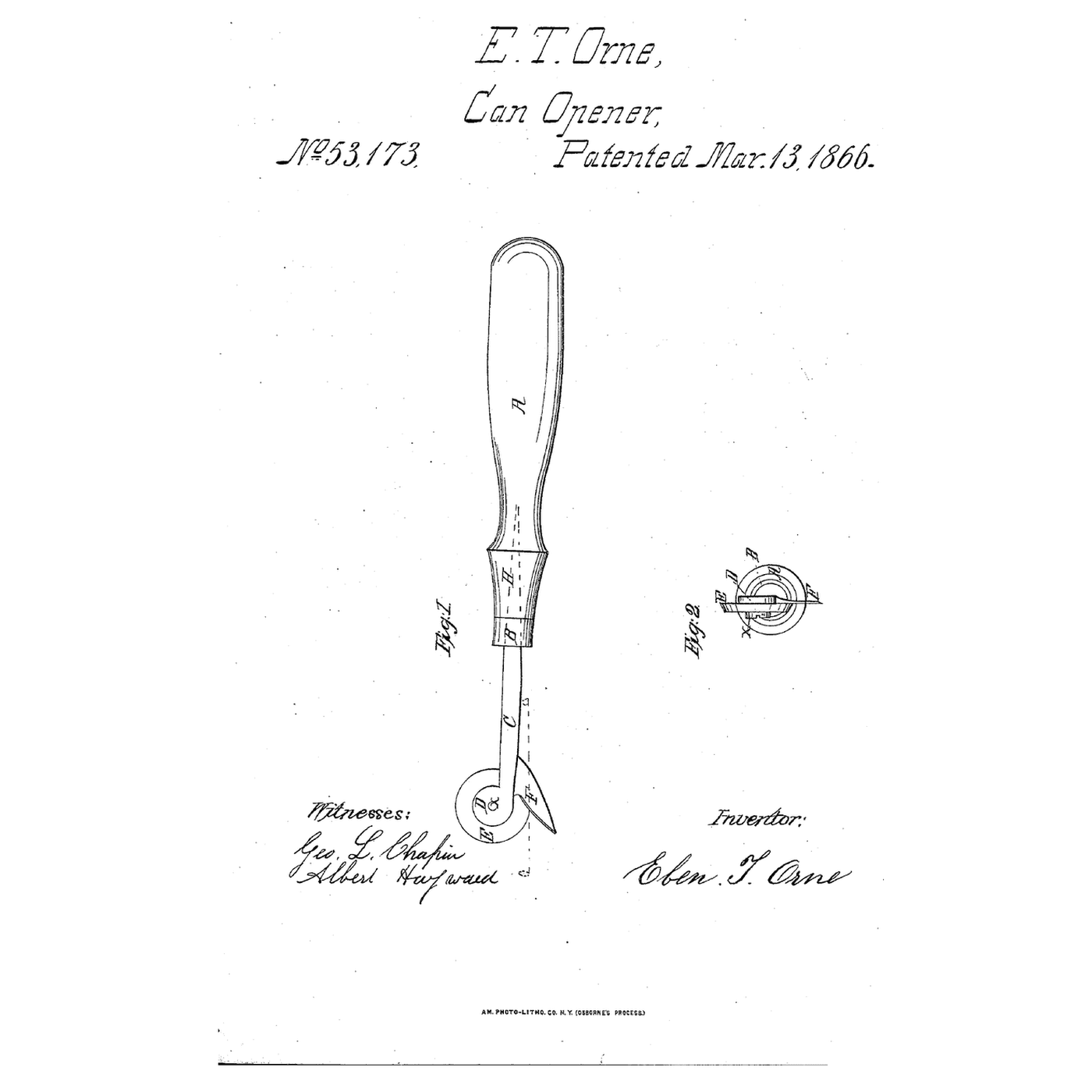
The embedded blueprint shears tin round a wheel. Chapin bends the blade into a half-tube so twisting it cuts a circle.
3
3
Read US 56,368
Read US 56,368
"The said edges a are beveled upon their inner side to make them sufficiently sharp, and the implement is used for cutting circular holes in the tin box by forcing it, point first, into and through the sheet metal nearly up to the end of the handle A, and then turning or twisting the cutter around by means of the said handle, which causes the foremost of the edges a to cut the thin metal in a circular line corresponding to the circle of which the back or convex side of the cutter forms an arc."
4
4
Cut the half tube
Cut the half tube
Cut 45 mm of 25 mm steel tube and saw it in half lengthwise. Keep one half.
Àwọn ohun èlò fún ìgbésẹ̀ yìí:
 Páìpù irin ilé1 ẹyọ
Àwọn irinṣẹ́ tí a nílò:
 Ayùn Irin
 Ìdìmú Tábìlì
 Ààmì Tí Kò Ní Parẹ́
 Ìdíwọ̀n
5
5
Shape the point
Shape the point
File both long edges to slope in to a point at one end, over the last 25 mm. Bevel them inside with a round needle file and hone.
Àwọn irinṣẹ́ tí a nílò:
 Àwọn Ìfá (Ìfá Ọwọ́)
 Àkójọ Ìfá Kékeré
 Òkúta ìpọ́nÌdìmú Tábìlì
 Gílásì Ààbò Tí Ó Mọ́
6
6
Guard and handle
Guard and handle
Epoxy a large flat washer across the cutter's top as the guard, and a hardwood handle above it.
Àwọn ohun èlò fún ìgbésẹ̀ yìí:
 Wáṣà Pẹrẹsẹ1 ẹyọ
 Àwọn dowel igi líle1 ẹyọ
 Ẹpọ́ksì Ẹ̀yà Méjì1 ẹyọ
Àwọn irinṣẹ́ tí a nílò:
 Bébà Ìfá
7
7
The build in 3D
The build in 3D
FreeCAD model of this build, not of the patent: a 25 mm half-tube cutter with sloping edges to a point, the washer guard and the hardwood handle.
8
8
Twist out a hole
Twist out a hole
Stand a sealed can on the kitchen scale. Force the point through the top until the guard meets it, then twist round; count the twists, read the peak load and measure the hole.
Àwọn ohun èlò fún ìgbésẹ̀ yìí:
 Ìgò irin1 ẹyọ
Àwọn irinṣẹ́ tí a nílò:
 Òṣùwọ̀n Díjítà Ilé Ìdáná
 Òṣùwọ̀n Kálípà Díjítà Ìnṣì 6
 Aago Ìdúró
 Ìbọ̀wọ́ Iṣẹ́ Awọ
9
9
A cutter that will not enter, wanders or jams
A cutter that will not enter, wanders or jams
Half-round can opener troubleshooting.
Flow
Loading...
10
10
History and honest limits
History and honest limits
**Seth P. Chapin** of Atlantic, Monmouth County, New Jersey, received US 56,368, dated 17 July 1866, for opening tin or other sheet-metal boxes in circles or straight or irregular lines. Widened at its widest part, the cutter cuts a larger part of a circle or oval at one thrust, leaving a piece easily bent over; another form has one edge flattened for sardine boxes, and a metal handle with a cross-piece for turning. Wyman's 1868 patent names it.
**Honest limits.** A washer stands in for his guard, and the tube is unhardened. Your twist counts are the result.
Àwọn ohun-èlò
5- 1 ẹyọÀyè
- 1 ẹyọÀyè
- 1 ẹyọÀyè
- 1 ẹyọÀyè
- 1 ẹyọÀyè
Àwọn irinṣẹ́ tó nílò
13- Àyè
- Àyè
- Àyè
- Àyè
- Àyè
- Àyè
Àwọn fáìlì àpẹrẹ
1Ìtọ́nisọ́nà yìí ń ṣe
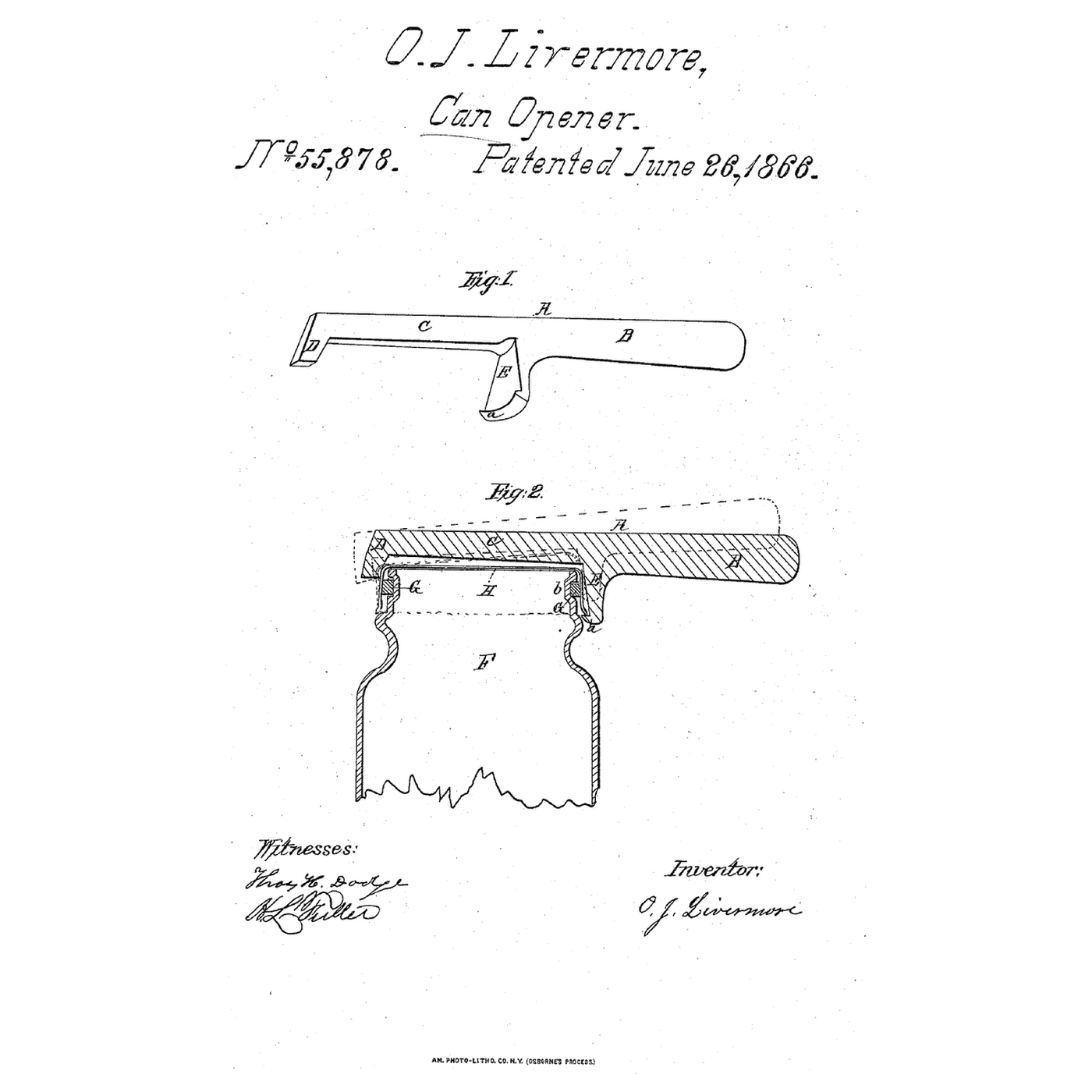
Blueprint tó jọra
Àwọn blueprint wọ̀nyí pín ìmọ̀ — ọ̀nà, ohun-èlò tàbí ìlànà


CC0 Àgbègbè Gbogbogbò
Blueprint yìí ti jáde lábẹ́ CC0. O lè ṣe àdàkọ, yí padà, pín, àti lò láìsí ìyọ̀ǹda.
Ṣàtìlẹ́yìn Olùṣẹ́dá nípa rírà àwọn ọjà nipasẹ̀ Blueprint wọn Ẹ̀san Olùṣẹ́dá tí àwọn Olùtajà gbé kalẹ̀, tàbí ṣẹ̀dá àtúnṣe tuntun ti Blueprint yìí kí o sì fi sínú Blueprint rẹ gẹ́gẹ́ bí ìsopọ̀ láti pín owó-wíwọlé.