
IṢẸ́ ỌNÀ
ẸWÀ ÀTI ÌLERA
IṢẸ́ ỌWỌ́
ÀṢÀ ÀTI ÌTÀN
ÌṢERÉ
ÀYÍKÁ
OÚNJẸ ÀTI OHUN MÍMU
REVERSE ENGINEERING
SÁYẸ́ǸSÌ
ERÉ ÌDÁRAYÁ
ÌMỌ̀-Ẹ̀RỌ
ÀWỌN OHUN WÍWỌ̀
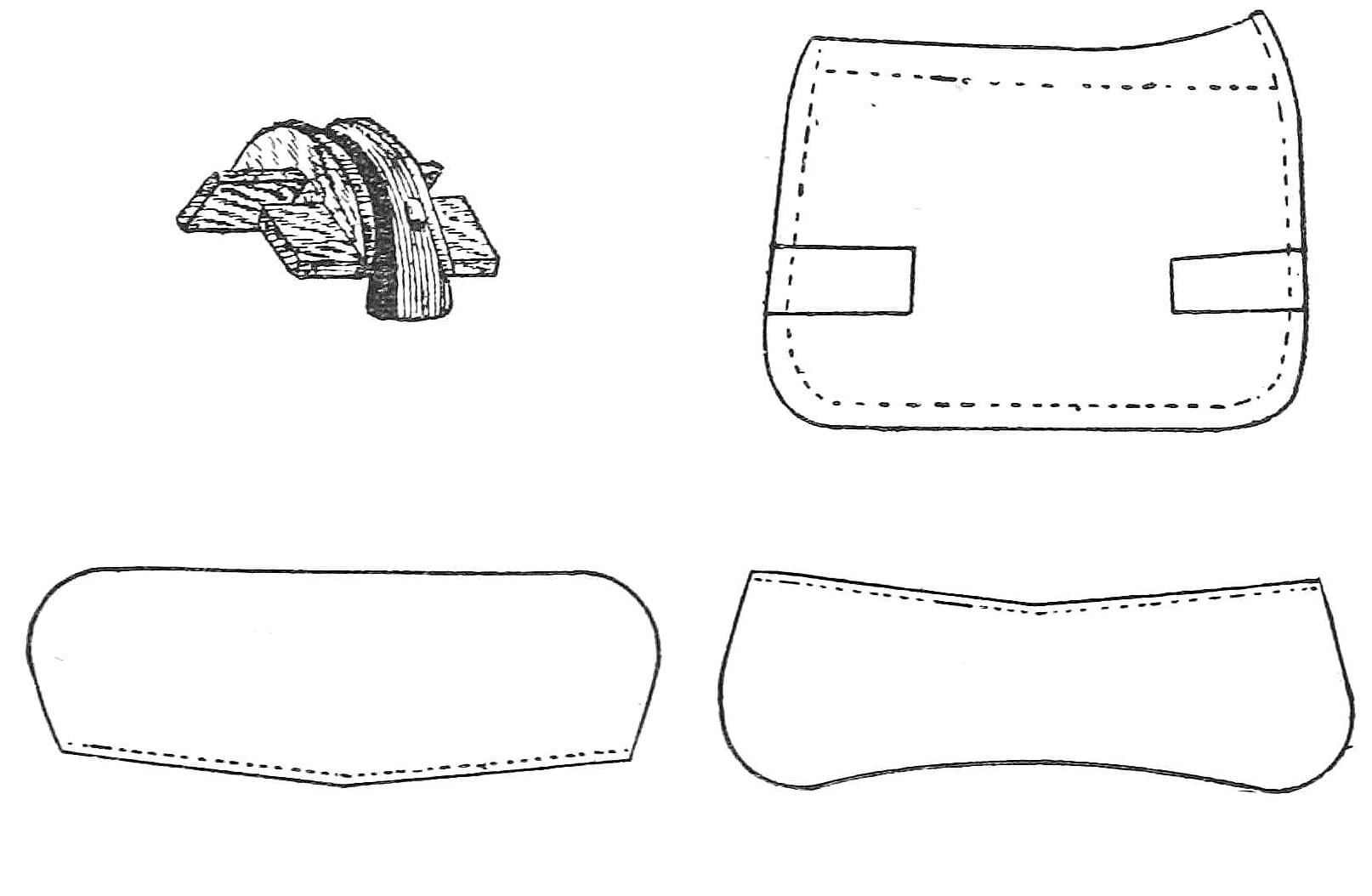
Cart Crupper, Breeching, Belly-Band and Straps (Hasluck, Harness Making, 1904)
Tex

Ṣẹ́dá nipasẹ̀

Tex

13. Oṣù Kọkànlá 2026FO
9
0
0
0
0

Cart Crupper, Breeching, Belly-Band and Straps (Hasluck, Harness Making, 1904)

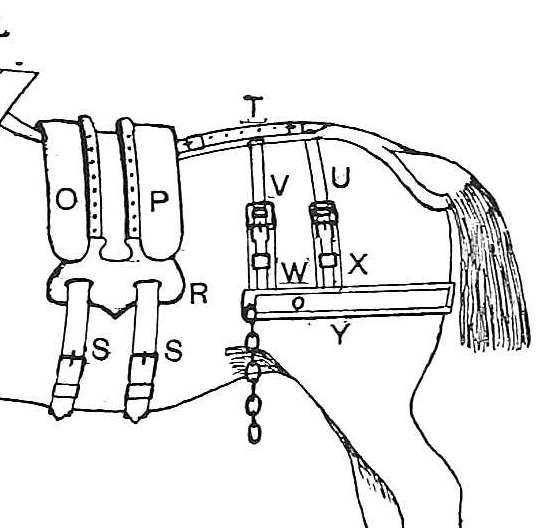
The rest of a cart harness, from Paul N. Hasluck's Harness Making (1904): the crupper that runs from the saddle under the tail, the breeching round the hindquarters with its tugs and loin straps, the belly-band, hame straps and a leading rein. All sizes are his. With the bridle, collar and cart saddle it completes the set.
Ilọsíwájú
About 3 days

Ìlànà

1

Cutting list

Ń ṣí ìwé Jupyter…
2

Read Harness Making, ch. VII

"To make the breeching, cut the body, if possible, 7 ft. 4 in. long and about 4 in. wide. Turn it down to 4 ft. 10 in. long, the strong end less than the weak."
3

Cut the crupper body and dock

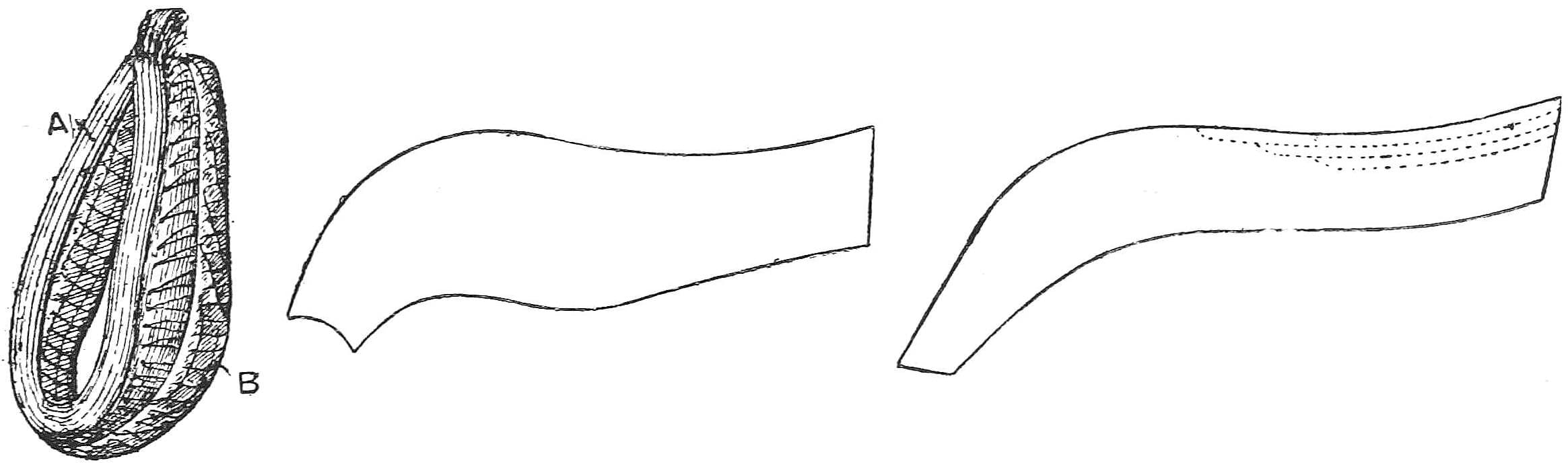
Cut the body 2 ft 6 in or 2 ft 8 in long and 3½ to 4 in wide; cut a semicircle in the centre from the weak end, leaving a point about ¾ in wide each side, and cut an 8 in piece to line this end. Cut a piece ⅞ in wide and 8½ in long, shave its ends, and stitch it edge to edge into a round to within 1½ in of each end, with a cord or strip of leather inside; rub it round, blacken it and flatten both ends with a hammer.

Àwọn ohun èlò fún ìgbésẹ̀ yìí:

Awọ ohun èlò ẹṣinAwọ ohun èlò ẹṣin1 ẹyọ
Okùn Hẹ́ǹpùOkùn Hẹ́ǹpù1 ẹyọ
Òwú awọÒwú awọ1 ẹyọ
Aró awọAró awọ1 ẹyọ

Àwọn irinṣẹ́ tí a nílò:

Ọ̀bẹ awọỌ̀bẹ awọ
Abẹ́rẹ́ ìránṣọ awọ méjìAbẹ́rẹ́ ìránṣọ awọ méjì
Ọ̀kọ̀ ÌlùhòỌ̀kọ̀ Ìlùhò
Òòlù oníkànnìÒòlù oníkànnì
4

Finish the crupper body

Point the square end, reducing it to about 2 in. Race it along the sides and ends, edge and black it, and run a hot iron over the creases. Prick it about nine per inch as far as the lining reaches from the semicircle. Put the ends of the round piece under the points, one each side, the lining under them, and stitch all round and across the points with three-cord black-wax thread; trim, black and rub the edges.

Àwọn ohun èlò fún ìgbésẹ̀ yìí:

Òwú awọÒwú awọ1 ẹyọ
Aró awọAró awọ1 ẹyọ

Àwọn irinṣẹ́ tí a nílò:

Ọ̀bẹ awọỌ̀bẹ awọ
Kọ́ńpáàsì oníṣẹ́ gàárìKọ́ńpáàsì oníṣẹ́ gàárì
Ohun èlò ìbẹ etíOhun èlò ìbẹ etí
Irin ìtẹ̀ onígun oníṣẹ́ gàárìIrin ìtẹ̀ onígun oníṣẹ́ gàárì
Ọ̀pá Iná PùróféènìỌ̀pá Iná Pùróféènì
Ìlà ìrán awọÌlà ìrán awọ
Ọ̀kọ̀ ÌlùhòỌ̀kọ̀ Ìlùhò
Abẹ́rẹ́ ìránṣọ awọ méjìAbẹ́rẹ́ ìránṣọ awọ méjì
Ìmú igi fún ríran awọÌmú igi fún ríran awọ
5

Make the crupper lay

Cut the lay 1 in narrower than the body and 3 ft long; turn in 10 in at the strong end and beat it flat. Turn the other end down 2 in and cut it slanting to 1½ in for a buckle, with a buckle hole. Mark cross lines 2 in from the broad point, ¼ in from the end of the bend underneath, and 2½ in from that toward the buckle. Edge the top only, crease two lines and hot-iron them, with inner lines about ¼ in in. Leave two openings for the hip straps, one in the bend and one in the middle; black and prick the stitched parts. Fix the buckle, lay it on the centre of the body with the broad end reaching the edge of the semicircle, tack and stitch, spotting the three cross lines.

Àwọn ohun èlò fún ìgbésẹ̀ yìí:

Awọ ohun èlò ẹṣinAwọ ohun èlò ẹṣin1 ẹyọ
Bọ́ọ̀kù irin onílahùnBọ́ọ̀kù irin onílahùn1 ẹyọ
Òwú awọÒwú awọ1 ẹyọ
Aró awọAró awọ1 ẹyọ

Àwọn irinṣẹ́ tí a nílò:

Ọ̀bẹ awọỌ̀bẹ awọ
Ohun èlò ìbẹ etíOhun èlò ìbẹ etí
Ohun èlò ìkáOhun èlò ìká
Irin ìtẹ̀ onígun oníṣẹ́ gàárìIrin ìtẹ̀ onígun oníṣẹ́ gàárì
Ohun èlò ìlu ihò awọOhun èlò ìlu ihò awọ
Ìlà ìrán awọÌlà ìrán awọ
Ọ̀kọ̀ ÌlùhòỌ̀kọ̀ Ìlùhò
Abẹ́rẹ́ ìránṣọ awọ méjìAbẹ́rẹ́ ìránṣọ awọ méjì
6

Pad the crupper and fit its strap

Cut thick felt as wide as the body, from the point of the semicircle to 2 in beyond the cross line near the buckle; cover it with basil, coarse-stitch it along the centre, turn the ends over and fasten them, and stitch it in place next the body with four or five stitches here and there, well secured at each corner. Cut a hole through the body opposite the buckle, 1½ in wide. Make a strap 9 in long, pointed one end and shaved the other, crease, black and stitch its shaved end to the narrow end of the body; it goes round the saddle's dock and up through the hole to the buckle on the lay.

Àwọn ohun èlò fún ìgbésẹ̀ yìí:

Aṣọ irun àgùtàn tí a lẹ̀Aṣọ irun àgùtàn tí a lẹ̀1 ẹyọ
Awọ àgùntàn (basil)Awọ àgùntàn (basil)1 ẹyọ
Awọ ohun èlò ẹṣinAwọ ohun èlò ẹṣin1 ẹyọ
Òwú awọÒwú awọ1 ẹyọ
Aró awọAró awọ1 ẹyọ

Àwọn irinṣẹ́ tí a nílò:

Ọ̀bẹ awọỌ̀bẹ awọ
Ohun èlò ìlu ihò awọOhun èlò ìlu ihò awọ
Ọ̀kọ̀ ÌlùhòỌ̀kọ̀ Ìlùhò
Abẹ́rẹ́ ìránṣọ awọ méjìAbẹ́rẹ́ ìránṣọ awọ méjì
7

Make the breeching body

Cut the body 7 ft 4 in x about 4 in and turn it down to 4 ft 10 in, the strong end less than the weak; edge, black and crease two rows along the edges. Mark a cross line about 1½ in from the centre of the bend each side, and at each end. Line the bend with 1 ft pieces bent flesh outward, one end about 1 in shorter; prick, tack and stitch row to row to make the eye for the bridgeband pin. Trim, blacken and rub the bend with tallow and bone; beat it with a wooden mallet if hard, and stitch the double part along ends and sides.

Àwọn ohun èlò fún ìgbésẹ̀ yìí:

Awọ ohun èlò ẹṣinAwọ ohun èlò ẹṣin1 ẹyọ
Òwú awọÒwú awọ1 ẹyọ
Aró awọAró awọ1 ẹyọ
Ọ̀rá ẸranỌ̀rá Ẹran1 ẹyọ

Àwọn irinṣẹ́ tí a nílò:

Ọ̀bẹ awọỌ̀bẹ awọ
Ohun èlò ìbẹ etíOhun èlò ìbẹ etí
Ohun èlò ìkáOhun èlò ìká
Ìlà ìrán awọÌlà ìrán awọ
Ọ̀kọ̀ ÌlùhòỌ̀kọ̀ Ìlùhò
Abẹ́rẹ́ ìránṣọ awọ méjìAbẹ́rẹ́ ìránṣọ awọ méjì
Egungun ìká bébàEgungun ìká bébà
Òòlù IgiÒòlù Igi
8

Put on the breeching lay

Cut the lay the same length and 1 in narrower; edge, crease and black it, run another line ¼ in inside the crease, prick the two inner lines nine to the inch and turn it down at both ends as the body. Tack it on the centre of the body, light end against heavy end, and stitch end to end to the cross lines, bulging the cross stitching inward about 1 in at the middle. Punch a large hole where the stitches bulge and cut straight out each side for the chain to catch the pin. Cut a slot for the 1½ in tug 1 ft 4 in from each end.

Àwọn ohun èlò fún ìgbésẹ̀ yìí:

Awọ ohun èlò ẹṣinAwọ ohun èlò ẹṣin1 ẹyọ
Òwú awọÒwú awọ1 ẹyọ
Aró awọAró awọ1 ẹyọ

Àwọn irinṣẹ́ tí a nílò:

Ọ̀bẹ awọỌ̀bẹ awọ
Ohun èlò ìbẹ etíOhun èlò ìbẹ etí
Ohun èlò ìkáOhun èlò ìká
Ìlà ìrán awọÌlà ìrán awọ
Ohun èlò ìlu ihò awọOhun èlò ìlu ihò awọ
Ọ̀kọ̀ ÌlùhòỌ̀kọ̀ Ìlùhò
Abẹ́rẹ́ ìránṣọ awọ méjìAbẹ́rẹ́ ìránṣọ awọ méjì
9

Make the tugs and safes

Two hind tugs 1 ft 8 in long, 6 in turned down each end to meet; buckle hole in the weak end; black, crease, rub and prick them. Put the strong end up through the slot from underneath, joint in front under the loop, buckle on the other end; make a loop about 2½ in long round both thicknesses and pull it over the joint. Cut a safe for each from the breeching to an inch beyond the buckle and ½ in wider each side, narrowed and shaved at the bottom, rounded at the top with a loop; finish it on the 1½ in loop-stick, beat it flat and square, nail it from underneath with about five nails each side clinched on the loop-stick, and crease it again with a hot iron. Stitch the safes along the tugs. Make the front tugs for the bridgeband pins the same but shorter, so their length from the breeching equals the hind tugs; fit the pins with their nut and washer.

Àwọn ohun èlò fún ìgbésẹ̀ yìí:

Awọ ohun èlò ẹṣinAwọ ohun èlò ẹṣin1 ẹyọ
Bọ́ọ̀kù irin onílahùnBọ́ọ̀kù irin onílahùn4 ẹyọ
Ìṣó okùn ìdí ẹṣinÌṣó okùn ìdí ẹṣin2 ẹyọ
ÌṣóÌṣó1 ẹyọ
Òwú awọÒwú awọ1 ẹyọ
Aró awọAró awọ1 ẹyọ

Àwọn irinṣẹ́ tí a nílò:

Ọ̀bẹ awọỌ̀bẹ awọ
Ohun èlò ìlu ihò awọOhun èlò ìlu ihò awọ
Igi ìmọ òrùka awọIgi ìmọ òrùka awọ
Òòlù oníkànnìÒòlù oníkànnì
Irin ìtẹ̀ onígun oníṣẹ́ gàárìIrin ìtẹ̀ onígun oníṣẹ́ gàárì
Ọ̀pá Iná PùróféènìỌ̀pá Iná Pùróféènì
Ohun èlò ìkáOhun èlò ìká
Ìlà ìrán awọÌlà ìrán awọ
Ọ̀kọ̀ ÌlùhòỌ̀kọ̀ Ìlùhò
Abẹ́rẹ́ ìránṣọ awọ méjìAbẹ́rẹ́ ìránṣọ awọ méjì
Kọ́kọ́rọ́ tí a lè ṣàtúnṣeKọ́kọ́rọ́ tí a lè ṣàtúnṣe
10

Make the loin straps

Cut two loin straps 3 ft 8 in x 1½ in to fasten to the tugs and pass through the openings in the crupper; point each end, crease double each side, edge, black, hot-iron the creases and make six or seven holes in each end.

Àwọn ohun èlò fún ìgbésẹ̀ yìí:

Awọ ohun èlò ẹṣinAwọ ohun èlò ẹṣin1 ẹyọ
Aró awọAró awọ1 ẹyọ

Àwọn irinṣẹ́ tí a nílò:

Ọ̀bẹ awọỌ̀bẹ awọ
Ohun èlò ìbẹ etíOhun èlò ìbẹ etí
Ohun èlò ìkáOhun èlò ìká
Irin ìtẹ̀ onígun oníṣẹ́ gàárìIrin ìtẹ̀ onígun oníṣẹ́ gàárì
Ọ̀pá Iná PùróféènìỌ̀pá Iná Pùróféènì
Ohun èlò ìlu ihò awọOhun èlò ìlu ihò awọ
11

Make the leading rein and hame straps

Leading rein: a 1 in strap about 8 ft 6 in long in all, with a buckle and a billet 1 ft long at one end and a chain with a spring hook at the other; black and crease it and stitch on buckle, billet and chain. The chain goes through the near bit ring and hooks to the other ring; the billet fastens to the crupper. Hame straps: 1¼ in, about 1 ft 8 in long, buckle and loop at one end, the other pointed with holes.

Àwọn ohun èlò fún ìgbésẹ̀ yìí:

Awọ ohun èlò ẹṣinAwọ ohun èlò ẹṣin1 ẹyọ
Bọ́ọ̀kù irin onílahùnBọ́ọ̀kù irin onílahùn3 ẹyọ
Ẹ̀wọ̀n irinẸ̀wọ̀n irin1 ẹyọ
Ìkọ̀ oníspríngìÌkọ̀ oníspríngì1 ẹyọ
Òwú awọÒwú awọ1 ẹyọ
Aró awọAró awọ1 ẹyọ

Àwọn irinṣẹ́ tí a nílò:

Ọ̀bẹ awọỌ̀bẹ awọ
Ohun èlò ìkáOhun èlò ìká
Ohun èlò ìlu ihò awọOhun èlò ìlu ihò awọ
Ọ̀kọ̀ ÌlùhòỌ̀kọ̀ Ìlùhò
Abẹ́rẹ́ ìránṣọ awọ méjìAbẹ́rẹ́ ìránṣọ awọ méjì
12

Make the belly-band

Cut it 3 in wide and 3 ft 8 in long, narrowed to 2 in for 6 in at both ends, with a buckle hole about 3 in from the point. Make two billets 2 ft 2 in x 2 in and two loops about 1¾ in wide; edge, crease and black everything. Prick the billets six per inch for about 6 in from the shaved end, set the buckle with the billet lapping 3 in over it and the loop about 1 in from the buckle, tack and stitch with six-cord black-wax thread, twice waxed, with two or three stitches in the centre of each end. Open and crease the loops and make four holes in the billets.

Àwọn ohun èlò fún ìgbésẹ̀ yìí:

Awọ ohun èlò ẹṣinAwọ ohun èlò ẹṣin1 ẹyọ
Bọ́ọ̀kù irin onílahùnBọ́ọ̀kù irin onílahùn2 ẹyọ
Òwú awọÒwú awọ1 ẹyọ
Aró awọAró awọ1 ẹyọ

Àwọn irinṣẹ́ tí a nílò:

Ọ̀bẹ awọỌ̀bẹ awọ
Ohun èlò ìbẹ etíOhun èlò ìbẹ etí
Ohun èlò ìkáOhun èlò ìká
Ìlà ìrán awọÌlà ìrán awọ
Ohun èlò ìlu ihò awọOhun èlò ìlu ihò awọ
Ọ̀kọ̀ ÌlùhòỌ̀kọ̀ Ìlùhò
Abẹ́rẹ́ ìránṣọ awọ méjìAbẹ́rẹ́ ìránṣọ awọ méjì
Ìmú igi fún ríran awọÌmú igi fún ríran awọ
13

Troubleshooting

Crupper and breeching troubleshooting.

Flow

Loading...
14

History and honest limits

From **Harness Making**, edited by Paul N. Hasluck, Cassell and Company, 1904, chapter VII, "Cart Saddles, Reins, etc." (Project Gutenberg #70169). All sizes are his. Not made here: the iron-dee crupper he gives as a matter of taste, the ornamental breast-plate, the maker's-name stamp, and the final coat of "Harris's liquid or composition", a trade dressing. The heat source for the iron and the metric figures are ours.

Àwọn ohun-èlò

12

Àwọn irinṣẹ́ tó nílò

16

CC0 Àgbègbè Gbogbogbò

Blueprint yìí ti jáde lábẹ́ CC0. O lè ṣe àdàkọ, yí padà, pín, àti lò láìsí ìyọ̀ǹda.

Ṣàtìlẹ́yìn Olùṣẹ́dá nípa rírà àwọn ọjà nipasẹ̀ Blueprint wọn Ẹ̀san Olùṣẹ́dá tí àwọn Olùtajà gbé kalẹ̀, tàbí ṣẹ̀dá àtúnṣe tuntun ti Blueprint yìí kí o sì fi sínú Blueprint rẹ gẹ́gẹ́ bí ìsopọ̀ láti pín owó-wíwọlé.

Ìfọ̀rọ̀wérọ̀

(0)

Wọlé láti dara pọ̀ mọ́ ìfọ̀rọ̀wérọ̀

Ń gbé àwọn ọ̀rọ̀ wọlé...