IṢẸ́ ỌNÀ
ẸWÀ ÀTI ÌLERA
IṢẸ́ ỌWỌ́
ÀṢÀ ÀTI ÌTÀN
ÌṢERÉ
ÀYÍKÁ
OÚNJẸ ÀTI OHUN MÍMU
REVERSE ENGINEERING
SÁYẸ́ǸSÌ
ERÉ ÌDÁRAYÁ
ÌMỌ̀-Ẹ̀RỌ
ÀWỌN OHUN WÍWỌ̀
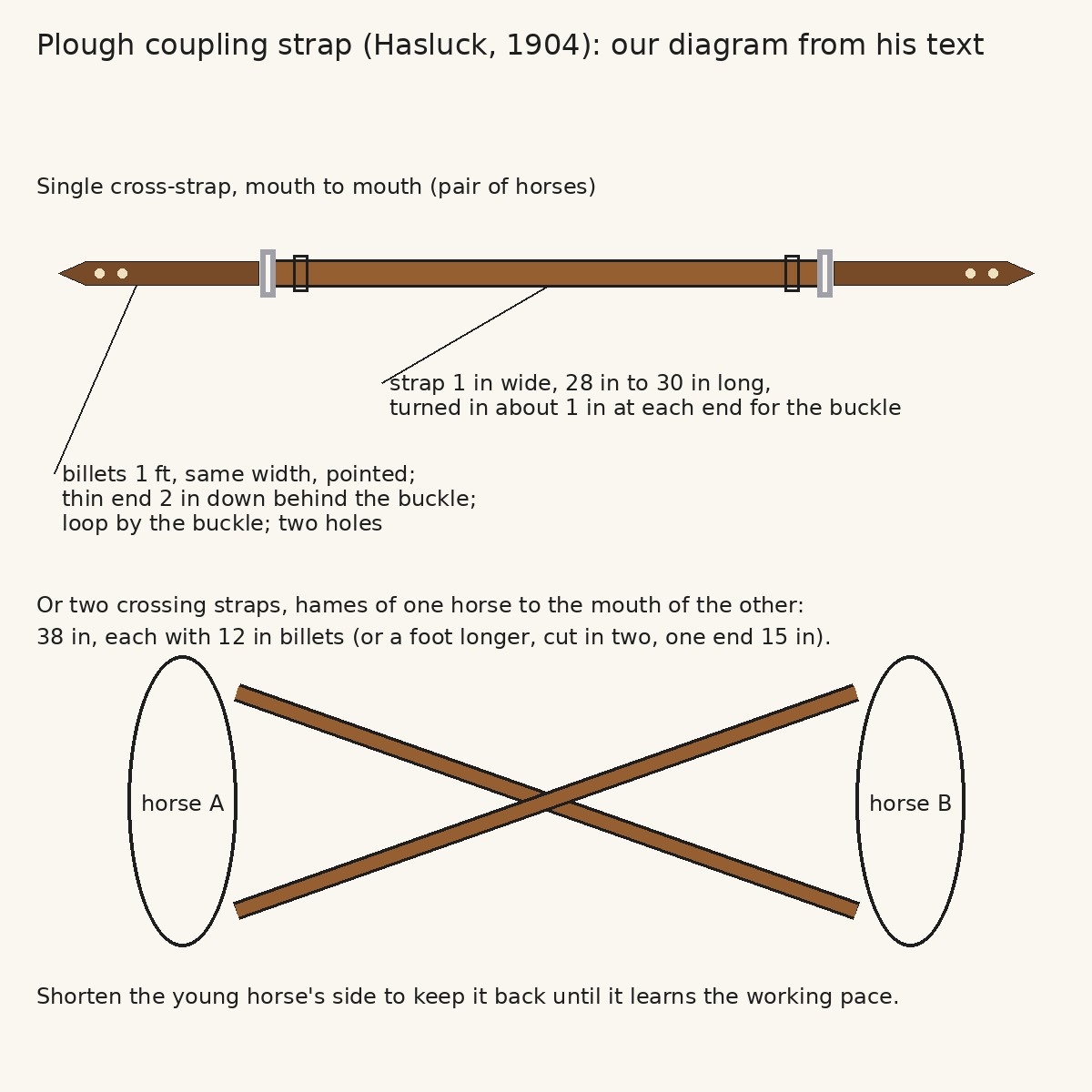


Plough Coupling Strap: Cross-Strap With Buckled Billets for a Pair of Horses (Hasluck, Harness Making, 1904)
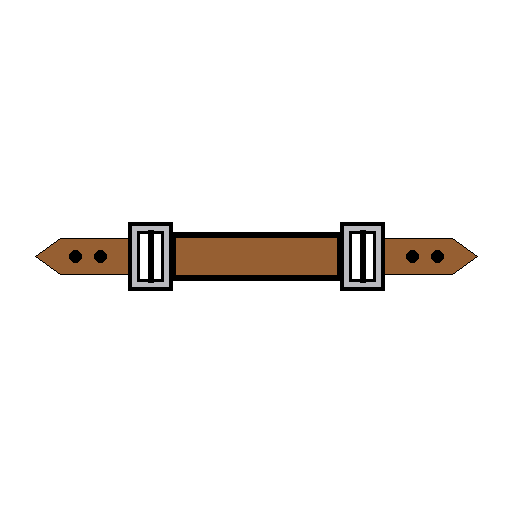
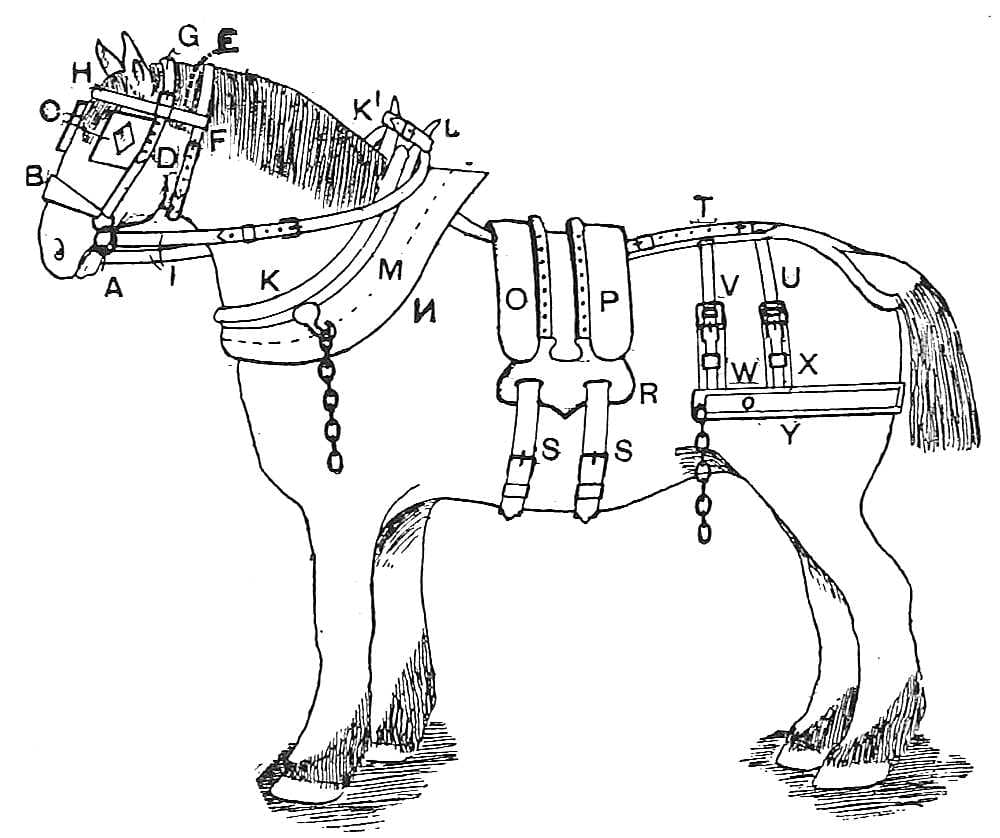
When two horses plough side by side, a coupling strap ties them together so they keep level. This is the coupling from Paul N. Hasluck's Harness Making (1904): a 1 in strap 28 in to 30 in long with a buckled billet at each end, buckled from the mouth of one horse to the other. Every size is his; the picture is our diagram.
Olùbẹ̀rẹ̀
About 2 hours
Ìlànà
1
1
His sizes in centimetres
His sizes in centimetres
Ń ṣí ìwé Jupyter…
2
2
Read Harness Making, ch. IX
Read Harness Making, ch. IX
"Couplings are also a necessary part of plough gear. In some localities only cross-straps are employed from mouth to mouth when ploughing in pairs."
3
3
Cut the strap
Cut the strap
Cut the strap 1 in wide and 28 in to 30 in long. Turn it in about 1 in at each end, make a hole for the buckle, and shave the points.
Àwọn ohun èlò fún ìgbésẹ̀ yìí:
 Awọ ohun èlò ẹṣin1 ẹyọ
Àwọn irinṣẹ́ tí a nílò:
 Ọ̀bẹ awọ
 Ohun èlò ìlu ihò awọ
 Okùn Ìdíwọ̀n
4
4
Make the billets
Make the billets
Cut two billets the same width, 1 ft long; trim them to a point at one end and shave the other. Edge them and crease them (the book prints "edge back, and crease them", probably for "edge, black").
Àwọn ohun èlò fún ìgbésẹ̀ yìí:
Awọ ohun èlò ẹṣin1 ẹyọ Aró awọ1 ẹyọ
Àwọn irinṣẹ́ tí a nílò:
Ọ̀bẹ awọ Ohun èlò ìbẹ etí
 Ohun èlò ìká
 Ọ̀pá Iná Pùróféènì
5
5
Put it together
Put it together
Put the buckle in, then the thin end of the billet 2 in down at the back of the buckle. Put a loop between the chape by the buckle, and stitch one billet and buckle at each end. Punch two holes in each billet.
Àwọn ohun èlò fún ìgbésẹ̀ yìí:
 Bọ́ọ̀kù irin onílahùn2 ẹyọAwọ ohun èlò ẹṣin1 ẹyọ
 Òwú awọ1 ẹyọ
 Ìdí Oyin1 ẹyọ
Àwọn irinṣẹ́ tí a nílò:
 Igi ìmọ òrùka awọ
 Ọ̀kọ̀ Ìlùhò
 Abẹ́rẹ́ ìránṣọ awọ méjì
 Ìmú igi fún ríran awọOhun èlò ìlu ihò awọ
6
6
Crossing couplings for a pair
Crossing couplings for a pair
Sometimes two coupling straps are used for a pair, crossing each other from the hames of each horse to the mouth of the other. Make them the same way but longer: 38 in, each with 12 in billets. Some are made a foot longer and cut in two, one end 15 in long with a buckle and loop and the other made to buckle on, with many holes. Then the coupling can be shortened on a young horse's side, to keep it back until it has learned the ordinary working pace.
Àwọn ohun èlò fún ìgbésẹ̀ yìí:
Awọ ohun èlò ẹṣin1 ẹyọBọ́ọ̀kù irin onílahùn4 ẹyọÒwú awọ1 ẹyọÌdí Oyin1 ẹyọÀwọn irinṣẹ́ tí a nílò:
Ọ̀bẹ awọIgi ìmọ òrùka awọỌ̀kọ̀ ÌlùhòAbẹ́rẹ́ ìránṣọ awọ méjìOhun èlò ìlu ihò awọOkùn Ìdíwọ̀n7
7
Troubleshooting
Troubleshooting
Coupling strap troubleshooting.
Flow
Loading...
8
8
History and honest limits
History and honest limits
From **Harness Making**, edited by Paul N. Hasluck, Cassell, 1904 (Project Gutenberg 70169), chapter IX, "Plough Harness", couplings, pp. 110-111; every figure was checked on the archive.org scan (harnessmaking00hasl). He gives no buckle size; a 1 in buckle suits the 1 in strap. The picture is our diagram from his text. The tools and metric figures are ours.
Àwọn ohun-èlò
5- 4 ẹyọÀyè
- 1 ẹyọÀyè
- Àyè
- 2 ẹyọÀyè
- 2 ẹyọÀyè
Ìtọ́nisọ́nà yìí ń ṣe
Blueprint tó jọra
Àwọn blueprint wọ̀nyí pín ìmọ̀ — ọ̀nà, ohun-èlò tàbí ìlànà
CC0 Àgbègbè Gbogbogbò
Blueprint yìí ti jáde lábẹ́ CC0. O lè ṣe àdàkọ, yí padà, pín, àti lò láìsí ìyọ̀ǹda.
Ṣàtìlẹ́yìn Olùṣẹ́dá nípa rírà àwọn ọjà nipasẹ̀ Blueprint wọn Ẹ̀san Olùṣẹ́dá tí àwọn Olùtajà gbé kalẹ̀, tàbí ṣẹ̀dá àtúnṣe tuntun ti Blueprint yìí kí o sì fi sínú Blueprint rẹ gẹ́gẹ́ bí ìsopọ̀ láti pín owó-wíwọlé.