IṢẸ́ ỌNÀ
ẸWÀ ÀTI ÌLERA
IṢẸ́ ỌWỌ́
ÀṢÀ ÀTI ÌTÀN
ÌṢERÉ
ÀYÍKÁ
OÚNJẸ ÀTI OHUN MÍMU
REVERSE ENGINEERING
SÁYẸ́ǸSÌ
ERÉ ÌDÁRAYÁ
ÌMỌ̀-Ẹ̀RỌ
ÀWỌN OHUN WÍWỌ̀
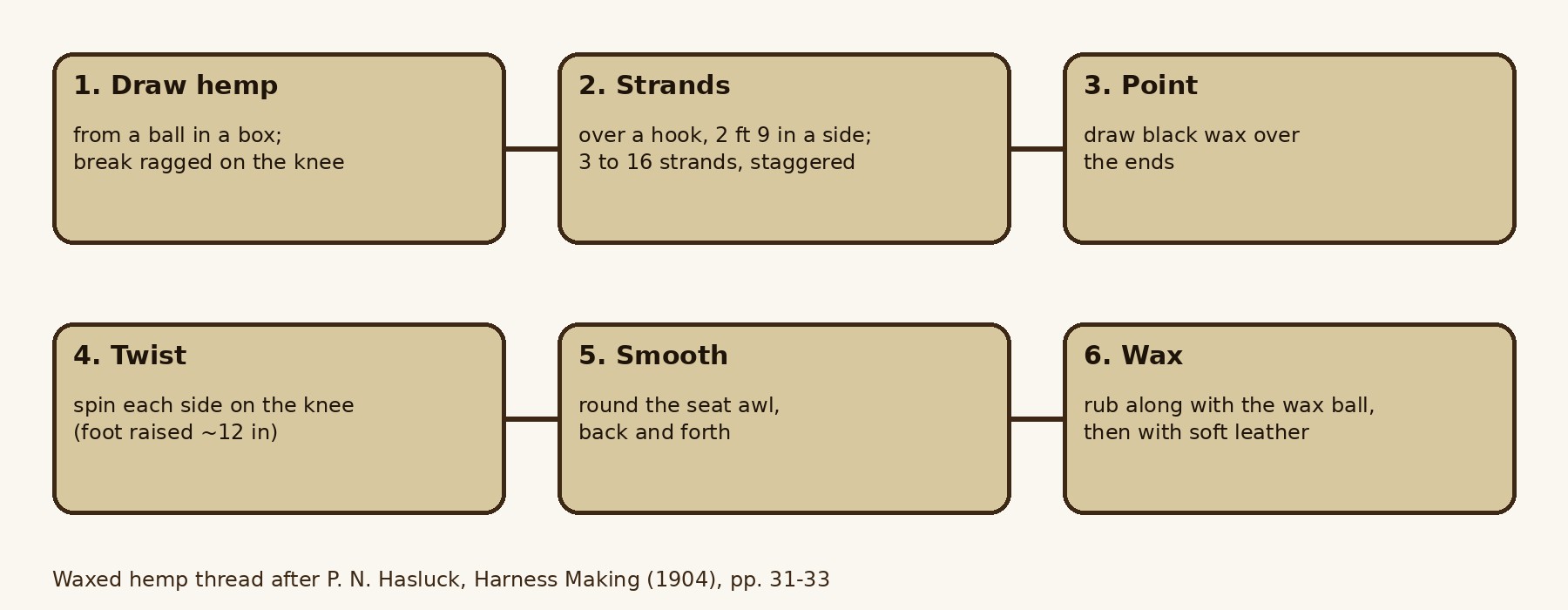


Saddler's Waxed Hemp Thread: Ragged-Pointed Strands Spun on the Knee and Rubbed With Black Wax (Hasluck, 1904)
How a harness maker makes his own waxed thread, from P. N. Hasluck's Harness Making (1904): strands of hemp broken to ragged points over a bench hook, 3 to 16 of them laid with staggered ends, each side twisted by rolling on the knee, smoothed round the seat-awl, and rubbed with black cobbler's wax (beeswax for light work).
Olùbẹ̀rẹ̀
About 15 minutes per thread
Ìlànà
1
1
Length and strands
Length and strands
Ń ṣí ìwé Jupyter…
2
2
Read Harness Making
Read Harness Making
"The threads used in the trade are many, but the principal is waxed thread, made by the saddler himself." White hemp is the best and toughest; fine No. 15 and coarse No. 3 meet most needs.
3
3
Cut the strands
Cut the strands
Keep the ball of hemp in a box with a small hole in the lid. Draw out the end, twist it once round the fingers, and break it by rolling on the knee and giving a sharp pull, so it breaks ragged (the more ragged, the better the point). Throw it over a nail or hook in the bench and pull until each side is about 2 ft 9 in, untwist by rolling on the knee and break again. Add strands the same way, 3 to 16 by the strength wanted, leaving the ends of unequal length for a fine point.
Àwọn ohun èlò fún ìgbésẹ̀ yìí:
 Hemp Yarn1 ẹyọ
Àwọn irinṣẹ́ tí a nílò:
 Àpótí Igi
4
4
Point and twist
Point and twist
Draw the ball of wax over the points two or three times to hold them together. Raise the knee about 12 in by resting the foot on a support, and spin each side by rolling it on the knee with the palm until twisted enough (too much and it knots in stitching). For best work, twist both sides once round the seat-awl and draw it sharply back and forth to smooth out lumps.
Àwọn ohun èlò fún ìgbésẹ̀ yìí:
 Ìda oníbàtà1 ẹyọ
Àwọn irinṣẹ́ tí a nílò:
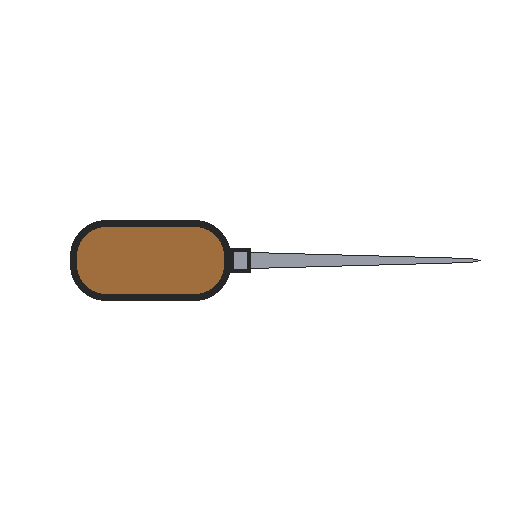 Seat Awl
5
5
Wax
Wax
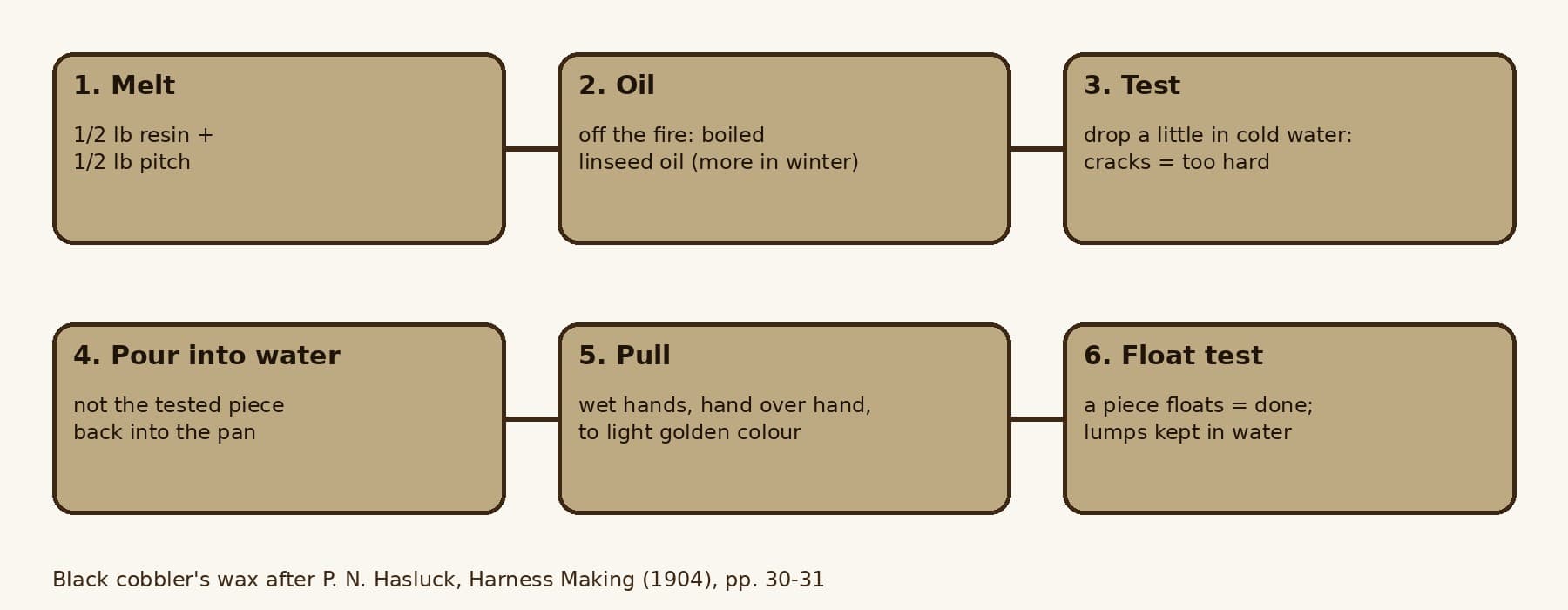
Rub the thread with tallow so the wax runs smooth. Holding both ends in the left hand, rub the ball of wax along the whole thread, pulling the part round the hook out to wax it too, then rub the thread sharply end to end with soft leather or the bare hand to even the wax. For yellow or white thread on light work use beeswax, but always point the ends with black wax: only black wax keeps the thread fast to the needles.
Àwọn ohun èlò fún ìgbésẹ̀ yìí:
Ìda oníbàtà1 ẹyọ Ọ̀rá Ẹran1 ẹyọ
 Ìdí Oyin1 ẹyọ
Àwọn irinṣẹ́ tí a nílò:
Seat Awl6
6
Troubleshooting
Troubleshooting
Thread troubleshooting.
Flow
Loading...
7
7
History and honest limits
History and honest limits
From Paul N. Hasluck, **Harness Making** (1904), "Harness-makers' Materials" (checked on the archive.org scan harnessmaking00hasl, pp. 29-33). The strand-use notes, metric figures and the diagram are ours.
Ìtọ́nisọ́nà yìí ń ṣe
Blueprint tó jọra
Àwọn blueprint wọ̀nyí pín ìmọ̀ — ọ̀nà, ohun-èlò tàbí ìlànà

CC0 Àgbègbè Gbogbogbò
Blueprint yìí ti jáde lábẹ́ CC0. O lè ṣe àdàkọ, yí padà, pín, àti lò láìsí ìyọ̀ǹda.
Ṣàtìlẹ́yìn Olùṣẹ́dá nípa rírà àwọn ọjà nipasẹ̀ Blueprint wọn Ẹ̀san Olùṣẹ́dá tí àwọn Olùtajà gbé kalẹ̀, tàbí ṣẹ̀dá àtúnṣe tuntun ti Blueprint yìí kí o sì fi sínú Blueprint rẹ gẹ́gẹ́ bí ìsopọ̀ láti pín owó-wíwọlé.