IṢẸ́ ỌNÀ
ẸWÀ ÀTI ÌLERA
IṢẸ́ ỌWỌ́
ÀṢÀ ÀTI ÌTÀN
ÌṢERÉ
ÀYÍKÁ
OÚNJẸ ÀTI OHUN MÍMU
REVERSE ENGINEERING
SÁYẸ́ǸSÌ
ERÉ ÌDÁRAYÁ
ÌMỌ̀-Ẹ̀RỌ
ÀWỌN OHUN WÍWỌ̀

Heat-Shrink Tubing
Paul Cook founded Raychem in 1957 to use radiation chemistry: electron beams that cross-link polyethylene chains so the plastic no longer melts, only softens. Such a material has a memory. Stretch it while hot, cool it stretched, and it keeps the new size until heated again - then it shrinks back tight onto whatever is inside.
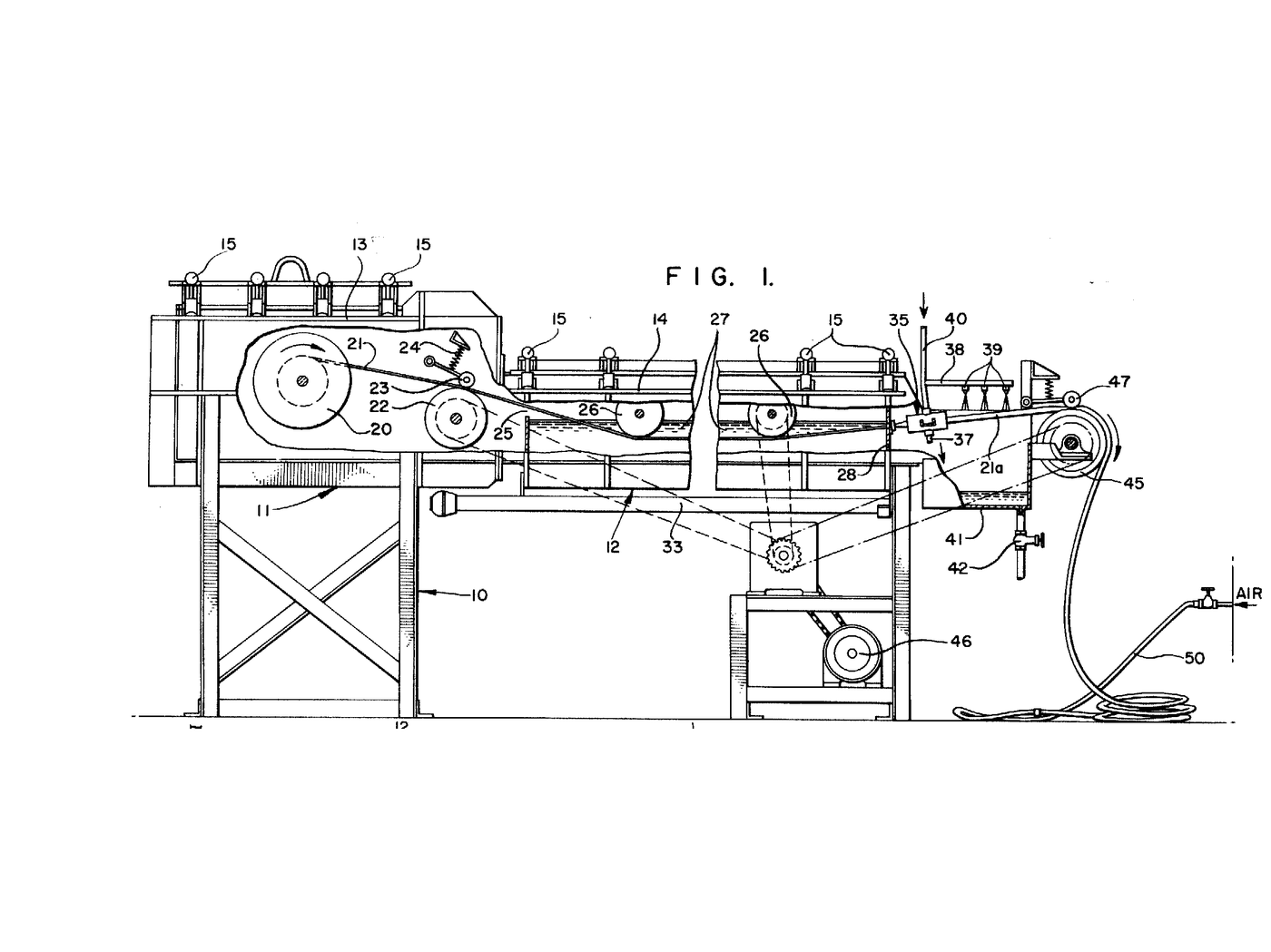
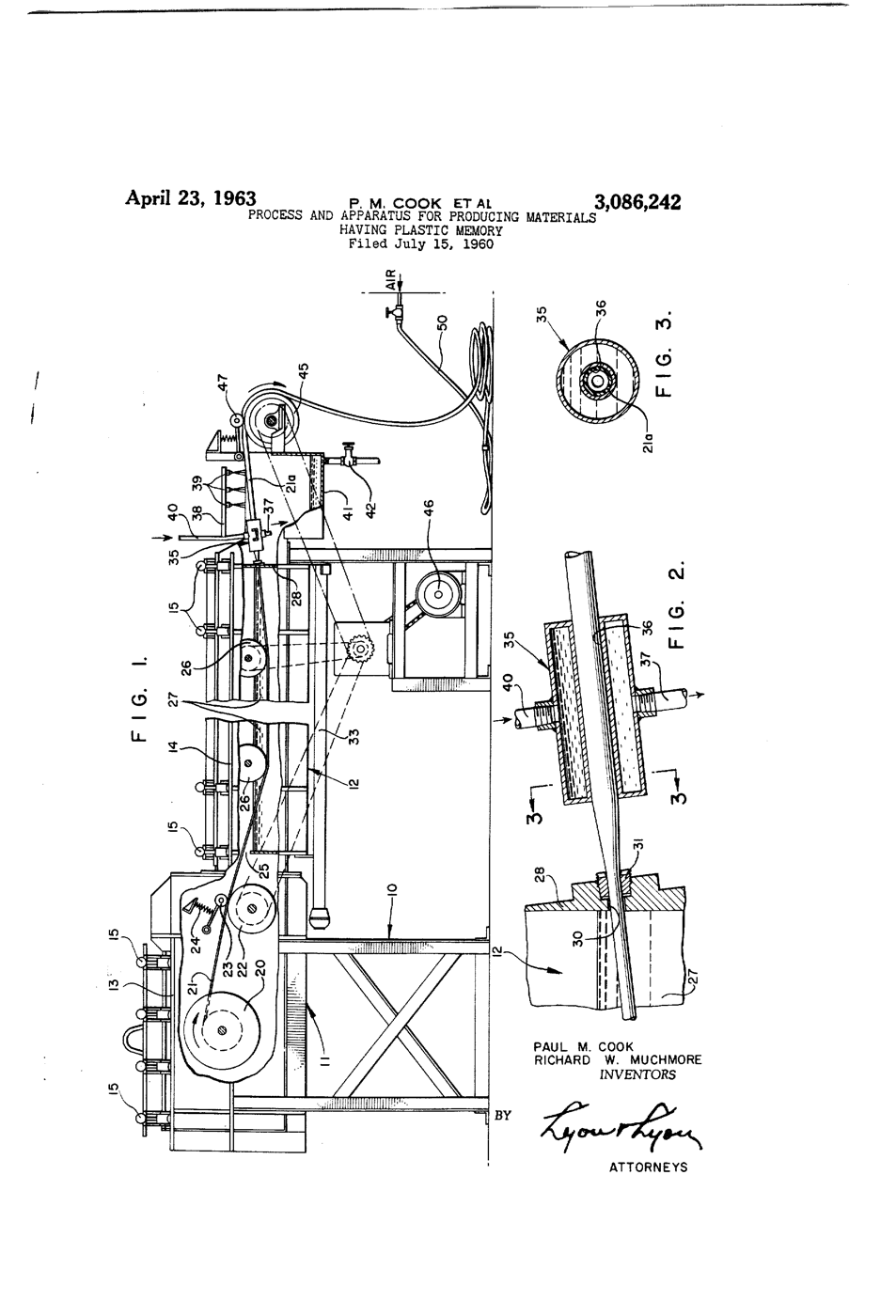
**US 3,086,242**, "Process and apparatus for producing materials having plastic memory", Cook and Muchmore, assigned to Raychem, filed 15. July 1960, granted 23. April 1963: tubing carried through a heated zone in a pressure vessel, expanded as it emerges, and cooled while expanded - "dimensionally heat-unstable tubing".
**You measure the memory and use it**: free-shrink a sample and check where the plastic went, then insulate a crimped wire splice.
Olùbẹ̀rẹ̀
1 hour
Ìlànà
1
1
Measure as supplied
Measure as supplied
Cut 40 mm of 2:1 heat-shrink. Measure its flattened width, its wall (pinch one wall in the caliper) and its length.
Àwọn ohun èlò fún ìgbésẹ̀ yìí:
 Tube tí ń hó pẹ̀lú ooru1 ẹyọ
Àwọn irinṣẹ́ tí a nílò:
 Ọ̀bẹ iṣẹ́
 Òṣùwọ̀n Kálípà Díjítà Ìnṣì 6
2
2
Shrink it free
Shrink it free
Hold it in the helping hands and heat evenly with the heat gun, keeping the gun moving, until it stops changing. Let it cool; measure inside diameter, wall and length again.
Àwọn irinṣẹ́ tí a nílò:
 Ìbọn atẹ́gùn gbígbóná
 Ọwọ́ olùrànlọ́wọ́Òṣùwọ̀n Kálípà Díjítà Ìnṣì 6
 Gílásì Ààbò Tí Ó Mọ́
3
3
Crimp the splice
Crimp the splice
Slide 40 mm of heat-shrink onto one wire first. Strip 6 mm from both wire ends, push them into a butt splice and crimp each side. Tug each wire to 20 N on the spring scale - it must not pull out.
Àwọn ohun èlò fún ìgbésẹ̀ yìí:
 Okun waya ìsopọ̀1 mítà
 Ìsopọ̀ okùn aláìní ìbòrí1 ẹyọTube tí ń hó pẹ̀lú ooru1 ẹyọ
Àwọn irinṣẹ́ tí a nílò:
 Ẹ̀mú ìbóhun
 Ohun èlò ìtẹ̀mọ́
 Ẹ̀rọ Ìwọ̀n Agbára (Òṣùwọ̀n Ìsúnkì)
4
4
Shrink it on
Shrink it on
Centre the tube over the splice with 10 mm overlap onto the insulation each side. Heat from the middle outwards so air is pushed out, not trapped.
Àwọn irinṣẹ́ tí a nílò:
Ìbọn atẹ́gùn gbígbóná5
5
Test the insulation
Test the insulation
Wrap aluminium foil tightly round the shrunk sleeve. Set the multimeter to its highest resistance range and measure between the wire and the foil: it must read open circuit. Then check the wire end to end: near zero ohms.
Àwọn ohun èlò fún ìgbésẹ̀ yìí:
 Bébà Alumíníọ̀mù1 ewé
Àwọn irinṣẹ́ tí a nílò:
 Òǹwọ̀n iná mànàmáná onírúurú
6
6
Shrink ratio and conservation
Shrink ratio and conservation
Ń ṣí ìwé Jupyter…
7
7
History & Context
History & Context
**What the patent specifies:** tubing heated, expanded under pressure as it leaves a vessel, and cooled while expanded, to give material with plastic memory. **Modern build (derived):** commercial 2:1 polyolefin heat-shrink.
Heat-shrink replaced tape on aircraft, military and then all wiring harnesses; the same memory idea gives shrink film and pipe-joint sleeves. Its limits: it must be slid on before the joint is made, overheating chars it, and a thin wall offers little protection from abrasion.
Àwọn ohun-èlò
4- Àyè
- 1 mítàÀyè
- Àyè
- 1 ewéÀyè
Àwọn irinṣẹ́ tó nílò
9- Àyè
- 1 vendor sell this, none ship to you yetÀyè
- Àyè
Blueprint tó jọra
Àwọn blueprint wọ̀nyí pín ìmọ̀ — ọ̀nà, ohun-èlò tàbí ìlànà


CC0 Àgbègbè Gbogbogbò
Blueprint yìí ti jáde lábẹ́ CC0. O lè ṣe àdàkọ, yí padà, pín, àti lò láìsí ìyọ̀ǹda.
Ṣàtìlẹ́yìn Olùṣẹ́dá nípa rírà àwọn ọjà nipasẹ̀ Blueprint wọn Ẹ̀san Olùṣẹ́dá tí àwọn Olùtajà gbé kalẹ̀, tàbí ṣẹ̀dá àtúnṣe tuntun ti Blueprint yìí kí o sì fi sínú Blueprint rẹ gẹ́gẹ́ bí ìsopọ̀ láti pín owó-wíwọlé.