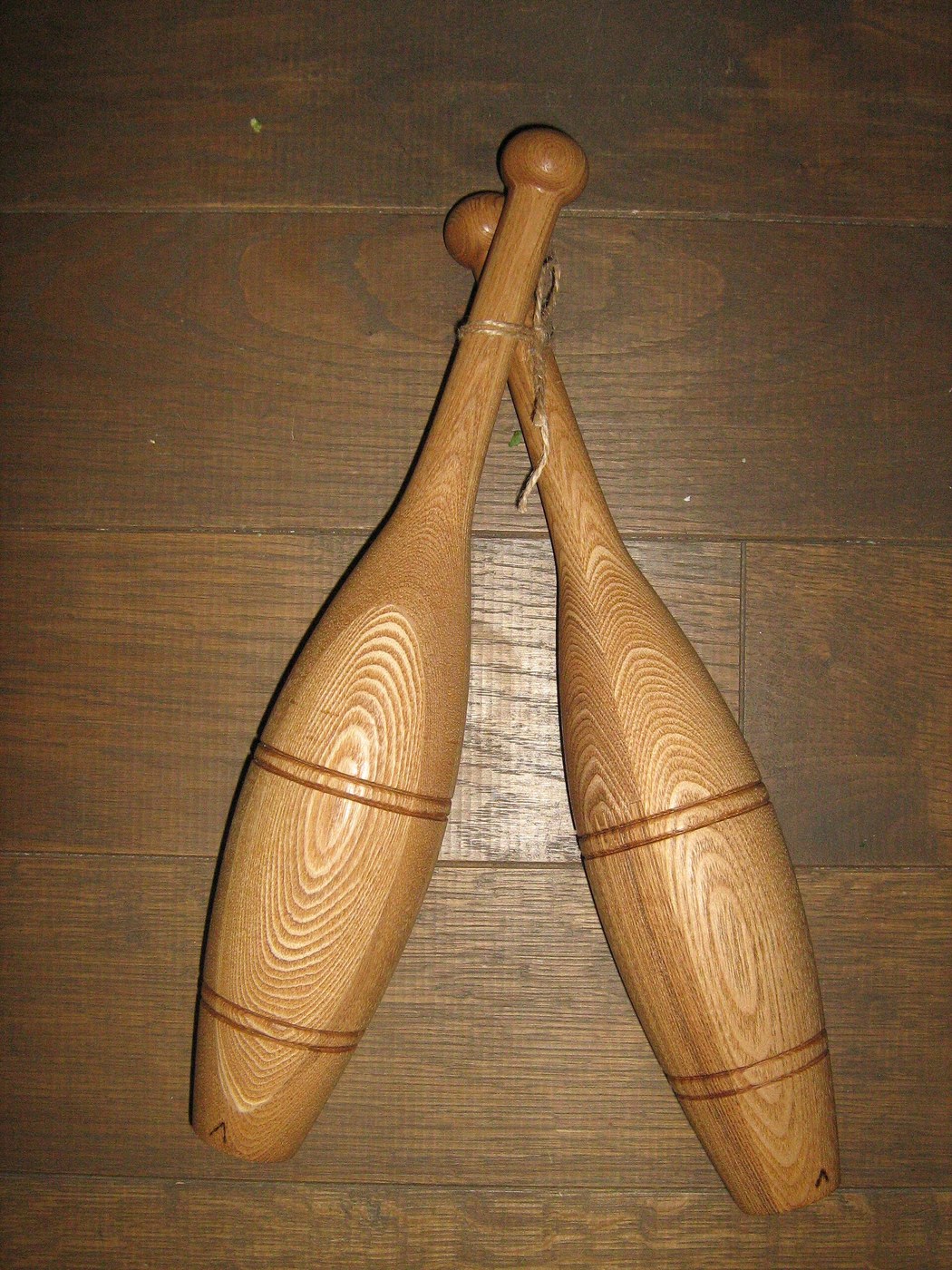


Indian Clubs
A pair of bottle-shaped wooden clubs, swung in circles around the head and shoulders, was the most common piece of exercise equipment in the English-speaking world for roughly seventy years. Schools had racks of them, armies drilled with them, and club swinging was contested as a gymnastics event at the 1904 and 1932 Olympic Games.
They work because of leverage. A two-pound club held at the end of a long handle behaves like a much heavier weight the moment it moves, and it loads the shoulder through its whole range of rotation rather than in one plane. That is why they are back — the modern shoulder-mobility literature rediscovered what Victorian gymnasiums took for granted.
This is a spindle-turning project: two matched clubs from one length of hardwood.
Ìlànà
Clear a wide space before you ever swing one
Clear a wide space before you ever swing one
A club needs about two metres of clear radius in every direction, including above. Start every new movement slowly — a released or mistimed club at speed will break what it hits.
Choose straight-grained hardwood
Choose straight-grained hardwood
Use dry maple, ash or beech, free of knots, with the grain running straight along the length. A knot at the neck is where the club will break, and it breaks while moving fast.
Àwọn ohun èlò fún ìgbésẹ̀ yìí:
 Pátákó Igi Líle2 ẹyọ
Cut two blanks 450 mm long
Cut two blanks 450 mm long
Cut two square blanks about 70 × 70 mm in section and 450 mm long. Cut them from the same board, adjacent to each other, so the pair matches in density.
Weigh both blanks and record
Weigh both blanks and record
Weigh each blank and note the figures. Clubs are swung as a matched pair, and a mismatch you can feel makes the movement patterns fight each other.
Àwọn irinṣẹ́ tí a nílò:
 Òṣùwọ̀n Díjítà
Mark the centres and mount between centres
Mark the centres and mount between centres
Find and punch the centre of each end, then mount the first blank between centres on the lathe. Accurate centring keeps the finished club balanced on its own axis.
Turn to a cylinder
Turn to a cylinder
Rough the blank down to a clean cylinder with a roughing gouge at moderate speed. Work from the middle outward to avoid tearing the ends.
Mark the four control points
Mark the four control points
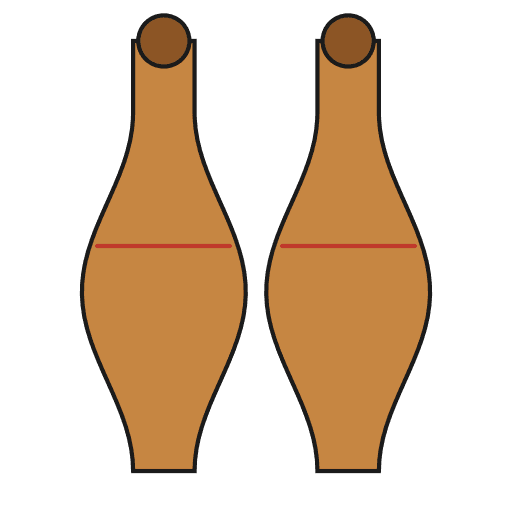
Pencil lines on the spinning cylinder for the knob at the top of the handle, the narrowest point of the neck, the widest point of the body, and the base. These four diameters define the whole profile.
Turn the body to about 65 mm at its widest
Turn the body to about 65 mm at its widest
Shape the bulbous lower body, keeping the widest point roughly a third of the way up from the base. This is where nearly all the mass lives.
Turn the neck down to 28-32 mm
Turn the neck down to 28-32 mm
Cut the neck to a comfortable grip diameter — about 30 mm for an average adult hand. Go in small steps and stop often to grip it; too thin is unrecoverable.
Turn the knob at the top
Turn the knob at the top
Shape a rounded knob wider than the neck. This is not decoration — the knob is what stops the club leaving your hand at the top of a swing.
Blend the curves into one continuous line
Blend the curves into one continuous line
Refine with a skew or spindle gouge until body, neck and knob flow together without a step. Any abrupt shoulder is a stress riser and a blister source.
Sand on the lathe through the grits
Sand on the lathe through the grits
Sand from 120 through to 320 with the lathe running, then stop it and sand along the grain to remove the circular scratches.
Turn the second club to match
Turn the second club to match
Repeat, checking diameters against the first with callipers at each control point. Weigh both when finished and take material off the heavier one until they agree within a few grams.
Check the balance point on both
Check the balance point on both
Balance each club across a finger and mark where it sits. The two balance points should be in the same place — matched weight with mismatched balance still swings wrong.
Oil the finish, do not varnish it
Oil the finish, do not varnish it
Apply an oil finish and buff it back. A glossy varnish is slippery in a sweating hand, which is the one property a swinging club must not have.
Àwọn ohun èlò fún ìgbésẹ̀ yìí:
 Òróró òkúta tí ó bá oúnjẹ mu100 ml
History & Context — Persia to the Olympic Games and back
History & Context — Persia to the Olympic Games and back
They are not Indian, and the name is a colonial accident. The equipment descends from the Persian meel and the Indian mugdar or jori — heavy wooden clubs used for centuries in the training of wrestlers and soldiers, and still central to the Iranian varzesh-e bastani practised in the zurkhaneh. British officers stationed in India in the early nineteenth century encountered them, adopted them, and carried them home; the lighter, longer-handled club that resulted is a British redesign of a South Asian implement, and the label "Indian club" stuck to it. Crediting the Victorians with the invention is straightforwardly wrong.
The Victorian boom. Sim D. Kehoe's The Indian Club Exercise of 1866 and a wave of similar manuals turned club swinging into a mass activity in Britain and the United States, tied to the physical-culture movement and to military and school drill. It became a competitive gymnastics discipline, and club swinging appeared as an Olympic event in 1904 and again in 1932. It then vanished almost completely, displaced by barbells and by the machine-based gym.
Why leverage, not weight, is the point. A club's mass sits far from the hand, so its moment of inertia about the wrist is large — swinging a light club generates forces at the shoulder out of all proportion to its weight on a scale. Because the swings are circular and pass behind the head, they load the shoulder in positions that pressing and pulling never reach, especially in external rotation. That is the mechanical case for them, and it is why a 1-2 kg club is a serious piece of equipment rather than a toy, and why going heavier is usually the wrong instinct.
An honest caution. The historical manuals are full of confident medical claims — curing dyspepsia, expanding the chest, correcting the constitution — that are of their period and should not be repeated as fact. What is well supported is narrower and still worth having: club work builds shoulder mobility, grip endurance and coordination through large ranges of motion. Start with the lightest pair you can make, learn the basic front and back circles slowly, and add speed only once the pattern is automatic.
Àwọn ohun-èlò
2- 2 ẹyọÀyè
- Àyè
Àwọn irinṣẹ́ tó nílò
1Àwọn Ohun Èlò Ìtọ́nisọ́nà Tí A So Pọ̀
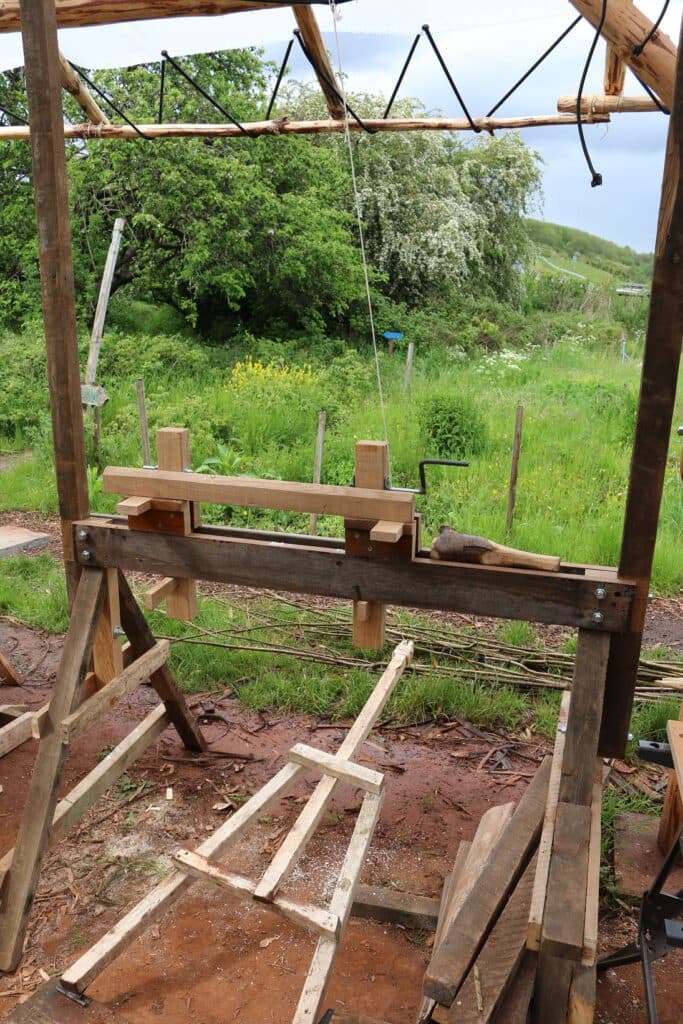
Ìtọ́nisọ́nà yìí ń ṣe
Blueprint tó jọra
Àwọn blueprint wọ̀nyí pín ìmọ̀ — ọ̀nà, ohun-èlò tàbí ìlànà
CC0 Àgbègbè Gbogbogbò
Blueprint yìí ti jáde lábẹ́ CC0. O lè ṣe àdàkọ, yí padà, pín, àti lò láìsí ìyọ̀ǹda.
Ṣàtìlẹ́yìn Olùṣẹ́dá nípa rírà àwọn ọjà nipasẹ̀ Blueprint wọn Ẹ̀san Olùṣẹ́dá tí àwọn Olùtajà gbé kalẹ̀, tàbí ṣẹ̀dá àtúnṣe tuntun ti Blueprint yìí kí o sì fi sínú Blueprint rẹ gẹ́gẹ́ bí ìsopọ̀ láti pín owó-wíwọlé.