
ART
BEAUTY & WELLNESS
CRAFT
CULTURE & HISTORY
ENTERTAINMENT
ENVIRONMENT
FOOD & DRINKS
GREEN FUTURE
REVERSE ENGINEERING
SCIENCES
SPORTS
TECHNOLOGY
WEARABLES
Turning a Bowl on a Pole Lathe — Foot-Powered Green Wood Turning
Woody

Created by

Woody

26. May 2026NO
0
0
0
0
0

Turning a Bowl on a Pole Lathe — Foot-Powered Green Wood Turning

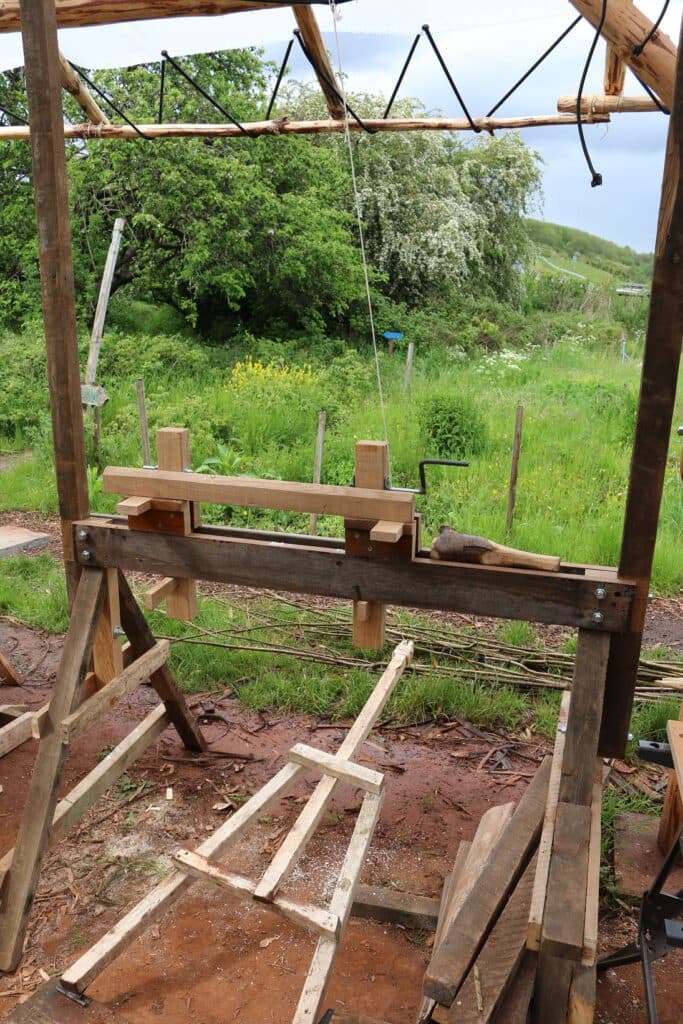
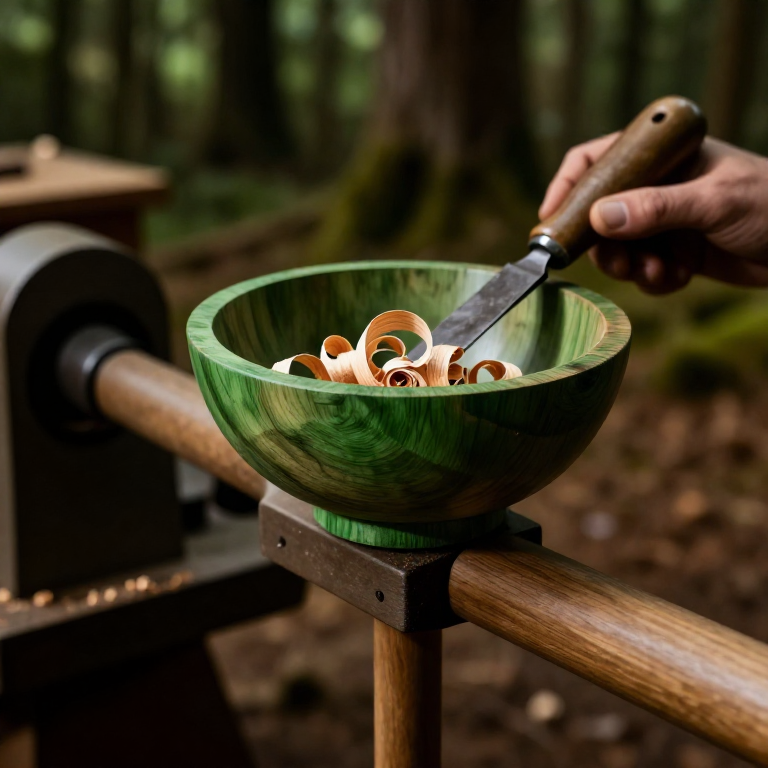
The pole lathe is the oldest form of powered turning — a foot treadle spins the workpiece against a cutting tool, and the spring of a bent pole returns the treadle for the next stroke. It produces work identical in quality to a modern lathe but operates on human power alone. Bowl turning on a pole lathe was a specialist trade in medieval Europe — the bodger (itinerant chair-maker) and the bowl turner worked in the forest where the timber grew, using nothing but a pole lathe, a drawknife, and a set of turning gouges.

Pole lathe turning is intermittent — the workpiece spins toward the tool on the down-stroke (cutting) and reverses on the return stroke (no cutting). This alternating motion means the turner only cuts on half the cycle, but the rhythm becomes natural within minutes. The key advantage is control: the speed is proportional to the foot pressure, so the turner can slow down for delicate finishing cuts and speed up for roughing.

Bowls are turned from a disc-shaped blank cut across the grain of a green log. Green wood turns easily, producing long ribbons of shaving. The finished bowl is removed from the lathe while still damp and left to dry slowly — it will distort slightly into an oval as the grain shrinks unevenly, a characteristic signature of pole-lathe work.

Advanced
2-4 hours (per bowl)

Instructions

1

Prepare a bowl blank from a green log

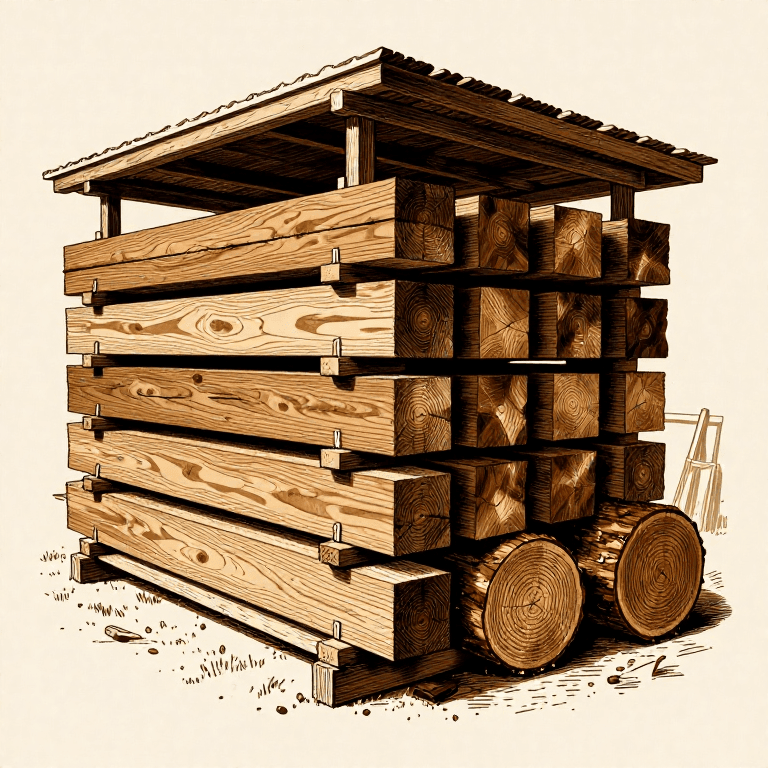
Cut a disc from a green log — a cross-section slice about 8-15 cm thick and the diameter of the finished bowl (typically 20-35 cm). The grain runs across the face of the bowl. Use a hatchet and drawknife to rough the disc into a circle and flatten the back face. Mark the centre on both faces — this is where the lathe spindle will hold the blank. The wood must be green (freshly cut) for easy turning. Birch, sycamore, alder, and cherry are traditional bowl-turning woods.
2

Mount the blank on the pole lathe

Mount the bowl blank between the lathe centres. For bowl turning, the blank is held on a faceplate or mandrel rather than between two points — the front face (which becomes the inside of the bowl) must be accessible to the tool. A simple mandrel is a short hardwood cylinder with a tenon that fits into a hole bored in the back of the blank. The mandrel is held between the lathe centres, and the blank projects outward from it. Ensure the blank runs true with minimal wobble.
3

Rough-turn the outside

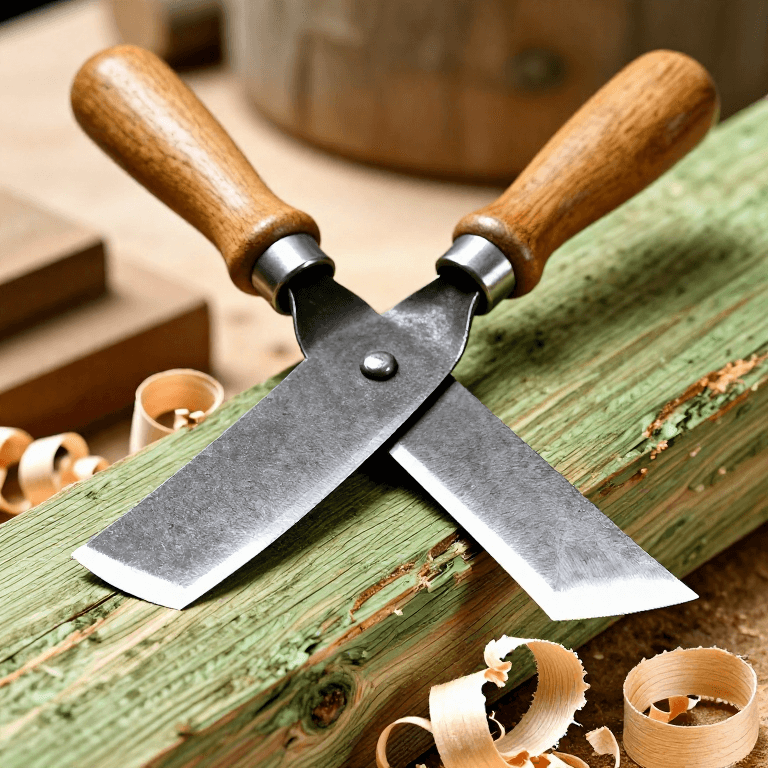
Start by shaping the outside of the bowl. Use a large gouge, bracing the handle against your body and resting the blade on the tool rest. Pump the treadle with a steady rhythm — the cord wraps around the mandrel, spinning the blank toward you on the down-stroke. Cut only on the down-stroke and lift the tool clear on the return. Shape the outside profile from the rim to the base, removing the corners of the disc first, then refining the curve. Leave the base thick — it is still attached to the mandrel.

Tools needed:

Wood GougeWood Gouge
4

Hollow the inside

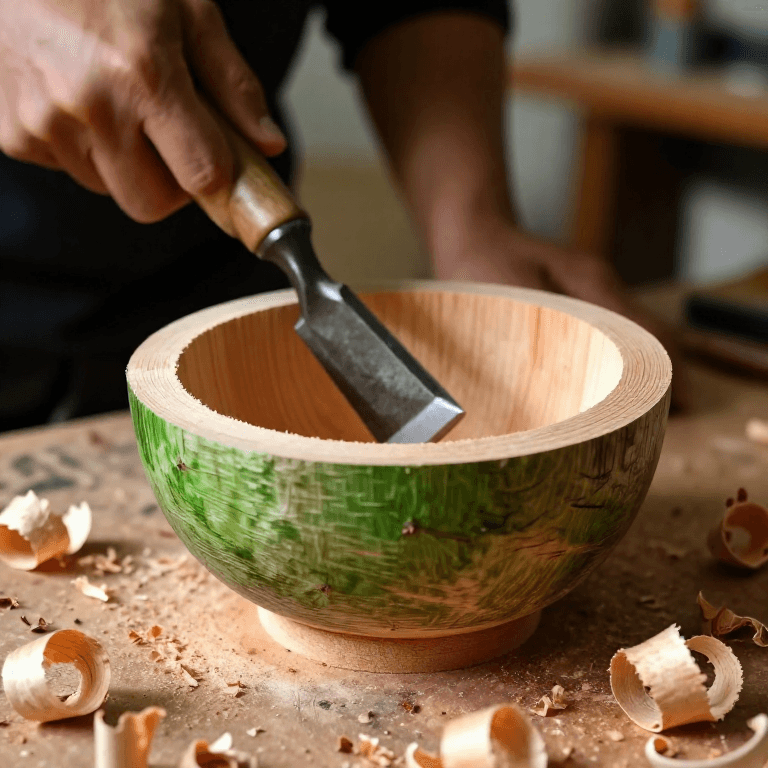
Re-mount the blank so the open face is accessible — either reverse it on the mandrel or use a jam chuck (a tight-fitting hollow in a wooden block that grips the outside of the bowl). Use a smaller gouge to hollow the inside, working from the centre outward toward the rim. The most difficult part is achieving an even wall thickness — the tool is cutting end-grain on half the bowl and side-grain on the other half, which requires constant adjustment of the cutting angle. Check the wall thickness frequently by feel.
5

Finish-turn and smooth

Once the bowl is roughed to shape with consistent wall thickness (about 8-12 mm), make light finishing passes with a sharp gouge. The alternating motion of the pole lathe naturally produces a series of fine ridges — on the cutting stroke the tool engages, on the return stroke it lifts. These ridges can be smoothed by scraping with the gouge held at a high angle (shear scraping) or left as a decorative texture. Sand lightly with fine grit if a smooth surface is desired — green wood sands easily.
6

Part off and dry the bowl

Part the bowl from the mandrel by cutting through the base tenon with a narrow parting tool. Clean up the base with a gouge or knife. The finished bowl is still wet and will shrink as it dries. Place it upside-down in a cool, shaded spot with moderate airflow. Drying takes 2-4 weeks depending on wall thickness and wood species. The bowl will distort into a slight oval — this is normal for green-turned work. Once dry, apply a food-safe finish: linseed oil, walnut oil, or beeswax.

Tools Required

1

Connected Blueprint Materials

Related Blueprints

These blueprints share knowledge with this one — techniques, materials, or principles that connect them in the learning graph.

CC0 Public Domain

This blueprint is released under CC0. You are free to copy, modify, distribute, and use this work for any purpose, without asking permission.

Support the Maker by purchasing products through their Blueprint where they earn a Maker Commission set by Vendors, or create a new iteration of this Blueprint and include it as a connection in your own Blueprint to share revenue.

Discussion

(0)

Log in to join the discussion

Loading comments...