IṢẸ́ ỌNÀ
ẸWÀ ÀTI ÌLERA
IṢẸ́ ỌWỌ́
ÀṢÀ ÀTI ÌTÀN
ÌṢERÉ
ÀYÍKÁ
OÚNJẸ ÀTI OHUN MÍMU
REVERSE ENGINEERING
SÁYẸ́ǸSÌ
ERÉ ÌDÁRAYÁ
ÌMỌ̀-Ẹ̀RỌ
ÀWỌN OHUN WÍWỌ̀
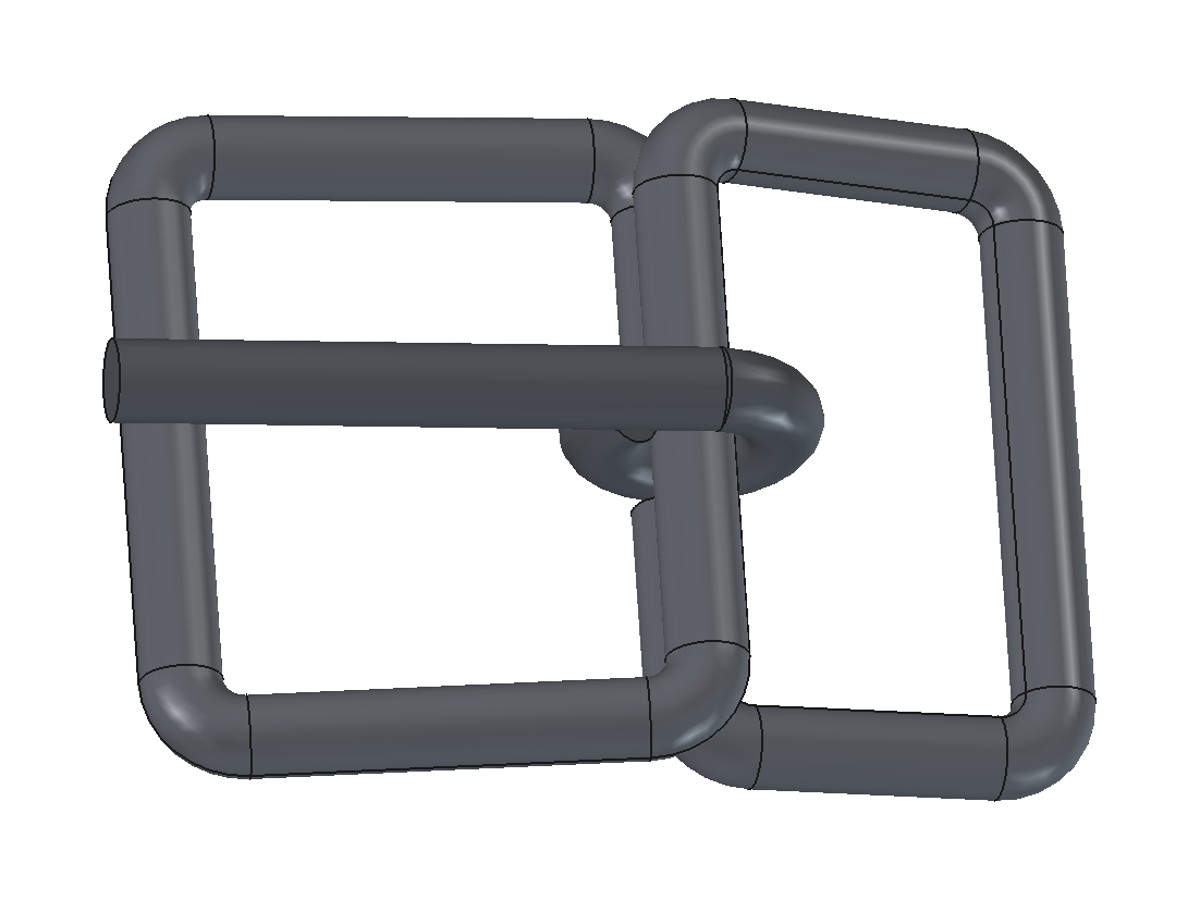


Iron Buckle with Tongue: One Bent Wire Forming Both Loops and the Tongue Bar (after Schleicher, 1907)
A strap buckle for harness and belts made from one piece of iron wire: bent into a tongue loop and a tuck loop that share the middle bar, the two ends tucked under the bar and soldered, and a wire tongue looped round the bar. William Schleicher patented this way of making a buckle in 1907. Sized for a 25 mm strap.
Olùbẹ̀rẹ̀
About 1 hour
Ìlànà
1
1
A square buckle made at the forge
A square buckle made at the forge
A square buckle for a 1 in. strap made at the forge (Beau Beckett). Ours is bent cold from wire and soldered.
2
2
Schleicher's wire buckle, 1907
Schleicher's wire buckle, 1907
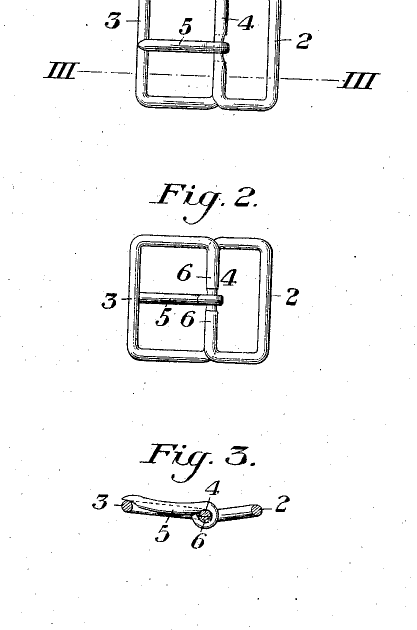
US 850,792: one piece of wire bent to form the tuck loop 2 and the tongue loop 3. The middle of the wire is the bar 4 between them, the pin for the tongue 5. The bar's underside is filed a little flat, the free ends 6 run back under it, and the frame is tinned, the ends soldered to the bar and the tongue put on.
3
3
Print the bending plan
Print the bending plan
The buckle at 1:1 with the bend marks A to H and the tongue. Print at 100 % and check the 50 x 10 mm box.
4
4
Cut and mark the wire
Cut and mark the wire
Cut 190 mm of 4 mm iron wire for the frame and 52 mm for the tongue. File the ends square and mark the frame wire at the eight bend marks from the plan.
Àwọn ohun èlò fún ìgbésẹ̀ yìí:
 Wáyà irin1 piece (4 mm, 250 mm)
Àwọn irinṣẹ́ tí a nílò:
 Ayùn Irin
 Ìdìmú Tábìlì
 Ìfá Irin
 Òṣùwọ̀n Kálípà Díjítà Ìnṣì 6
5
5
Bend the frame
Bend the frame
Bend 90 degrees at each mark in order, A to H, all the same way round, checking the shape on the plan after each bend: A to D make the tongue loop and bring the wire back along the bar, E to H make the tuck loop. Bends A and H put the two ends under the bar. Bend each loop about 8 degrees down from the bar.
Àwọn irinṣẹ́ tí a nílò:
Ìdìmú Tábìlì Ẹmú Ẹnu Pẹrẹsẹ
 Ẹ̀mú Olórí Yíká
 Òòlù olórí bọ́ọ̀lù
6
6
Fit the ends under the bar
Fit the ends under the bar
File about 0.6 mm off the underside of the bar so it is flat. Squeeze both ends up tight against it, leaving 6 mm of bare bar in the middle for the tongue.
Àwọn irinṣẹ́ tí a nílò:
Ìfá IrinẸmú Ẹnu PẹrẹsẹÌdìmú Tábìlì7
7
Tin and solder
Tin and solder
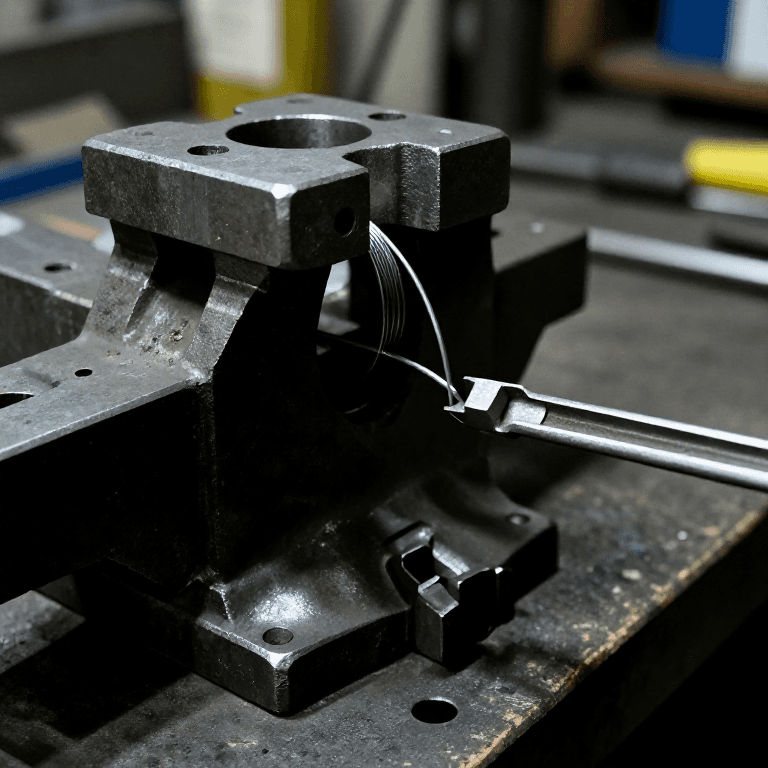
Clean the frame bright with emery and brush on flux for steel. Heat it with the torch and run solder over the whole frame to tin it, and into the joints between the ends and the bar so they are soldered to it. Let it cool, then wash off the flux.
Àwọn ohun èlò fún ìgbésẹ̀ yìí:
 Wáyà Sọ́ldà5 g
 Ohun Ìyọ́ Ìsúdì2 g
Àwọn irinṣẹ́ tí a nílò:
 Bébà emery
 Ọ̀pá Iná Pùróféènì
 Ìbọ̀wọ́ Tí Ń Fara Da Ooru
 Gíláàsì ààbò
8
8
Put on the tongue
Put on the tongue
File one end of the tongue wire to a rounded point. Wrap the other end once round the bare middle of the bar so it turns freely, with the tip resting just past the far side of the tongue loop.
Àwọn irinṣẹ́ tí a nílò:
Ẹ̀mú Olórí YíkáÌfá IrinÌdìmú Tábìlì9
9
Troubleshooting
Troubleshooting
Buckle problems and fixes.
Flow
Loading...
10
10
History and honest limits
History and honest limits
William A. Schleicher, Cleveland, Ohio, for the Eberhard Manufacturing Company: US 850,792, "Wire Buckle", filed 14 June 1906, granted 16 April 1907. He does not give the wire size or loop sizes: ours are for a 25 mm strap. A wire buckle is lighter than a forged one; use a thicker wire and bigger loops for heavy draught harness. Not made by us yet.
Àwọn ohun-èlò
3- 1 piece (4 mm, 250 mm)Àyè
- 5 gÀyè
- Àyè
Àwọn irinṣẹ́ tó nílò
11- Àyè
- Àyè
- Àyè
- Àyè
- Àyè
Àwọn fáìlì àpẹrẹ
1Àwọn Ohun Èlò Ìtọ́nisọ́nà Tí A So Pọ̀
Ìtọ́nisọ́nà yìí ń ṣe

Blueprint tó jọra
Àwọn blueprint wọ̀nyí pín ìmọ̀ — ọ̀nà, ohun-èlò tàbí ìlànà
CC0 Àgbègbè Gbogbogbò
Blueprint yìí ti jáde lábẹ́ CC0. O lè ṣe àdàkọ, yí padà, pín, àti lò láìsí ìyọ̀ǹda.
Ṣàtìlẹ́yìn Olùṣẹ́dá nípa rírà àwọn ọjà nipasẹ̀ Blueprint wọn Ẹ̀san Olùṣẹ́dá tí àwọn Olùtajà gbé kalẹ̀, tàbí ṣẹ̀dá àtúnṣe tuntun ti Blueprint yìí kí o sì fi sínú Blueprint rẹ gẹ́gẹ́ bí ìsopọ̀ láti pín owó-wíwọlé.