IṢẸ́ ỌNÀ
ẸWÀ ÀTI ÌLERA
IṢẸ́ ỌWỌ́
ÀṢÀ ÀTI ÌTÀN
ÌṢERÉ
ÀYÍKÁ
OÚNJẸ ÀTI OHUN MÍMU
REVERSE ENGINEERING
SÁYẸ́ǸSÌ
ERÉ ÌDÁRAYÁ
ÌMỌ̀-Ẹ̀RỌ
ÀWỌN OHUN WÍWỌ̀
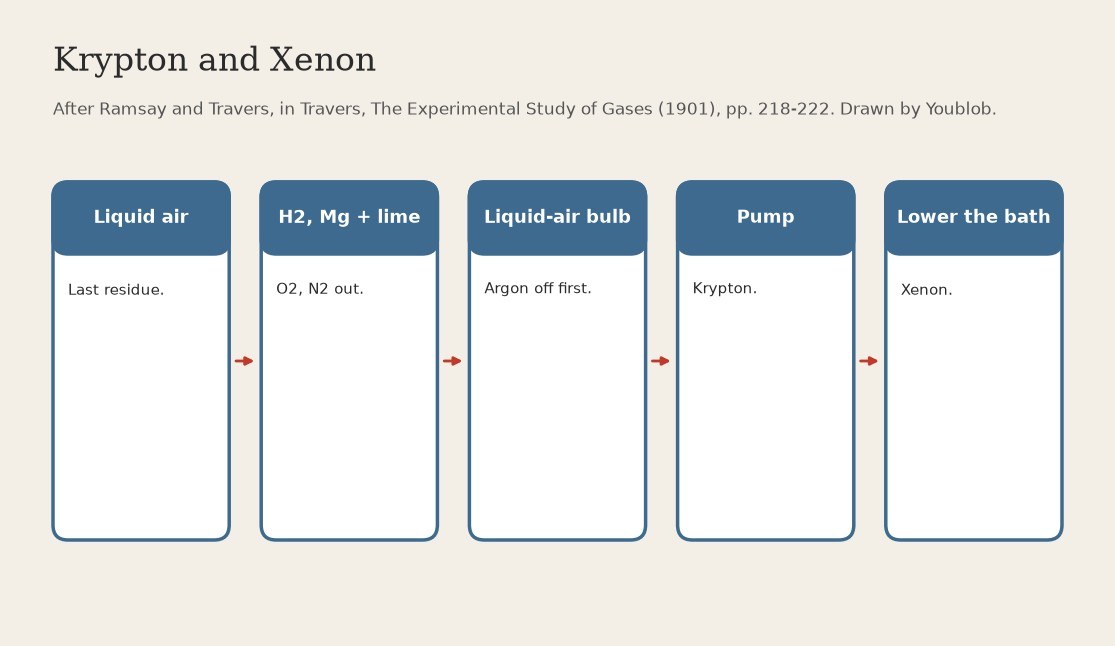


Krypton and Xenon: Liquid-Air Residues Cleaned and Fractionated at the Temperature of Liquid Air (Ramsay and Travers, 1901)
When liquid air boils away, the heavy noble gases stay in the last of it. Ramsay and Travers took that residue, stripped out the oxygen and nitrogen, and separated what was left by condensing it in liquid air and letting it boil off in fractions: argon first, then krypton, and xenon last of all.
Result: krypton and xenon gases (a litre of liquid air gives at most 0.1-0.2 cc of xenon).
Source: M. W. Travers, The Experimental Study of Gases (1901), pp. 218-222. Hydrogen is flammable; liquid air is very cold. Picture drawn by Youblob.
Ilọsíwájú
2 weeks
Ìlànà
1
1
Collect the last of the liquid air
Collect the last of the liquid air
Let liquid air evaporate quietly in a vacuum vessel. The last of it is nearly all oxygen with some nitrogen, argon, krypton and xenon; evaporate it into a gasholder. Work from much liquid air: one litre gives at best 0.1-0.2 cc of xenon.
Àwọn ohun èlò fún ìgbésẹ̀ yìí:
 Afẹ́fẹ́ olómi1 many litres
Àwọn irinṣẹ́ tí a nílò:
 Ìgò òfo (Dewar)
 Ibùdó gáàsì
2
2
Strip out oxygen and nitrogen
Strip out oxygen and nitrogen
Pass the gas with hydrogen through a heated iron tube to remove the oxygen. Absorb the nitrogen with a mixture of magnesium and lime. Pass it over heated copper oxide to take out traces of carbon monoxide and hydrogen, then treat it with soda solution. Ours: a tube furnace for the heating.
Àwọn irinṣẹ́ tí a nílò:
 Hydrogen
 Páìpù irin
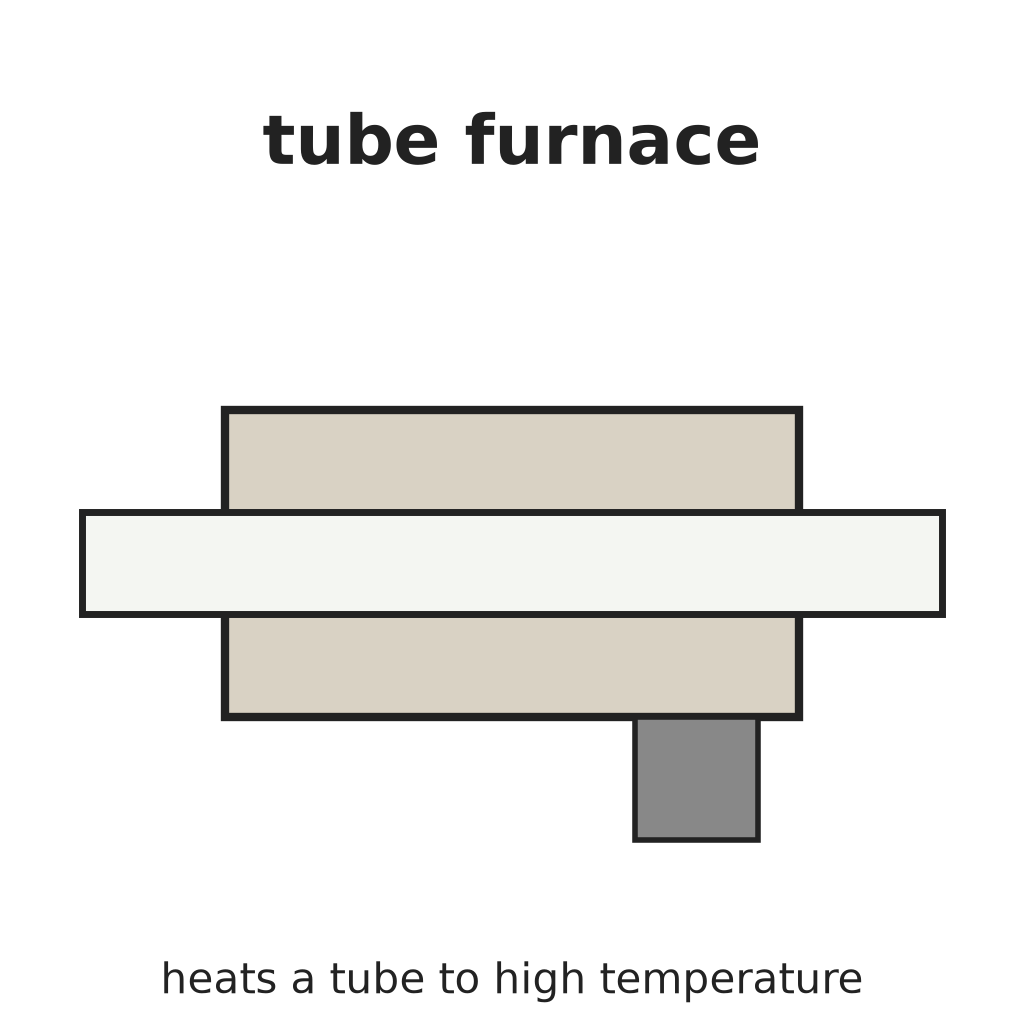 Ààrò Ọ̀pọ́n
 Magnesium
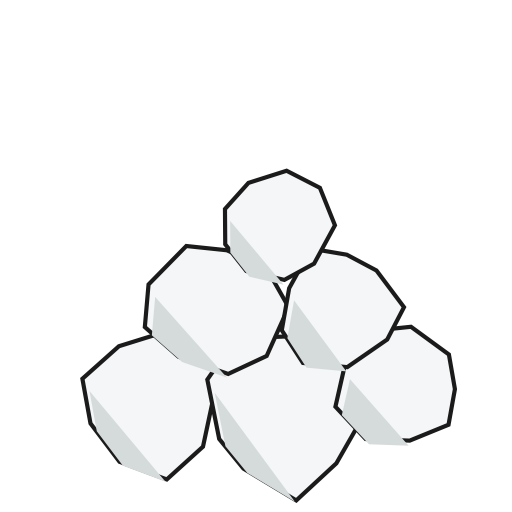 Ẹ̀fun tí a kò tíì pa
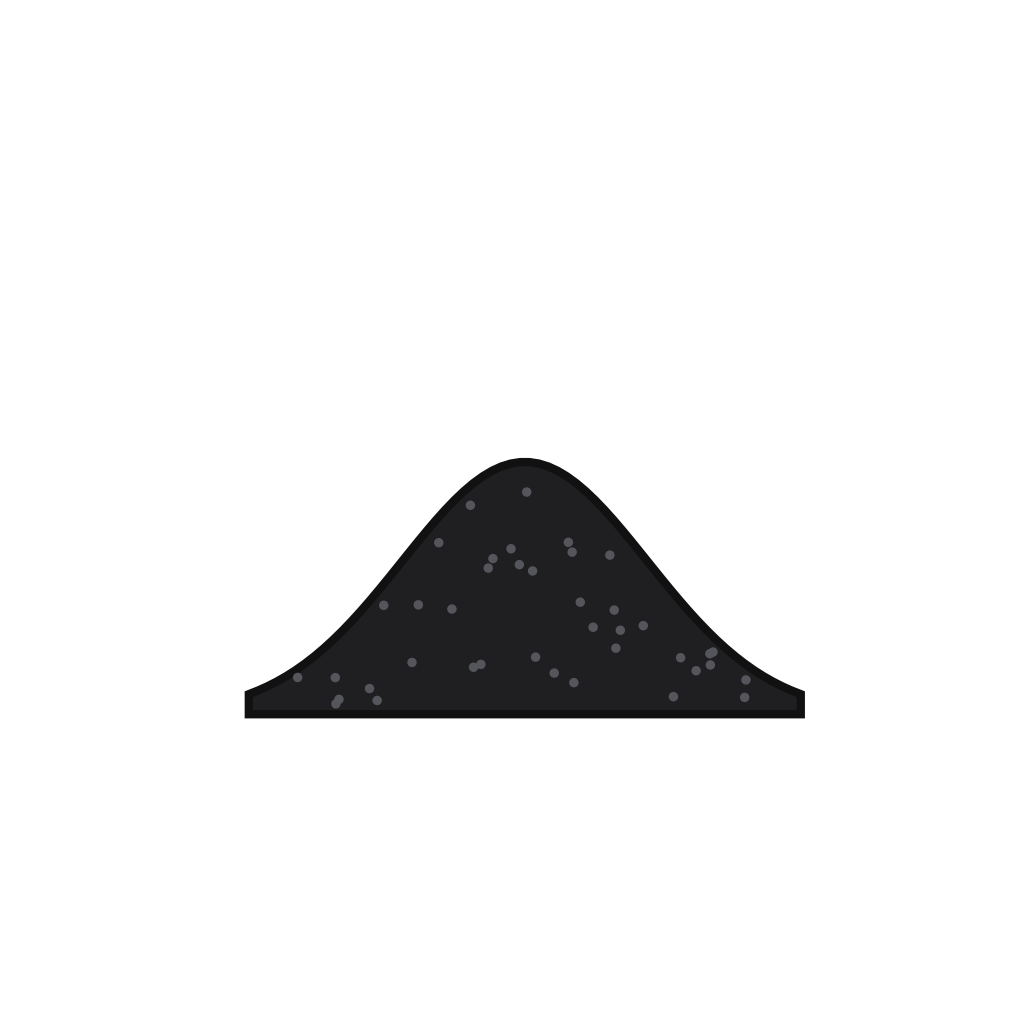 Oxide Bàbà
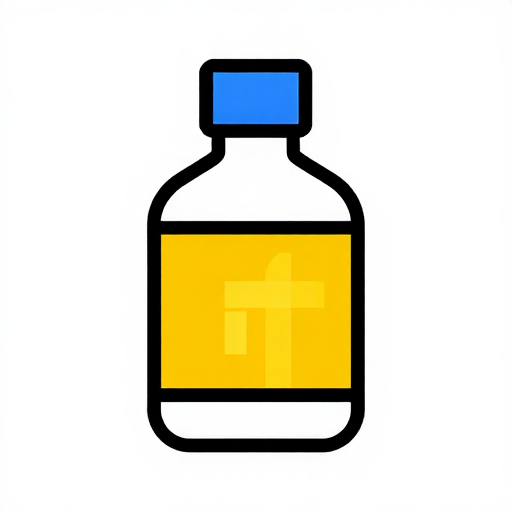 Omi sodium hydroxideIbùdó gáàsì
3
3
First fractionation
First fractionation
Condense the gas in a bulb cooled by liquid air. Let the first part, mostly argon, boil off into a gasholder; collect the rest. Take the last traces off with the pump while the liquid-air vessel is lowered, so the xenon comes too. Travers got about 300 cc of heavy gas.
Àwọn irinṣẹ́ tí a nílò:
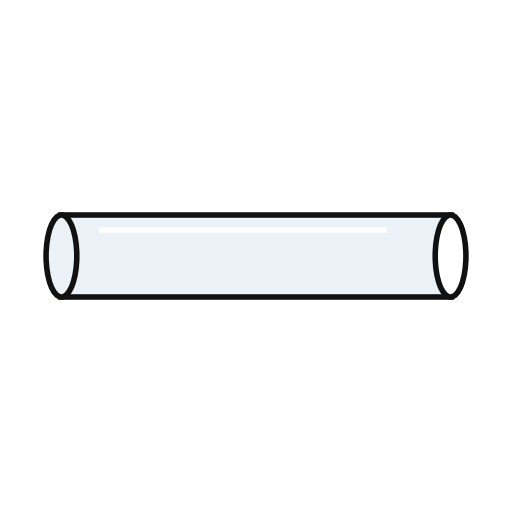 Ọpọ́n gíláàsìAfẹ́fẹ́ olómiÌgò òfo (Dewar)
 Ẹ̀rọ ìfàfẹ́fẹ́jádeIbùdó gáàsì
4
4
Refractionate
Refractionate
Condense and boil off again in six equal portions, throwing away the argon-rich first ones, and repeat, guided by the spectroscope. Let the liquid-air surface just touch the bottom of the bulb while the gas goes in, then immerse it; take every fraction off through the pump. Krypton has a vapour pressure of no more than 150 mm at this temperature; xenon hardly any.
Àwọn irinṣẹ́ tí a nílò:
Ọpọ́n gíláàsìAfẹ́fẹ́ olómiÌgò òfo (Dewar)Ẹ̀rọ ìfàfẹ́fẹ́jáde Spectroscope ìdìmú-ọwọ́
5
5
Part krypton from xenon
Part krypton from xenon
Condense the mixed gas and pump off everything that will come: that is krypton. Then lower the liquid air and collect the xenon. Repeat on each part several times, since krypton hides in the solid xenon.
Àwọn irinṣẹ́ tí a nílò:
Ọpọ́n gíláàsìAfẹ́fẹ́ olómiÌgò òfo (Dewar)Ẹ̀rọ ìfàfẹ́fẹ́jádeIbùdó gáàsìÀwọn ohun-èlò
1- 1 many litresÀyè
Àwọn irinṣẹ́ tó nílò
13- Àyè
- Àyè
- Àyè
- Àyè
- Àyè
- Àyè
- 1 vendor sell this, none ship to you yetÀyè
Ìtọ́nisọ́nà yìí ń ṣe


Blueprint tó jọra
Àwọn blueprint wọ̀nyí pín ìmọ̀ — ọ̀nà, ohun-èlò tàbí ìlànà

CC0 Àgbègbè Gbogbogbò
Blueprint yìí ti jáde lábẹ́ CC0. O lè ṣe àdàkọ, yí padà, pín, àti lò láìsí ìyọ̀ǹda.
Ṣàtìlẹ́yìn Olùṣẹ́dá nípa rírà àwọn ọjà nipasẹ̀ Blueprint wọn Ẹ̀san Olùṣẹ́dá tí àwọn Olùtajà gbé kalẹ̀, tàbí ṣẹ̀dá àtúnṣe tuntun ti Blueprint yìí kí o sì fi sínú Blueprint rẹ gẹ́gẹ́ bí ìsopọ̀ láti pín owó-wíwọlé.