IṢẸ́ ỌNÀ
ẸWÀ ÀTI ÌLERA
IṢẸ́ ỌWỌ́
ÀṢÀ ÀTI ÌTÀN
ÌṢERÉ
ÀYÍKÁ
OÚNJẸ ÀTI OHUN MÍMU
REVERSE ENGINEERING
SÁYẸ́ǸSÌ
ERÉ ÌDÁRAYÁ
ÌMỌ̀-Ẹ̀RỌ
ÀWỌN OHUN WÍWỌ̀
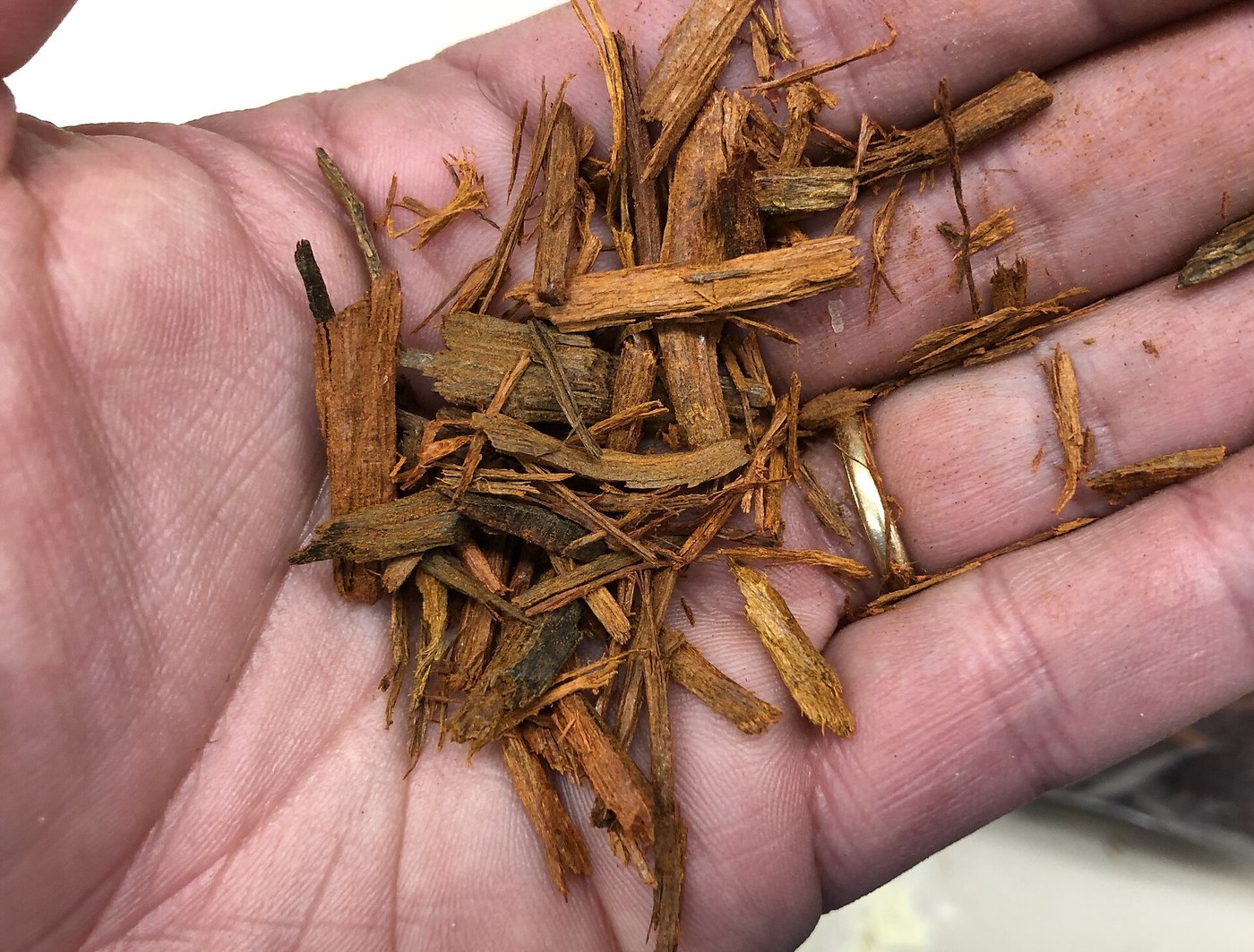


Logwood Chips: Campeachy Heartwood Chipped for the Dyer
Dyers never use logwood as a log: they chip or rasp the hard heartwood first (Thorpe, 1912). Old wood with little of the pale sapwood is best (Ure, 1839). Keep the chips closed up, because they lose dyeing power in the air. They can be "aged" in damp heaps first, though with a chrome mordant this is not needed.
The picture: logwood chips (photo by Waughd, Wikimedia Commons, CC BY-SA 4.0).
Olùbẹ̀rẹ̀
A few hours
Ìlànà
1
1
Choose old heartwood
Choose old heartwood
Pick old logwood with dark bark and little of the white sapwood. Shave off bark and sapwood: only the dense dark-red heartwood dyes.
Àwọn ohun èlò fún ìgbésẹ̀ yìí:
 Igi Logwood1 kg
Àwọn irinṣẹ́ tí a nílò:
 Ọ̀bẹ Ìfàsẹ́yìn
 Àáké kékeré
2
2
Chip or rasp
Chip or rasp
Split the heartwood with the hatchet and cut it into small chips, or rasp it to a coarse powder.
Àwọn irinṣẹ́ tí a nílò:
Àáké kékeré Rásípù igi
 Òṣùwọ̀n Díjítà Ilé Ìdáná
3
3
Ageing, if wanted
Ageing, if wanted
For iron blacks, the old trade wetted the chips and heaped them in an airy room until they warmed and darkened, turning them often so they did not over-age. With a chrome mordant, skip this.
Àwọn irinṣẹ́ tí a nílò:
 Omi
4
4
Store closed
Store closed
Bag the chips and keep them closed and dry: left open to the air they lose part of their dyeing power.
Àwọn irinṣẹ́ tí a nílò:
 Àpò jute
Àwọn ohun-èlò
1- 1 kgÀyè
Àwọn irinṣẹ́ tó nílò
6- Àyè
- Àyè
- Àyè
- Àyè
Ìtọ́nisọ́nà yìí ń ṣe

CC0 Àgbègbè Gbogbogbò
Blueprint yìí ti jáde lábẹ́ CC0. O lè ṣe àdàkọ, yí padà, pín, àti lò láìsí ìyọ̀ǹda.
Ṣàtìlẹ́yìn Olùṣẹ́dá nípa rírà àwọn ọjà nipasẹ̀ Blueprint wọn Ẹ̀san Olùṣẹ́dá tí àwọn Olùtajà gbé kalẹ̀, tàbí ṣẹ̀dá àtúnṣe tuntun ti Blueprint yìí kí o sì fi sínú Blueprint rẹ gẹ́gẹ́ bí ìsopọ̀ láti pín owó-wíwọlé.