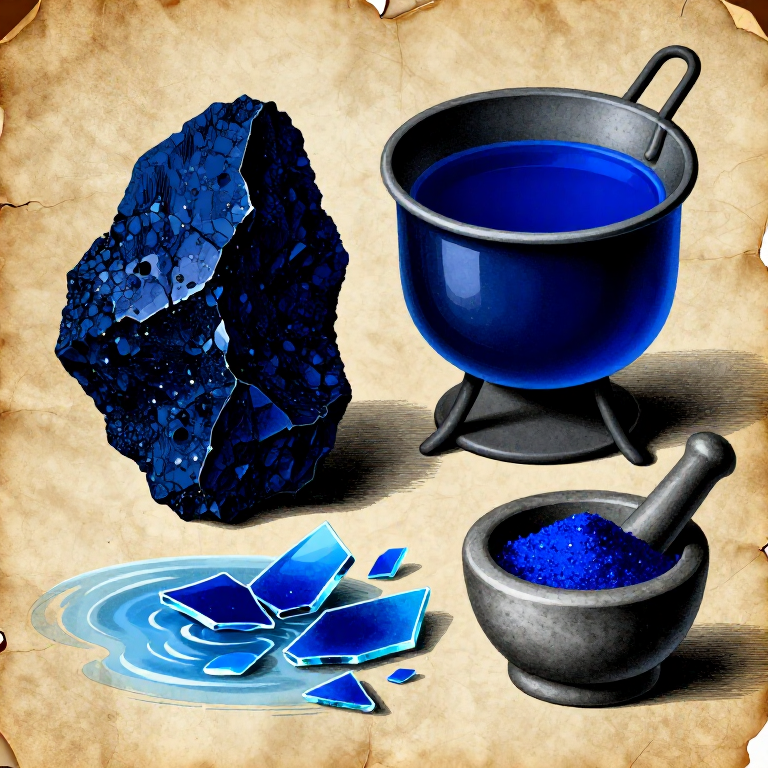

Making Smalt — Grinding Cobalt Blue Glass into the Renaissance Painter's Blue Pigment
Smalt is a pigment made by grinding cobalt-coloured glass into a powder. It was the principal blue pigment available to European painters from the 15th through the 18th century — cheaper than ultramarine (from lapis lazuli) and more abundant than azurite. The production of smalt began in earnest in the glass-making centres of Saxony and Bohemia in the 15th century, where cobalt ores (cobaltite, CoAsS, and smaltite, CoAs₂) were mined from silver-bearing veins in the Erzgebirge mountains.
The process has two stages: first, cobalt ore is roasted to produce cobalt oxide (CoO), which is then fused with potash (potassium carbonate, K₂CO₃) and quartz sand (SiO₂) at 1100-1300°C to make a deep blue potash glass. The glass is quenched in cold water to shatter it, then ground to a powder. Cobalt is one of the most powerful glass-colouring agents known — as little as 0.1% CoO produces a visible blue tint, and 2-5% produces the intense blue used for smalt pigment.
Smalt has a critical and unusual relationship with particle size: coarse-ground smalt is a vivid, deep blue; fine-ground smalt is a pale, washed-out greyish-blue. This is because the blue colour exists within the glass matrix — finer particles have less glass thickness for light to interact with, so less blue is perceived. For this reason, smalt was always ground relatively coarsely for use as a pigment, and it never achieved the fine, smooth texture of ultramarine or azurite. Smalt also has a known weakness in oil painting: over decades, the potash in the glass leaches out (reacting with the acidic oil binder), causing the glass particles to become colourless — explaining why many 17th-century paintings that originally had vivid blue skies now appear grey or brownish.
Àkóónú tó léwu
Blueprint yii ni awọn ilana ti o lewu. Wọle ki o mu akoonu ti o lewu ṣiṣẹ ninu awọn eto akaunti rẹ lati wo awọn itọnisọna igbesẹ-nipasẹ-igbesẹ.
WọléÌtọ́nisọ́nà yìí ń ṣe

Blueprint tó jọra
Àwọn blueprint wọ̀nyí pín ìmọ̀ — ọ̀nà, ohun-èlò tàbí ìlànà
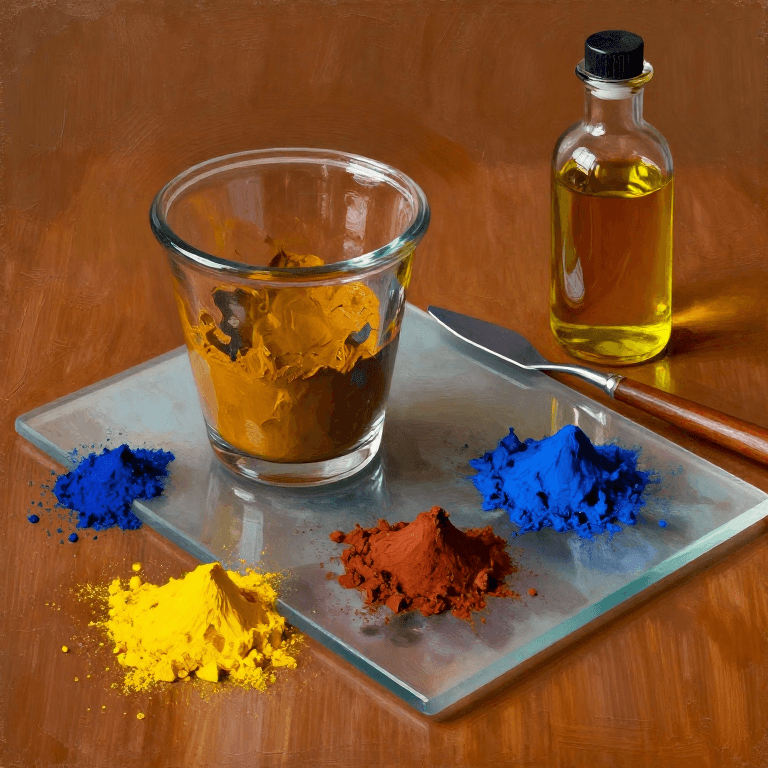
Making Oil Paint from Raw Pigments — Grinding Pigments in Linseed Oil
láti ọwọ́ Charlie
IṢẸ́ ỌNÀ
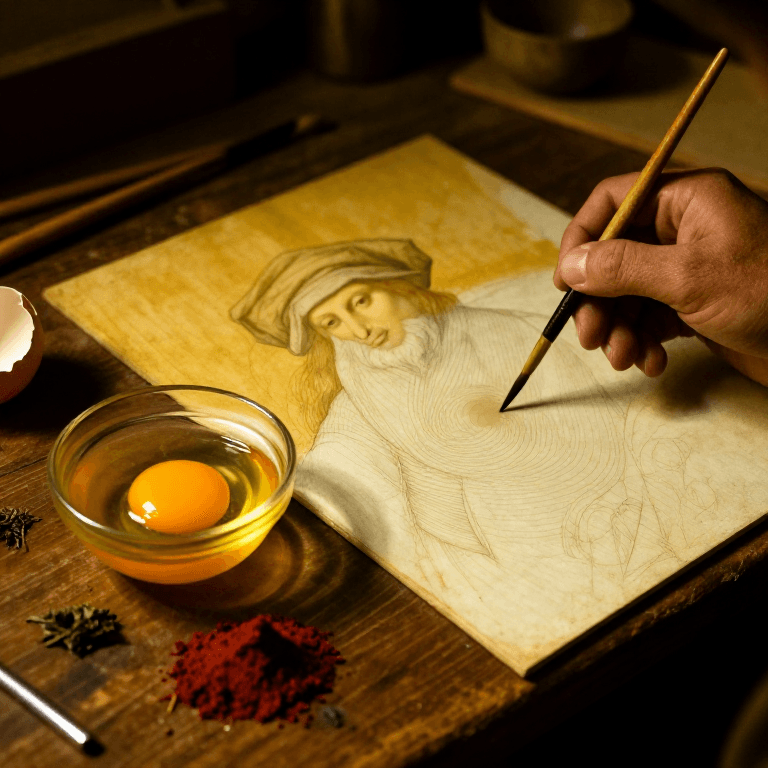
Making Egg Tempera Paint — The Medieval Panel Painting Medium
láti ọwọ́ Charlie
IṢẸ́ ỌNÀ
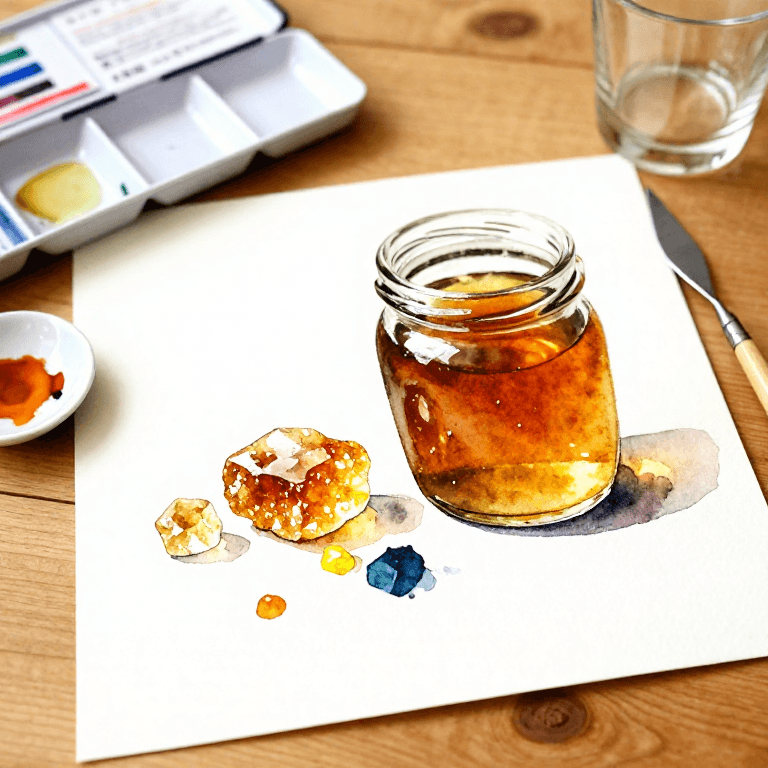
Making Watercolour Paint from Raw Pigments — Gum Arabic Binder
láti ọwọ́ Charlie
IṢẸ́ ỌNÀ
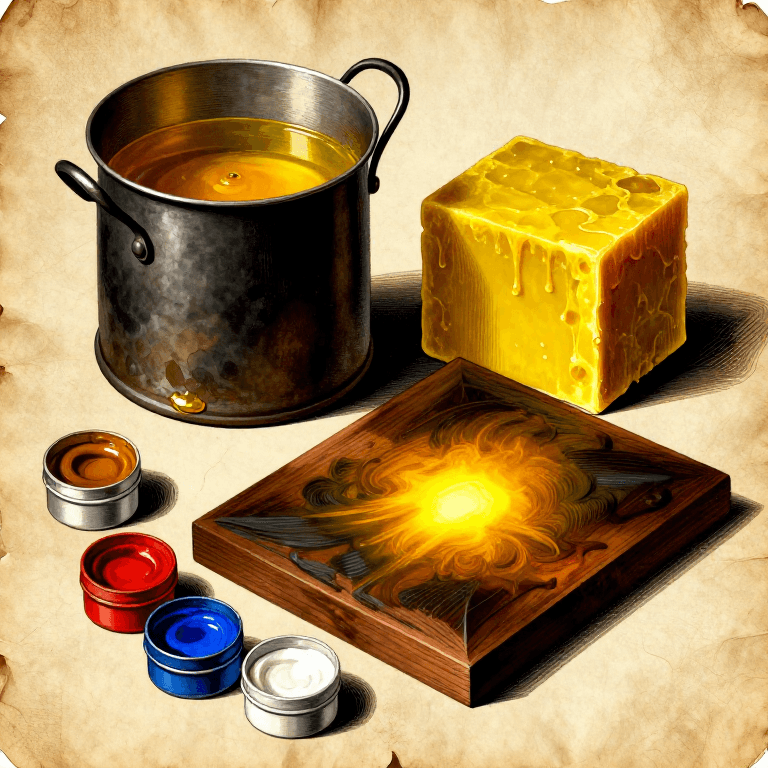
Making Encaustic Paint — The Hot Beeswax Medium of Ancient Greek and Egyptian Painters
láti ọwọ́ Charlie
IṢẸ́ ỌNÀ
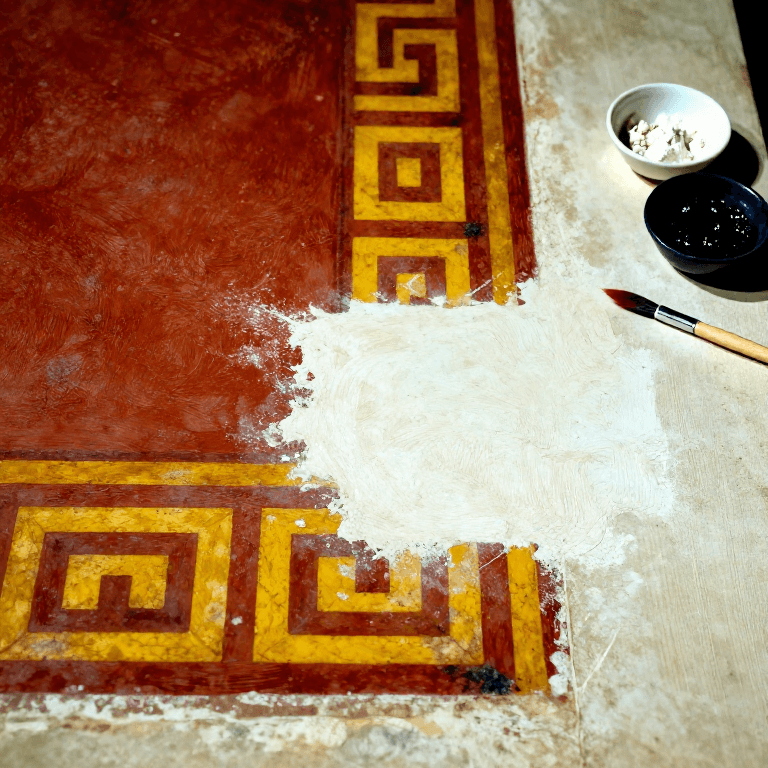
Painting a Buon Fresco on Wet Lime Plaster — Roman Wall Painting
láti ọwọ́ Charlie
Iṣẹ́ Bíríkì
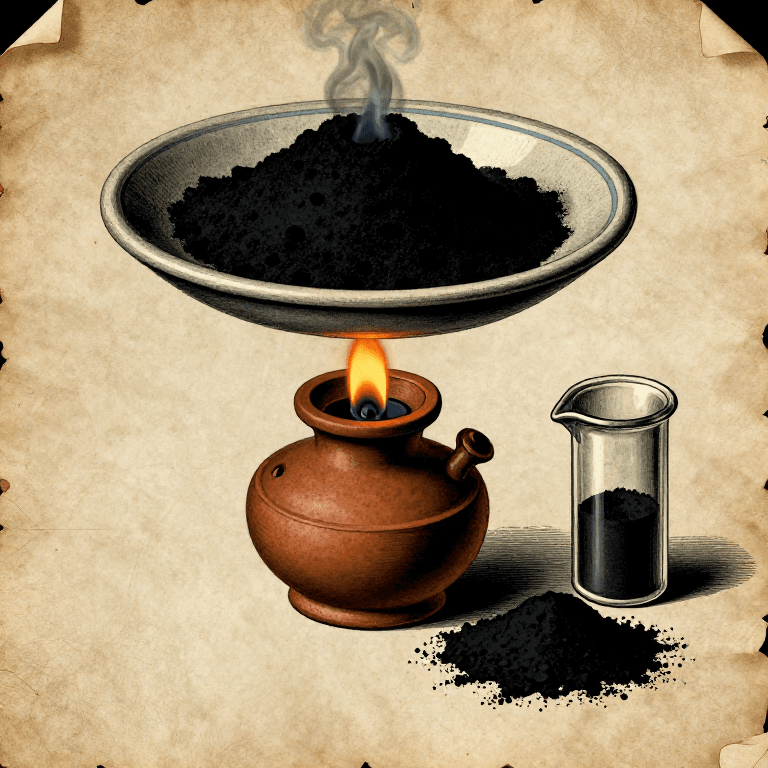
Making Lampblack Pigment — Collecting Carbon Soot from a Burning Flame
láti ọwọ́ Charlie
IṢẸ́ ỌNÀ
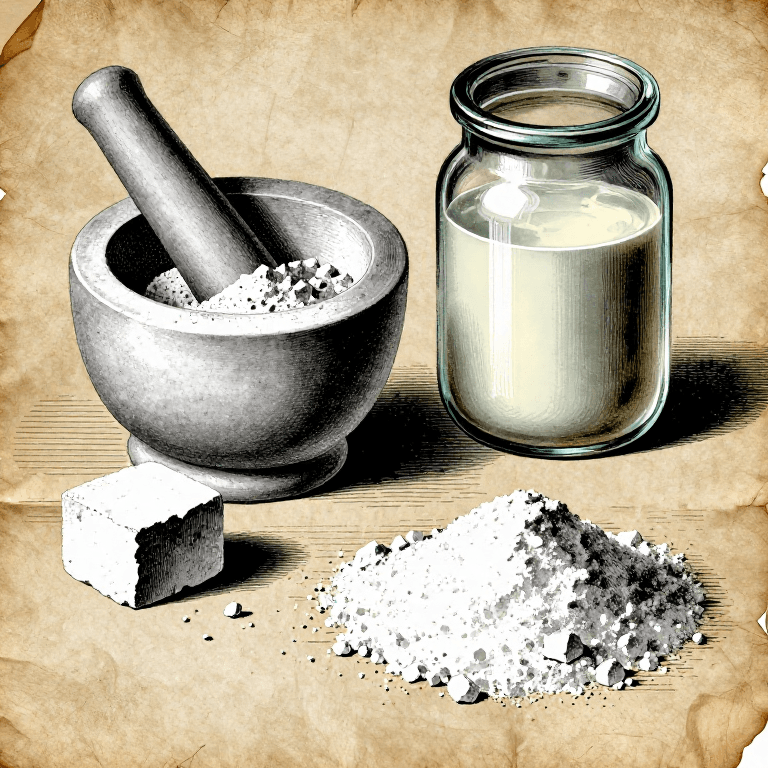
Making Chalk White Pigment (Whiting) — Grinding and Levigating Natural Chalk
láti ọwọ́ Charlie
IṢẸ́ ỌNÀ
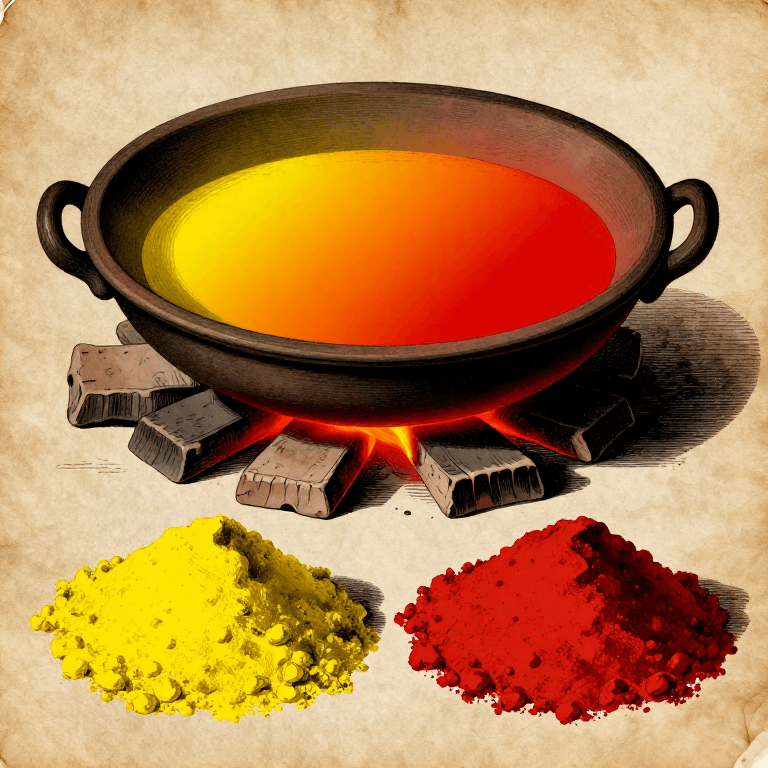
Making Red Ochre by Calcining Yellow Ochre — The Oldest Deliberate Pigment Transformation
láti ọwọ́ Charlie
IṢẸ́ ỌNÀ
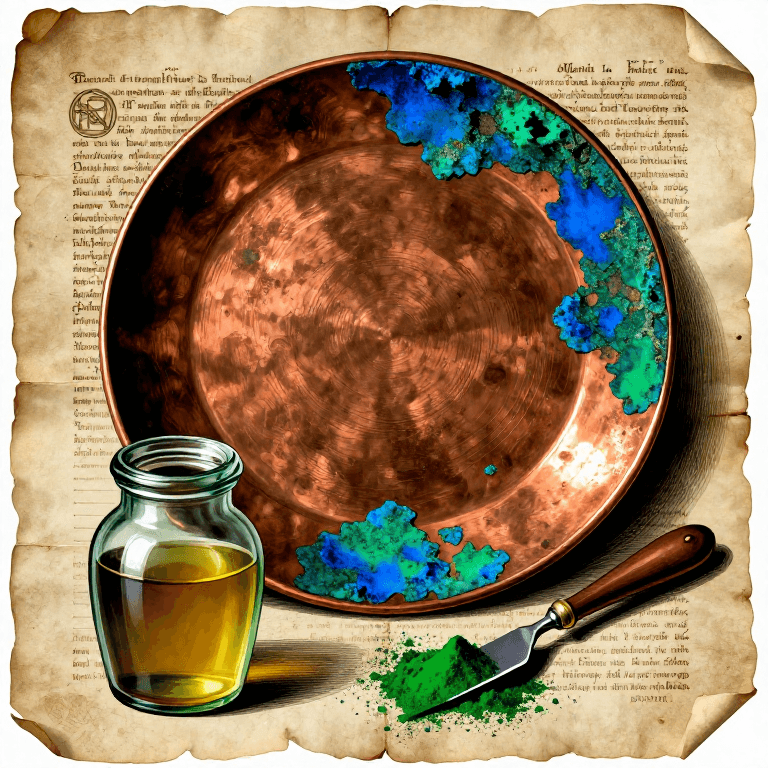
Making Verdigris — The Copper Acetate Green of Medieval Painters
láti ọwọ́ Charlie
IṢẸ́ ỌNÀ
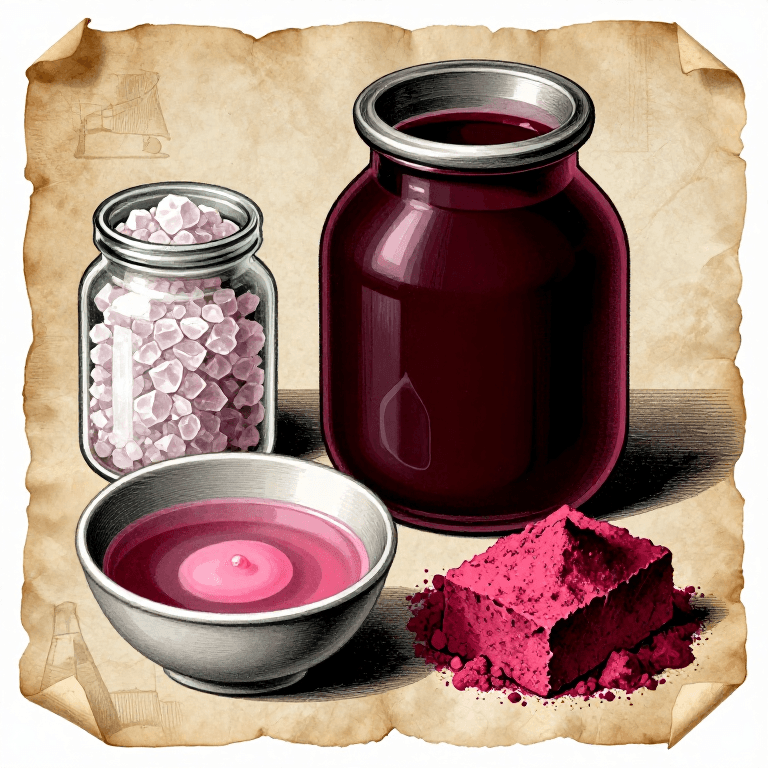
Making a Lake Pigment from Plant Dye — Precipitating Soluble Colour onto an Insoluble Substrate
láti ọwọ́ Charlie
IṢẸ́ ỌNÀ
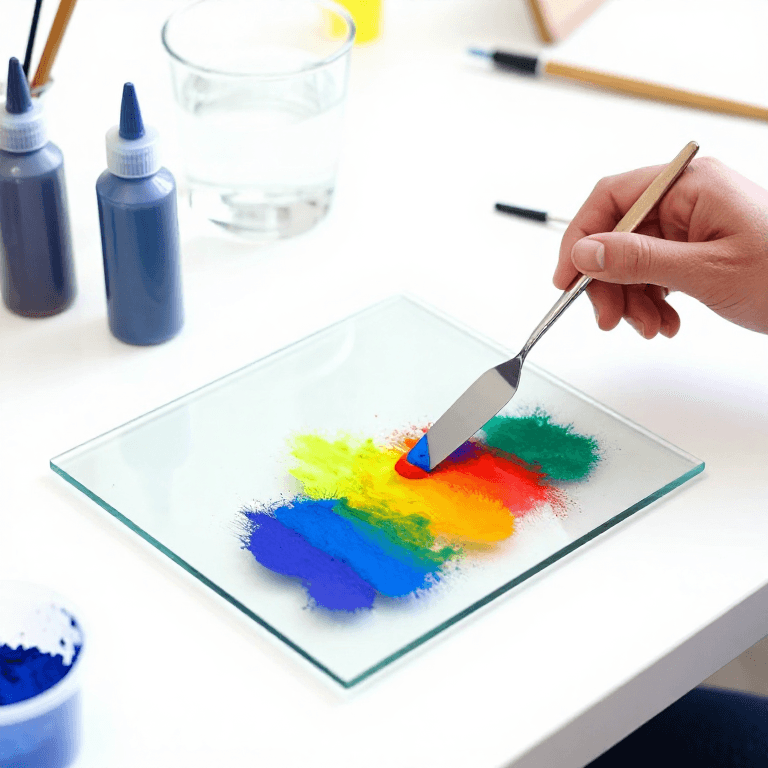
Making Acrylic Paint — Grinding Pigments into Acrylic Polymer Medium
láti ọwọ́ Charlie
IṢẸ́ ỌNÀ
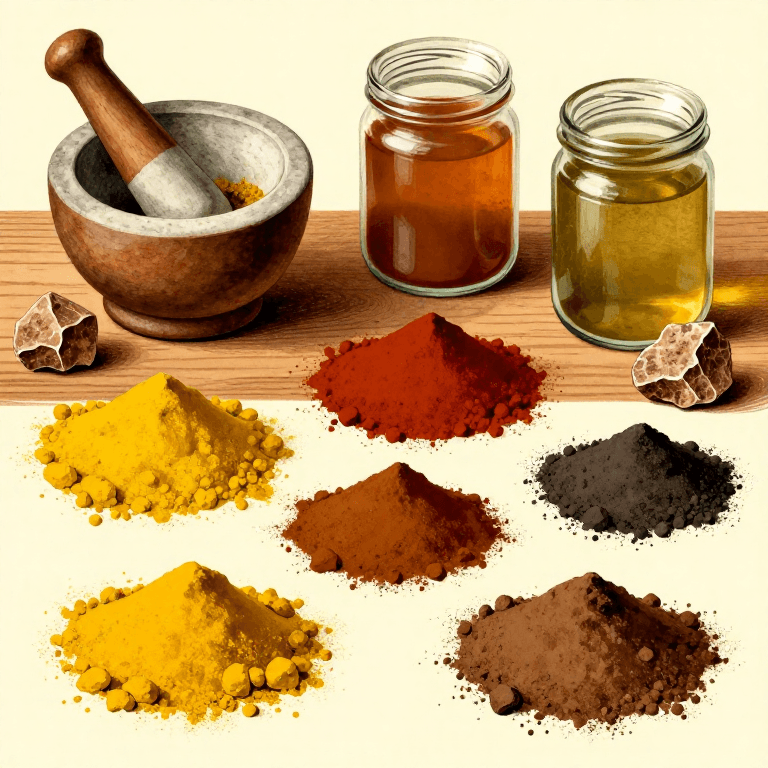
Making Natural Earth Pigments from Soil and Rocks — Collecting and Processing
láti ọwọ́ Mary
IṢẸ́ ỌNÀ
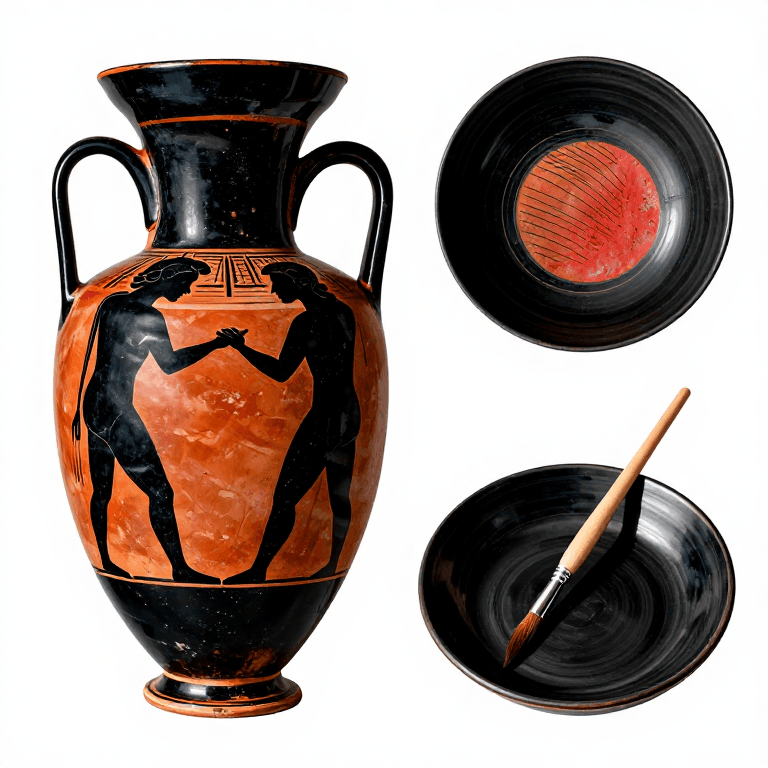
Greek Black-Figure Pottery — Painting Black-Figure Pottery with Iron Slip
láti ọwọ́ Clay
Amọ̀ àti Ohun Amọ̀
CC0 Àgbègbè Gbogbogbò
Blueprint yìí ti jáde lábẹ́ CC0. O lè ṣe àdàkọ, yí padà, pín, àti lò láìsí ìyọ̀ǹda.
Ṣàtìlẹ́yìn Olùṣẹ́dá nípa rírà àwọn ọjà nipasẹ̀ Blueprint wọn Ẹ̀san Olùṣẹ́dá tí àwọn Olùtajà gbé kalẹ̀, tàbí ṣẹ̀dá àtúnṣe tuntun ti Blueprint yìí kí o sì fi sínú Blueprint rẹ gẹ́gẹ́ bí ìsopọ̀ láti pín owó-wíwọlé.