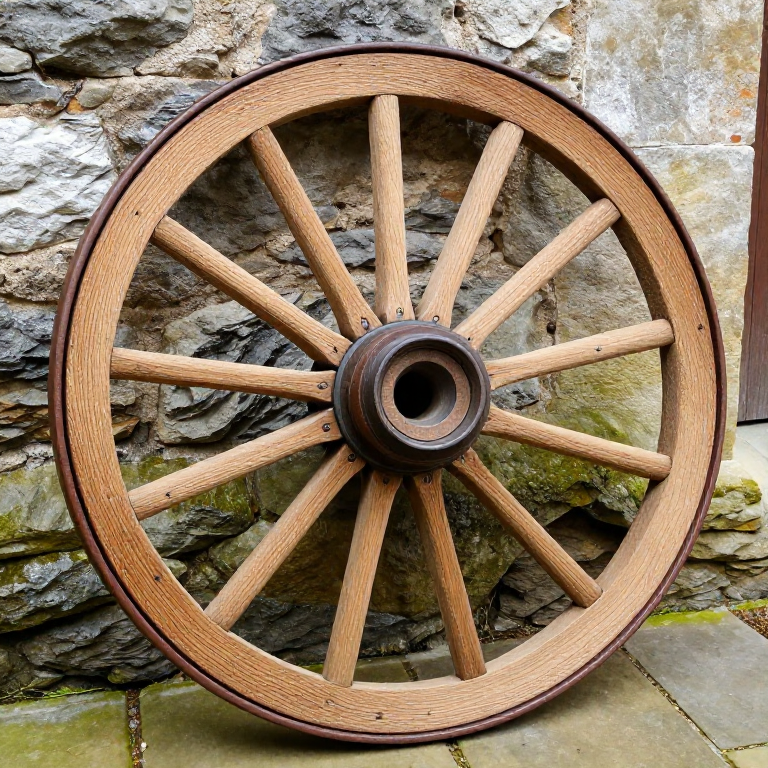


Building a Wooden Cart Wheel — Hub, Spokes, and Felloes
The spoked wheel is one of the greatest inventions in human history. First appearing around 2000 BCE, it made overland transport practical and remained essentially unchanged for nearly four thousand years. A wooden cart wheel is a precision assembly of three distinct components: a central hub (the nave) bored to fit the axle, a set of spokes radiating outward from the hub, and a rim (the felloe) made from curved segments joined end to end. Each component demands a different woodworking skill.
The hub is turned or carved from a single block of dense hardwood — elm is traditional because its interlocked grain resists splitting when mortised for the spokes. The spokes are riven from straight-grained oak for maximum strength. The felloes are sawn or carved from naturally curved timber — the crook of a branch that matches the wheel's curvature. Every joint must be tight: the spokes are driven into mortises in the hub and through mortises in the felloes, then wedged.
Wheelwrighting was one of the most skilled of the traditional trades. The wheel must be perfectly round, perfectly flat, and slightly dished (the spokes angled outward from the hub so the wheel tracks straight under load). A badly made wheel wobbles, wears unevenly, and collapses under the first heavy load.
Ìlànà
Turn or carve the hub
Turn or carve the hub
Àwọn irinṣẹ́ tí a nílò:
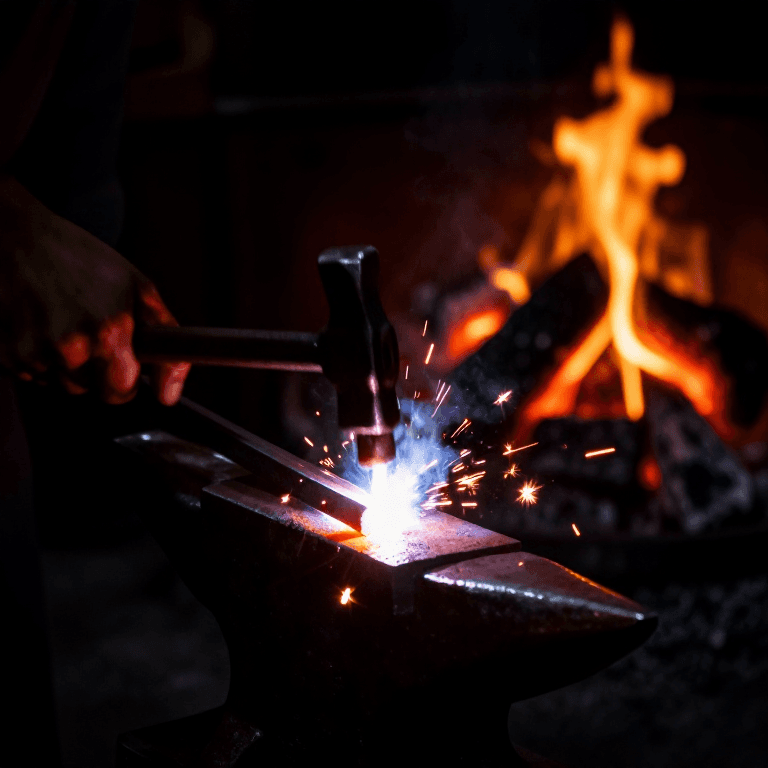
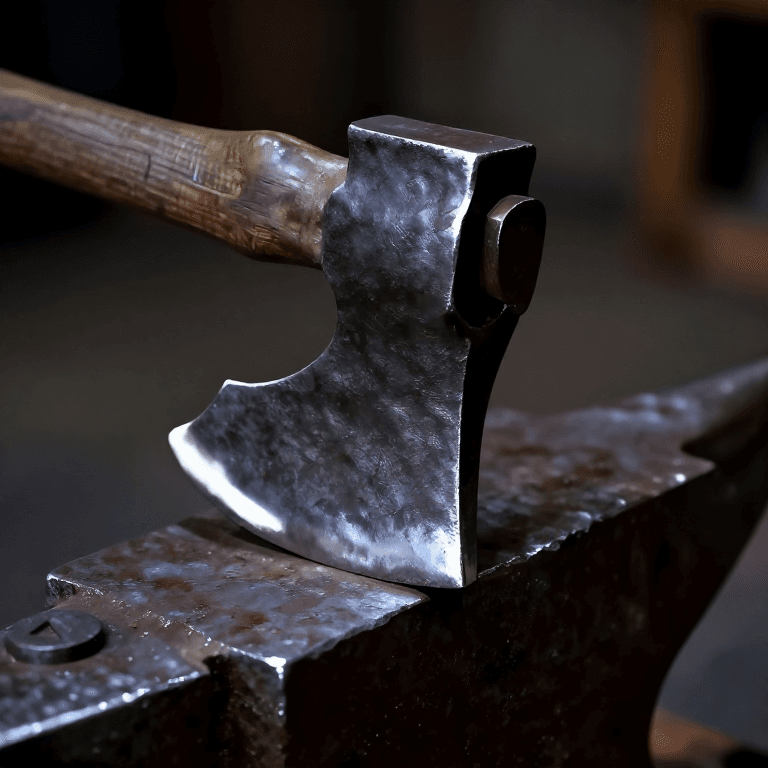
 Àáké ìṣèkó
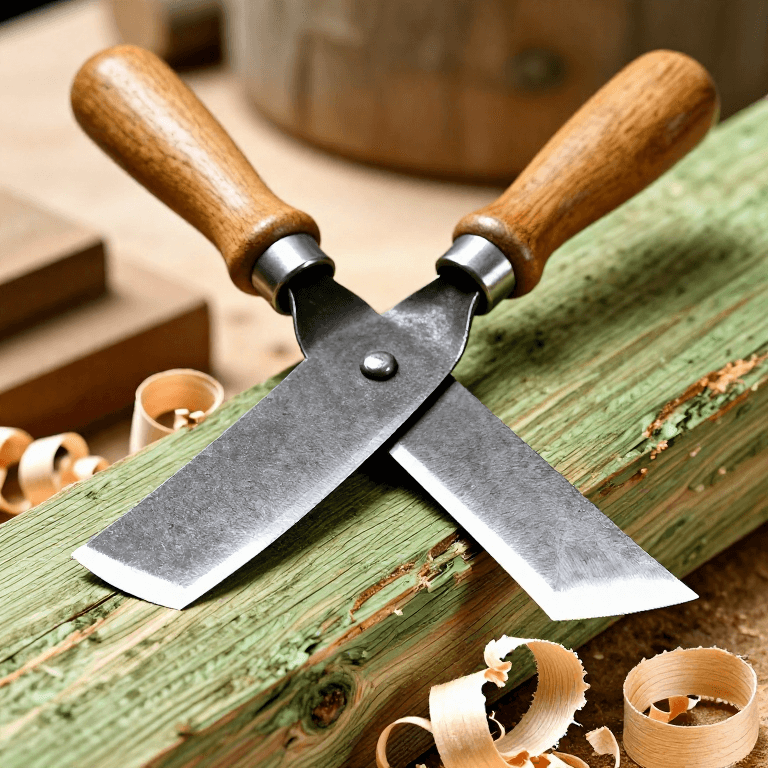
 Ọ̀bẹ Ìfàsẹ́yìn
Cut the spoke mortises in the hub
Cut the spoke mortises in the hub
Àwọn irinṣẹ́ tí a nílò:
 Ìlù Ọwọ́ (Auger)
 Ìdìpọ̀ àyà igi
 Ohun èlò ìsàmì
 Kọ́mpàsì olójú méjì
Rive and shape the spokes
Rive and shape the spokes
Àwọn irinṣẹ́ tí a nílò:
Ọ̀bẹ Ìfàsẹ́yìn Froe (ọ̀bẹ ìpín)
Drive the spokes into the hub
Drive the spokes into the hub
Àwọn irinṣẹ́ tí a nílò:
 Òòlù Igi
Shape and fit the felloes
Shape and fit the felloes
Àwọn ohun èlò fún ìgbésẹ̀ yìí:
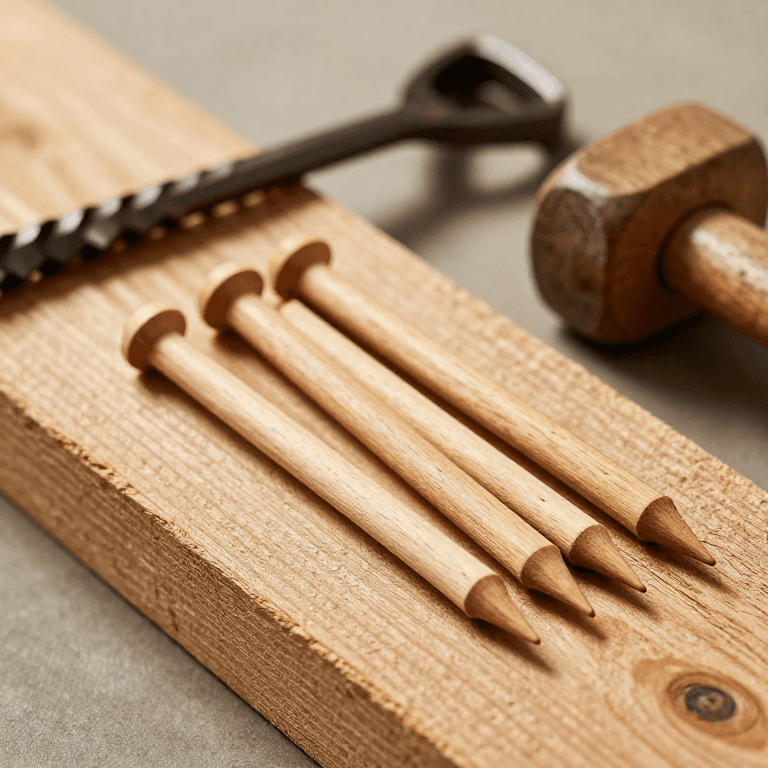
 Òpó Igi Dòwẹ̀lì1 ẹyọ
Fit the iron tyre (optional reinforcement)
Fit the iron tyre (optional reinforcement)
Àwọn ohun-èlò
1- 1 ẹyọÀyè
Àwọn irinṣẹ́ tó nílò
8- Àyè
- Àyè
Àwọn Ohun Èlò Ìtọ́nisọ́nà Tí A So Pọ̀
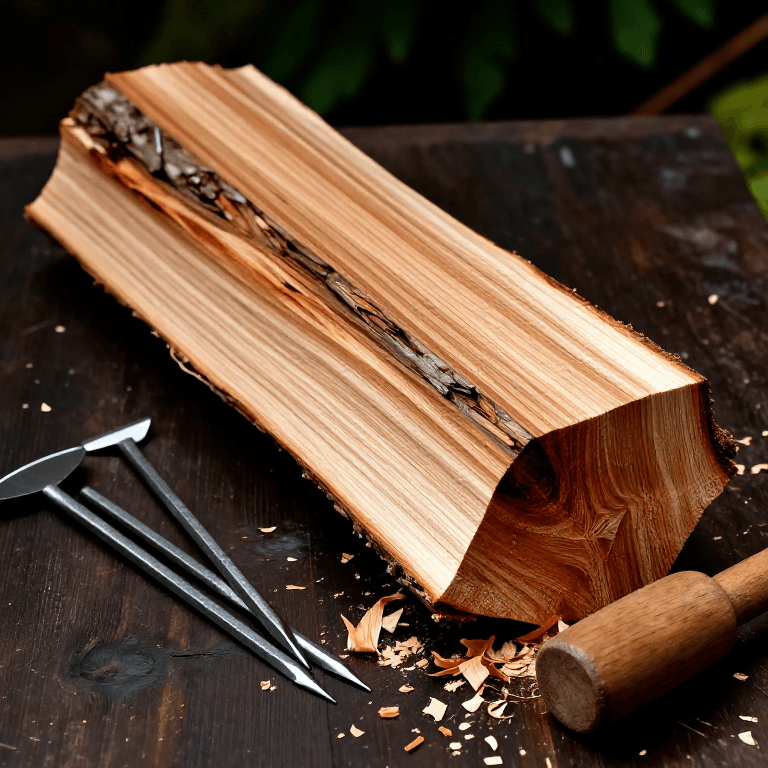
Blueprint tó jọra
Àwọn blueprint wọ̀nyí pín ìmọ̀ — ọ̀nà, ohun-èlò tàbí ìlànà
CC0 Àgbègbè Gbogbogbò
Blueprint yìí ti jáde lábẹ́ CC0. O lè ṣe àdàkọ, yí padà, pín, àti lò láìsí ìyọ̀ǹda.
Ṣàtìlẹ́yìn Olùṣẹ́dá nípa rírà àwọn ọjà nipasẹ̀ Blueprint wọn Ẹ̀san Olùṣẹ́dá tí àwọn Olùtajà gbé kalẹ̀, tàbí ṣẹ̀dá àtúnṣe tuntun ti Blueprint yìí kí o sì fi sínú Blueprint rẹ gẹ́gẹ́ bí ìsopọ̀ láti pín owó-wíwọlé.