IṢẸ́ ỌNÀ
ẸWÀ ÀTI ÌLERA
IṢẸ́ ỌWỌ́
ÀṢÀ ÀTI ÌTÀN
ÌṢERÉ
ÀYÍKÁ
OÚNJẸ ÀTI OHUN MÍMU
REVERSE ENGINEERING
SÁYẸ́ǸSÌ
ERÉ ÌDÁRAYÁ
ÌMỌ̀-Ẹ̀RỌ
ÀWỌN OHUN WÍWỌ̀


Chinese Dragon Kite: Bamboo-Ring Head With Revolving Eyes and 20 Sections on a Seine-Twine Harness (Boy Mechanic, 1919)
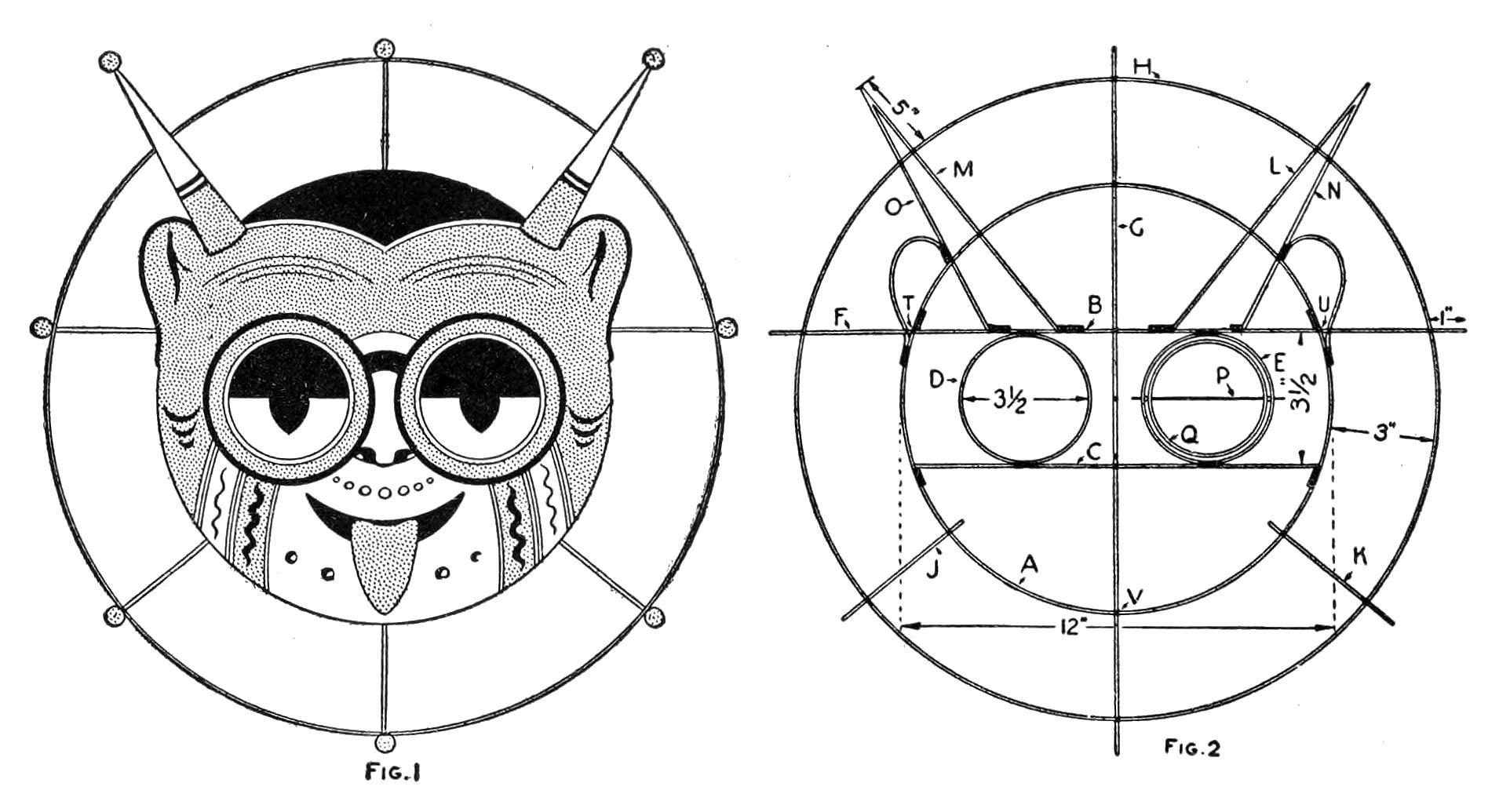
C. M. Miller's dragon kite from The Boy Mechanic, Book 3 (1919): a 12 in bamboo-ring head with horns and two paper eyes that spin in the wind, followed by up to 20 round section kites, each with a 36 in balancer stick, tied 30 in apart on three cords of seine twine. Twenty sections make a kite about 50 ft long.
Ilọsíwájú
Several days
Ìlànà
1
1
Strip lengths and kite length
Strip lengths and kite length
Ń ṣí ìwé Jupyter…
2
2
Read The Boy Mechanic, Book 3
Read The Boy Mechanic, Book 3
"Dragon kites are made as hideous as the maker can possibly conceive, and while the one to be considered is no beauty, it is more droll than fierce-looking."
3
3
Split and pare the bamboo
Split and pare the bamboo
Split bamboo into strips about 3/16 in wide and pare them to less than 1/16 in thick for the head's inner ring A. To bend a strip to a sharp angle, heat it over a candle flame until it gives under pressure, bend it, and it keeps its shape when cold.
Àwọn ohun èlò fún ìgbésẹ̀ yìí:
 Ọ̀pá oparun1 ẹyọ
Àwọn irinṣẹ́ tí a nílò:
 Ọ̀bẹ àpò irin
 Àbẹ́là
4
4
Frame the head
Frame the head
Make ring A 12 in across from a strip about 38 in long, lapping the ends and winding them with linen thread (or with wet pasted strips of rice paper about 1/2 in wide, which bind as they dry). Lash two crosspieces B and C of the same stock 3-1/2 in apart, parallel and equally spaced from the centre, their ends bent sharply and lashed inside the ring. Lash two eye rings D and E, 3-1/2 in across, between them, shaped round a 3-1/2 in cylinder so they are true. Lash stiffeners F and G, 1/16 by 1/8 by 20 in, across the back. Add outer ring H, 3 in outside A (18 in across), of 1/8 in strip under 1/16 in thick, in two pieces if needed, and the short pieces J and K between the rings. Lash the horn supports, 1/8 in wide, to the upper crosspiece and both rings, with L and M halfway between the ends of F and G and radiating from the centre of A, and N and O pointing at the eye-ring centres (Fig. 2).
Àwọn ohun èlò fún ìgbésẹ̀ yìí:
Ọ̀pá oparun1 ẹyọ Òwú ọ̀gbọ̀1 ẹyọ
Àwọn irinṣẹ́ tí a nílò:
Ọ̀bẹ àpò irinÀbẹ́là Okùn Ìdíwọ̀n
 Ìṣẹ́ná
5
5
Cover and paint the head
Cover and paint the head
Cover only the inside of ring A, the horns and the ears with Chinese rice paper, stretched tight with no bagging, leaving the eye rings open. Put the rings on the horns and stick ends, 1/2 to 2 in across, cut from stiff paper (larger ones of bamboo). Shade with a brush and water colours, leaving the face white or tinting it; leave the horns white and colour the tongue red (Fig. 1).
Àwọn ohun èlò fún ìgbésẹ̀ yìí:
 Rice Paper1 ẹyọ
 Ìdí ìyẹ̀fun àlìkámà1 ẹyọ
 Bébà Líle1 ẹyọ
 Àwọ̀ omi1 ẹyọ
Àwọn irinṣẹ́ tí a nílò:
 Búrọ́ọ̀ṣì gọ́mù
 Ìṣù bùrọ́ọ̀ṣì oníṣẹ́-ọnàÌṣẹ́ná
6
6
Make the revolving eyes
Make the revolving eyes
Pare bamboo to 1/32 in and form each eye into a true ring 3-1/4 in across. Pass a wire axle exactly on a diameter through the eye ring and through its socket ring D or E, with a glass bead on the wire each side between the two rings; fix the wire to the eye ring with a strip of paper wrapped tight and pasted. Cover each side halfway with rice paper, the front upper half and the back lower half, so the wind turns the eye. Blacken the front upper half and paste a round pupil between the halves so it shows on both sides (Figs. 3, 4).
Àwọn ohun èlò fún ìgbésẹ̀ yìí:
Ọ̀pá oparun1 ẹyọ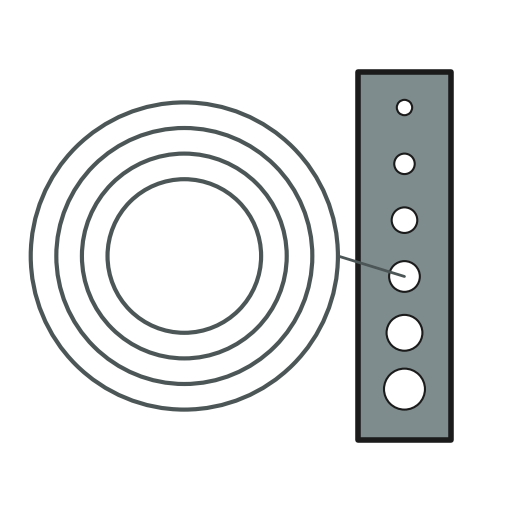 Wáyà irin1 ẹyọ
 Ilẹ̀kẹ̀ dígí4 ẹyọRice Paper1 ẹyọÌdí ìyẹ̀fun àlìkámà1 ẹyọÀwọ̀ omi1 ẹyọ
Àwọn irinṣẹ́ tí a nílò:
Ọ̀bẹ àpò irin Ẹmú Ẹnu PẹrẹsẹÌṣẹ́náÌṣù bùrọ́ọ̀ṣì oníṣẹ́-ọnà
7
7
Make the section kites
Make the section kites
For each section make a 12 in ring of bamboo 1/8 in wide and 1/16 in thick and cover it tight like the head. Lash on a balancer stick 36 in long, small, light and well balanced, at about the place of cross-stick F, with tufts of tissue paper or feathers at its tips. Colour the discs as you like; give the last section's balancer streamers of light cloth (Figs. 5, 6). Sections may instead be 9 in with 30 in balancers, but uniform sections are better and easier.
Àwọn ohun èlò fún ìgbésẹ̀ yìí:
Ọ̀pá oparun1 ẹyọÒwú ọ̀gbọ̀1 ẹyọRice Paper1 ẹyọÌdí ìyẹ̀fun àlìkámà1 ẹyọ Tissue Paper1 ẹyọ
 Ìyẹ́1 ẹyọ
 Aṣọ Òwú1 ẹyọÀwọ̀ omi1 ẹyọ
Àwọn irinṣẹ́ tí a nílò:
Ọ̀bẹ àpò irinÀbẹ́làÌṣẹ́náÌṣù bùrọ́ọ̀ṣì oníṣẹ́-ọnà8
8
Tie the harness and bridle
Tie the harness and bridle
Cut three cords of six-ply hard-twisted seine twine as long as the kite plus the knots. Fasten the head to a wall, tie the three cords to it at T, U and V (Fig. 2), and tie each section at the matching points exactly 30 in from the last (Fig. 7). Tie a three-string bridle to the head at T, U and V, the lower string longer than the two upper ones so the head, and with it every section, leans to the wind. A ball balancer of bamboo strips may hang from the head (Fig. 8).
Àwọn ohun èlò fún ìgbésẹ̀ yìí:
 Seine Twine1 ẹyọ
 Kite String1 ẹyọỌ̀pá oparun1 ẹyọ
Àwọn irinṣẹ́ tí a nílò:
Okùn Ìdíwọ̀nÌṣẹ́ná9
9
Flying and troubleshooting
Flying and troubleshooting
Dragon kite flying.
Flow
Loading...
10
10
History and honest limits
History and honest limits
From "How to Make Combined Kites, Part I: A Dragon Kite" by C. M. Miller, in **The Boy Mechanic, Book 3**, Popular Mechanics, 1919 (Project Gutenberg 71856; checked on the archive.org scan boymechanic0003unse, pp. 145-148). He gives no bridle lengths and no line size beyond "a strong cord". Fig. 2 also marks 5 in at the horn tip and 1 in where F passes ring H. The tools and metric figures are ours.
Àwọn ohun-èlò
13- 1 ẹyọÀyè
- 2 ẹyọÀyè
- 1 ẹyọÀyè
- 1 ẹyọÀyè
- 1 ẹyọÀyè
- 3 ẹyọÀyè
- 1 ẹyọÀyè
- 4 ẹyọÀyè
- 1 ẹyọÀyè
- 1 ẹyọÀyè
- 1 ẹyọÀyè
- 1 ẹyọÀyè
- 1 ẹyọÀyè
Ìtọ́nisọ́nà yìí ń ṣe
Blueprint tó jọra
Àwọn blueprint wọ̀nyí pín ìmọ̀ — ọ̀nà, ohun-èlò tàbí ìlànà
CC0 Àgbègbè Gbogbogbò
Blueprint yìí ti jáde lábẹ́ CC0. O lè ṣe àdàkọ, yí padà, pín, àti lò láìsí ìyọ̀ǹda.
Ṣàtìlẹ́yìn Olùṣẹ́dá nípa rírà àwọn ọjà nipasẹ̀ Blueprint wọn Ẹ̀san Olùṣẹ́dá tí àwọn Olùtajà gbé kalẹ̀, tàbí ṣẹ̀dá àtúnṣe tuntun ti Blueprint yìí kí o sì fi sínú Blueprint rẹ gẹ́gẹ́ bí ìsopọ̀ láti pín owó-wíwọlé.