IṢẸ́ ỌNÀ
ẸWÀ ÀTI ÌLERA
IṢẸ́ ỌWỌ́
ÀṢÀ ÀTI ÌTÀN
ÌṢERÉ
ÀYÍKÁ
OÚNJẸ ÀTI OHUN MÍMU
REVERSE ENGINEERING
SÁYẸ́ǸSÌ
ERÉ ÌDÁRAYÁ
ÌMỌ̀-Ẹ̀RỌ
ÀWỌN OHUN WÍWỌ̀
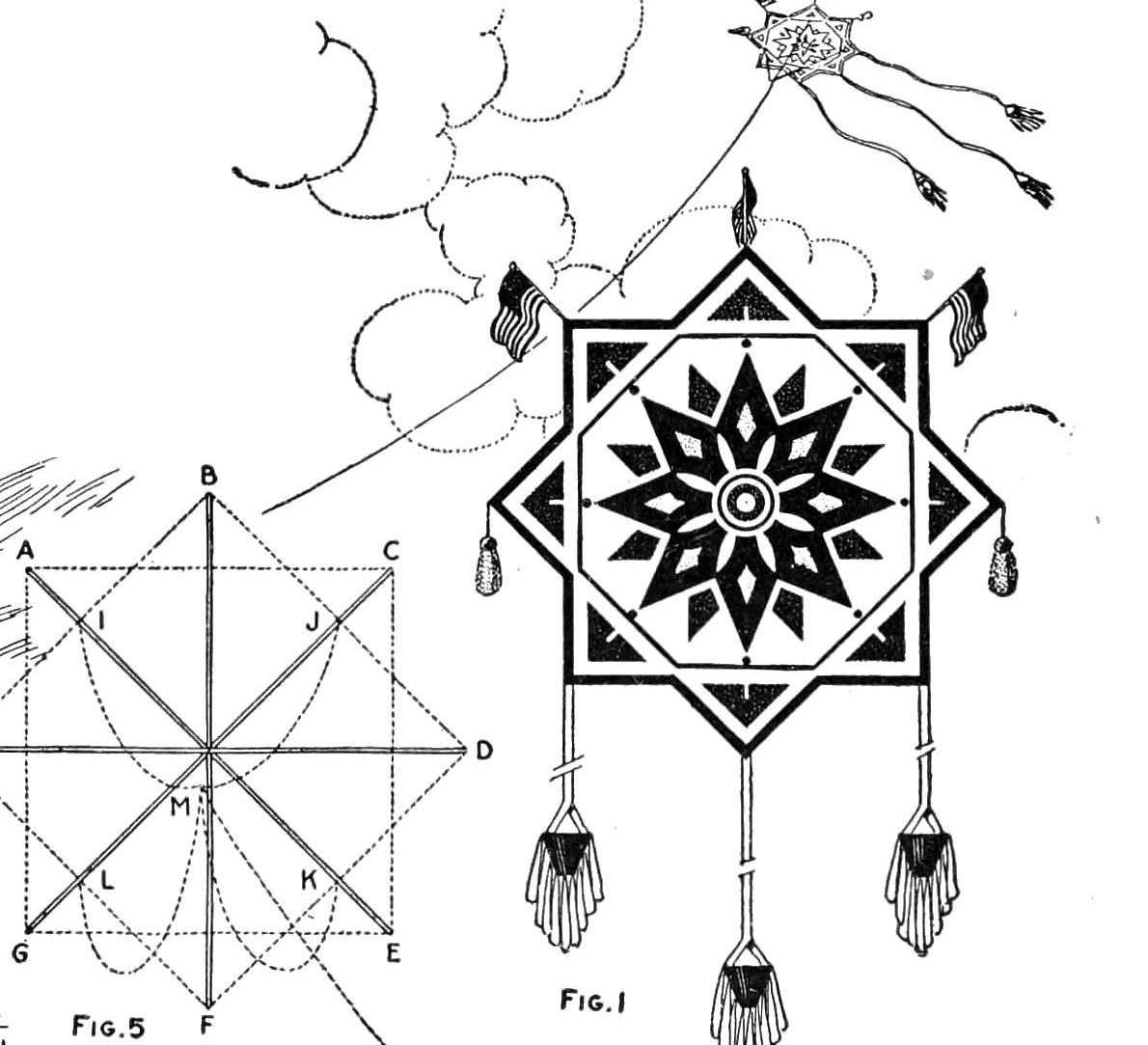


Eight-Pointed Star Kite: Four 4 ft Sticks, Two String Squares and Funnel-Tipped Streamers (Boy Mechanic, 1919)
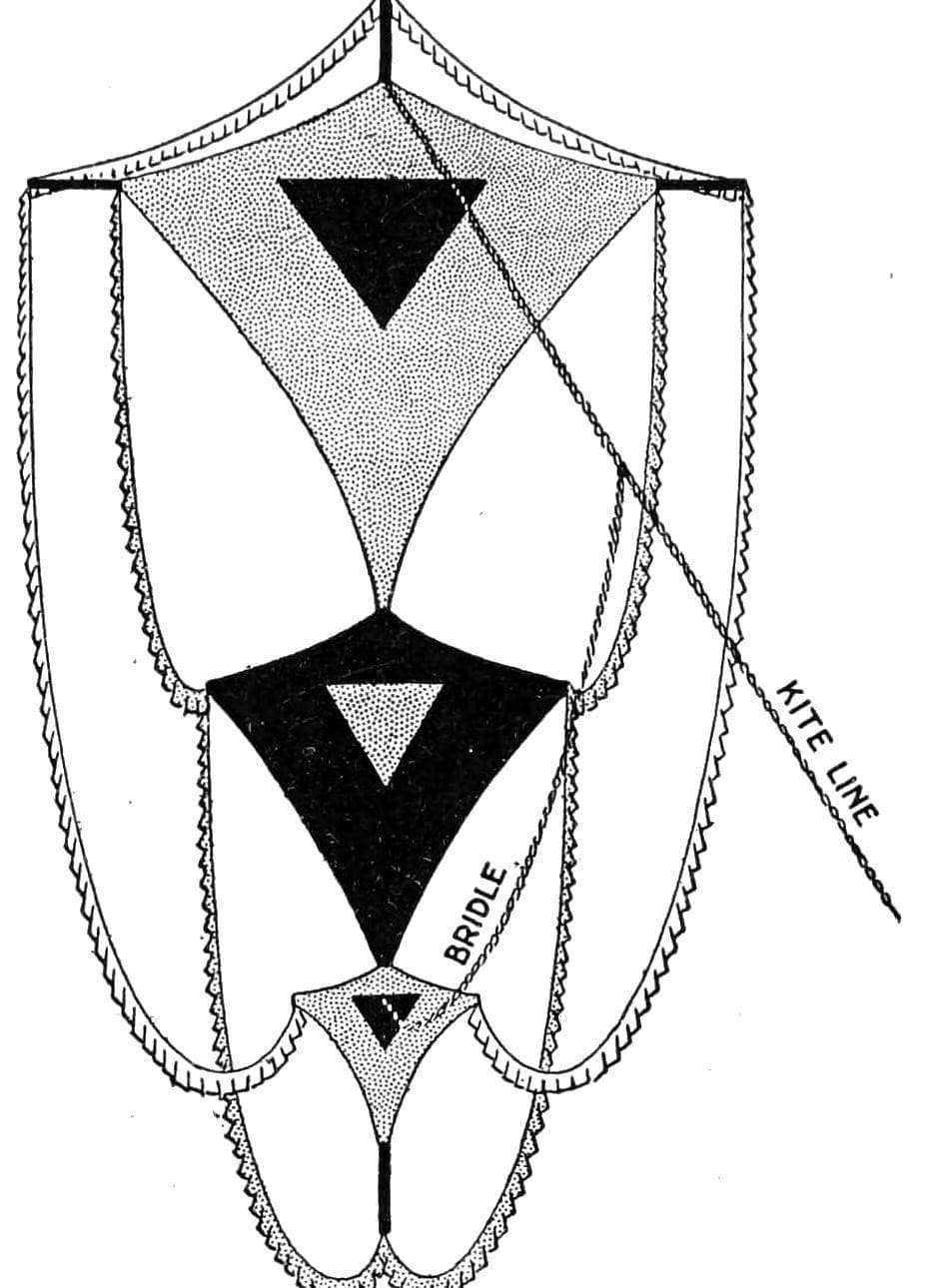
Charles M. Miller's eight-pointed star kite from The Boy Mechanic, Book 3 (1919): four 4 ft sticks crossed in two pairs, two string squares making the star outline, a paper cover with pasted-on decorations, and streamers at least 6 ft long ending in paper funnels that steady it instead of a tail.
Àárín
About 1 day
Ìlànà
1
1
The two squares
The two squares
Ń ṣí ìwé Jupyter…
2
2
Read The Boy Mechanic, Book 3
Read The Boy Mechanic, Book 3
"Any regular-shaped kite should be laid out accurately, as otherwise the error appears very prominent, and unbalances the poise of the kite."
3
3
Make the frame
Make the frame
Cut four sticks 1/4 by 1/2 in by 4 ft. Notch each pair a little where they cross, set them at right angles in pairs, lash them with cord and drive a 3/4 in brad at the centre (Fig. 5).
Àwọn ohun èlò fún ìgbésẹ̀ yìí:
 Igi tẹ́ẹ́rẹ́ rírọ̀4 ẹyọ
 Okùn1 ẹyọ
 Ìṣó1 ẹyọ
Àwọn irinṣẹ́ tí a nílò:
 Ayùn Ọwọ́
 Ọ̀bẹ àpò irin
 Òòlù
 Okùn Ìdíwọ̀n
 Gègé
4
4
String the star
String the star
Run strings from each corner to the second corner beyond, A to C, C to E and so on, making two squares. The squares' sides (A to G, and B to H) must be equal when tied. Tie the strings where they cross each other and the sticks.
Àwọn ohun èlò fún ìgbésẹ̀ yìí:
 Kite String1 ẹyọ
Àwọn irinṣẹ́ tí a nílò:
Okùn Ìdíwọ̀n Ìṣẹ́ná
5
5
Cover and decorate
Cover and decorate
Lay plain light-coloured paper out on a smooth floor or table and paste it on as the first cover, turning the outside edges over the string outline and pasting them down. Paste the darker decorations on top: in his design a 1-1/2 in black stripe round the edge, black figures, an octagonal black line, dark-blue points with a gilt stripe on each, and a centre in black, dark blue and gilt. Brilliant, contrasting colours are best.
Àwọn ohun èlò fún ìgbésẹ̀ yìí:
 Bébà origami4 ewé
 Ìdí ìyẹ̀fun àlìkámà1 ẹyọ
Àwọn irinṣẹ́ tí a nílò:
Ìṣẹ́ná Búrọ́ọ̀ṣì gọ́mù
 Ìdíwọ̀nGègé
6
6
Make the streamers and funnels
Make the streamers and funnels
Make the outside streamers at least 6 ft long of ribbon or dark lining cambric, balanced carefully. For each funnel end, cut heavy wrapping or cover paper as in Fig. 4 (a half circle of 7 in radius) and roll it into a cone with a 1 in opening at the bottom, stiffened at the top by a hoop of thin reed or fine wire. Make them dark blue with a light-blue cloth fringe (Figs. 2-4). Tie on the flags, and tassels made of cord.
Àwọn ohun èlò fún ìgbésẹ̀ yìí:
 Aṣọ Òwú1 ẹyọ
 Ìwé pátákó nípọn1 ẹyọ
 Esùsú gbígbẹ1 ẹyọOkùn1 ẹyọÌdí ìyẹ̀fun àlìkámà1 ẹyọ
Àwọn irinṣẹ́ tí a nílò:
Ìṣẹ́ná Kọ́mpasiỌ̀bẹ àpò irin
7
7
Bridle
Bridle
Fasten a four-string bridle to the frame at I, J, K and L: the upper strings 18 in and the lower ones 32 in long to where they meet. Fasten the kite line at M and then adjust the bridle.
Àwọn ohun èlò fún ìgbésẹ̀ yìí:
Kite String1 ẹyọÀwọn irinṣẹ́ tí a nílò:
Okùn Ìdíwọ̀n8
8
Flying and troubleshooting
Flying and troubleshooting
Star kite flying.
Flow
Loading...
9
9
History and honest limits
History and honest limits
From "An Eight-Pointed Star Kite" by Charles M. Miller, in **The Boy Mechanic, Book 3**, Popular Mechanics, 1919 (Project Gutenberg 71856; checked on the archive.org scan boymechanic0003unse, pp. 159-160). He does not say what the flags are made of or which paste to use; the gilt is not specified. The tools and metric figures are ours.
Àwọn ohun-èlò
9- 4 ẹyọÀyè
- 2 ẹyọÀyè
- 1 ẹyọÀyè
- 2 ẹyọÀyè
- 4 ewéÀyè
- 1 ẹyọÀyè
- 1 ẹyọÀyè
- 1 ẹyọÀyè
- 1 ẹyọÀyè
Ìtọ́nisọ́nà yìí ń ṣe
Blueprint tó jọra
Àwọn blueprint wọ̀nyí pín ìmọ̀ — ọ̀nà, ohun-èlò tàbí ìlànà
CC0 Àgbègbè Gbogbogbò
Blueprint yìí ti jáde lábẹ́ CC0. O lè ṣe àdàkọ, yí padà, pín, àti lò láìsí ìyọ̀ǹda.
Ṣàtìlẹ́yìn Olùṣẹ́dá nípa rírà àwọn ọjà nipasẹ̀ Blueprint wọn Ẹ̀san Olùṣẹ́dá tí àwọn Olùtajà gbé kalẹ̀, tàbí ṣẹ̀dá àtúnṣe tuntun ti Blueprint yìí kí o sì fi sínú Blueprint rẹ gẹ́gẹ́ bí ìsopọ̀ láti pín owó-wíwọlé.