IṢẸ́ ỌNÀ
ẸWÀ ÀTI ÌLERA
IṢẸ́ ỌWỌ́
ÀṢÀ ÀTI ÌTÀN
ÌṢERÉ
ÀYÍKÁ
OÚNJẸ ÀTI OHUN MÍMU
REVERSE ENGINEERING
SÁYẸ́ǸSÌ
ERÉ ÌDÁRAYÁ
ÌMỌ̀-Ẹ̀RỌ
ÀWỌN OHUN WÍWỌ̀
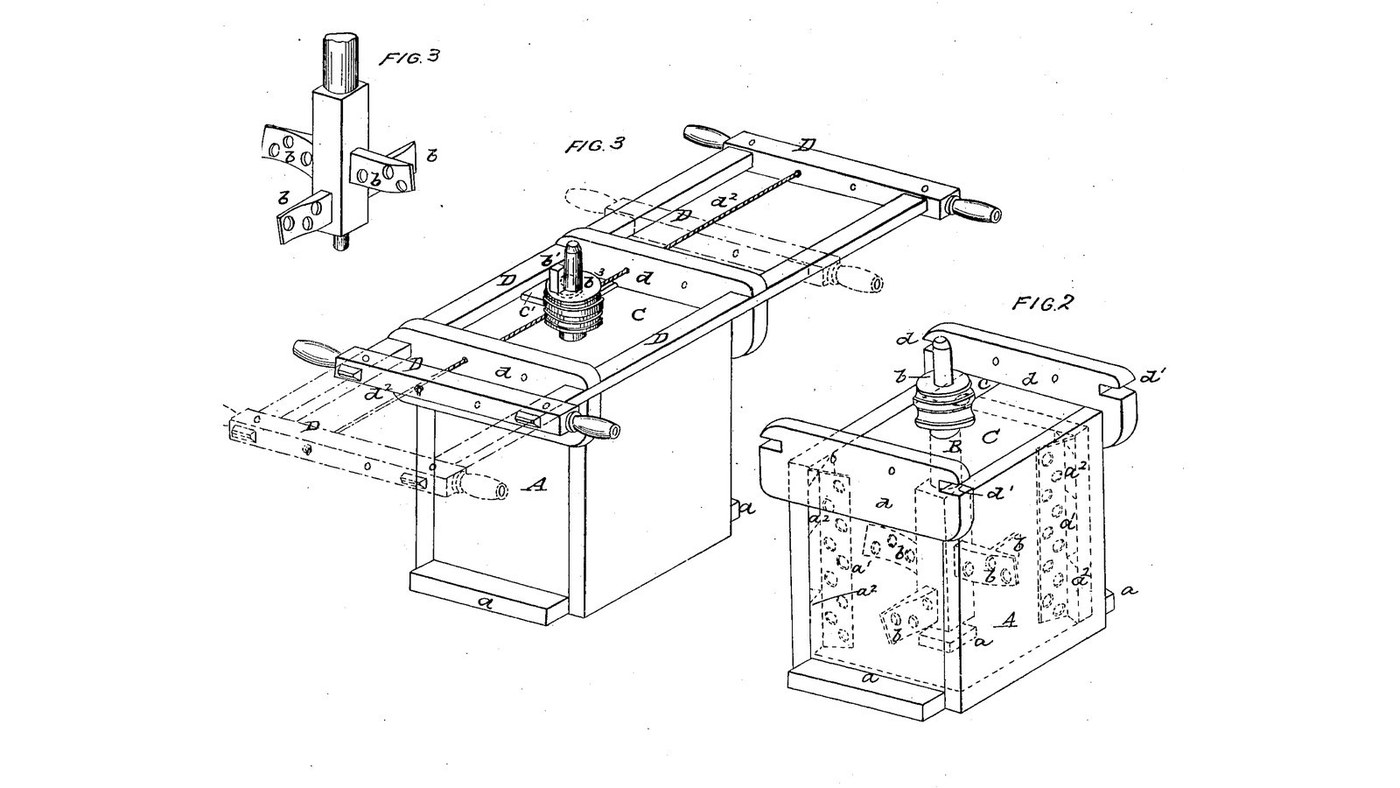

Sliding-Frame Churn: Push and Pull a Frame on Top and a Cord Spins Tilted, Perforated Beaters Back and Forth
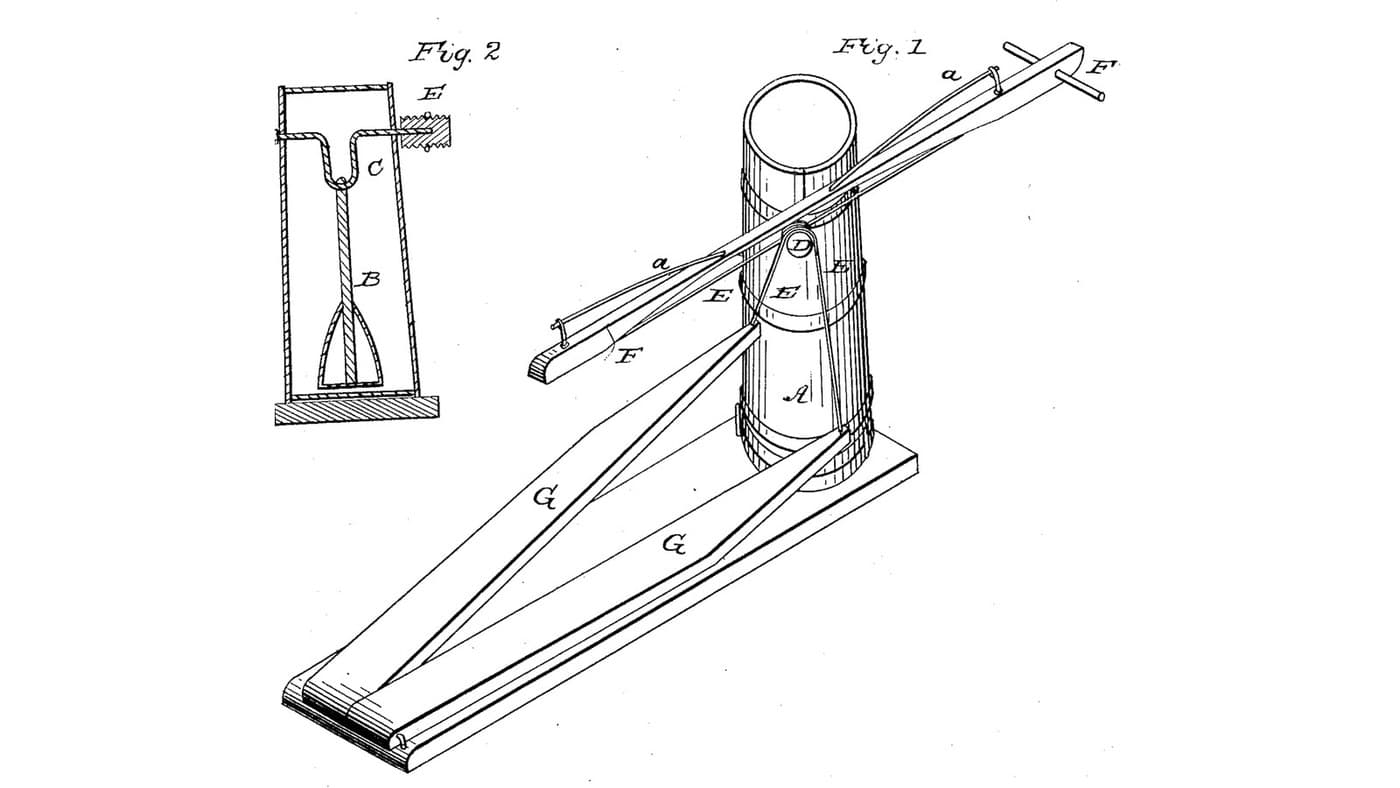
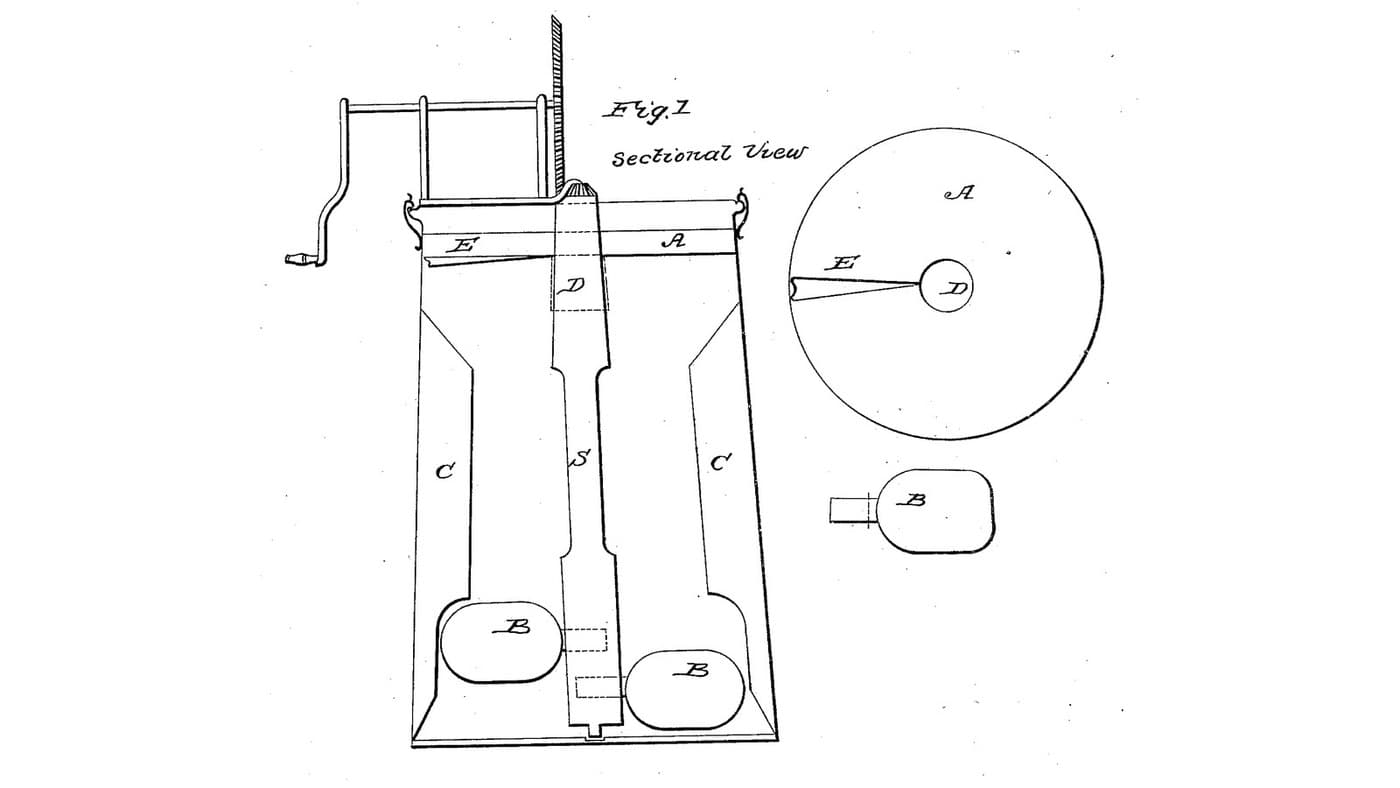
William Morgan of Middlebrook, Virginia, received US 27,559, dated 20 March 1860, for a churn. A frame sliding in slotted ledges on top of a square box is pushed and pulled by its handles; a cord from the frame, wound round a pulley on the upright dasher shaft, spins the dasher first one way then the other. Its beaters are perforated and tilted 5 to 10 degrees, and perforated breakers stand in the box's corners. A large one can be worked by two people.
The patent gives the beaters' proportions; every size here is ours.
Àárín
About 2 days, plus printing
Ìlànà
1
1
From a push to a turn
From a push to a turn
Ń ṣí ìwé Jupyter…
2
2
A cord that turns a shaft back and forth, five weeks before
A cord that turns a shaft back and forth, five weeks before
Willson's bow pulls a cord round a whirl. Morgan's frame does the same, guided in slots.
3
3
Tilted beaters on an upright shaft, one week before
Tilted beaters on an upright shaft, one week before
Wiswell's scoops lean by different amounts. Morgan's beaters all lean one way, and are perforated.
4
4
Read US 27,559
Read US 27,559
"These beaters I construct of a depth two or three times greater than their width, and set them at an angle of from five to ten degrees to the perpendicular of the dasher-shaft, and so that they all incline one way. They are also perforated with a series of holes to effect a more minute subdivision of the particles of the milk."
5
5
Print the pulley b3
Print the pulley b3
Pulley 80 mm across, 30 high, with a round groove for a 5 mm cord and a hub; bored 25.4 mm, cross-drilled for the key. PETG, 0.2 mm layers, 40 % infill, 4 walls.
6
6
Box A, ledge a, lid C and step a3
Box A, ledge a, lid C and step a3
From 20 mm hardwood board make a box 300 x 300 mm inside and 400 deep, glued and screwed, its inside joints sealed with silicone sealant, standing on a base board 40 mm larger all round as the ledge a. Screw a hardwood block 60 x 60 x 20 mm in the floor's centre as the step a3 and bore it 21 mm, 15 deep. Cut a lid to fit inside the top, bored 26 mm in the centre for the shaft and 40 mm near one corner for the filling opening; fit a rubber stopper as the plug c.
Àwọn ohun èlò fún ìgbésẹ̀ yìí:
 Pátákó Igi Líle3 ẹyọ
 Ìṣù Igi Líle1 ẹyọ
 Ìdìpọ̀ Igi1 ẹyọ
 Ìṣó igi40 ẹyọ
 Ìdílẹ̀ Silikoni1 ẹyọ
 Ìdí rọ́bà1 ẹyọ
Àwọn irinṣẹ́ tí a nílò:
 Ayùn tábìlì
 Ẹ̀rọ Ìlùkòkò Aláìlókùn
 Àkójọ Orí Ìlùkòkò
 Àkójọ orí kànnàkànnà
 Ìdìmú oní-ọ̀pá
 Ìṣù àwọn ohun ìyí skurú
 Okùn Ìdíwọ̀n
7
7
Breakers a' in strips a2
Breakers a' in strips a2
Cut four triangular hardwood strips 50 mm on the short sides, 350 long, with a 15 mm slot along each, and glue and screw one into each corner. Cut four hardwood breakers 60 x 15 mm, 350 long, drill each with two rows of 12 mm holes, and slide them into the slots so their edges face the shaft, 140 mm from it; they lift out for cleaning.
Àwọn ohun èlò fún ìgbésẹ̀ yìí:
Pátákó Igi Líle1 ẹyọÌdìpọ̀ Igi1 ẹyọÌṣó igi8 ẹyọÀwọn irinṣẹ́ tí a nílò:
Ayùn tábìlì Ìdìpọ̀ àyà igiẸ̀rọ Ìlùkòkò AláìlókùnÀkójọ Orí Ìlùkòkò
 Bébà ÌfáÌṣù àwọn ohun ìyí skurú
8
8
Dasher-shaft B and beaters b
Dasher-shaft B and beaters b
Cut a 35 mm square hardwood shaft 375 mm long; turn or carve its foot to a 20 mm round pin 15 long and its top to a 25 mm round 90 long. Cut two hardwood beaters 220 x 50 x 20 mm, two and a half times as deep as wide, and drill each with four 14 mm holes. Mortise them through the shaft at right angles to each other, 55 and 115 mm above the floor, each tilted 8 degrees from upright, both the same way, checked with the protractor.
Àwọn ohun èlò fún ìgbésẹ̀ yìí:
Pátákó Igi Líle1 ẹyọÌdìpọ̀ Igi1 ẹyọÀwọn irinṣẹ́ tí a nílò:
Ayùn tábìlìÌdìpọ̀ àyà igiẸ̀rọ Ìlùkòkò AláìlókùnÀkójọ Orí ÌlùkòkòÀkójọ orí kànnàkànnà Ẹ̀rọ Ìwọ̀n IgunBébà Ìfá
9
9
Ledges d, sliding frame D, pulley and cord d2
Ledges d, sliding frame D, pulley and cord d2
Screw a hardwood ledge 50 x 50 mm, 420 long, on the top of each of two opposite sides; cut a slot 26 mm wide and 32 deep across each ledge 180 mm each side of the middle, and lower the ledges' middle 15 mm to clear the cord. Make the frame from two bars 24 x 30 mm, 700 long, and two cross-bars 24 x 30 mm, 384 long, pinned at the corners with dowels so it comes apart, with a turned dowel handle on each bar's ends. Set the bars in the slots. Key the pulley on the shaft's top with a dowel through both. Tie a cord to one cross-bar, take it round the pulley two or three times, and tie it to the other, tight.
Àwọn ohun èlò fún ìgbésẹ̀ yìí:
Pátákó Igi Líle2 ẹyọ Àwọn dowel igi líle2 ẹyọÌdìpọ̀ Igi1 ẹyọÌṣó igi8 ẹyọ
 Okùn1 ẹyọ
 Okùn PETG1 ẹyọ
Àwọn irinṣẹ́ tí a nílò:
 Ẹ̀rọ ìtẹ̀ 3D oníwàyà (FDM)Ayùn tábìlìÌdìpọ̀ àyà igiẸ̀rọ Ìlùkòkò AláìlókùnÀkójọ Orí ÌlùkòkòÌdìmú oní-ọ̀páÌṣù àwọn ohun ìyí skurú
10
10
The build in 3D
The build in 3D
FreeCAD model of this build, one side left off: the shaft on its step with the two tilted beaters, the breakers in the corners, the lid, the ledges with their slots, the sliding frame and the cord round the pulley.
11
11
Churn
Churn
Pour about 10 litres of heavy cream at about 15 °C, checked with the thermometer, through the filling opening and put in the plug. Take the frame's handles and push and pull it steadily, timing it; with a large churn two people can work it, one each side. When the butter comes, lift off the frame, pulley and lid, lift out the dasher and breakers, take out the butter, tip the buttermilk into a bowl, wash the butter in cold water until it runs clear, salt and weigh it.
Àwọn ohun èlò fún ìgbésẹ̀ yìí:
 Ọ̀rá wàrà tó nípọn10 l
 Iyọ̀ Òkun Rúkèrúdò1 ẹyọ
 Omi1 ẹyọ
Àwọn irinṣẹ́ tí a nílò:
 Ẹ̀rọ ìwọ̀n ooru oníhun tí ó dúró sí inú
 Aago Ìdúró
 Òṣùwọ̀n Díjítà Ilé Ìdáná
 Àwo ìdàpọ̀ ńlá ti irin tí kò ń yá
12
12
Troubleshooting
Troubleshooting
Sliding-frame churn troubleshooting.
Flow
Loading...
13
13
History and honest limits
History and honest limits
**William Morgan** of Middlebrook, Augusta County, Virginia, US 27,559, 20 March 1860, "Churn". He did not claim dashers turned back and forth, nor the forms of dashers and breakers, but the inclined perforated beaters with the removable perforated breakers and the sliding frame. He made it all of hard wood, "oak, ash, hickory &c.", with no metal; ours is hardwood with a printed pulley. The beaters' proportions are his; every size is ours.
Àwọn ohun-èlò
12- 3 ẹyọÀyè
- 1 ẹyọÀyè
- 4 ẹyọÀyè
- 56 ẹyọÀyè
- 1 ẹyọÀyè
- 1 ẹyọÀyè
- 2 ẹyọÀyè
- 1 ẹyọÀyè
- 1 ẹyọÀyè
- Àyè
- 1 ẹyọÀyè
- 1 ẹyọÀyè
Àwọn irinṣẹ́ tó nílò
15- 1 vendor sell this, none ship to you yetÀyè
- 1 vendor sell this, none ship to you yetÀyè
- 1 vendor sell this, none ship to you yetÀyè
- Àyè
- Àyè
Àwọn fáìlì àpẹrẹ
2Ìtọ́nisọ́nà yìí ń ṣe

Blueprint tó jọra
Àwọn blueprint wọ̀nyí pín ìmọ̀ — ọ̀nà, ohun-èlò tàbí ìlànà
Spring-Bow Churn: A Bow With Two Springs Keeps Its Cord Tight Round a Screw Whirl on the Crank Shaft
láti ọwọ́ Buttercup
Iṣẹ́ Igi
13
0
0
0
0
0
Leaning-Scoop Churn: Three Scoops Tilted 10, 5 and 0 Degrees Throw the Cream at Sharp-Topped Ribs and a Slit Cover
láti ọwọ́ Buttercup
Iṣẹ́ Igi
10
0
0
0
0
0
Churning Butter from Cream — The 5,000-Year-Old Fat Separation
láti ọwọ́ TheChef
IṢẸ́ ỌWỌ́
63
0
0
0
0
0
CC0 Àgbègbè Gbogbogbò
Blueprint yìí ti jáde lábẹ́ CC0. O lè ṣe àdàkọ, yí padà, pín, àti lò láìsí ìyọ̀ǹda.
Ṣàtìlẹ́yìn Olùṣẹ́dá nípa rírà àwọn ọjà nipasẹ̀ Blueprint wọn Ẹ̀san Olùṣẹ́dá tí àwọn Olùtajà gbé kalẹ̀, tàbí ṣẹ̀dá àtúnṣe tuntun ti Blueprint yìí kí o sì fi sínú Blueprint rẹ gẹ́gẹ́ bí ìsopọ̀ láti pín owó-wíwọlé.