IṢẸ́ ỌNÀ
ẸWÀ ÀTI ÌLERA
IṢẸ́ ỌWỌ́
ÀṢÀ ÀTI ÌTÀN
ÌṢERÉ
ÀYÍKÁ
OÚNJẸ ÀTI OHUN MÍMU
REVERSE ENGINEERING
SÁYẸ́ǸSÌ
ERÉ ÌDÁRAYÁ
ÌMỌ̀-Ẹ̀RỌ
ÀWỌN OHUN WÍWỌ̀
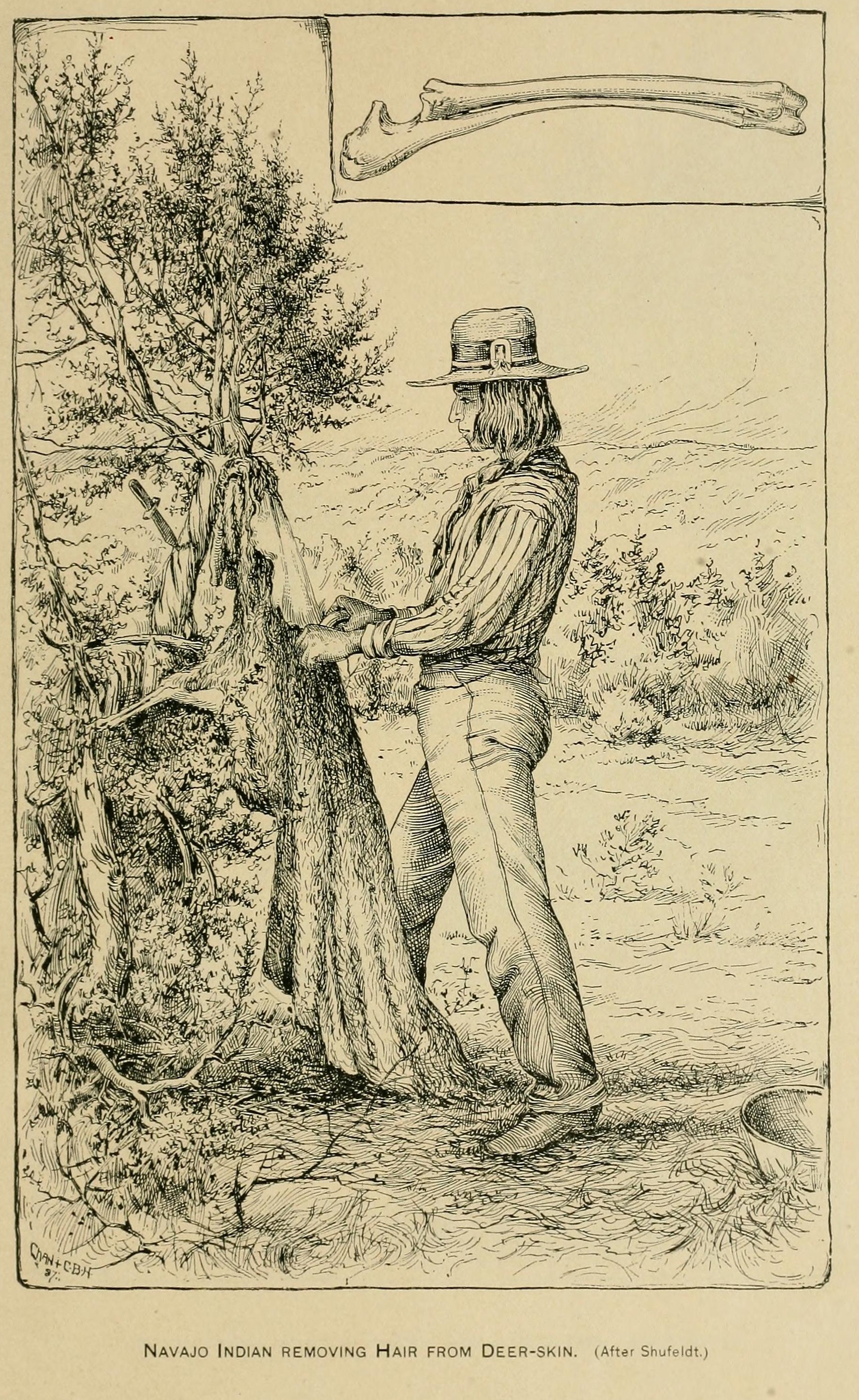


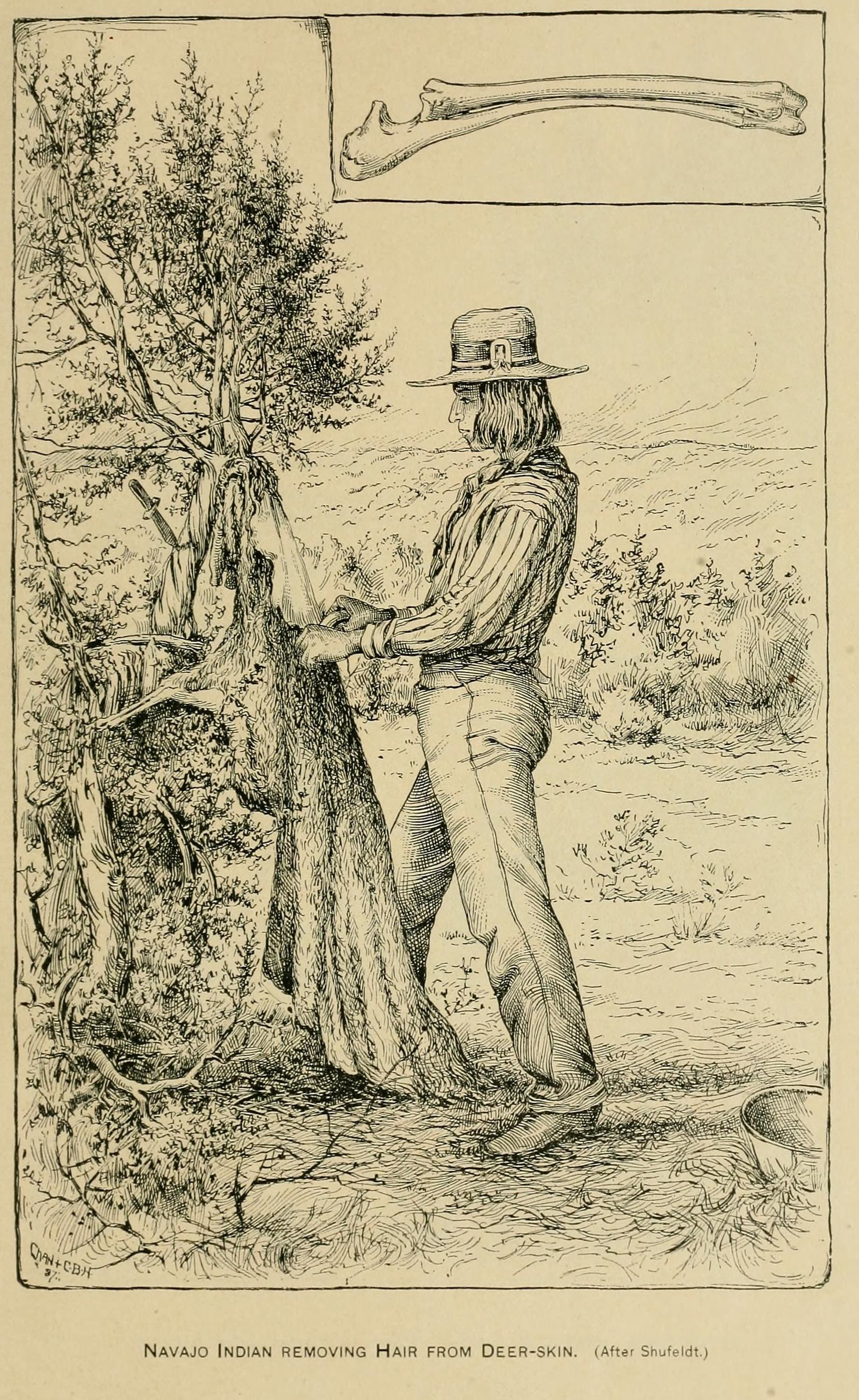
Navajo Hide-Scraping Beam: Small Pine Trunk Barked on One Side, Notched and Braced Under a Tree Limb (Shufeldt, 1888)
The quick beam a Navajo (Diné) tanner set up to shave a deer hide, as Dr. R. W. Shufeldt watched it made: a small pine trunk about 6 in. thick at the butt and 4 in. at the top, barked smooth on one side of its thick half, notched at the big end and wedged up under the limb of a small tree, the thin end on the ground about 2 ft from the trunk, with clean hay spread underneath.
Olùbẹ̀rẹ̀
An hour
Ìlànà
1
1
Read Shufeldt
Read Shufeldt
"He next cut a deep notch in the big end of this stick, so as to assist in bracing it against the limb of a small cedar tree near by."
2
2
Cut and bark the trunk
Cut and bark the trunk
Cut the trunk of a small pine, about 6 in. (15 cm) through at the thick end and 4 in. (10 cm) at the small end (length ours: about 2.5 m). Strip the bark off one side of the thicker half so the smooth wood shows; that is the working face.
Àwọn ohun èlò fún ìgbésẹ̀ yìí:
 Ọ̀pá igi tútù1 ẹyọ
Àwọn irinṣẹ́ tí a nílò:
 Àáké
 Ọ̀bẹ Ìfàsẹ́yìn
3
3
Notch and brace it
Notch and brace it
Cut a deep notch in the big end. Brace that end up under the limb of a small tree, smooth face toward you, with the small end set firmly on the ground about 2 ft (60 cm) from the base of the tree. Strew clean short hay around so the hide stays clean.
Àwọn ohun èlò fún ìgbésẹ̀ yìí:
 Koríko gbígbẹ1 ẹyọ
Àwọn irinṣẹ́ tí a nílò:
Àáké Ọ̀bẹ
4
4
Use it
Use it
Throw the hide over the log with the head skin caught between the notch and the limb, the hind end toward the ground, and shift it as you scrape.
Àwọn irinṣẹ́ tí a nílò:
Ọ̀bẹ5
5
Troubleshooting
Troubleshooting
Beam troubleshooting.
Flow
Loading...
6
6
History and honest limits
History and honest limits
From R. W. Shufeldt's account in Otis T. Mason, "Aboriginal Skin-Dressing", **Report of the U.S. National Museum for 1889** (1891), pp. 575-576 and Plate LXII (checked on the archive.org scan aboriginalskindr00maso). The full tanning process is the Navajo brain-tanned buckskin blueprint. Log length is ours.
Àwọn ohun-èlò
2- 1 ẹyọÀyè
- 1 ẹyọÀyè
Ìtọ́nisọ́nà yìí ń ṣe
Blueprint tó jọra
Àwọn blueprint wọ̀nyí pín ìmọ̀ — ọ̀nà, ohun-èlò tàbí ìlànà
Navajo Buckskin: Hair Shaved with the Deer's Own Foreleg Bone, Brains Rubbed In, Wrung on a Tree, Worked Dry over the Feet (Shufeldt, 1888)
láti ọwọ́ Tex
Aṣọ àti Awọ
6
0
0
0
0
0
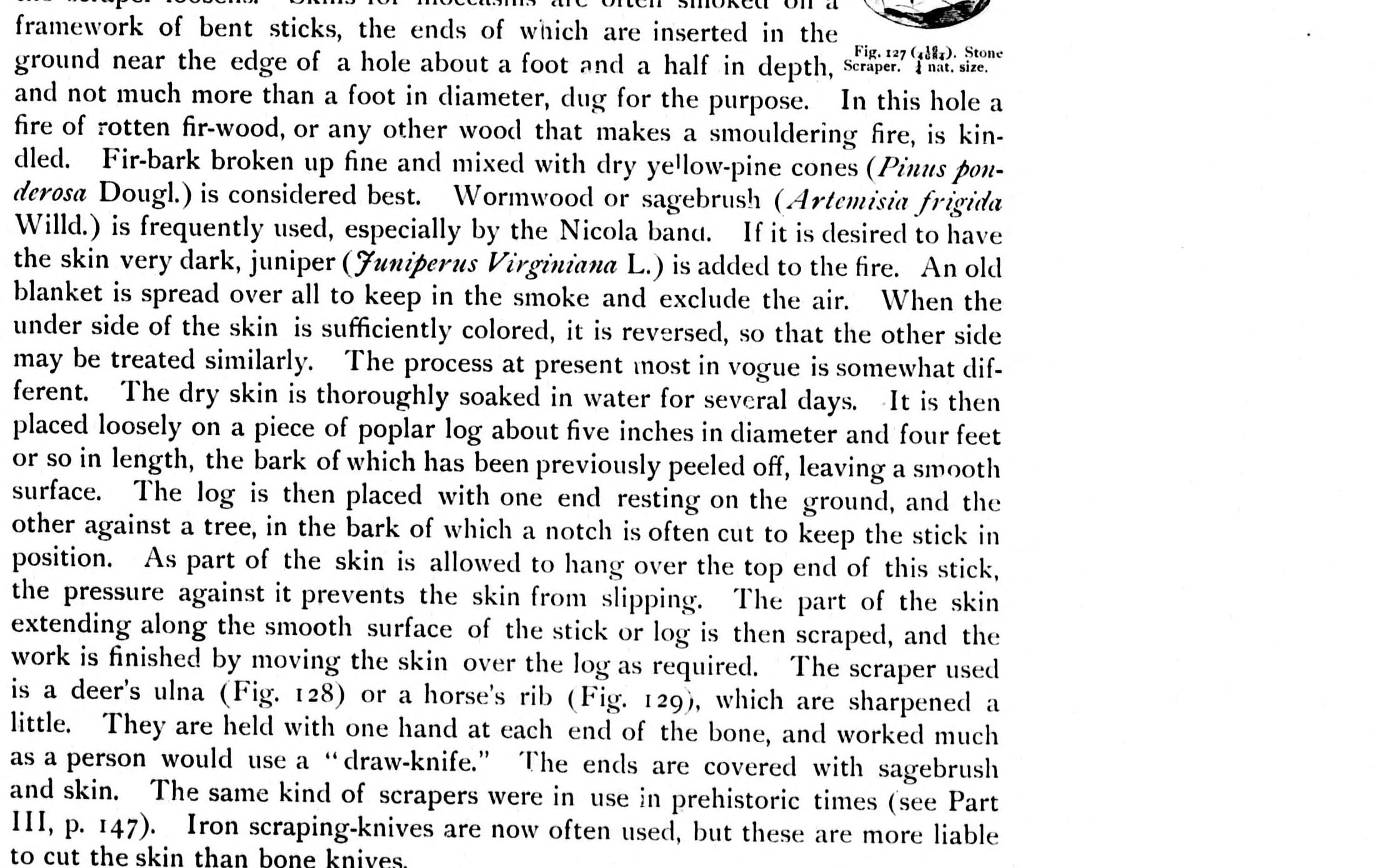
Thompson (Nlaka'pamux) Smoked Buckskin: Scraped on a Leaning Poplar Log with a Deer Ulna, Soap-Soaked, Wrung, Pounded Soft, Smoked (Teit, 1900)
láti ọwọ́ Tex
Aṣọ àti Awọ
17
0
0
0
0
0
CC0 Àgbègbè Gbogbogbò
Blueprint yìí ti jáde lábẹ́ CC0. O lè ṣe àdàkọ, yí padà, pín, àti lò láìsí ìyọ̀ǹda.
Ṣàtìlẹ́yìn Olùṣẹ́dá nípa rírà àwọn ọjà nipasẹ̀ Blueprint wọn Ẹ̀san Olùṣẹ́dá tí àwọn Olùtajà gbé kalẹ̀, tàbí ṣẹ̀dá àtúnṣe tuntun ti Blueprint yìí kí o sì fi sínú Blueprint rẹ gẹ́gẹ́ bí ìsopọ̀ láti pín owó-wíwọlé.