IṢẸ́ ỌNÀ
ẸWÀ ÀTI ÌLERA
IṢẸ́ ỌWỌ́
ÀṢÀ ÀTI ÌTÀN
ÌṢERÉ
ÀYÍKÁ
OÚNJẸ ÀTI OHUN MÍMU
REVERSE ENGINEERING
SÁYẸ́ǸSÌ
ERÉ ÌDÁRAYÁ
ÌMỌ̀-Ẹ̀RỌ
ÀWỌN OHUN WÍWỌ̀

Thompson (Nlaka'pamux) Smoked Buckskin: Scraped on a Leaning Poplar Log with a Deer Ulna, Soap-Soaked, Wrung, Pounded Soft, Smoked (Teit, 1900)
The Thompson (Nlaka'pamux) buckskin James Teit saw made around 1900: a soaked hide scraped on a peeled poplar log leaning against a tree with a deer's ulna or a horse rib used like a draw-knife, smoked over a small pit of smouldering rotten wood, soaked a day in soapy water, wrung with dry grass on a log and stick, pounded soft on a frame and smoked again.
Ilọsíwájú
About a week
Ìlànà
1
1
Read Teit
Read Teit
"It is said that, after being smoked, the skin does not shrink so much when it gets wet as it otherwise would."
2
2
Soak and set up the log
Soak and set up the log
Soak the dry skin in water for several days. Peel a poplar log about 5 in. (13 cm) thick and 4 ft (1.2 m) long; stand one end on the ground and lean the other against a tree, in a notch cut in its bark.
Àwọn ohun èlò fún ìgbésẹ̀ yìí:
 Awọ tútù1 ẹyọ
 Omi1 ẹyọ
 Ọ̀pá igi tútù1 ẹyọ
Àwọn irinṣẹ́ tí a nílò:
 Igi ìpa awọ
3
3
Scrape both sides
Scrape both sides
Lay the skin loosely over the log with some hanging over the top so the pressure holds it. Scrape the flesh side with a slightly sharpened deer ulna or horse rib held at both ends like a draw-knife, moving the skin as you go; then the hair side, taking the dark outer skin off with the hair. Bone cuts the skin less than iron.
Àwọn irinṣẹ́ tí a nílò:
 Ohun èlò ìpa awọIgi ìpa awọ
4
4
Dry and smoke
Dry and smoke
Hang it over a pole to dry. Dig a hole about 1½ ft (45 cm) deep and a little over 1 ft (30 cm) across, light a smouldering fire of rotten fir wood (fir bark with dry pine cones is best; juniper for a very dark colour), set a frame of bent sticks over it, spread the skin on it and cover all with an old blanket. Turn it to smoke the other side.
Àwọn ohun èlò fún ìgbésẹ̀ yìí:
 Igi jíjẹrà1 ẹyọ
 Ọ̀pá willow1 ẹyọ
Àwọn irinṣẹ́ tí a nílò:
 Ọkọ́
 Ihò iná
 Aṣọ kánfásì
 Òpó igi
5
5
Soap, wring and pound
Soap, wring and pound
Soak it 24 hours or more in warm water with a strong soap solution. Roll it lengthwise with a little dry grass, tie one end to a log with a rope, fold the other round a short stout stick and turn until the water is wrung out. Stretch it on a frame and pound the inside until quite dry and soft (warm it by a fire in cold weather), then smoke it again.
Àwọn ohun èlò fún ìgbésẹ̀ yìí:
 Ọṣẹ1 ẹyọOmi1 ẹyọ
 Koríko gbígbẹ1 ẹyọ
Àwọn irinṣẹ́ tí a nílò:
 Ìkòkò aró ńlá
 Okùn
 Ọ̀pá ìrú igiÒpó igi
6
6
Troubleshooting
Troubleshooting
Smoked buckskin troubleshooting.
Flow
Loading...
7
7
History and honest limits
History and honest limits
From James Teit, *The Thompson Indians of British Columbia*, **Memoirs of the American Museum of Natural History, Jesup North Pacific Expedition** vol. I part IV (1900), pp. 185-186 and Figs. 127-129 (checked on the archive.org scan cihm_16242). Some said smoking came from the Okanagon; many held that a skin rubbed with brains needs no smoking (see the Navajo brain-tan blueprint). Corncob smoke gave a bright yellow. Frame size and hay for the dry grass are ours.
Àwọn ohun-èlò
7- 1 ẹyọÀyè
- 2 ẹyọÀyè
- 1 ẹyọÀyè
- 1 ẹyọÀyè
- 1 ẹyọÀyè
- 1 ẹyọÀyè
- 1 ẹyọÀyè
Ìtọ́nisọ́nà yìí ń ṣe
Blueprint tó jọra
Àwọn blueprint wọ̀nyí pín ìmọ̀ — ọ̀nà, ohun-èlò tàbí ìlànà
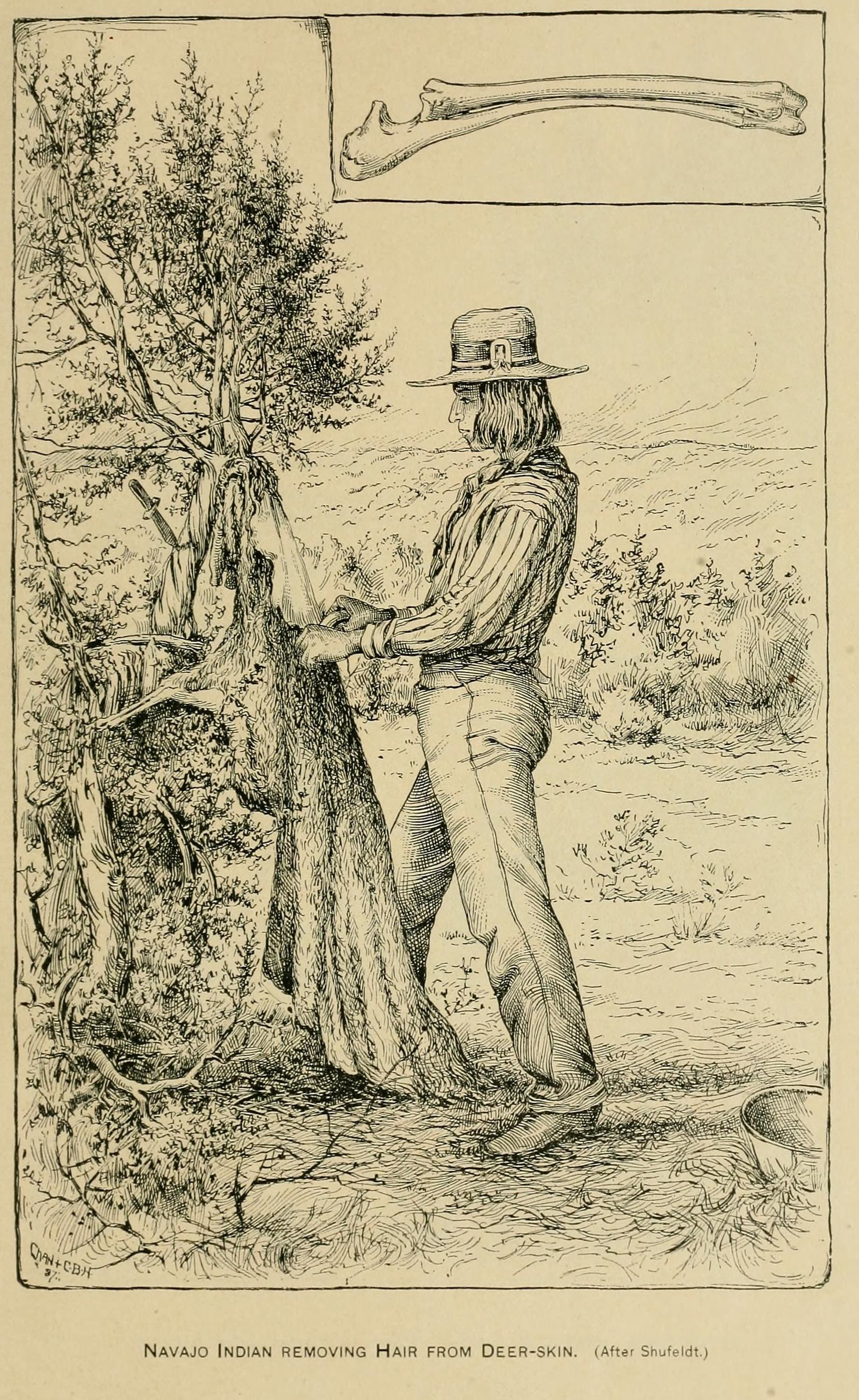
Navajo Buckskin: Hair Shaved with the Deer's Own Foreleg Bone, Brains Rubbed In, Wrung on a Tree, Worked Dry over the Feet (Shufeldt, 1888)
láti ọwọ́ Tex
Aṣọ àti Awọ
6
0
0
0
0
0
Blackfoot Sinew Thread: Dried Leg and Neck Sinew Shredded, Softened and Rolled Between the Palms (Wissler, 1910)
láti ọwọ́ Tex
Aṣọ àti Awọ
11
0
0
0
0
0
CC0 Àgbègbè Gbogbogbò
Blueprint yìí ti jáde lábẹ́ CC0. O lè ṣe àdàkọ, yí padà, pín, àti lò láìsí ìyọ̀ǹda.
Ṣàtìlẹ́yìn Olùṣẹ́dá nípa rírà àwọn ọjà nipasẹ̀ Blueprint wọn Ẹ̀san Olùṣẹ́dá tí àwọn Olùtajà gbé kalẹ̀, tàbí ṣẹ̀dá àtúnṣe tuntun ti Blueprint yìí kí o sì fi sínú Blueprint rẹ gẹ́gẹ́ bí ìsopọ̀ láti pín owó-wíwọlé.