IṢẸ́ ỌNÀ
ẸWÀ ÀTI ÌLERA
IṢẸ́ ỌWỌ́
ÀṢÀ ÀTI ÌTÀN
ÌṢERÉ
ÀYÍKÁ
OÚNJẸ ÀTI OHUN MÍMU
REVERSE ENGINEERING
SÁYẸ́ǸSÌ
ERÉ ÌDÁRAYÁ
ÌMỌ̀-Ẹ̀RỌ
ÀWỌN OHUN WÍWỌ̀
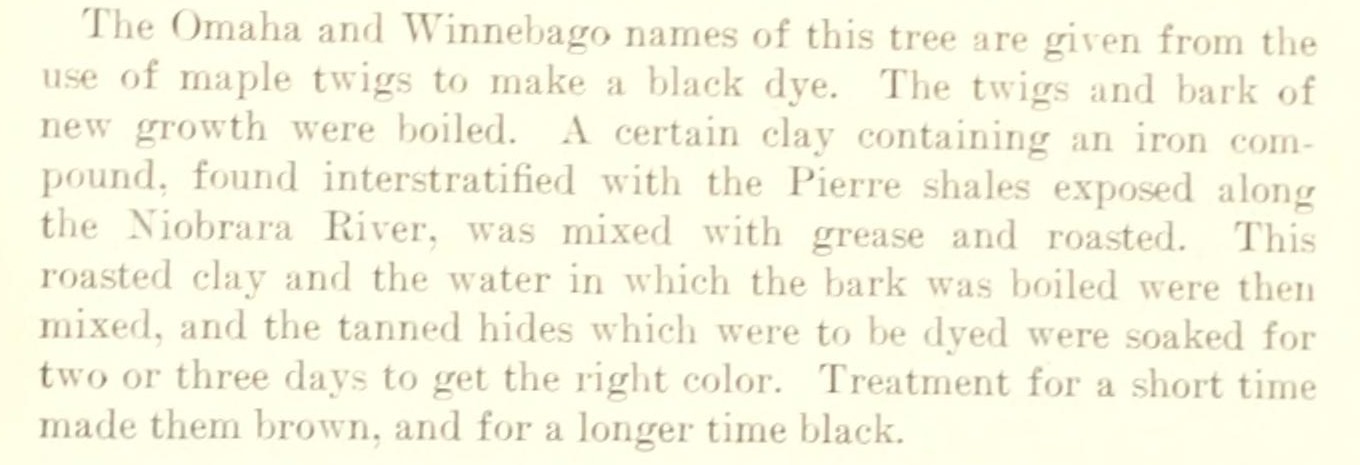

Omaha and Winnebago Black Dye for Tanned Hides: Soft Maple Twigs Boiled, Iron Clay Roasted with Grease (Gilmore, 1919)
Why the Omaha and Winnebago called the soft maple "tree to dye black", from Melvin Gilmore's record: twigs and bark of new growth boiled, an iron-bearing clay roasted with grease and stirred in, and tanned hides soaked in it two or three days: a short soak gives brown, a long one black.
Olùbẹ̀rẹ̀
Two or three days of soaking
Ìlànà
1
1
Read Gilmore
Read Gilmore
"Treatment for a short time made them brown, and for a longer time black."
2
2
Boil the maple
Boil the maple
Cut twigs and bark of new growth from a soft maple and boil them in water (amounts and time ours: a pot packed with twigs, boiled until the water is dark).
Àwọn ohun èlò fún ìgbésẹ̀ yìí:
 Soft Maple Twigs1 ẹyọ
 Omi1 ẹyọ
Àwọn irinṣẹ́ tí a nílò:
 Ọ̀bẹ
 Kẹ́tù Irin
 Ihò iná
3
3
Roast the clay
Roast the clay
Mix the iron-bearing clay with grease and roast it (theirs came from beds in the Pierre shale along the Niobrara River). Ours: in an old pan over the fire until it darkens.
Àwọn ohun èlò fún ìgbésẹ̀ yìí:
 Iron-bearing Clay1 ẹyọ
 Ọ̀rá Ẹranko1 ẹyọ
Àwọn irinṣẹ́ tí a nílò:
Kẹ́tù IrinIhò iná4
4
Mix and soak the hides
Mix and soak the hides
Stir the roasted clay into the maple water and soak the tanned hides in it for two or three days. Take them out early for brown, leave them longer for black. Rinse and dry them (ours).
Àwọn ohun èlò fún ìgbésẹ̀ yìí:
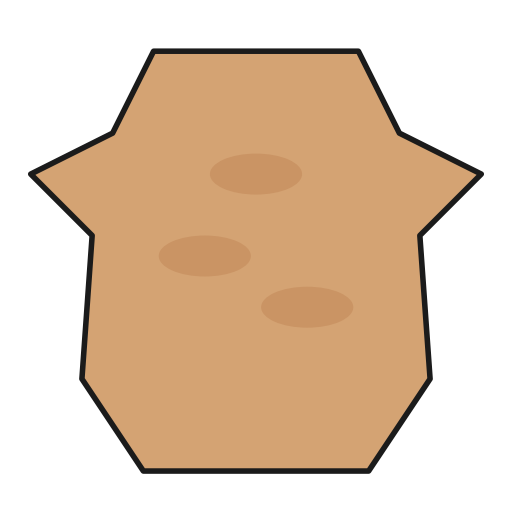 Awọ àgbọ̀nrín rírọ̀1 ẹyọ
Àwọn irinṣẹ́ tí a nílò:
 Ìkòkò aró ńlá
5
5
Troubleshooting
Troubleshooting
Hide dye troubleshooting.
Flow
Loading...
6
6
History and honest limits
History and honest limits
From Melvin R. Gilmore, *Uses of Plants by the Indians of the Missouri River Region*, **33rd Annual Report of the Bureau of American Ethnology** (1919), pp. 100-101 (checked on the archive.org scan usesofplantsbyin00gilm). The Omaha-Ponca and Winnebago names of the soft maple both mean "tree to dye black". Gilmore gives no amounts or times except the soak: amounts, boiling and roasting, rinsing, and tallow as the grease are ours.
Àwọn ohun-èlò
5- 1 ẹyọÀyè
- 1 ẹyọÀyè
- 1 ẹyọÀyè
- 1 ẹyọÀyè
- 1 ẹyọÀyè
Ìtọ́nisọ́nà yìí ń ṣe
Blueprint tó jọra
Àwọn blueprint wọ̀nyí pín ìmọ̀ — ọ̀nà, ohun-èlò tàbí ìlànà
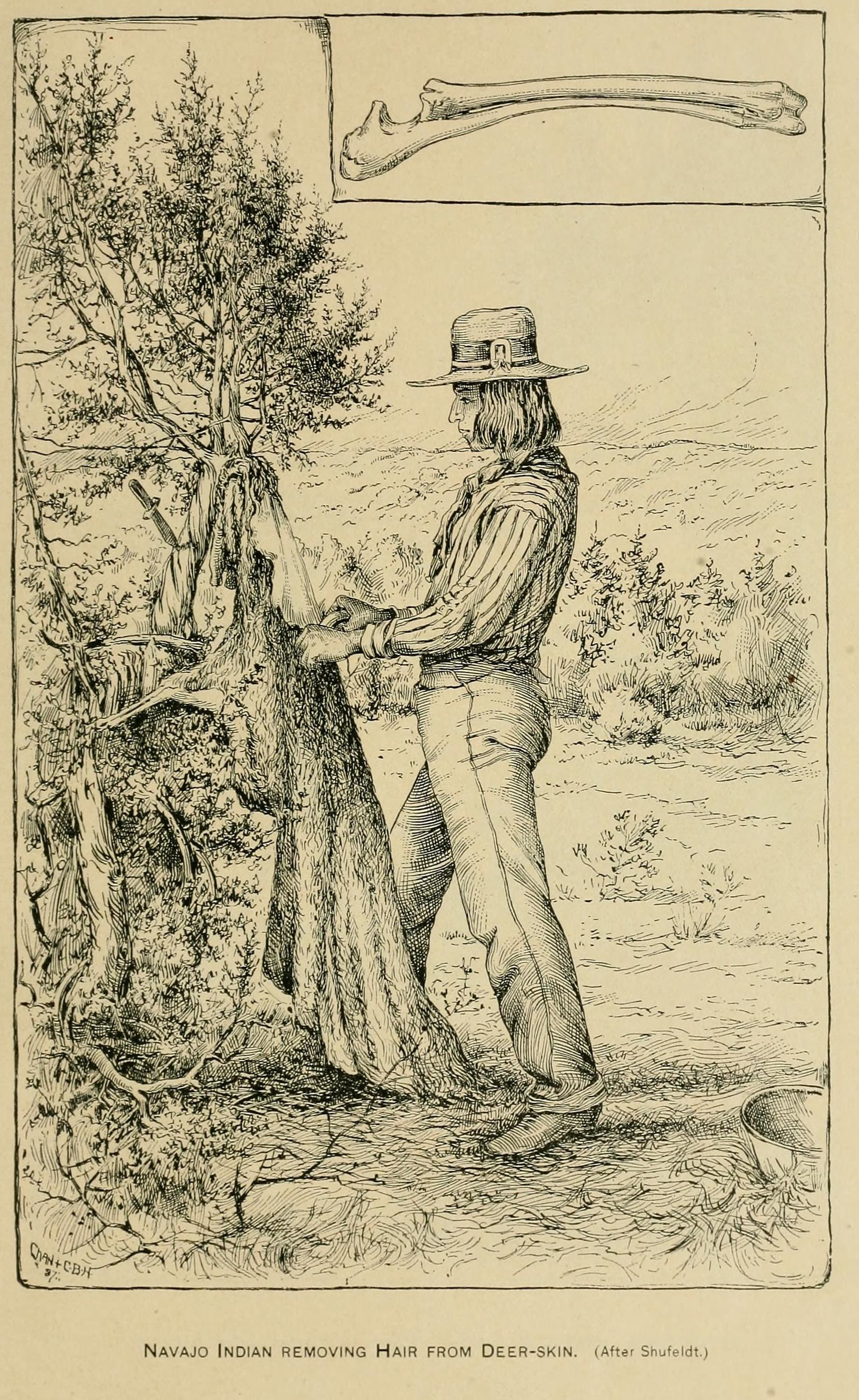
Navajo Buckskin: Hair Shaved with the Deer's Own Foreleg Bone, Brains Rubbed In, Wrung on a Tree, Worked Dry over the Feet (Shufeldt, 1888)
láti ọwọ́ Tex
Aṣọ àti Awọ
6
0
0
0
0
0
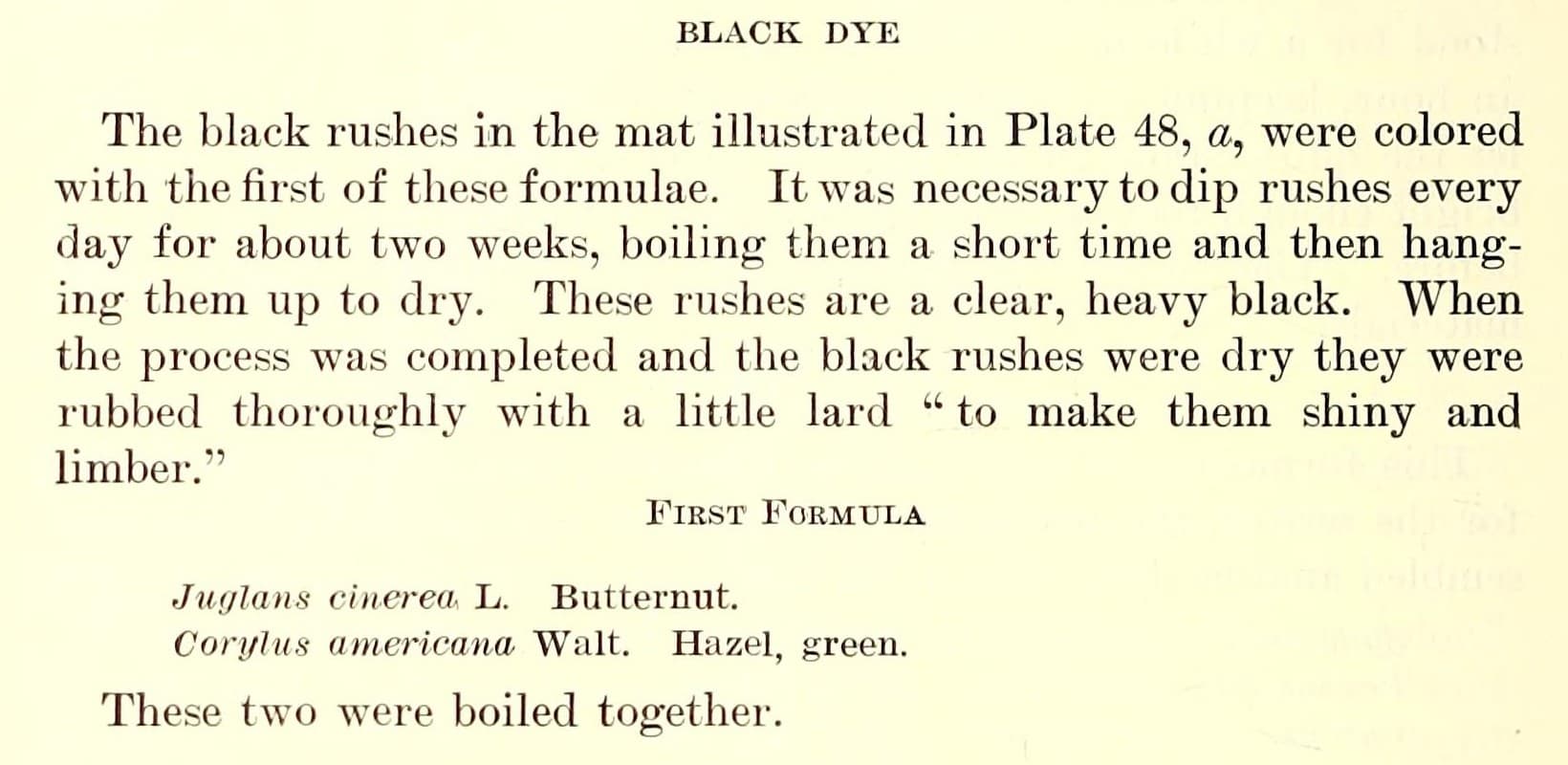
Chippewa Black Dyes: Butternut, Green Hazel Burs and Oak Bark with Black Spring Earth or Grindstone Dust (Densmore, 1928)
láti ọwọ́ Charlie
Kíkun
6
0
0
0
0
0
CC0 Àgbègbè Gbogbogbò
Blueprint yìí ti jáde lábẹ́ CC0. O lè ṣe àdàkọ, yí padà, pín, àti lò láìsí ìyọ̀ǹda.
Ṣàtìlẹ́yìn Olùṣẹ́dá nípa rírà àwọn ọjà nipasẹ̀ Blueprint wọn Ẹ̀san Olùṣẹ́dá tí àwọn Olùtajà gbé kalẹ̀, tàbí ṣẹ̀dá àtúnṣe tuntun ti Blueprint yìí kí o sì fi sínú Blueprint rẹ gẹ́gẹ́ bí ìsopọ̀ láti pín owó-wíwọlé.