IṢẸ́ ỌNÀ
ẸWÀ ÀTI ÌLERA
IṢẸ́ ỌWỌ́
ÀṢÀ ÀTI ÌTÀN
ÌṢERÉ
ÀYÍKÁ
OÚNJẸ ÀTI OHUN MÍMU
REVERSE ENGINEERING
SÁYẸ́ǸSÌ
ERÉ ÌDÁRAYÁ
ÌMỌ̀-Ẹ̀RỌ
ÀWỌN OHUN WÍWỌ̀
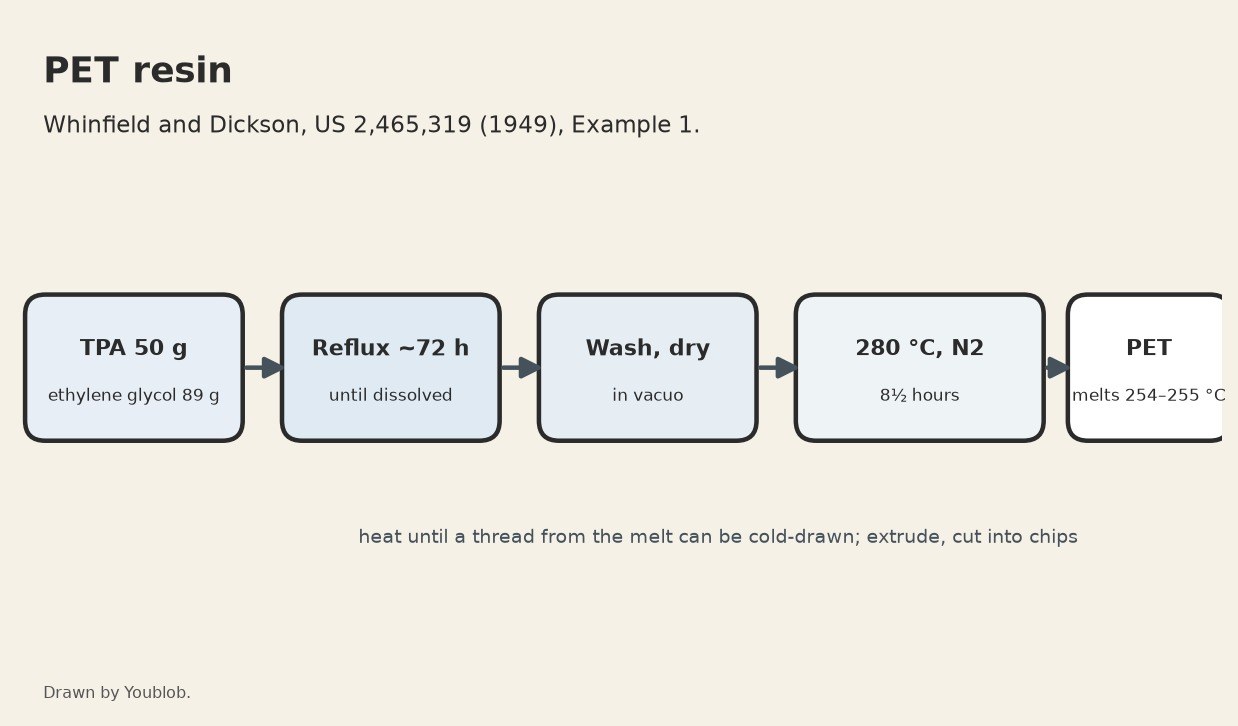


PET Resin: Terephthalic Acid and Ethylene Glycol, Whinfield and Dickson
PET (polyethylene terephthalate) was invented by Whinfield and Dickson, whose patent (US 2,465,319, 1949) gives this first example: boil terephthalic acid in ethylene glycol until it dissolves, wash and dry the glycol ester, then heat it at 280 °C under nitrogen until it is a viscous polymer that melts at 254–255 °C and can be drawn into fibre. The melt is extruded and cut into chips (pellets) for moulding and spinning.
The picture: our diagram.
Ilọsíwájú
About 4 days
Ìlànà
1
1
Boil the acid in glycol
Boil the acid in glycol
Reflux 50 g terephthalic acid with 89 g ethylene glycol for about 72 hours, until it has all dissolved. This makes glycol terephthalate.
Àwọn ohun èlò fún ìgbésẹ̀ yìí:
 Ásídì Tẹrẹfitálíìkì50 g
 Ethylene glycol89 g
Àwọn irinṣẹ́ tí a nílò:
 Òǹwọ̀n ìdọ́gba
 Ìgò abẹ́-róbótó
 Ìyípo ẹ̀rọ ìtutù
 Pátákó Gbígbóná
2
2
Wash and dry the ester
Wash and dry the ester
Wash the glycol terephthalate with water and dry it under vacuum.
Àwọn irinṣẹ́ tí a nílò:
 Omi Àyọ́
 Kọ́nfù Gílásì Onípọ̀n
 Bébà Ìsẹ́
 Ẹ̀rọ ìfàfẹ́fẹ́jáde
3
3
Heat at 280 °C under nitrogen
Heat at 280 °C under nitrogen
Melt it and heat at 280 °C for 8½ hours in a slow stream of nitrogen: no air may reach it. It grows thick as it polymerises.
Àwọn irinṣẹ́ tí a nílò:
Ìgò abẹ́-róbótóPátákó Gbígbóná Thermocouple pẹ̀lú ìkà
 Sílíńdà Gáàsì Nàìtírójìn
 Ìbọ̀wọ́ Tí Ń Fara Da Ooru
 Gílásì Ààbò Fún Ìfọ́n Kẹ́míkà
4
4
Test for cold-drawing
Test for cold-drawing
Pull a thread from the melt with a rod and let it cool. It is ready when the cold thread can be stretched to several times its length. The finished polymer melts at 254–255 °C.
Àwọn irinṣẹ́ tí a nílò:
 Ọ̀pá Ìrúwé GílásìÌbọ̀wọ́ Tí Ń Fara Da Ooru
5
5
Extrude and cut into chips
Extrude and cut into chips
Extrude the molten polymer, let it cool, and cut it into chips (pellets).
Àwọn irinṣẹ́ tí a nílò:
 Ẹ̀rọ ìtújáde ṣíṣu
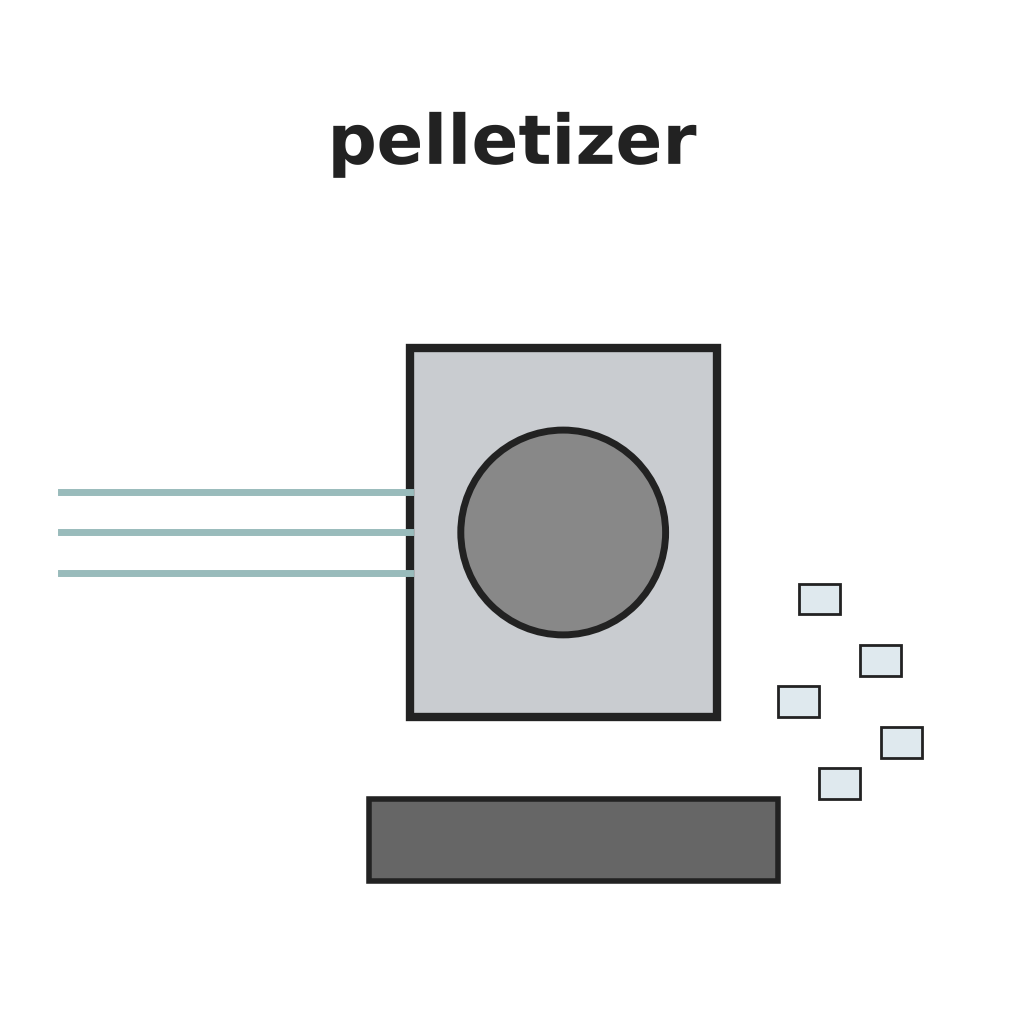 Ẹ̀rọ Ìṣe Pẹ́lẹ́ẹ̀tìÌbọ̀wọ́ Tí Ń Fara Da Ooru
Àwọn ohun-èlò
2- Àyè
- 89 gÀyè
Àwọn irinṣẹ́ tó nílò
15- Àyè
- Àyè
- 1 vendor sell this, none ship to you yetÀyè
Ìtọ́nisọ́nà yìí ń ṣe
Blueprint tó jọra
Àwọn blueprint wọ̀nyí pín ìmọ̀ — ọ̀nà, ohun-èlò tàbí ìlànà
CC0 Àgbègbè Gbogbogbò
Blueprint yìí ti jáde lábẹ́ CC0. O lè ṣe àdàkọ, yí padà, pín, àti lò láìsí ìyọ̀ǹda.
Ṣàtìlẹ́yìn Olùṣẹ́dá nípa rírà àwọn ọjà nipasẹ̀ Blueprint wọn Ẹ̀san Olùṣẹ́dá tí àwọn Olùtajà gbé kalẹ̀, tàbí ṣẹ̀dá àtúnṣe tuntun ti Blueprint yìí kí o sì fi sínú Blueprint rẹ gẹ́gẹ́ bí ìsopọ̀ láti pín owó-wíwọlé.