IṢẸ́ ỌNÀ
ẸWÀ ÀTI ÌLERA
IṢẸ́ ỌWỌ́
ÀṢÀ ÀTI ÌTÀN
ÌṢERÉ
ÀYÍKÁ
OÚNJẸ ÀTI OHUN MÍMU
REVERSE ENGINEERING
SÁYẸ́ǸSÌ
ERÉ ÌDÁRAYÁ
ÌMỌ̀-Ẹ̀RỌ
ÀWỌN OHUN WÍWỌ̀


Terephthalic Acid: Para-Xylene Oxidised by Air with Manganese and Bromide
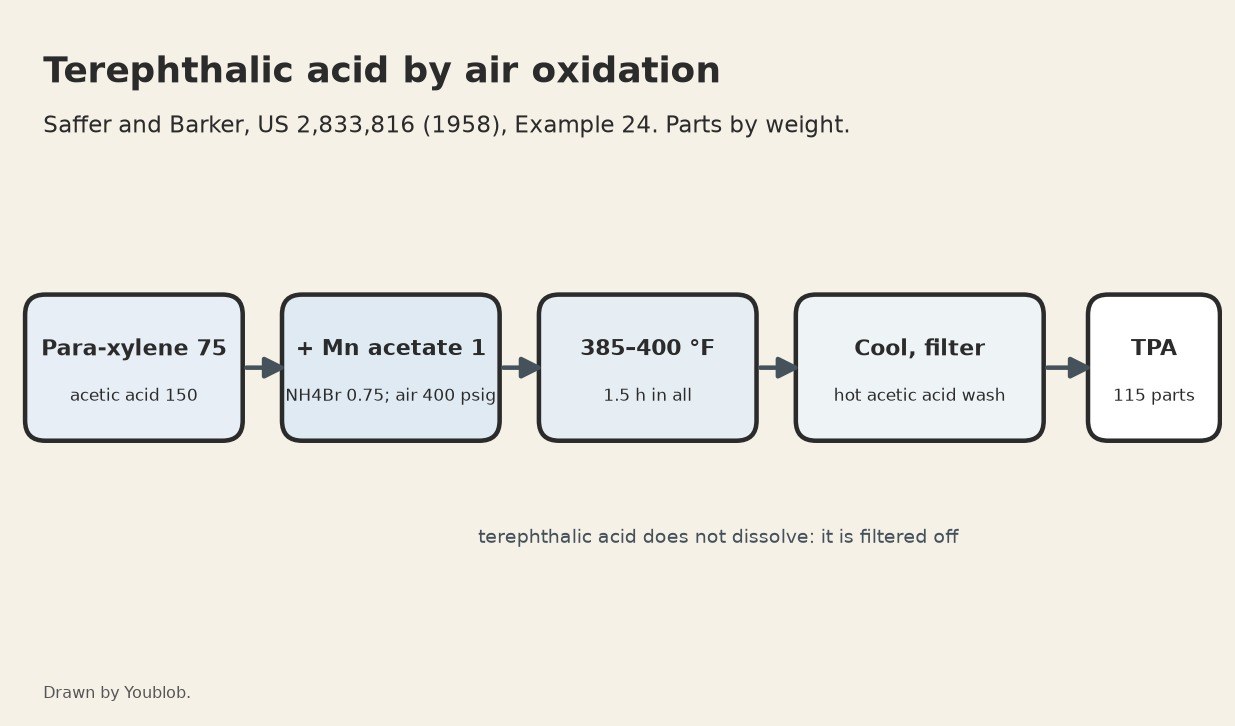
Terephthalic acid is the acid half of PET. Both methyl groups of para-xylene are burnt to acid groups by air under pressure in hot acetic acid, with a little manganese salt and bromide as catalyst: the Mid-Century process of Saffer and Barker (US 2,833,816, 1958). The acid does not dissolve, so it is simply filtered off. Example 24 of the patent, all parts by weight.
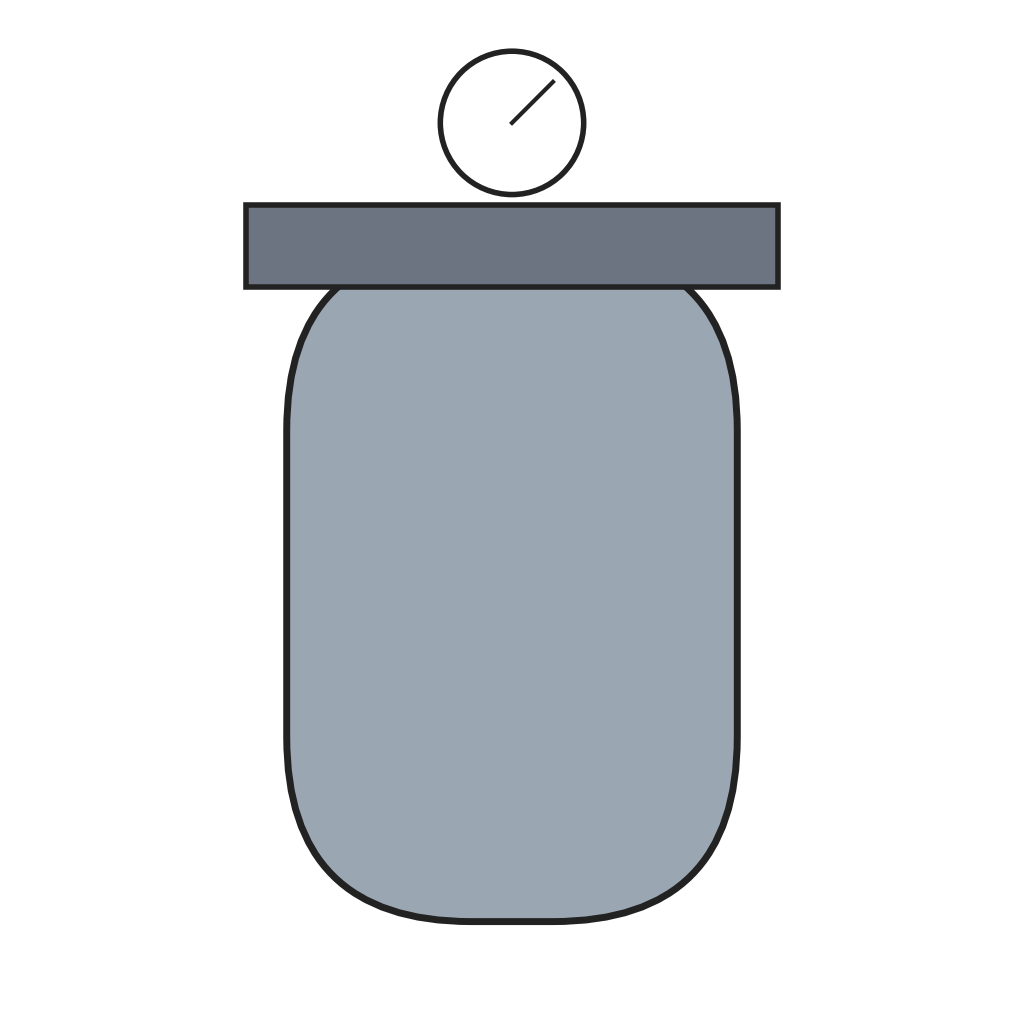
The picture: our diagram of the reactor.
Ilọsíwájú
1 day
Ìlànà
1
1
Charge the reactor
Charge the reactor
Into a corrosion-resistant pressure reactor with a water-cooled condenser on top, put 75 parts para-xylene, 150 parts acetic acid, 1 part manganese acetate (tetrahydrate) and 0.75 part ammonium bromide.
Àwọn ohun èlò fún ìgbésẹ̀ yìí:
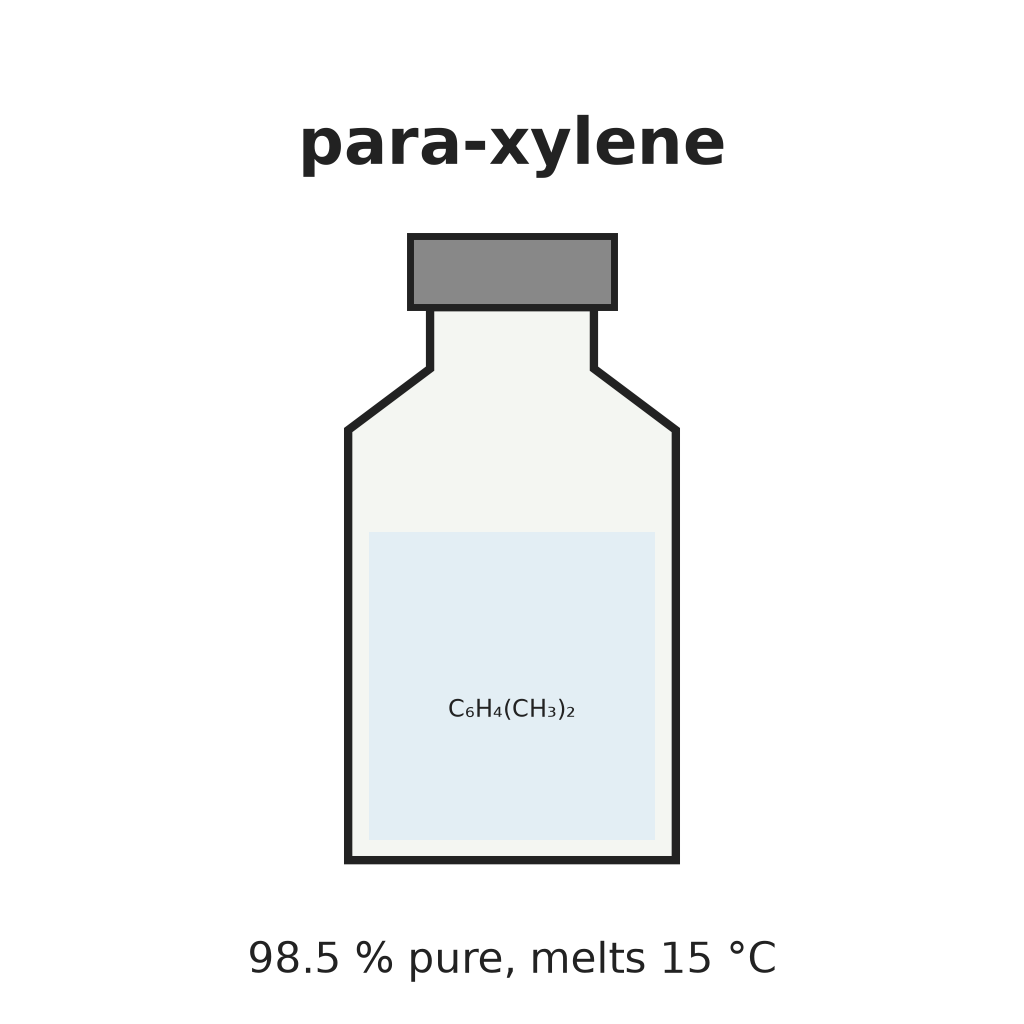 Para-sílẹ́ìnì75 parts
Àwọn irinṣẹ́ tí a nílò:
 Acid acetic (glacial)
 Mangánísì Asítétì
 Amóníọ́mù Bírómídì
 Òǹwọ̀n ìdọ́gba
 Ìkòkò ìṣesí ìfúnpá
 Ìyípo ẹ̀rọ ìtutù
 Gílásì Ààbò Fún Ìfọ́n Kẹ́míkà
 Ìbọ̀wọ́ Tí Ń Kojú Kẹ́míkà
2
2
Pressurise with air and heat to 385 °F
Pressurise with air and heat to 385 °F
Raise the pressure to 400 psig with air, blown in near the bottom. Set the vent so gas leaves at 3,000 volumes per hour per volume of liquid. Heat to 385 °F (196 °C), then switch the heat off: the reaction heats itself.
Àwọn irinṣẹ́ tí a nílò:
Ìkòkò ìṣesí ìfúnpá Ohun ìtẹ̀ afẹ́fẹ́ ti iléeṣẹ́Ìyípo ẹ̀rọ ìtutù
 Ẹ̀rọ Ìwọ̀n Ooru Yàrá Ìwádìí
3
3
Hold at 385–400 °F
Hold at 385–400 °F
Once the first rush is over, heat as needed to hold 385–400 °F (196–204 °C), 1.5 hours in all. It is finished when the exit gas is back to 20–21 % oxygen (Orsat analysis).
Àwọn irinṣẹ́ tí a nílò:
Ìkòkò ìṣesí ìfúnpáẸ̀rọ Ìwọ̀n Ooru Yàrá Ìwádìí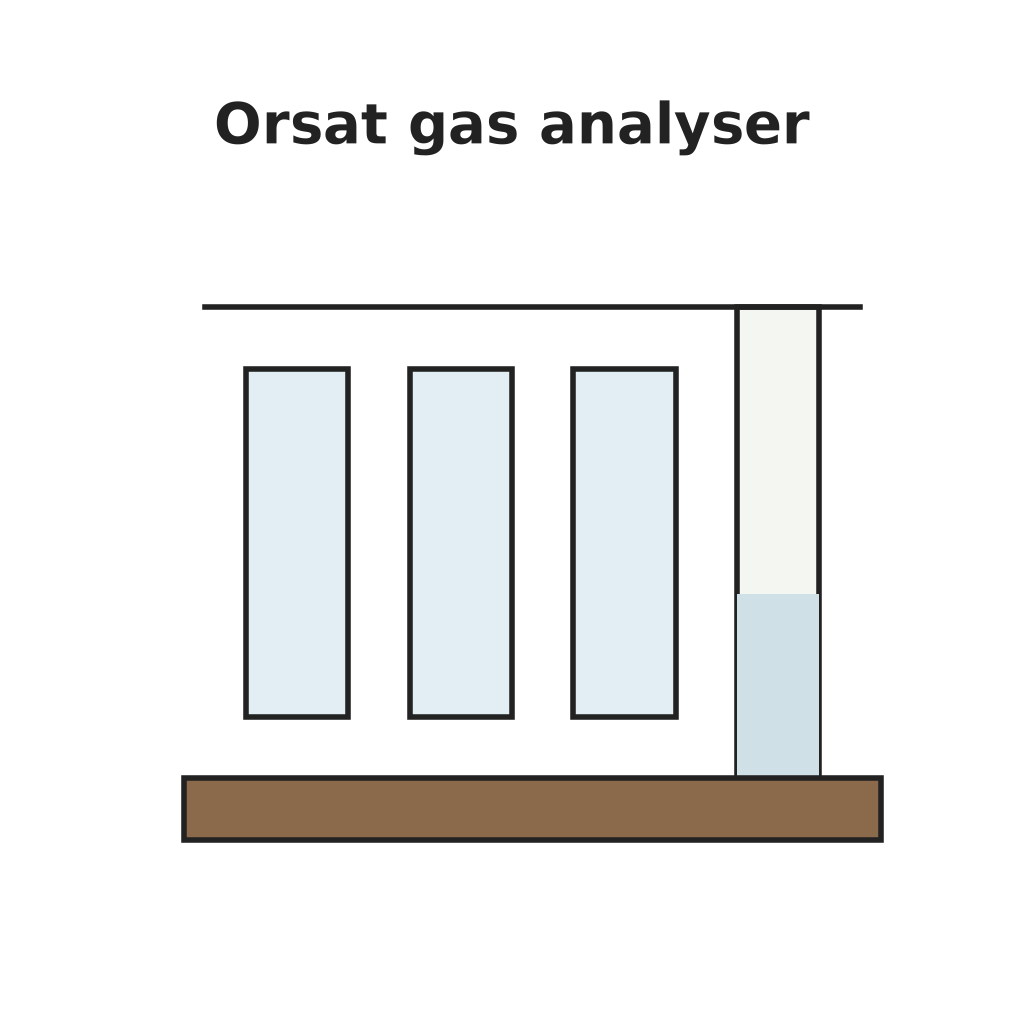 Ẹ̀rọ Ìtúpalẹ̀ Gáàsì Orsat
4
4
Cool, empty and filter
Cool, empty and filter
Cool to 185 °F (85 °C) and let the pressure off. Push the liquid out at 150–200 °F with nitrogen pressure, scrape out the solid, and filter everything together.
Àwọn irinṣẹ́ tí a nílò:
 Sílíńdà Gáàsì Nàìtírójìn
 Kọ́nfù Gílásì Onípọ̀n
 Bébà Ìsẹ́Ìbọ̀wọ́ Tí Ń Kojú Kẹ́míkà
5
5
Wash and dry
Wash and dry
Wash the terephthalic acid twice with hot acetic acid (75 ml each in the example) and dry it. The patent got 115 parts by weight from 100 of para-xylene.
Àwọn irinṣẹ́ tí a nílò:
Acid acetic (glacial)Kọ́nfù Gílásì Onípọ̀nBébà Ìsẹ́ Ààrò ìgbẹ̀
Àwọn ohun-èlò
1- 75 partsÀyè
Àwọn irinṣẹ́ tó nílò
15- Àyè
- Àyè
Ìtọ́nisọ́nà yìí ń ṣe
Blueprint tó jọra
Àwọn blueprint wọ̀nyí pín ìmọ̀ — ọ̀nà, ohun-èlò tàbí ìlànà
CC0 Àgbègbè Gbogbogbò
Blueprint yìí ti jáde lábẹ́ CC0. O lè ṣe àdàkọ, yí padà, pín, àti lò láìsí ìyọ̀ǹda.
Ṣàtìlẹ́yìn Olùṣẹ́dá nípa rírà àwọn ọjà nipasẹ̀ Blueprint wọn Ẹ̀san Olùṣẹ́dá tí àwọn Olùtajà gbé kalẹ̀, tàbí ṣẹ̀dá àtúnṣe tuntun ti Blueprint yìí kí o sì fi sínú Blueprint rẹ gẹ́gẹ́ bí ìsopọ̀ láti pín owó-wíwọlé.