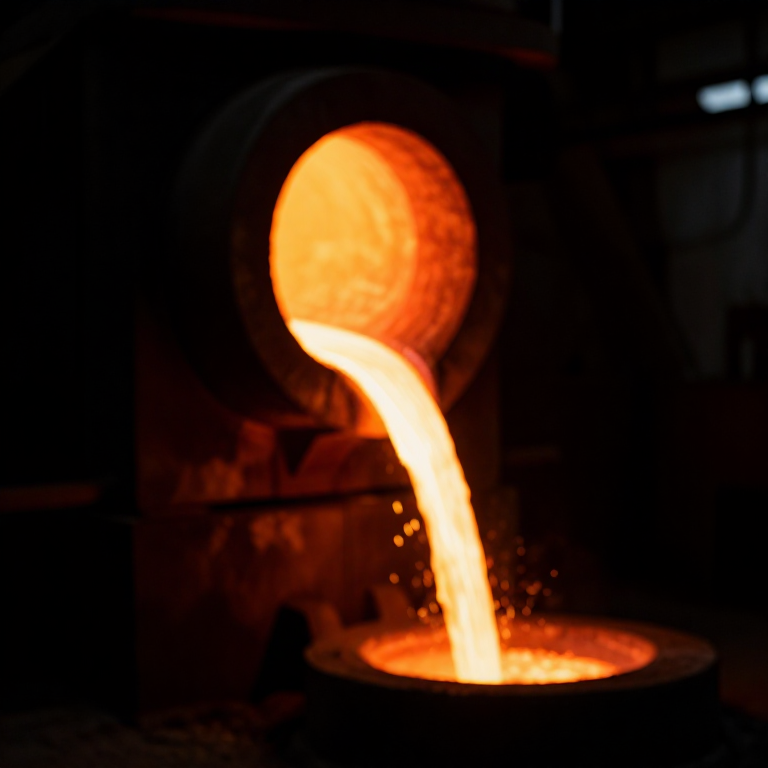


Smelting Pig Iron in a Coke Blast Furnace — Molten Iron at Industrial Scale
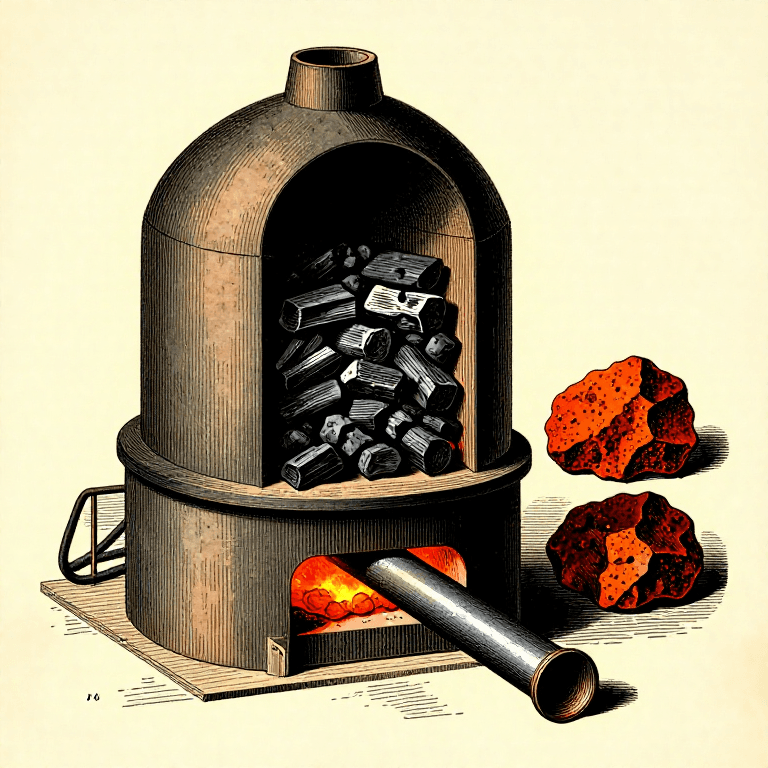
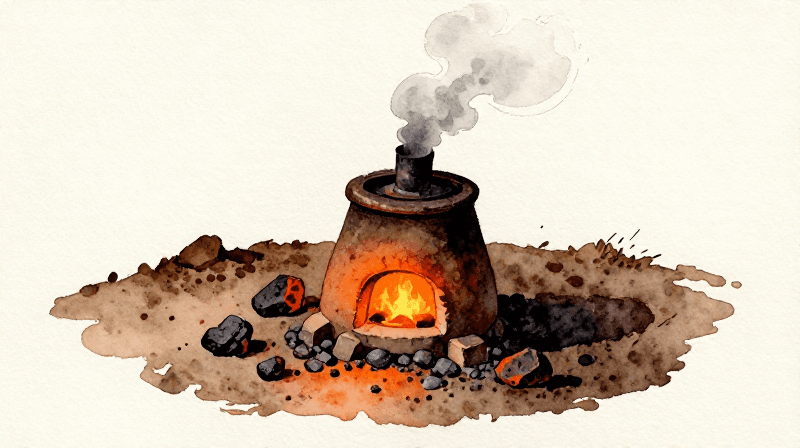
The bloomery gave the ancient world iron, but only in small spongy lumps, one slow batch at a time. The blast furnace changed everything: a tall shaft kept continuously charged and blown produces a steady river of molten iron. Where a bloomery never melts its metal, a blast furnace runs hot enough to liquefy iron entirely, letting it pool at the hearth and be tapped out by the tonne.
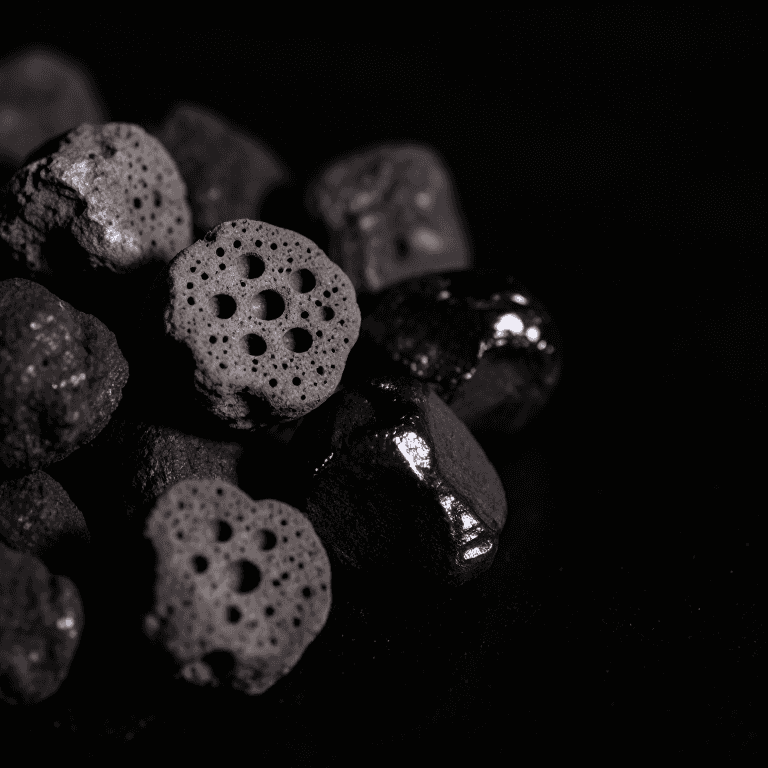
The key is heat and chemistry working together. A powerful air blast burns coke to carbon monoxide, which strips the oxygen from iron ore; meanwhile the descending iron soaks up carbon until it melts. Limestone added as flux carries off the stony impurities as a floating slag. What runs out of the tap hole is pig iron — iron saturated with about four percent carbon: hard, brittle, and perfect for casting or for refining into wrought iron and steel.
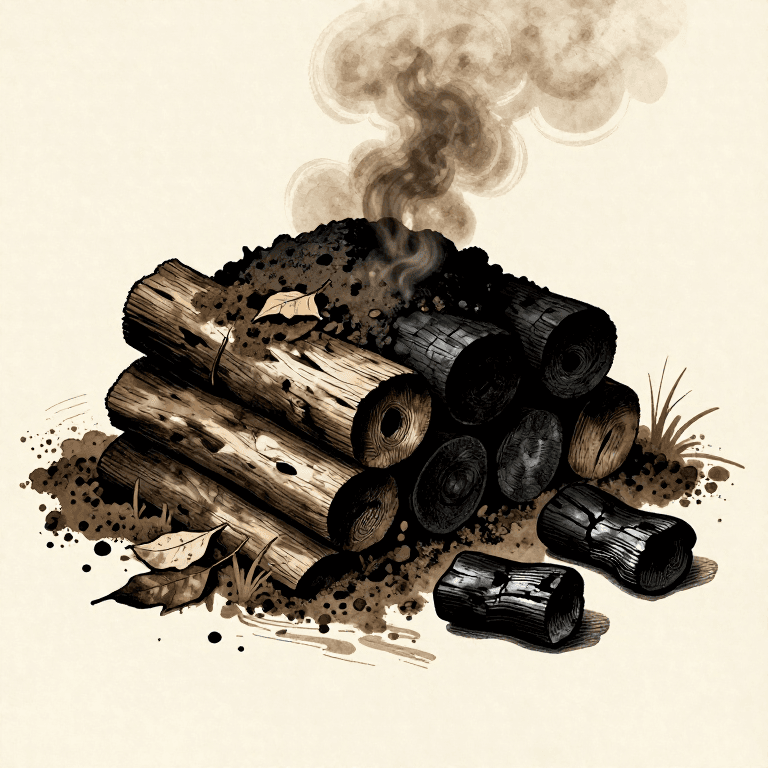
When coke replaced charcoal as the blast-furnace fuel in the early 1700s, iron could finally be made in unlimited quantity without consuming whole forests. Cheap pig iron became the raw material of the Industrial Revolution — the metal behind rails, bridges, engines, and machines.
Ìlànà
Understand pig iron
Understand pig iron
Build the shaft furnace
Build the shaft furnace
Àwọn ohun èlò fún ìgbésẹ̀ yìí:
 Bíríkì Tí Ń Kojú Iná80 ẹyọ
Àwọn irinṣẹ́ tí a nílò:
 Ọkọ́ Ọwọ́
Crush the ore and flux
Crush the ore and flux
Àwọn ohun èlò fún ìgbésẹ̀ yìí:
 Òkúta irin ẹrẹ̀ gbígbẹ30 kg
 Àwo òkúta ẹfun8 kg
Àwọn irinṣẹ́ tí a nílò:
 Òòlù
ÒòlùSet up the air blast
Set up the air blast
Àwọn irinṣẹ́ tí a nílò:
 Ẹ̀rọ Ìfẹ́ Afẹ́fẹ́
Light the coke bed
Light the coke bed
Àwọn ohun èlò fún ìgbésẹ̀ yìí:
 Èédú metalurgi40 kg
Charge in layers
Charge in layers
Àwọn ohun èlò fún ìgbésẹ̀ yìí:
Èédú metalurgi40 kgReduce the ore
Reduce the ore
Melt and carburize
Melt and carburize
Form and tap the slag
Form and tap the slag
Àwọn irinṣẹ́ tí a nílò:
 Ọ̀pá ìtú ìléru
Tap the molten iron
Tap the molten iron
Àwọn irinṣẹ́ tí a nílò:
Ọ̀pá ìtú ìléruCast the pigs
Cast the pigs
Àwọn ohun èlò fún ìgbésẹ̀ yìí:
 Iyanrìn ìdàsílẹ̀50 kg
Cool, break, and identify
Cool, break, and identify
Àwọn irinṣẹ́ tí a nílò:
ÒòlùÀwọn ohun-èlò
5- 80 ẹyọÀyè
- Àyè
- 8 kgÀyè
- 40 kgÀyè
- 50 kgÀyè
Àwọn Ohun Èlò Ìtọ́nisọ́nà Tí A So Pọ̀

Blueprint tó jọra
Àwọn blueprint wọ̀nyí pín ìmọ̀ — ọ̀nà, ohun-èlò tàbí ìlànà


CC0 Àgbègbè Gbogbogbò
Blueprint yìí ti jáde lábẹ́ CC0. O lè ṣe àdàkọ, yí padà, pín, àti lò láìsí ìyọ̀ǹda.
Ṣàtìlẹ́yìn Olùṣẹ́dá nípa rírà àwọn ọjà nipasẹ̀ Blueprint wọn Ẹ̀san Olùṣẹ́dá tí àwọn Olùtajà gbé kalẹ̀, tàbí ṣẹ̀dá àtúnṣe tuntun ti Blueprint yìí kí o sì fi sínú Blueprint rẹ gẹ́gẹ́ bí ìsopọ̀ láti pín owó-wíwọlé.