IṢẸ́ ỌNÀ
ẸWÀ ÀTI ÌLERA
IṢẸ́ ỌWỌ́
ÀṢÀ ÀTI ÌTÀN
ÌṢERÉ
ÀYÍKÁ
OÚNJẸ ÀTI OHUN MÍMU
REVERSE ENGINEERING
SÁYẸ́ǸSÌ
ERÉ ÌDÁRAYÁ
ÌMỌ̀-Ẹ̀RỌ
ÀWỌN OHUN WÍWỌ̀
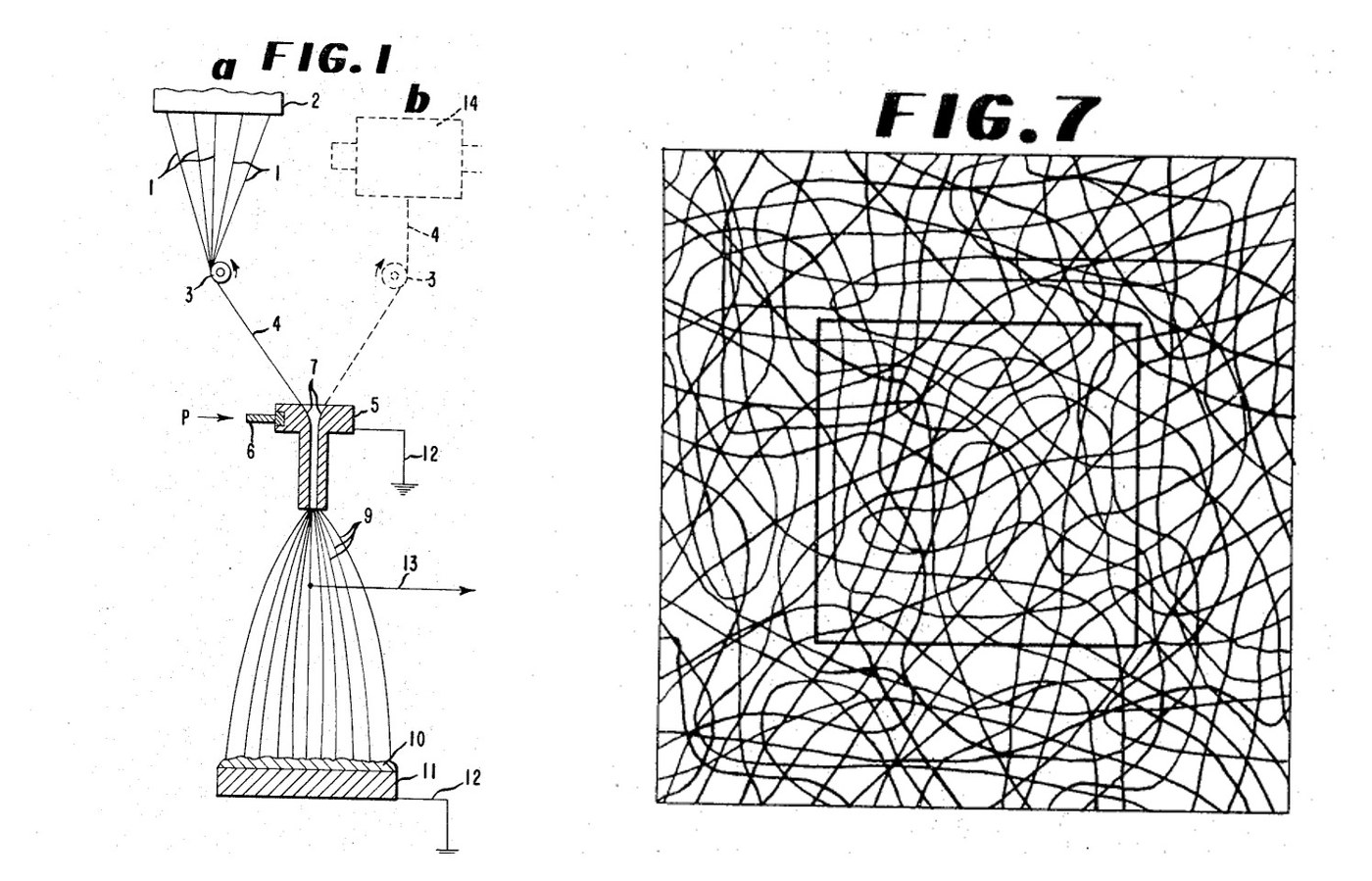


Polypropylene Felt: a Spunbonded Web, Kinney 1967
A polypropylene felt made without weaving or needling: hot filaments are spun, pulled down by an air jet, given an electric charge so they spread apart, and laid in loops on a moving table until they form an even sheet. Kinney's patent (Du Pont, US 3,338,992, 1967) gives every setting for polypropylene. The corona runs at 20 to 25 kV: keep clear of it while it is live.
The picture: the patent's own Fig. 1 (the process) and Fig. 7 (the web).
Ilọsíwájú
1 day
Ìlànà
1
1
Melt and spin
Melt and spin
Melt polypropylene of melt index 10 in a screw extruder, no hotter than 290 °C. Meter it at 12 g a minute through a 1/4 in. sand filter and a 20-hole spinneret (holes 0.015 in. across): pack block 275 °C, spinneret 260 °C.
Àwọn ohun èlò fún ìgbésẹ̀ yìí:
 Àwọn kóró polypropylene500 g
Àwọn irinṣẹ́ tí a nílò:
 Ẹ̀rọ ìtújáde ṣíṣu
 Àwo ìranfọ́nrán
 Pirómítà
 Òǹwọ̀n ìdọ́gba
 Ìbọ̀wọ́ Awọ
2
2
Quench
Quench
Cool the bundle of filaments in a 6 in. quench chimney blowing 40 cubic feet a minute of room air in from the side.
Àwọn irinṣẹ́ tí a nílò:
 Ẹ̀rọ ìfun afẹ́fẹ́
3
3
Draw with the air jet
Draw with the air jet
Lead the bundle 72 in. down into an air draw jet run at 25 psi: it pulls the filaments with about 3 g of tension and stretches them.
Àwọn irinṣẹ́ tí a nílò:
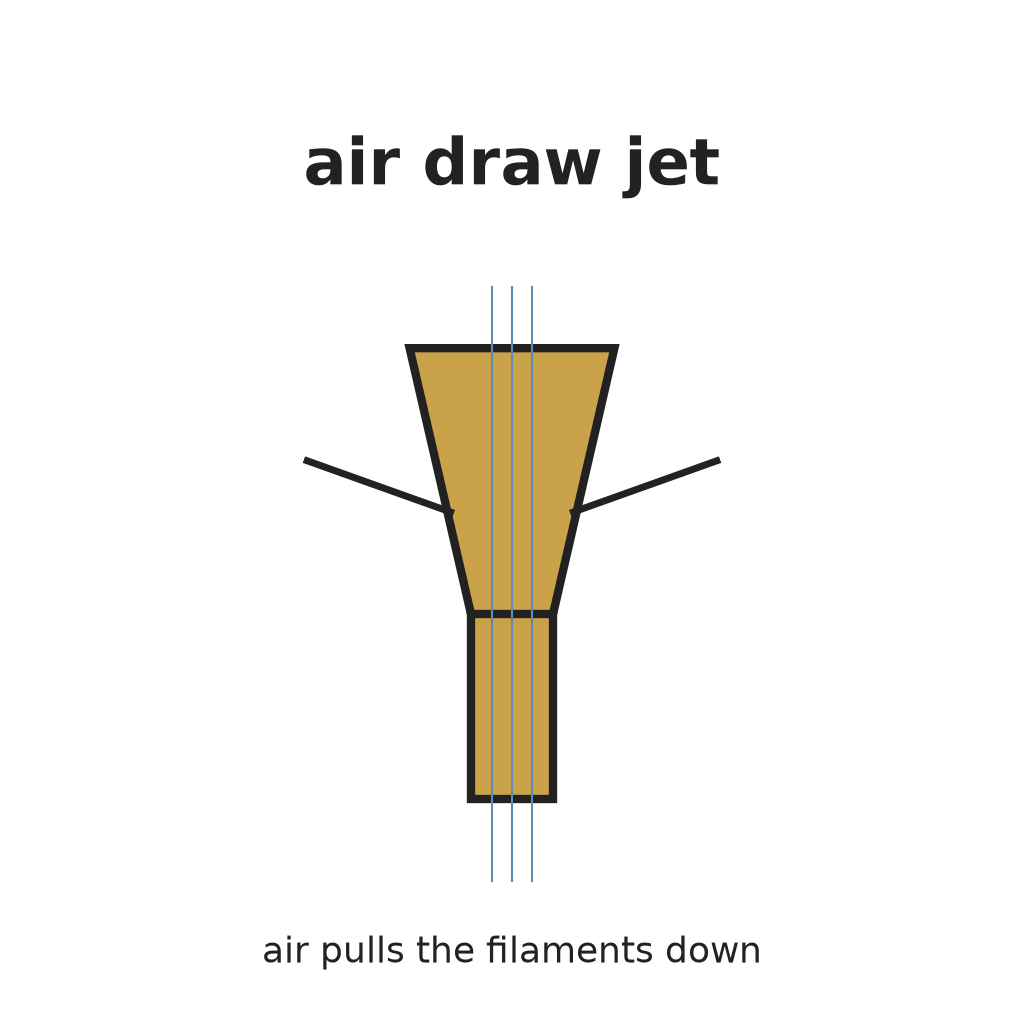 Ẹnu Afẹ́fẹ́ ÌfàyọẸ̀rọ ìfun afẹ́fẹ́
 Ẹ̀rọ Ìwọ̀n Ìtẹ̀
4
4
Charge the filaments
Charge the filaments
8 in. above the jet, let the filaments brush a 1 1/4 in. bar turning at 10 rpm, with a four-point corona 5/8 in. from it at minus 20 to 25 kV (100 to 150 µA). The charge pushes them apart. Keep clear while it is live.
Àwọn irinṣẹ́ tí a nílò:
 Ẹ̀rọ ìfi agbára iná corona
5
5
Lay the web
Lay the web
Catch the filaments on a grounded 47 in. square table that moves 26 in. a minute one way and 570 in. a minute the other. Each layer weighs 0.5 oz per square yard; lay several for each sheet.
Àwọn irinṣẹ́ tí a nílò:
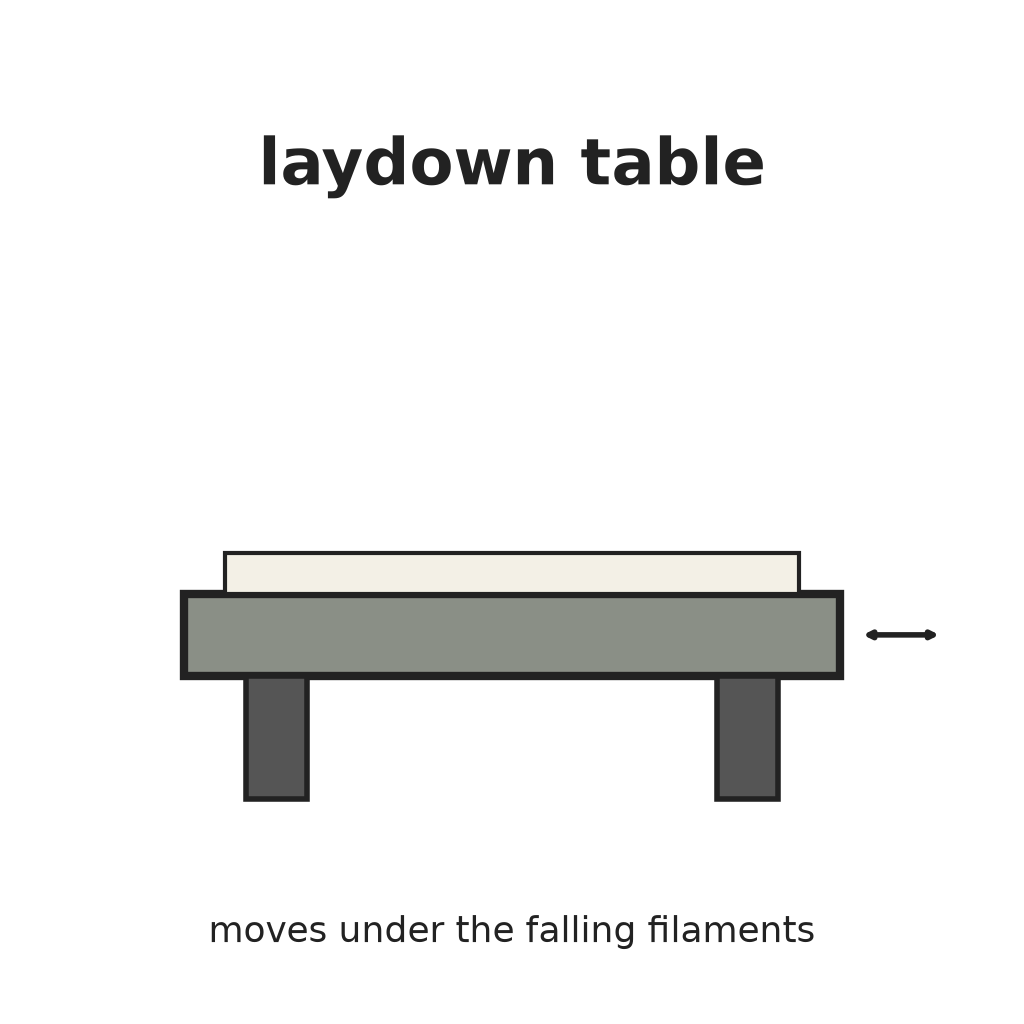 Tábìlì Ìtẹ́lẹ̀
6
6
What you get
What you get
An even sheet of fine filaments, about 2.5 denier each, tenacity 2.0 g per denier, stretching 300 % before they break.
Àwọn irinṣẹ́ tí a nílò:
Òǹwọ̀n ìdọ́gbaÀwọn ohun-èlò
1- Àyè
Àwọn irinṣẹ́ tó nílò
10- Àyè
- Àyè
- 1 vendor sell this, none ship to you yetÀyè
Ìtọ́nisọ́nà yìí ń ṣe
CC0 Àgbègbè Gbogbogbò
Blueprint yìí ti jáde lábẹ́ CC0. O lè ṣe àdàkọ, yí padà, pín, àti lò láìsí ìyọ̀ǹda.
Ṣàtìlẹ́yìn Olùṣẹ́dá nípa rírà àwọn ọjà nipasẹ̀ Blueprint wọn Ẹ̀san Olùṣẹ́dá tí àwọn Olùtajà gbé kalẹ̀, tàbí ṣẹ̀dá àtúnṣe tuntun ti Blueprint yìí kí o sì fi sínú Blueprint rẹ gẹ́gẹ́ bí ìsopọ̀ láti pín owó-wíwọlé.