
IṢẸ́ ỌNÀ
ẸWÀ ÀTI ÌLERA
IṢẸ́ ỌWỌ́
ÀṢÀ ÀTI ÌTÀN
ÌṢERÉ
ÀYÍKÁ
OÚNJẸ ÀTI OHUN MÍMU
REVERSE ENGINEERING
SÁYẸ́ǸSÌ
ERÉ ÌDÁRAYÁ
ÌMỌ̀-Ẹ̀RỌ
ÀWỌN OHUN WÍWỌ̀
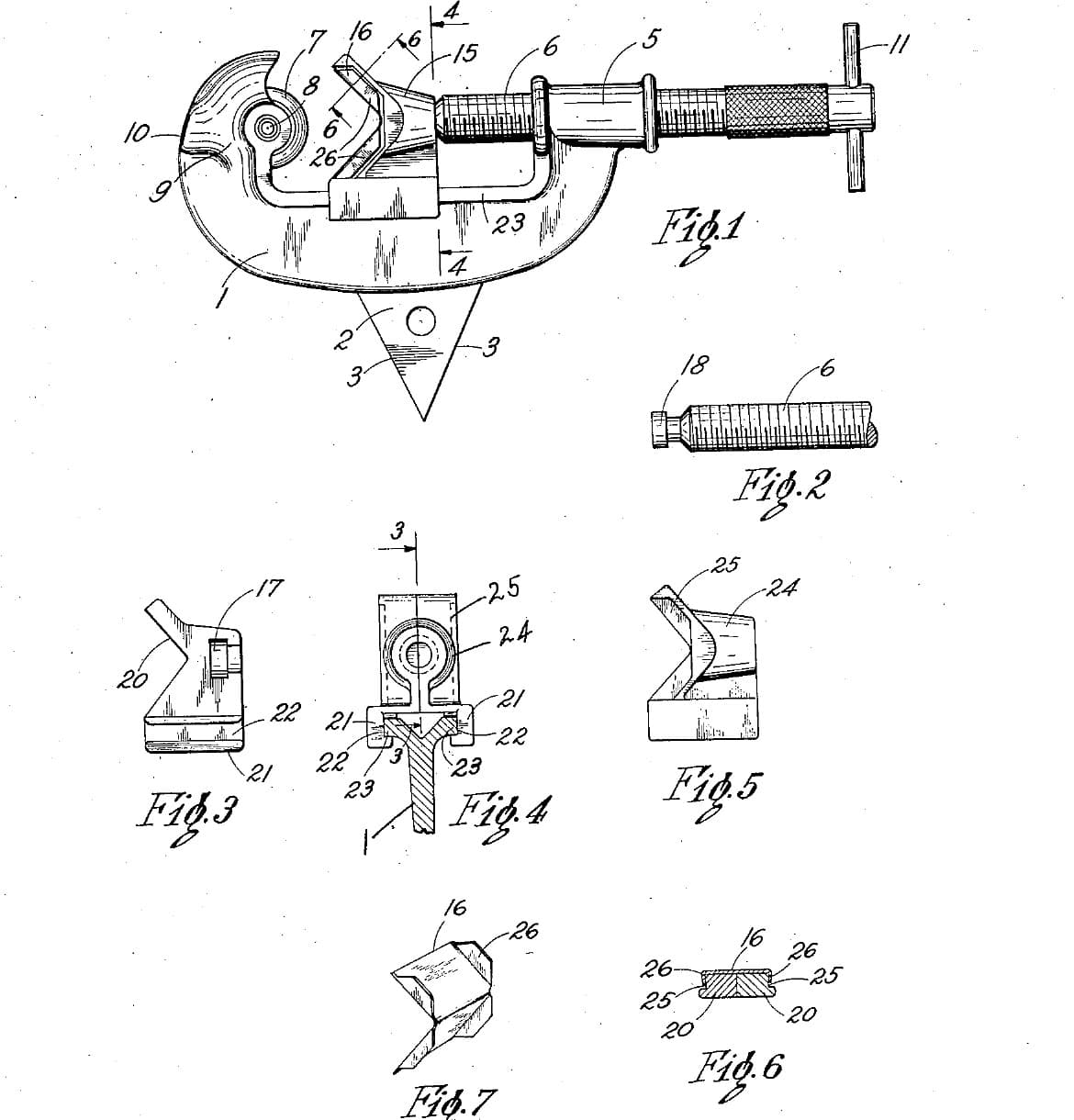
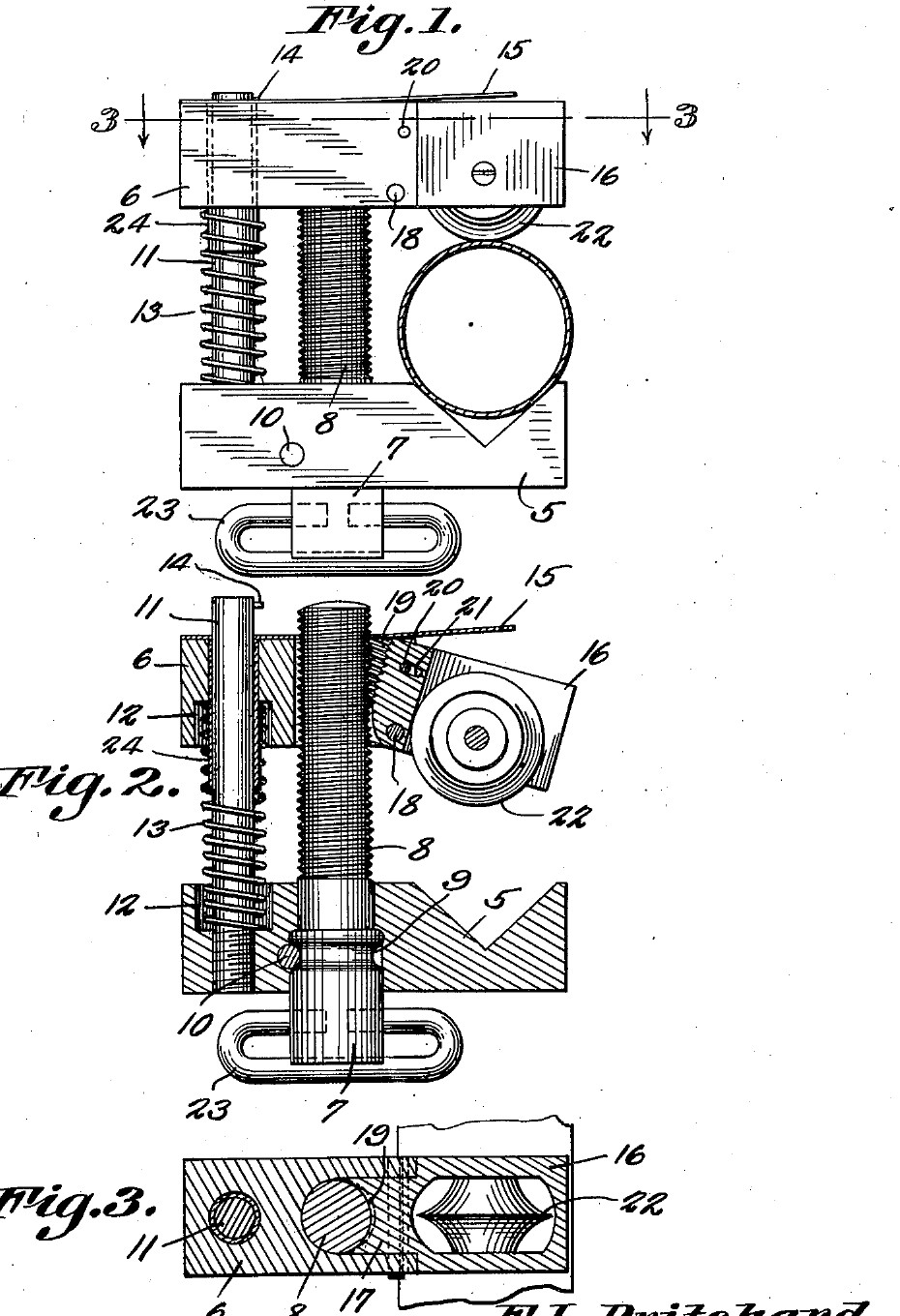
Swing-Nut Tubing Cutter: Swing the Blade Support Down and the Jaw Slides to the Tube, Up and the Screw Feeds It (Pritchard, 1941)
Forge

Ṣẹ́dá nipasẹ̀

Forge

13. Oṣù Kọkànlá 2026NO
18
0
0
0
0

Swing-Nut Tubing Cutter: Swing the Blade Support Down and the Jaw Slides to the Tube, Up and the Screw Feeds It (Pritchard, 1941)

Frank L. Pritchard of Parker, Arizona, received US 2,231,593, dated 11 February 1941, for a tubing cutter small enough for a mechanic's tool box. The tube sits in a V in a fixed jaw. A movable jaw slides on the adjusting screw and a guide pin, with a spring pushing the jaws apart. The cutting wheel is held by a pivoted support with threads on its inner edge. Swung down, the support lets go of the screw, so the jaw can be pushed straight onto any tube. Swung up, it meshes with the screw again and the screw feeds the wheel in. We make his parts from steel bar and plate. All sizes are ours.
Àárín
About 3 days

Ìlànà

1

The swing that lets go

Ń ṣí ìwé Jupyter…
2

Read US 2,231,593

"The pivoted blade support 16 may swing downwardly until the threads thereof will be free of the threads of the screw 8. The movable jaw 6 may now be slid downwardly until the pivoted blade support is in its proper cutting position."
3

Print the template

Both jaws, the blade support, the wheel and a 15 mm tube at 1:1, with the screw, pin and pivot holes. print at 100 % (check the 50 mm bar).
Fáìlì ÀpẹrẹPDFCC0 - Free
4

Make the stationary jaw

Saw 64 mm of 16 mm square bar, or of 16 mm plate. File the 90 degree V 8 mm deep in its top face. Drill the 6 mm pin hole and a 10 mm hole for the screw, and counterbore the pin hole 10 mm across, 5 mm deep, for the spring. Drill the 3 mm cross-pin hole across the jaw so it just cuts into the side of the screw hole.

Àwọn ohun èlò fún ìgbésẹ̀ yìí:

Pẹpẹ irin rírọ̀Pẹpẹ irin rírọ̀1 ẹyọ

Àwọn irinṣẹ́ tí a nílò:

Ayùn IrinAyùn Irin
Àkójọ ÌfáÀkójọ Ìfá
Ẹ̀rọ Ìlùkòkò OnídúróẸ̀rọ Ìlùkòkò Onídúró
Ìdìmú Ẹ̀rọÌdìmú Ẹ̀rọ
Àkójọ Orí ÌlùkòkòÀkójọ Orí Ìlùkòkò
Igi Àmì ÀárínIgi Àmì Àárín
Abẹ́rẹ́ Ìkọ ÌlàAbẹ́rẹ́ Ìkọ Ìlà
Ìdìmú TábìlìÌdìmú Tábìlì
Òṣùwọ̀n Kálípà Díjítà Ìnṣì 6Òṣùwọ̀n Kálípà Díjítà Ìnṣì 6
5

Make the movable jaw and the support

Saw the movable jaw 50 mm long from the same bar. Drill the 6.2 mm pin hole and its spring counterbore. Saw and file a slot 8.2 mm wide down its middle, from 22 mm to the end. Saw the blade support from 14 mm plate to the template. File its upper part down to 8 mm thick, centred, so it slides into the slot, and file away its lower inner corner. Saw a 7 mm slot up its lower part for the wheel. Drill the pivot and stop-pin holes through the jaw and support together, and file the stop-pin hole in the support into a short slot.

Àwọn ohun èlò fún ìgbésẹ̀ yìí:

Pẹpẹ irin rírọ̀Pẹpẹ irin rírọ̀1 ẹyọ

Àwọn irinṣẹ́ tí a nílò:

Ayùn IrinAyùn Irin
Àkójọ ÌfáÀkójọ Ìfá
Àkójọ Ìfá KékeréÀkójọ Ìfá Kékeré
Ẹ̀rọ Ìlùkòkò OnídúróẸ̀rọ Ìlùkòkò Onídúró
Ìdìmú Ẹ̀rọÌdìmú Ẹ̀rọ
Àkójọ Orí ÌlùkòkòÀkójọ Orí Ìlùkòkò
Ìdìmú TábìlìÌdìmú Tábìlì
Òṣùwọ̀n Kálípà Díjítà Ìnṣì 6Òṣùwọ̀n Kálípà Díjítà Ìnṣì 6
6

Tap the half nut

Pin the support in the jaw, swung up, and clamp it there. Drill 6.8 mm down the screw axis through both, so the drill cuts a shallow groove in the support's inner edge, then tap it M8 through both. Take the support out and open the jaw's own hole to 8.5 mm, so the screw passes freely and only the support's threads hold it.

Àwọn irinṣẹ́ tí a nílò:

Ẹ̀rọ Ìlùkòkò OnídúróẸ̀rọ Ìlùkòkò Onídúró
Ìdìmú Ẹ̀rọÌdìmú Ẹ̀rọ
Àkójọ Orí ÌlùkòkòÀkójọ Orí Ìlùkòkò
Ìtò irinṣẹ́ ìgé iháÌtò irinṣẹ́ ìgé ihá
Òróró gígéÒróró gígé
7

Make the screw and the guide pin

Turn the top 62 mm of a 90 mm piece of 10 mm bar to 8 mm and cut an M8 thread on it with the die. Turn a groove 1.5 mm deep and 3.2 mm wide in the plain part, where the cross pin will sit, and drill a 6 mm hole across its bottom end for a T-bar. Cut the guide pin, 80 mm of 6 mm rod, and drill a 3 mm hole across its top for the stop pin.

Àwọn ohun èlò fún ìgbésẹ̀ yìí:

Ọ̀pá rírọ irin rírọ̀Ọ̀pá rírọ irin rírọ̀1 ẹyọ
Ọ̀pá Róbótó Irin Rírọ̀Ọ̀pá Róbótó Irin Rírọ̀1 ẹyọ

Àwọn irinṣẹ́ tí a nílò:

Ẹ̀rọ Ìyí IrinẸ̀rọ Ìyí Irin
Ìmú ẹ̀rọ ìyípo oníka mẹ́taÌmú ẹ̀rọ ìyípo oníka mẹ́ta
Ohun ìgé ẹ̀rọ ìyíOhun ìgé ẹ̀rọ ìyí
Ọ̀bẹ ìgékúrò lórí ẹ̀rọ ìyíỌ̀bẹ ìgékúrò lórí ẹ̀rọ ìyí
Ìtò irinṣẹ́ ìgé iháÌtò irinṣẹ́ ìgé ihá
Ẹ̀rọ Ìlùkòkò OnídúróẸ̀rọ Ìlùkòkò Onídúró
Àkójọ Orí ÌlùkòkòÀkójọ Orí Ìlùkòkò
Ayùn IrinAyùn Irin
Òṣùwọ̀n Kálípà Díjítà Ìnṣì 6Òṣùwọ̀n Kálípà Díjítà Ìnṣì 6
8

Turn the cutting wheel

Chuck a tool steel bar and face it. Turn the end to 20 mm across for 10 mm, centre drill and drill a 5 mm hole 10 mm deep, and turn the edge to a 50 degree vee, 25 degrees each side, sharp in the middle of the 6 mm width. Part it off 6 mm long and take the burr off the hole.

Àwọn ohun èlò fún ìgbésẹ̀ yìí:

Ọ̀pá irin ohun èlòỌ̀pá irin ohun èlò1 ẹyọ

Àwọn irinṣẹ́ tí a nílò:

Ẹ̀rọ Ìyí IrinẸ̀rọ Ìyí Irin
Ìmú ẹ̀rọ ìyípo oníka mẹ́taÌmú ẹ̀rọ ìyípo oníka mẹ́ta
Ohun ìgé ẹ̀rọ ìyíOhun ìgé ẹ̀rọ ìyí
Ọ̀bẹ ìgékúrò lórí ẹ̀rọ ìyíỌ̀bẹ ìgékúrò lórí ẹ̀rọ ìyí
Ìdìpọ̀ ilẹ̀kùn ààrinÌdìpọ̀ ilẹ̀kùn ààrin
Àkójọ Orí ÌlùkòkòÀkójọ Orí Ìlùkòkò
Òṣùwọ̀n Kálípà Díjítà Ìnṣì 6Òṣùwọ̀n Kálípà Díjítà Ìnṣì 6
Gíláàsì ààbòGíláàsì ààbò
9

Harden and temper

Heat the wheel to a cherry red, until a magnet no longer sticks, and quench it in water, moving it about. Rub it bright with a stone, warm it on a piece of steel plate over the fire, and quench again as soon as it turns a light straw colour.

Àwọn irinṣẹ́ tí a nílò:

Ilé Iná Alágbẹ̀dẹIlé Iná Alágbẹ̀dẹ
Ẹmú Alágbẹ̀dẹẸmú Alágbẹ̀dẹ
Magnẹ́ẹ̀tì KékeréMagnẹ́ẹ̀tì Kékeré
Àpótí ìtutùÀpótí ìtutù
OmiOmi
Òkúta Ìpọ́nÒkúta Ìpọ́n
Ìbọ̀wọ́ wẹ́lídìnÌbọ̀wọ́ wẹ́lídìn
Gíláàsì ààbòGíláàsì ààbò
10

Assemble

Drive the guide pin into the stationary jaw. Put the screw into its hole from below and drive the cross pin in so it lies in the groove; the screw must still turn. Fit the T-bar. Slip the spring over the guide pin, then the movable jaw over the pin and the screw, and put the stop pin across the top. Fit the wheel in the support on its 5 mm pin, and pin the support into the jaw with its pivot and stop pins. Rivet a 1.5 mm steel strip along the top of the jaw, sticking out past the support as a thumb piece. Oil the threads.

Àwọn ohun èlò fún ìgbésẹ̀ yìí:

Ìṣó irin ìsopọ̀Ìṣó irin ìsopọ̀5 ẹyọ
Àkójọ Ìsúnkì Ìtẹ̀Àkójọ Ìsúnkì Ìtẹ̀1 ẹyọ
Ọ̀pá irin orísunỌ̀pá irin orísun1 ẹyọ
Ìṣó irinÌṣó irin2 ẹyọ
Ọ̀pá Róbótó Irin Rírọ̀Ọ̀pá Róbótó Irin Rírọ̀1 ẹyọ

Àwọn irinṣẹ́ tí a nílò:
Òòlù olórí bọ́ọ̀lùÒòlù olórí bọ́ọ̀lù
Igi Àmì ÀárínIgi Àmì Àárín
Ìdìmú TábìlìÌdìmú Tábìlì
Ẹ̀rọ Ìlùkòkò OnídúróẸ̀rọ Ìlùkòkò Onídúró
Àkójọ Orí ÌlùkòkòÀkójọ Orí Ìlùkòkò
Òróró gígéÒróró gígé
11

Cut a copper tube

Mark a copper tube and hold it in a vice with soft jaws, or by hand for small tubes. Swing the support down, push the movable jaw down until the wheel touches the tube in the V, swing it up into the screw, and tighten the screw a little. Turn the cutter once round, give the screw about a quarter turn, and go on until the tube parts. The wheel should run in its own groove; the end should be square and not squeezed oval. Clean the inside of the end with a deburring tool.

Àwọn ohun èlò fún ìgbésẹ̀ yìí:

Ọ̀pá bàbàỌ̀pá bàbà1 ẹyọ

Àwọn irinṣẹ́ tí a nílò:

Ìdìmú TábìlìÌdìmú Tábìlì

Ohun èlò ìmúkúrò èèpoOhun èlò ìmúkúrò èèpo
Òṣùwọ̀n Kálípà Díjítà Ìnṣì 6Òṣùwọ̀n Kálípà Díjítà Ìnṣì 6
12

Troubleshooting

Swing-nut tubing cutter troubleshooting.

Flow

Loading...
13

History and honest limits

**Frank L. Pritchard** of Parker, Arizona, US 2,231,593, dated 11 February 1941, filed 17 November 1939. He claimed "a pivoted blade support mounted on the movable jaw and having threads on the inner edge thereof adapted to engage the threads of said screw". His movable jaw had a bushing for the guide pin and a looped handle on the screw head; ours has a drilled hole and a T-bar. The patent gives no sizes or materials; all of ours are ours.

Àwọn ohun-èlò

9

Àwọn irinṣẹ́ tó nílò

27

Àwọn fáìlì àpẹrẹ

1

Ìtọ́nisọ́nà yìí ń ṣe

CC0 Àgbègbè Gbogbogbò

Blueprint yìí ti jáde lábẹ́ CC0. O lè ṣe àdàkọ, yí padà, pín, àti lò láìsí ìyọ̀ǹda.

Ṣàtìlẹ́yìn Olùṣẹ́dá nípa rírà àwọn ọjà nipasẹ̀ Blueprint wọn Ẹ̀san Olùṣẹ́dá tí àwọn Olùtajà gbé kalẹ̀, tàbí ṣẹ̀dá àtúnṣe tuntun ti Blueprint yìí kí o sì fi sínú Blueprint rẹ gẹ́gẹ́ bí ìsopọ̀ láti pín owó-wíwọlé.

Ìfọ̀rọ̀wérọ̀

(0)

Wọlé láti dara pọ̀ mọ́ ìfọ̀rọ̀wérọ̀

Ń gbé àwọn ọ̀rọ̀ wọlé...