IṢẸ́ ỌNÀ
ẸWÀ ÀTI ÌLERA
IṢẸ́ ỌWỌ́
ÀṢÀ ÀTI ÌTÀN
ÌṢERÉ
ÀYÍKÁ
OÚNJẸ ÀTI OHUN MÍMU
REVERSE ENGINEERING
SÁYẸ́ǸSÌ
ERÉ ÌDÁRAYÁ
ÌMỌ̀-Ẹ̀RỌ
ÀWỌN OHUN WÍWỌ̀
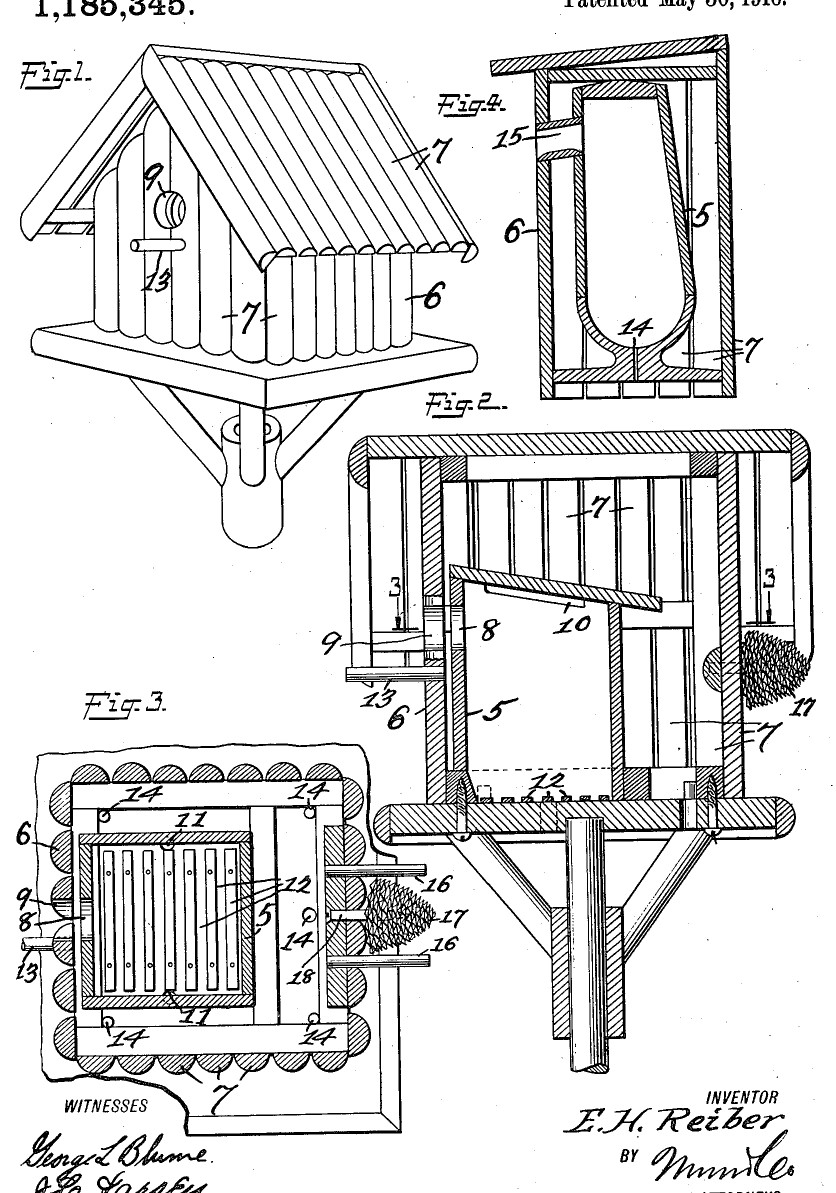


Spring Nest Box Inside a Shell of Bark Slabs, Kept Cool and Drained (Reiber, 1916)
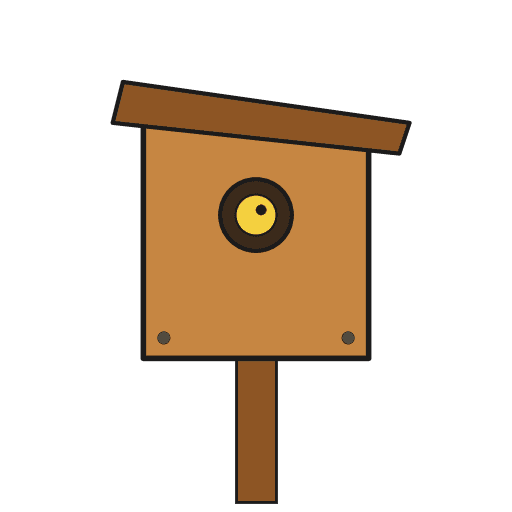
Edwin H. Reiber of West Webster, New York, received US 1,185,345, dated 30 May 1916, for a bird house built after years of watching nesting birds. In a house made from a hollowed limb, he found most young died of heat and vermin. So he put a ventilated, drained cedar nesting box inside a bigger shell of bark-covered slabs, spaced apart so air moves round the box and the bark keeps off the sun.
All sizes are ours.
Olùbẹ̀rẹ̀
About 4 hours
Ìlànà
1
1
Box and shell
Box and shell
Ń ṣí ìwé Jupyter…
2
2
Read US 1,185,345
Read US 1,185,345
"The invention really consists of a weatherproof box for the nest arranged within a relatively large shell far from weatherproof."
3
3
Build the nesting box
Build the nesting box
Cut and nail a box of red cedar board (his claim 3), sized from the notebook, his box 5. Leave the floor as slats with small gaps (his slats 12). Bore the entrance 8 near the top of the front, cut a few narrow ventilating slots 10 high in the sides, and drill drainage holes 11 low down.
Àwọn ohun èlò fún ìgbésẹ̀ yìí:
 Pákó igi sídà1 ẹyọ
 Ìṣó tí a bò pẹ̀lú sínkì1 ẹyọ
Àwọn irinṣẹ́ tí a nílò:
 Okùn Ìdíwọ̀n
 Gègé
 Ayùn Ọwọ́
 Ìlù ọwọ́ pẹ̀lú orí
 Ìlù ọwọ́
 Àwọn ìgbẹ́ igi
 Òòlù oníkànnì
4
4
Build the shell
Build the shell
Make a larger box and gabled roof of bark-covered slabs, bark outward, nailed to a cedar frame and spaced a little apart so air passes through, his shell 6 and slabs 7. Drill drainage openings 14 in its base.
Àwọn ohun èlò fún ìgbésẹ̀ yìí:
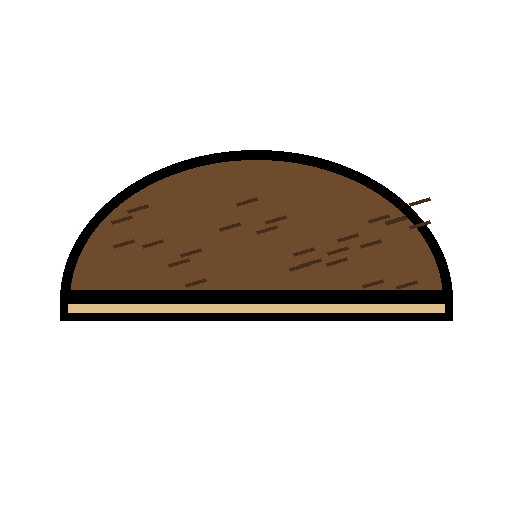 Pákó onípò1 ẹyọPákó igi sídà1 ẹyọÌṣó tí a bò pẹ̀lú sínkì1 ẹyọ
Àwọn irinṣẹ́ tí a nílò:
Ayùn Ọwọ́Ìlù ọwọ́Òòlù oníkànnì5
5
Fit the box in the shell
Fit the box in the shell
Fix the nesting box inside the shell on cedar blocks so it stands clear of the shell all round. Bore the shell's entrance 9 in line with the box's entrance, and fit a short dowel perch 13 just below it.
Àwọn ohun èlò fún ìgbésẹ̀ yìí:
Pákó igi sídà1 ẹyọ Àwọn dowel igi líle1 ẹyọÌṣó tí a bò pẹ̀lú sínkì1 ẹyọ
Àwọn irinṣẹ́ tí a nílò:
Ìlù ọwọ́ pẹ̀lú oríÌlù ọwọ́Òòlù oníkànnì6
6
Mount it
Mount it
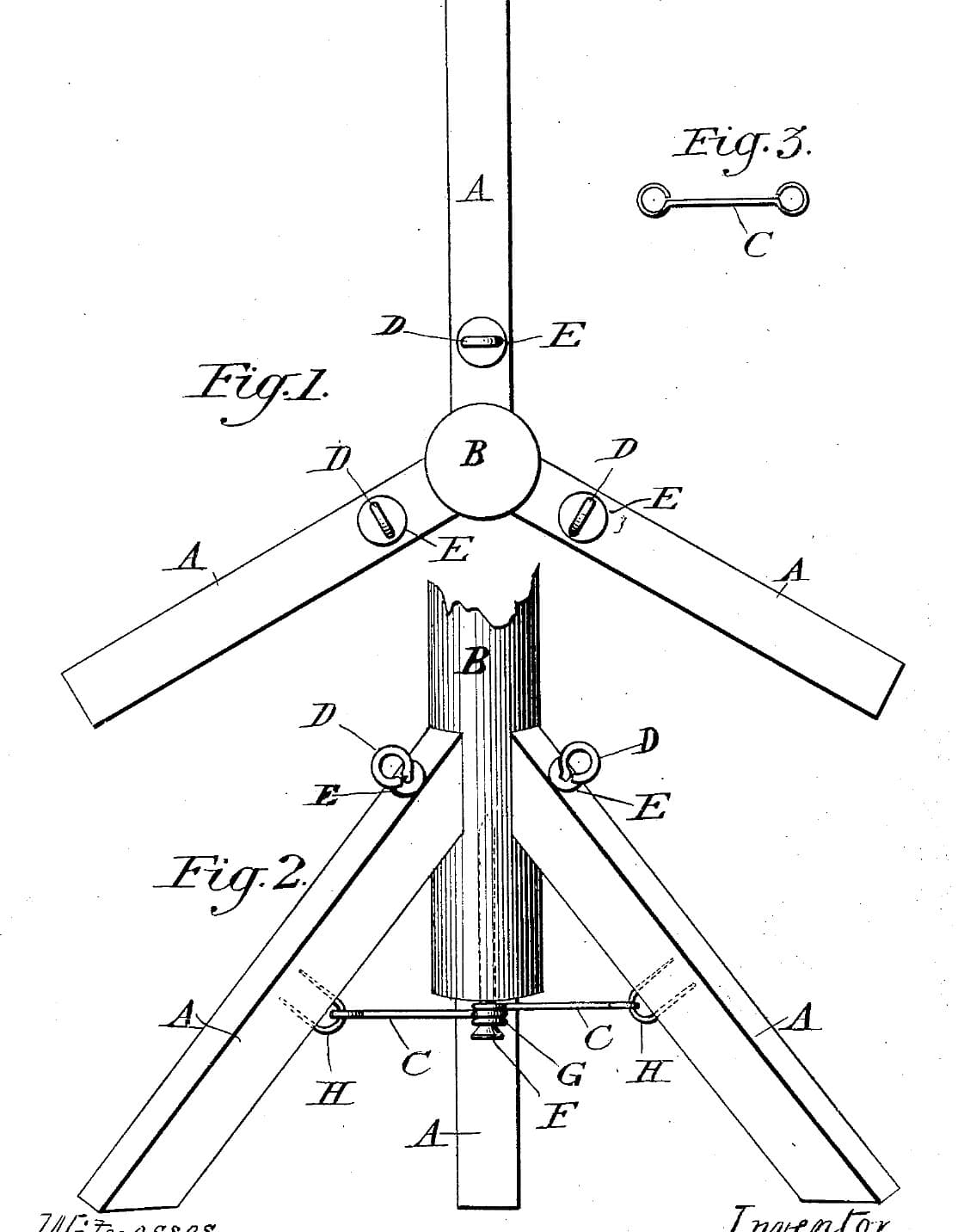
Set the house on a small platform on a post with diagonal braces, as his Fig. 1 (ours: sizes), in a shady spot before the birds return in spring.
Àwọn ohun èlò fún ìgbésẹ̀ yìí:
Pákó igi sídà1 ẹyọÌṣó tí a bò pẹ̀lú sínkì1 ẹyọÀwọn irinṣẹ́ tí a nílò:
Ayùn Ọwọ́Òòlù oníkànnì7
7
Troubleshooting
Troubleshooting
Nest box troubleshooting.
Flow
Loading...
8
8
History and honest limits
History and honest limits
**Edwin H. Reiber** of West Webster, New York, US 1,185,345, dated 30 May 1916, filed 13 January 1916. He claimed "a bird house, comprising a shell formed of spaced slabs and provided with an aperture in the side thereof for the passage of a bird, and a box for a nest within said shell and spaced therefrom", and in claim 3 "slabs of sassafras" and a box "of red cedar". Not built: his woodpecker house (Fig. 4) and the suet-filled pine cone feeder. He gives no sizes: all sizes, the entrance size, nails and the post are ours.
Àwọn ohun-èlò
4- 1 ẹyọÀyè
- Àyè
- 1 ẹyọÀyè
- 1 ẹyọÀyè
Ìtọ́nisọ́nà yìí ń ṣe
Blueprint tó jọra
Àwọn blueprint wọ̀nyí pín ìmọ̀ — ọ̀nà, ohun-èlò tàbí ìlànà
CC0 Àgbègbè Gbogbogbò
Blueprint yìí ti jáde lábẹ́ CC0. O lè ṣe àdàkọ, yí padà, pín, àti lò láìsí ìyọ̀ǹda.
Ṣàtìlẹ́yìn Olùṣẹ́dá nípa rírà àwọn ọjà nipasẹ̀ Blueprint wọn Ẹ̀san Olùṣẹ́dá tí àwọn Olùtajà gbé kalẹ̀, tàbí ṣẹ̀dá àtúnṣe tuntun ti Blueprint yìí kí o sì fi sínú Blueprint rẹ gẹ́gẹ́ bí ìsopọ̀ láti pín owó-wíwọlé.