IṢẸ́ ỌNÀ
ẸWÀ ÀTI ÌLERA
IṢẸ́ ỌWỌ́
ÀṢÀ ÀTI ÌTÀN
ÌṢERÉ
ÀYÍKÁ
OÚNJẸ ÀTI OHUN MÍMU
REVERSE ENGINEERING
SÁYẸ́ǸSÌ
ERÉ ÌDÁRAYÁ
ÌMỌ̀-Ẹ̀RỌ
ÀWỌN OHUN WÍWỌ̀
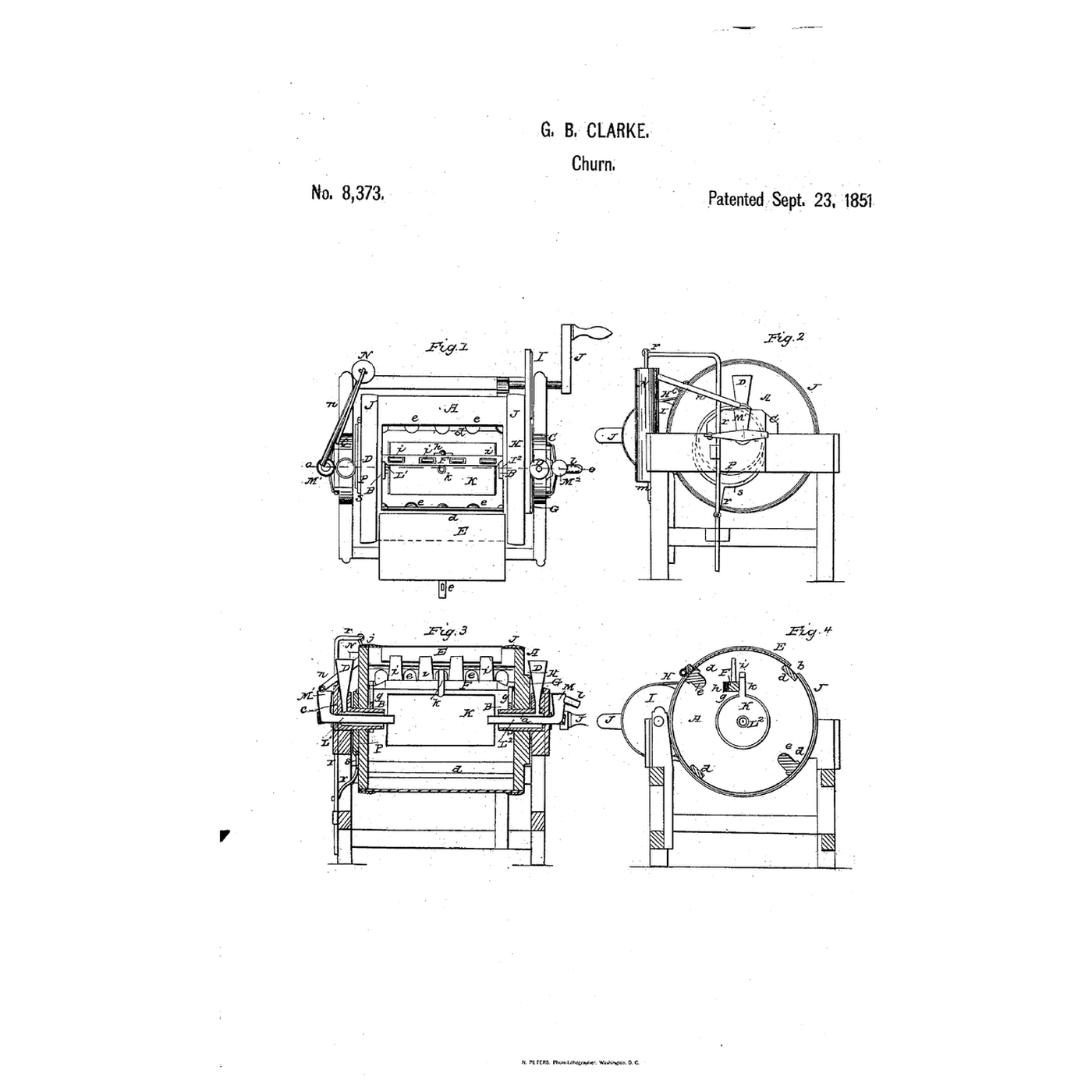
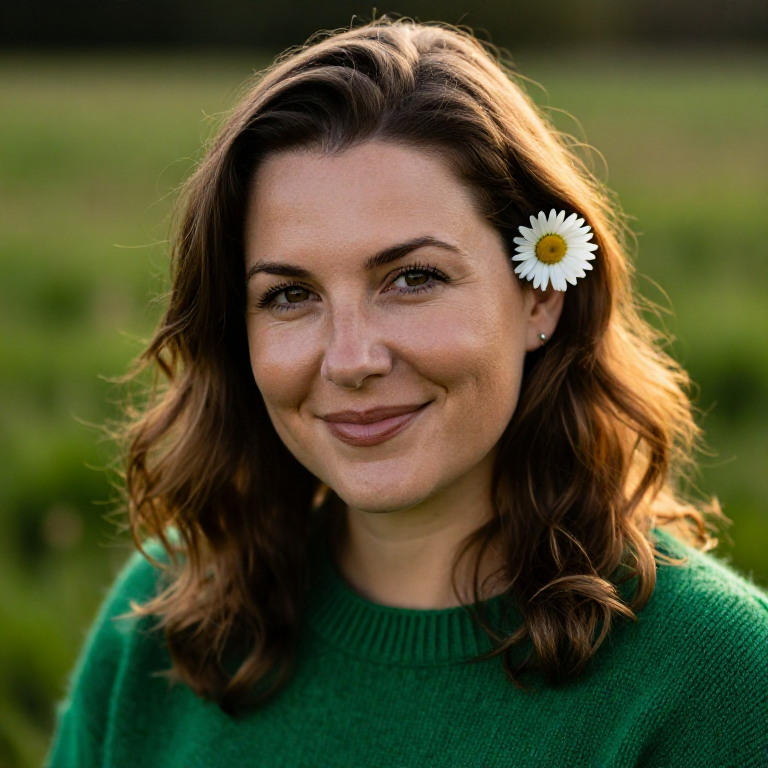
Revolving-Drum Toothed-Bar Churn: The Churn Turns Round a Fixed Toothed Bar
Clarke turned the churn itself and held the beater still.
George B. Clarke of Leonardsville, New York, received US 8,373, dated 23 September 1851, for "Clarke's excelsior churn": a cylinder hung horizontally and revolving on fixed axles, with cleats inside, "either with or without projections," working between teeth on a stationary cross bar fixed to the axles a little off centre, to "break the circular motion of the milk and thereby cause it to be precipitated on the cylinder at the center." A stationary metal cylinder inside, fed warm or cold water through tubes in the hollow axles by a pump worked from the churn, tempers the milk; funnels in the axles let air in.
This rung works out the speed limit, then prints the cleats, toothed bar and axle blocks, builds the drum on a frame, and makes butter.
Ilọsíwájú
About 6 hours, plus printing
Ìlànà
1
1
How fast to turn
How fast to turn
Ń ṣí ìwé Jupyter…
2
2
A churn that turns round still arms before it
A churn that turns round still arms before it
The embedded blueprint spins a drum against arms held still by a hook. Clarke's drum turns slowly round a fixed toothed bar, and tempers the milk from inside.
3
3
Read US 8,373
Read US 8,373
"The nature of my invention consists in hanging the body of the churn horizontally and causing it to revolve on fixed or permanent axles through which at either end are branch tubes connected to a stationary cylinder within the body serving (if required) by the passage of warm or cold fluid through them, to temper the milk."
4
4
Print the parts
Print the parts
Print four cleats with pins (/uploads/blueprints/revolving-drum-toothed-bar-churn-cleat.stl), the toothed cross bar (/uploads/blueprints/revolving-drum-toothed-bar-churn-toothed-bar.stl) and two axle blocks (/uploads/blueprints/revolving-drum-toothed-bar-churn-axle-block.stl). Print in PETG at 0.2 mm layers, 30 % infill, 4 walls; wash before first use.
Àwọn ohun èlò fún ìgbésẹ̀ yìí:
 Okùn PETG1 ẹyọ
Àwọn irinṣẹ́ tí a nílò:
 Ẹ̀rọ ìtẹ̀ 3D oníwàyà (FDM)
5
5
The drum
The drum
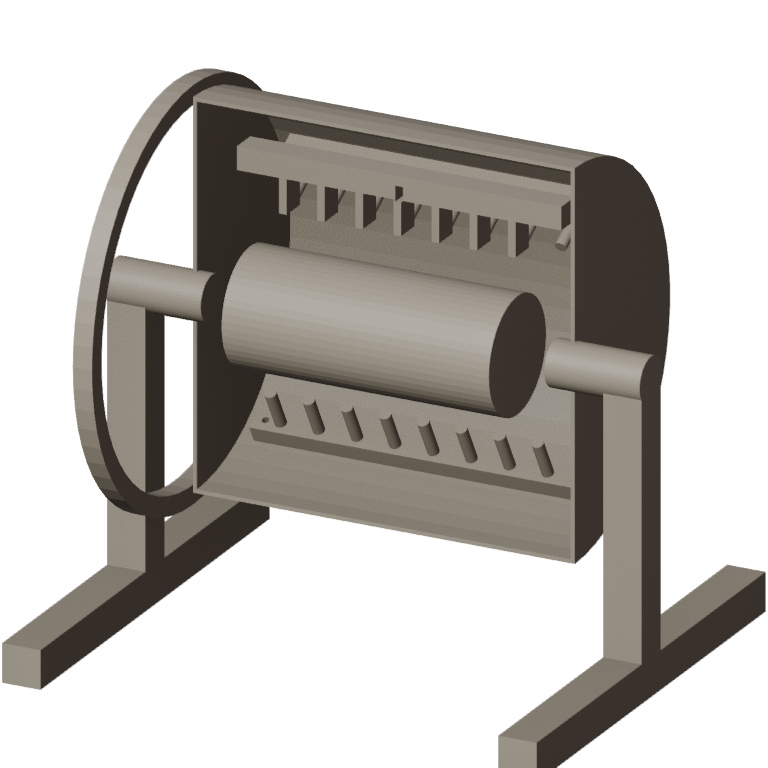
Use a round food-grade container about 200 mm across as the drum. Screw the cleats inside, lengthwise, at equal spacing. Cut a hinged door in its side as his lid E. Drill both ends at the centre for 25 mm hollow axles of food-grade pipe, sealed to turn in leather washers, so the drum turns on them.
Àwọn ohun èlò fún ìgbésẹ̀ yìí:
 Àgọ́ ìtọ́jú ti ìpele oúnjẹ1 ẹyọ
 Páìpù PVC1 ẹyọ
 Tẹ́ẹ́rẹ́ awọ1 ẹyọ
 Ìsúrù igi #8 x 1"1 ẹyọ
Àwọn irinṣẹ́ tí a nílò:
 Ìṣètò ayùn ihò
 Ẹ̀rọ Ìlùkòkò Aláìlókùn
 Ayùn Kópìngì
 Ìṣù àwọn ohun ìyí skurú
6
6
Bar, frame and drive
Bar, frame and drive
Fix the axles in the axle blocks on a pine frame so they do not turn. Fix the toothed bar to the axles inside the drum with two pine arms, a little to one side of the centre, teeth toward the cleats' pins. Wrap a belt round the drum and turn it by a crank and pulley, or turn the drum by hand. Optionally fit a sealed can between the axles as a tempering cylinder fed through one axle.
Àwọn ohun èlò fún ìgbésẹ̀ yìí:
 Pákó igi pine1 ẹyọÌsúrù igi #8 x 1"1 ẹyọ
 Ìdìpọ̀ Igi1 ẹyọPáìpù PVC1 ẹyọ
Àwọn irinṣẹ́ tí a nílò:
 Ayùn Ọwọ́Ẹ̀rọ Ìlùkòkò Aláìlókùn
 Àkójọ Orí ÌlùkòkòÌṣù àwọn ohun ìyí skurú
7
7
The build in 3D
The build in 3D
FreeCAD model of this build, not of the patent: the drum cut away to show the cleats with pins, the stationary toothed bar a little off centre, the tempering cylinder between the axles, the frame and the drive ring.
8
8
Turn the drum and make butter
Turn the drum and make butter
Let the heavy cream stand until it reaches about 15 °C, checked with the thermometer. Pour in 2 litres, a third to two thirds full as he said, and close the door. Turn the drum steadily below the notebook's speed; time until the butter comes. Take the butter out through the door. Pour off the buttermilk, add cold water, churn a little and pour off again until it runs clear; work in a pinch of salt and weigh the butter.
Àwọn ohun èlò fún ìgbésẹ̀ yìí:
 Ọ̀rá wàrà tó nípọn2000 ml
 Iyọ̀ Òkun Rúkèrúdò1 ẹyọ
 Omi1 ẹyọ
Àwọn irinṣẹ́ tí a nílò:
 Ẹ̀rọ ìwọ̀n ooru oníhun tí ó dúró sí inú
 Aago Ìdúró
 Òṣùwọ̀n Díjítà Ilé Ìdáná
 Àwo ìdàpọ̀ ńlá ti irin tí kò ń yá
9
9
Pins that strike, a door that leaks
Pins that strike, a door that leaks
Revolving-drum toothed-bar troubleshooting.
Flow
Loading...
10
10
History and honest limits
History and honest limits
**George B. Clarke** of Leonardsville, Brookfield, Madison County, New York, received US 8,373, dated 23 September 1851. The drum was driven by a belt round a pulley on one end, or round its hoops, so one churn could drive others; the cross bar had a joint at its centre so it could be doubled and put in or taken out through the lid. He claimed the revolving vessel with cleats working with a stationary cross bar, and the tempering cylinder and tubes in combination with them.
**Honest limits.** We leave out his pump; a container, pipe and printed parts stand in for his. FDM prints hold food in their layer lines, so wash well and replace when worn. Your times and weights are the result.
Àwọn ohun-èlò
10- 1 ẹyọÀyè
- Àyè
- 1 ẹyọÀyè
- 1 ẹyọÀyè
- 2 ẹyọÀyè
- 1 ẹyọÀyè
- 1 ẹyọÀyè
- 2000 mlÀyè
- 1 ẹyọÀyè
- 1 ẹyọÀyè
Àwọn irinṣẹ́ tó nílò
11- 1 vendor sell this, none ship to you yetÀyè
- Àyè
- Àyè
- Àyè
Àwọn fáìlì àpẹrẹ
1Ìtọ́nisọ́nà yìí ń ṣe

Blueprint tó jọra
Àwọn blueprint wọ̀nyí pín ìmọ̀ — ọ̀nà, ohun-èlò tàbí ìlànà
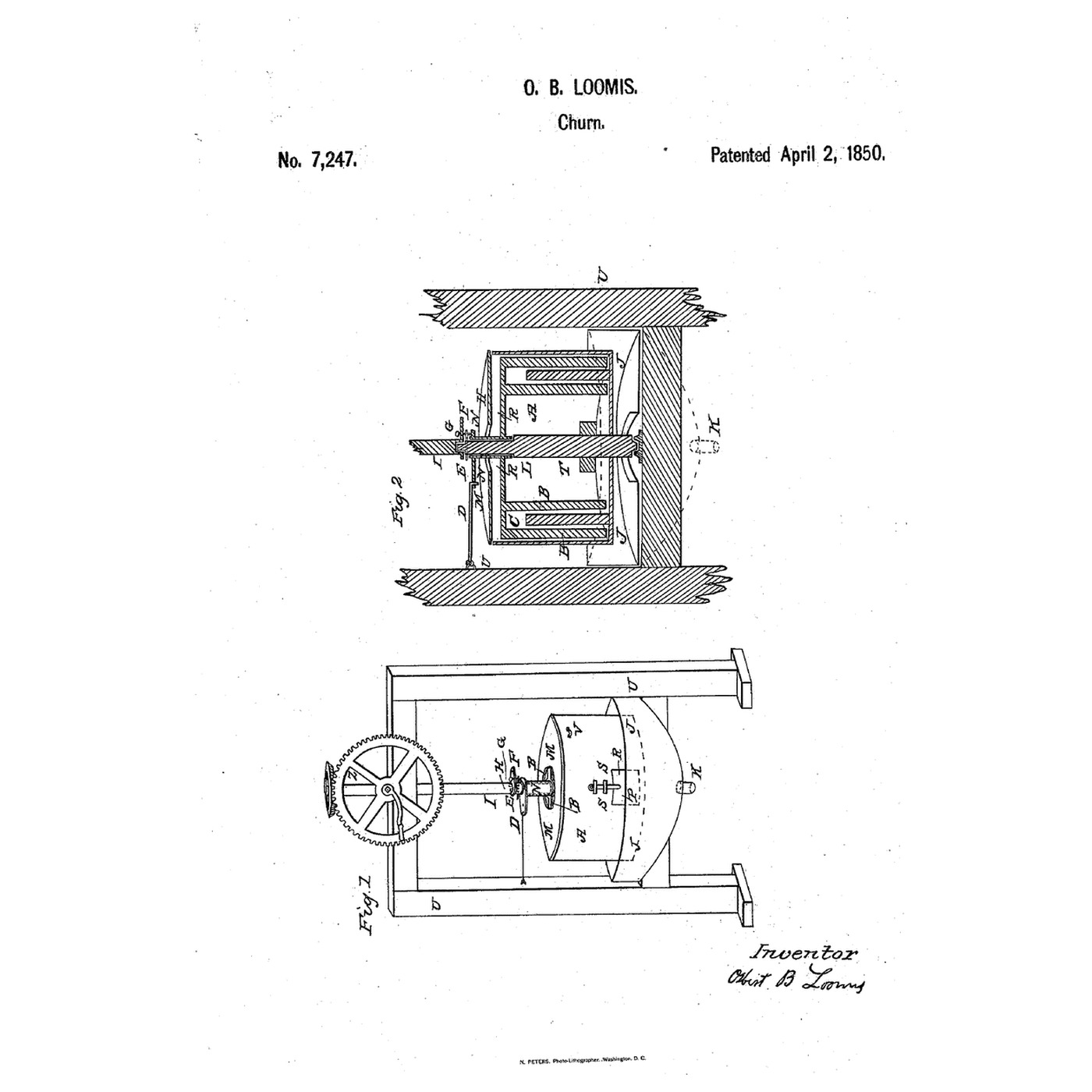
Centrifugal Buttermilk-Extractor Churn: A Spinning Drum That Throws the Buttermilk Out
láti ọwọ́ Martin
OÚNJẸ ÀTI OHUN MÍMU
17
0
0
0
0
0
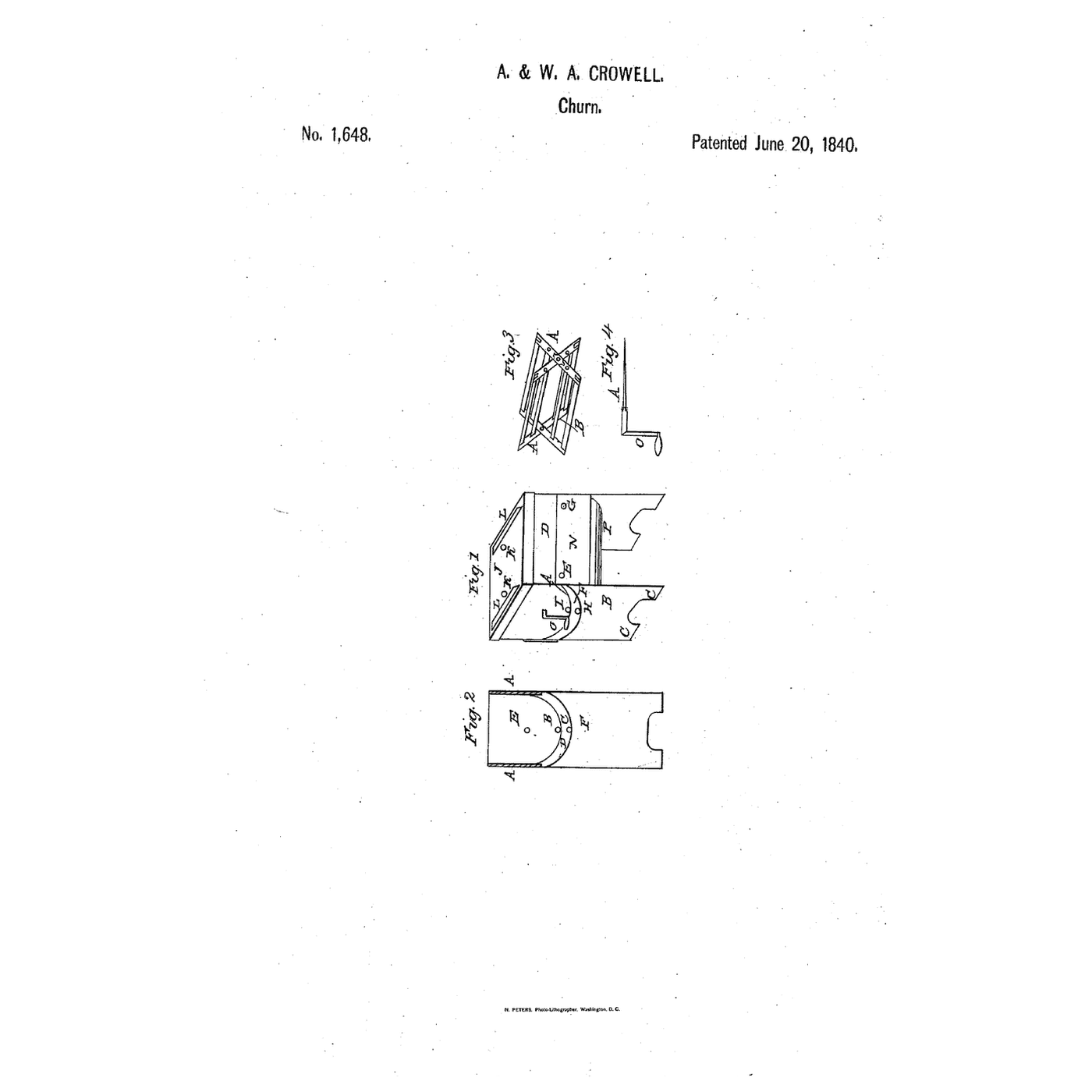
Water-Jacketed Churn: Hot or Cold Water Under a Metal Plate Tempers the Cream
láti ọwọ́ Karen
OÚNJẸ ÀTI OHUN MÍMU
25
0
0
0
0
0
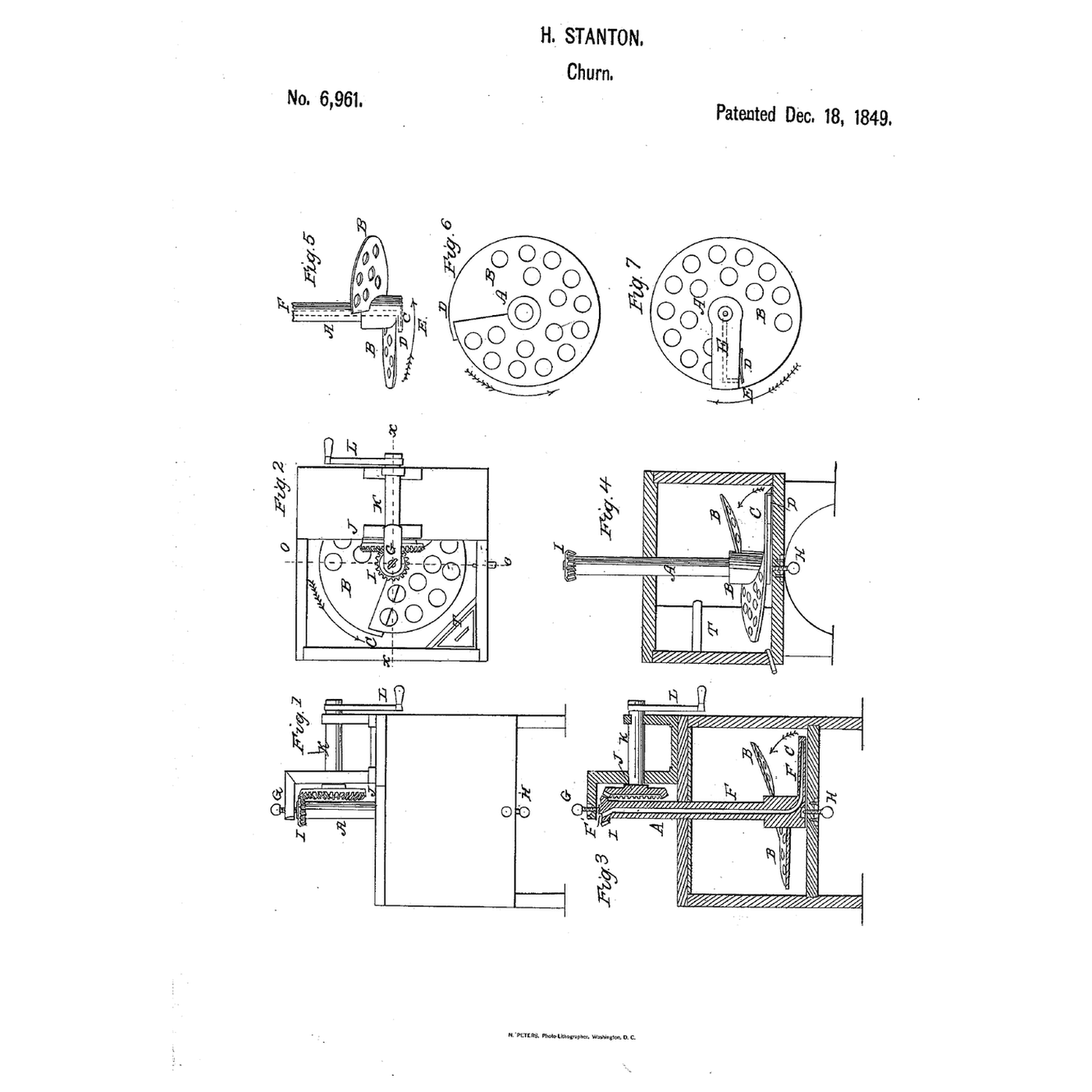
Spiral-Float Air-Arm Churn: A Perforated Screw Over a Breathing Wedge
láti ọwọ́ YourGrandma
OÚNJẸ ÀTI OHUN MÍMU
22
0
0
0
0
0
CC0 Àgbègbè Gbogbogbò
Blueprint yìí ti jáde lábẹ́ CC0. O lè ṣe àdàkọ, yí padà, pín, àti lò láìsí ìyọ̀ǹda.
Ṣàtìlẹ́yìn Olùṣẹ́dá nípa rírà àwọn ọjà nipasẹ̀ Blueprint wọn Ẹ̀san Olùṣẹ́dá tí àwọn Olùtajà gbé kalẹ̀, tàbí ṣẹ̀dá àtúnṣe tuntun ti Blueprint yìí kí o sì fi sínú Blueprint rẹ gẹ́gẹ́ bí ìsopọ̀ láti pín owó-wíwọlé.