IṢẸ́ ỌNÀ
ẸWÀ ÀTI ÌLERA
IṢẸ́ ỌWỌ́
ÀṢÀ ÀTI ÌTÀN
ÌṢERÉ
ÀYÍKÁ
OÚNJẸ ÀTI OHUN MÍMU
REVERSE ENGINEERING
SÁYẸ́ǸSÌ
ERÉ ÌDÁRAYÁ
ÌMỌ̀-Ẹ̀RỌ
ÀWỌN OHUN WÍWỌ̀
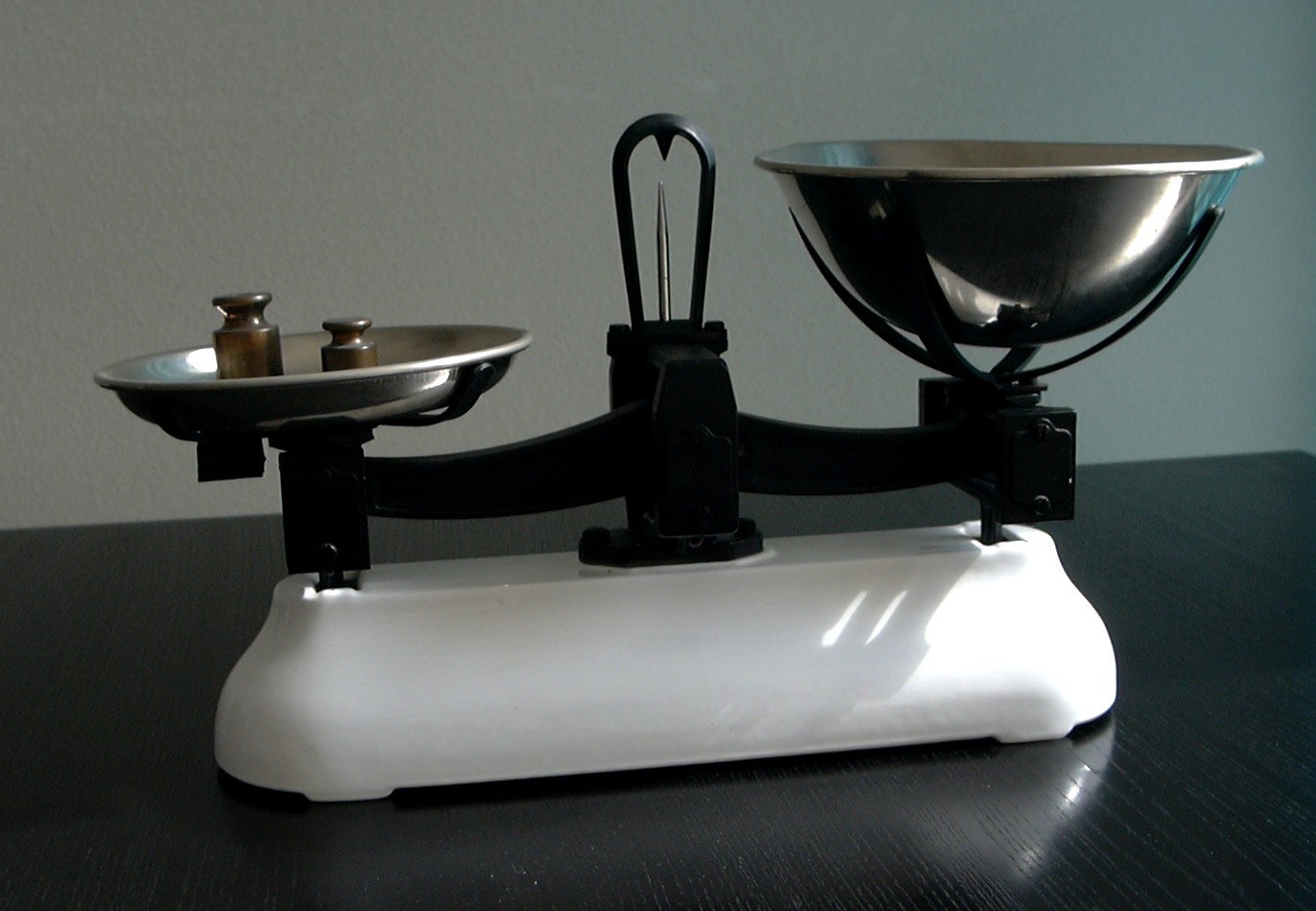


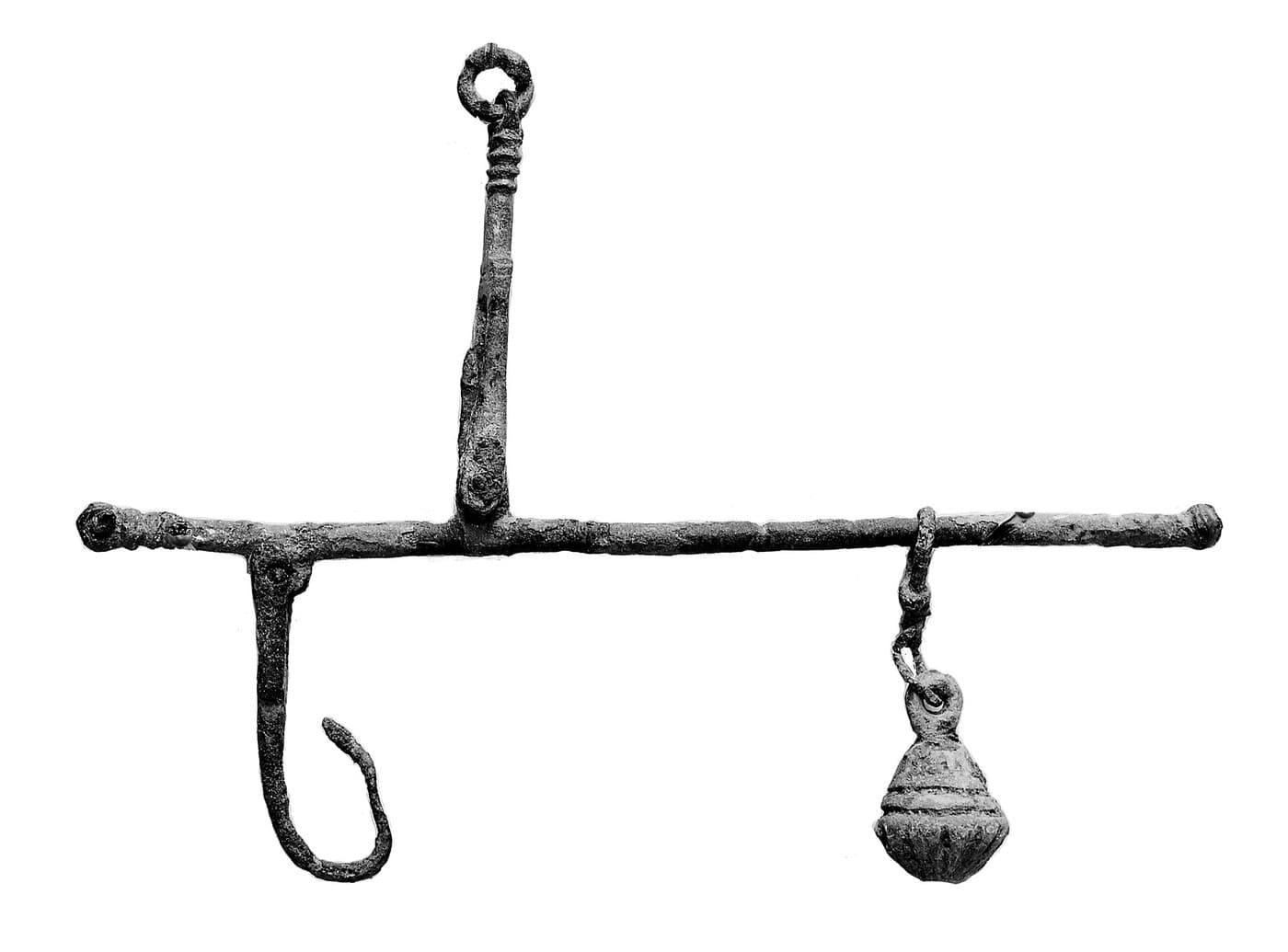
Roberval Balance: a Parallelogram Frame That Keeps Both Pans Level (Roberval, 1669)
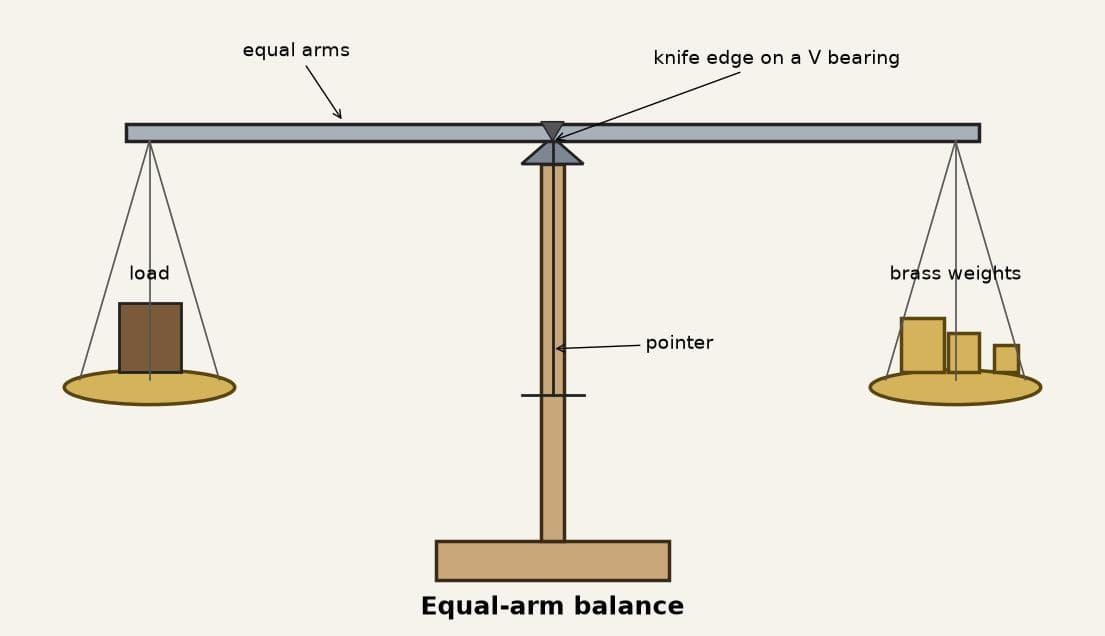
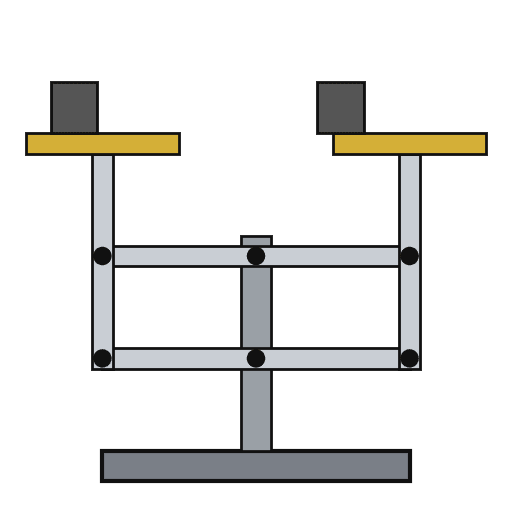
The equal-arm balance rebuilt as a hinged frame. Gilles Personne de Roberval showed it to the Académie Royale des Sciences in 1669. Two bars pivot on a post, joined at their ends by two upright bars into a hinged rectangle; each pan is fixed to an upright, so it stays level as the frame tilts.
Result: a balance on which a weight weighs the same wherever it sits on its pan, even when both loads are on the same side of the post. Later shop scales of the Roberval type keep this frame.
Source: the 1670 Journal des savants account as given by J. F. Hall, Two Hundred Years of Analyzing Roberval's Balance, Caltech Report 2024-01. Unknown: materials and sizes. Picture: Wikimedia Commons.
Àárín
1 day
Ìlànà
1
1
Make the six frame pieces and the post
Make the six frame pieces and the post
Make a post standing on a pedestal, a top bar and a bottom bar of the same length, and two upright bars of the same length as each other. Mark each horizontal bar at its exact middle: its two arms must be equal. Make two flat platforms (the pans). Not given: the material and the sizes.
Àwọn ohun èlò fún ìgbésẹ̀ yìí:
 Ohun èlò tí a kò mọ̀1 bars, post, pedestal, platforms
Àwọn irinṣẹ́ tí a nílò:
 Ìwọ̀n tí a kò mọ̀
2
2
Pin the frame to the post
Pin the frame to the post
Pin the top bar to the post at its middle, and the bottom bar to the post at its middle, directly below, so both can turn. Pin the left upright to the left ends of both bars, and the right upright to the right ends. The four bars now form a rectangle that can lean into a parallelogram; the uprights always stay upright. Tight pins bind unless every length is exact, so Hall advises slotting the lower hole in the post upright: it may slide up and down but not sideways. Ours: drill the pin holes by hand.
Àwọn ohun èlò fún ìgbésẹ̀ yìí:
Ohun èlò tí a kò mọ̀1 six pinsÀwọn irinṣẹ́ tí a nílò:
 Ìlù ọwọ́
3
3
Fix the pans to the uprights
Fix the pans to the uprights
Fix one platform rigidly to each upright, so it cannot turn. The weights sit on the platforms or hang from them. As the frame tilts, the uprights move straight up and down and the platforms stay level.
Àwọn ohun èlò fún ìgbésẹ̀ yìí:
Ohun èlò tí a kò mọ̀1 fixings4
4
Test it
Test it
With the pans empty the frame should rest level. Put equal weights on the two pans: they balance. Now slide one weight to the edge of its pan, or to the far side of the post: they still balance. With unequal arms, weights balance when their ratio is the inverse of the arm lengths.
Àwọn irinṣẹ́ tí a nílò:
 Ìwọ̀n
Àwọn Ohun Èlò Ìtọ́nisọ́nà Tí A So Pọ̀
Ìtọ́nisọ́nà yìí ń ṣe
Blueprint tó jọra
Àwọn blueprint wọ̀nyí pín ìmọ̀ — ọ̀nà, ohun-èlò tàbí ìlànà

CC0 Àgbègbè Gbogbogbò
Blueprint yìí ti jáde lábẹ́ CC0. O lè ṣe àdàkọ, yí padà, pín, àti lò láìsí ìyọ̀ǹda.
Ṣàtìlẹ́yìn Olùṣẹ́dá nípa rírà àwọn ọjà nipasẹ̀ Blueprint wọn Ẹ̀san Olùṣẹ́dá tí àwọn Olùtajà gbé kalẹ̀, tàbí ṣẹ̀dá àtúnṣe tuntun ti Blueprint yìí kí o sì fi sínú Blueprint rẹ gẹ́gẹ́ bí ìsopọ̀ láti pín owó-wíwọlé.