IṢẸ́ ỌNÀ
ẸWÀ ÀTI ÌLERA
IṢẸ́ ỌWỌ́
ÀṢÀ ÀTI ÌTÀN
ÌṢERÉ
ÀYÍKÁ
OÚNJẸ ÀTI OHUN MÍMU
REVERSE ENGINEERING
SÁYẸ́ǸSÌ
ERÉ ÌDÁRAYÁ
ÌMỌ̀-Ẹ̀RỌ
ÀWỌN OHUN WÍWỌ̀
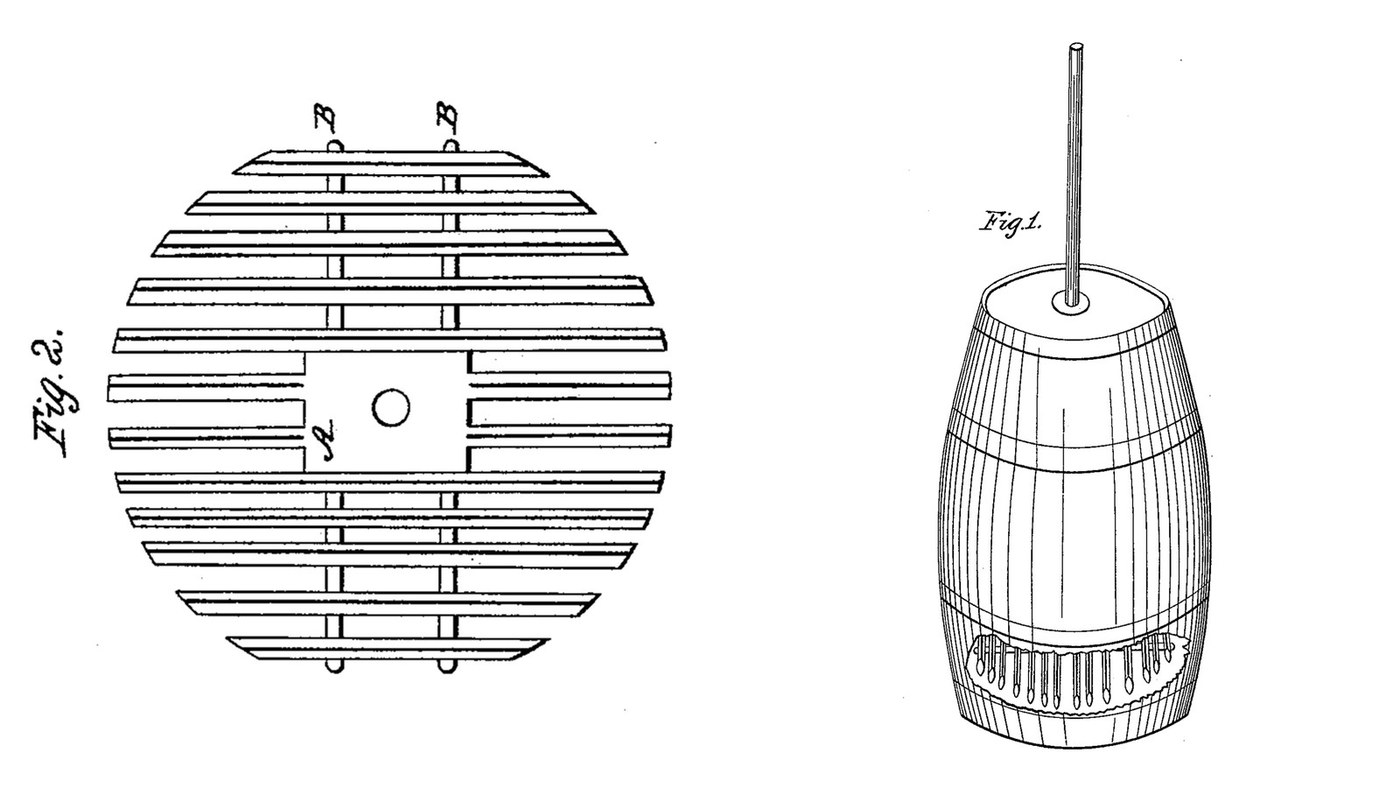


Oval-Breaker Rod Dasher: Breakers Strung on Two Rods, Add More for More Agitation
Alfred Rose of Penn Yan, New York, received US 25,914, dated 25 October 1859, for a churn-dasher for an ordinary up-and-down churn. A centre piece takes the staff, and breakers of oval section, with nearly sharp upper and lower edges, are strung beside it on two parallel rods, their ends cut to a circle. Putting on more breakers narrows the gaps between them and gives more agitation.
The patent gives no sizes; every size here is ours.
Olùbẹ̀rẹ̀
About a day, plus printing
Ìlànà
1
1
Breaker lengths, and how open the dasher is
Breaker lengths, and how open the dasher is
Ń ṣí ìwé Jupyter…
2
2
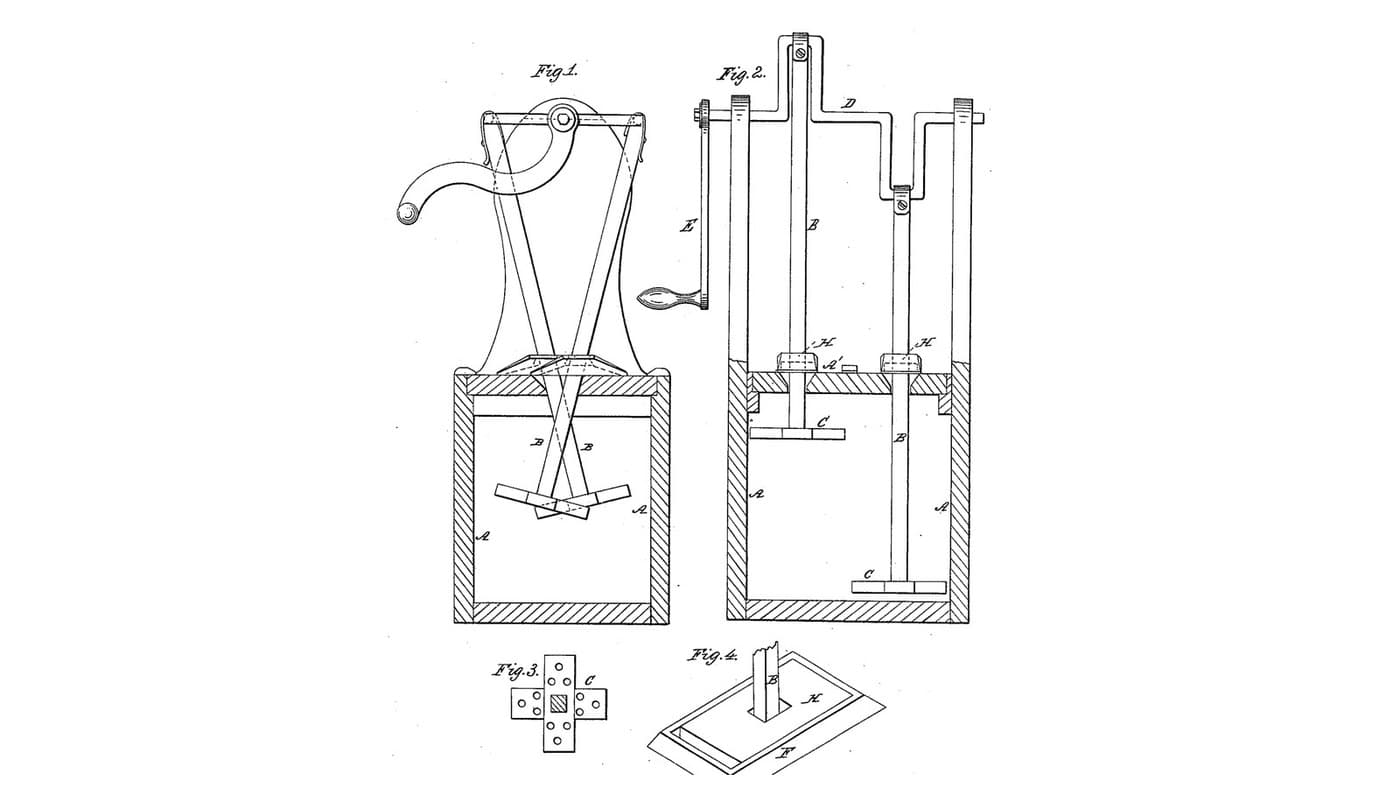
An up-and-down dasher of crossed boards, a few weeks before
An up-and-down dasher of crossed boards, a few weeks before
Gilpatrick's dashers are two boards crossed and bored with holes. Rose builds his from breakers strung on rods, so the openings can be changed.
3
3
Read US 25,914
Read US 25,914
"They may be adjusted to the width required to give the necessary agitation and if more agitation is required put on more of the breakers, thereby reducing the space between them and any amount of agitation required may by this means be produced."
4
4
Print the spacers
Print the spacers
Sixteen spacer rings 12 mm across and 8 mm long, bored 6.4 mm, to go on the rods between the pieces. Print more, or shorter ones, to change the gaps. PETG, 0.2 mm layers, 100 % infill.
5
5
Centre piece A
Centre piece A
Draw a 248 mm circle on 30 mm hardwood. Cut the centre piece 64 mm wide right across it, then cut away its middle down to a 90 mm block, leaving two prongs 12 mm wide each side, 20 mm apart, out to the circle. Bore a 31 mm hole down through the block for the staff, and two 6.6 mm holes across it, 50 mm apart, for the rods. Shave the prongs to an oval 12 x 24 mm, their upper and lower edges nearly sharp.
Àwọn ohun èlò fún ìgbésẹ̀ yìí:
 Pátákó Igi Líle1 ẹyọ
 Ìdìpọ̀ Igi1 ẹyọ
Àwọn irinṣẹ́ tí a nílò:
 Kọ́mpasi
 Ayùn tábìlì
 Ayùn Jígísò
 Àkójọ orí kànnàkànnà
 Ẹ̀rọ Ìlùkòkò Aláìlókùn
 Àkójọ Orí Ìlùkòkò
 Ayùn onídìmú méjì
 Bébà Ìfá
6
6
Breakers and rods B
Breakers and rods B
Cut eight breakers 12 x 24 mm from hardwood, two each of 230, 210, 179 and 129 mm long along their middles, ends trimmed to the circle. Shave each to the same oval with nearly sharp edges, and bore two 6.6 mm holes through each, 50 mm apart across their middles. Cut two 6 mm stainless threaded rods 236 mm long, thread the breakers and spacers on either side of the centre piece, and close each end with a cap nut.
Àwọn ohun èlò fún ìgbésẹ̀ yìí:
Pátákó Igi Líle1 ẹyọ Ọ̀pá oníṣọ̀kan1 ẹyọ
 Ẹ̀kù Ìdìmú Onínáílọ́ọ̀nù4 ẹyọ
 Okùn PETG1 ẹyọ
Àwọn irinṣẹ́ tí a nílò:
 Ẹ̀rọ ìtẹ̀ 3D oníwàyà (FDM)Ayùn tábìlìAyùn onídìmú méjìẸ̀rọ Ìlùkòkò AláìlókùnÀkójọ Orí Ìlùkòkò
 Ayùn Irin
 Àwọn Ìfá (Ìfá Ọwọ́)
 Kọ́kọ́rọ́ tí a lè ṣàtúnṣe
 Okùn Ìdíwọ̀n
7
7
The build in 3D
The build in 3D
FreeCAD model of the dasher: the centre piece with its prongs and the staff's foot, the eight breakers with their ends on a 248 mm circle, the two rods, spacers and cap nuts.
8
8
Churn
Churn
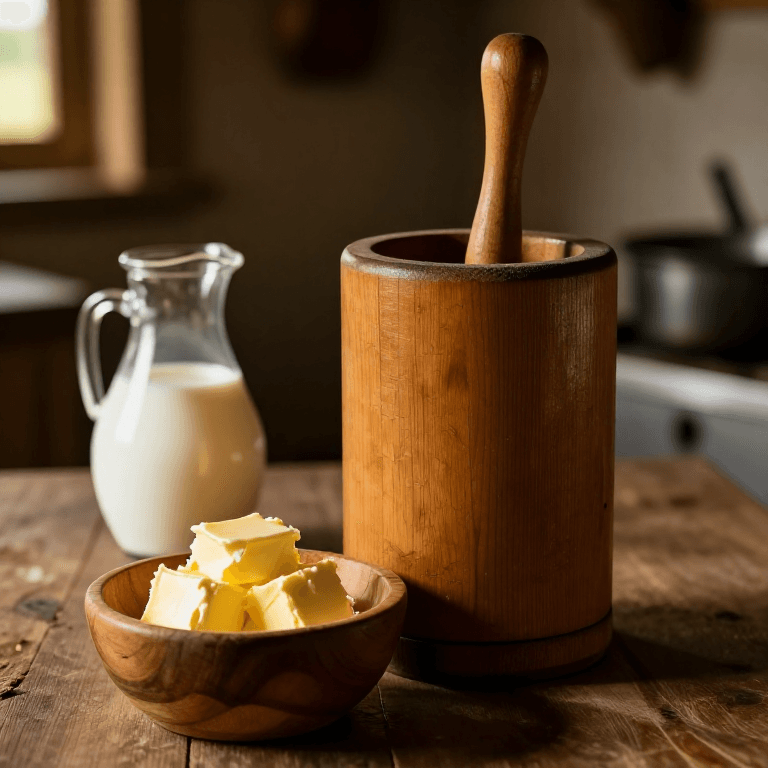
Fit a 30 mm hardwood staff into the centre piece and wedge it. Use a dash churn at least 260 mm across inside where the dasher works. Pour in cream at about 15 °C to a third of the churn's height, checked with the thermometer, put the dasher in and the lid on, and work the staff up and down, timing it. When the butter comes, lift the dasher out, drain the buttermilk, wash the butter in cold water until it runs clear, salt and weigh it. If it churns slowly, add breakers next time to close the gaps.
Àwọn ohun èlò fún ìgbésẹ̀ yìí:
 Ọ̀rá wàrà tó nípọn6 l
 Iyọ̀ Òkun Rúkèrúdò1 ẹyọ
 Àwọn dowel igi líle1 ẹyọÌdìpọ̀ Igi1 ẹyọ
Àwọn irinṣẹ́ tí a nílò:
 Ìkòkò ìgbọn bọ́tà
 Ẹ̀rọ ìwọ̀n ooru oníhun tí ó dúró sí inú
 Aago Ìdúró
 Òṣùwọ̀n Díjítà Ilé Ìdáná
 Àwo ìdàpọ̀ ńlá ti irin tí kò ń yá
 Omi
9
9
Troubleshooting
Troubleshooting
Rod dasher troubleshooting.
Flow
Loading...
10
10
History and honest limits
History and honest limits
**Alfred Rose** of Penn Yan, Yates County, New York, US 25,914, 25 October 1859, "Churn-Dasher". He claimed "the churn dasher when made in the manner substantially as specified". The patent gives no sizes and leaves the number of breakers to the maker; every size here is ours, and his drawing shows five breakers each side where ours has four.
Àwọn ohun-èlò
8- 1 ẹyọÀyè
- 2 ẹyọÀyè
- 1 ẹyọÀyè
- Àyè
- 1 ẹyọÀyè
- Àyè
- 1 ẹyọÀyè
- 1 ẹyọÀyè
Àwọn irinṣẹ́ tó nílò
19- Àyè
- 1 vendor sell this, none ship to you yetÀyè
- 1 vendor sell this, none ship to you yetÀyè
- 1 vendor sell this, none ship to you yetÀyè
- Àyè
- Àyè
- 1 vendor sell this, none ship to you yetÀyè
- Àyè
- Àyè
Àwọn fáìlì àpẹrẹ
2Ìtọ́nisọ́nà yìí ń ṣe

Blueprint tó jọra
Àwọn blueprint wọ̀nyí pín ìmọ̀ — ọ̀nà, ohun-èlò tàbí ìlànà

CC0 Àgbègbè Gbogbogbò
Blueprint yìí ti jáde lábẹ́ CC0. O lè ṣe àdàkọ, yí padà, pín, àti lò láìsí ìyọ̀ǹda.
Ṣàtìlẹ́yìn Olùṣẹ́dá nípa rírà àwọn ọjà nipasẹ̀ Blueprint wọn Ẹ̀san Olùṣẹ́dá tí àwọn Olùtajà gbé kalẹ̀, tàbí ṣẹ̀dá àtúnṣe tuntun ti Blueprint yìí kí o sì fi sínú Blueprint rẹ gẹ́gẹ́ bí ìsopọ̀ láti pín owó-wíwọlé.