IṢẸ́ ỌNÀ
ẸWÀ ÀTI ÌLERA
IṢẸ́ ỌWỌ́
ÀṢÀ ÀTI ÌTÀN
ÌṢERÉ
ÀYÍKÁ
OÚNJẸ ÀTI OHUN MÍMU
REVERSE ENGINEERING
SÁYẸ́ǸSÌ
ERÉ ÌDÁRAYÁ
ÌMỌ̀-Ẹ̀RỌ
ÀWỌN OHUN WÍWỌ̀
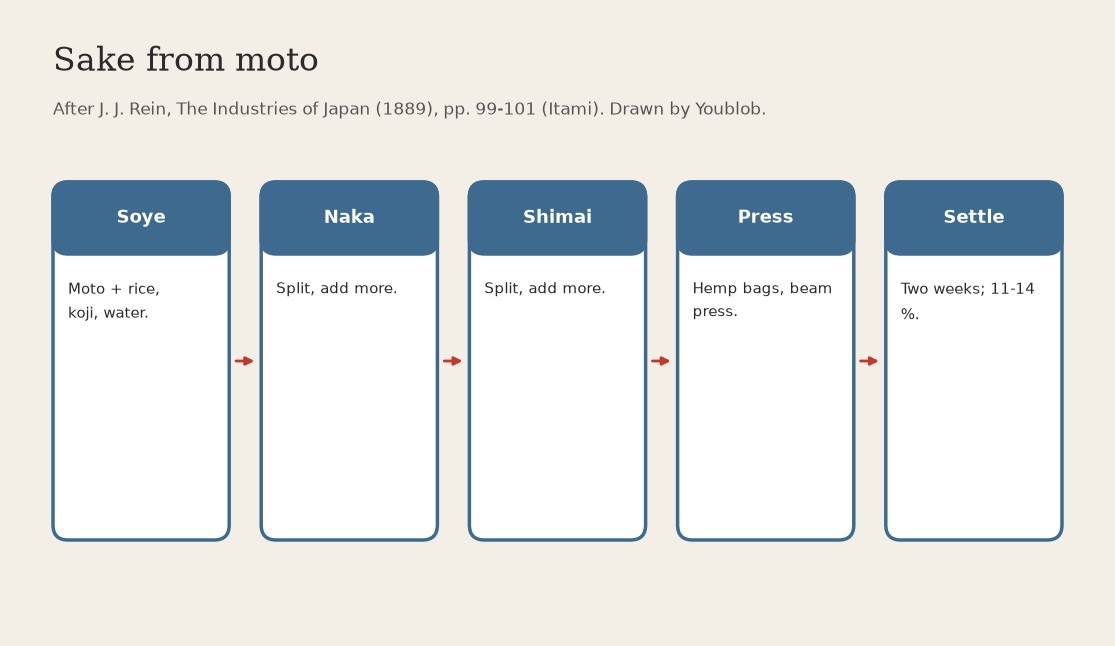


Sake from Moto: the Mash Built Up in Three Additions, Soye, Naka and Shimai, Pressed and Settled (Itami, after Rein 1889)
The brewers of Itami never put all the rice in at once. They fed the moto in three steps, roughly doubling the mash each time, so the yeast always stayed ahead of the sugar the koji made. Then they pressed the mash in a beam press and let the sake settle clear.
Result: sake of 11 to 14 % alcohol.
Source: J. J. Rein, The Industries of Japan (1889), pp. 99-101. The beam press is replaced by any press. Picture drawn by Youblob.
Ilọsíwájú
4 weeks
Ìlànà
1
1
Soye: first addition
Soye: first addition
In a three-foot tub mix 1.30 koku steamed rice, 1.30 koku moto, 0.35 koku koji and 1.30 koku water (4.25 koku). Stir thoroughly every two hours for two or three days; it warms to about 20 C and smells pleasant and pungent. Ours: steam the rice over a pot.
Àwọn ohun èlò fún ìgbésẹ̀ yìí:
 Ìrẹsì Japan olóhóró kúkúrú1.3 koku
 Moto (ìbẹ̀rẹ̀ ìwúkàrà sake)1.3 koku
 Ìrẹsì koji (Aspergillus oryzae)0.35 koku
 Omi1.3 koku
Àwọn irinṣẹ́ tí a nílò:
 Àwokòtò igi
 Ọ̀pá igi gígùn fún rírú
 Ìkòkò Ńlá
 Ẹ̀rọ Ìwọ̀n Ooru
2
2
Naka: second addition
Naka: second addition
Split the soye between two tubs and add 2.00 koku steamed rice, 0.65 koku koji and 2.90 koku water (9.80 koku, 4.90 per tub). Stir vigorously every other hour for one day.
Àwọn ohun èlò fún ìgbésẹ̀ yìí:
Ìrẹsì Japan olóhóró kúkúrú2 kokuÌrẹsì koji (Aspergillus oryzae)0.65 kokuOmi2.9 kokuÀwọn irinṣẹ́ tí a nílò:
Àwokòtò igiỌ̀pá igi gígùn fún rírúÌkòkò Ńlá3
3
Shimai: last addition
Shimai: last addition
Split again into four tubs and add 3.30 koku steamed rice, 1.00 koku koji and 4.20 koku water (Rein prints the naka here as 9.90; total 18.40 koku). Treat as before; keep tubs no more than half full.
Àwọn ohun èlò fún ìgbésẹ̀ yìí:
Ìrẹsì Japan olóhóró kúkúrú3.3 kokuÌrẹsì koji (Aspergillus oryzae)1 kokuOmi4.2 kokuÀwọn irinṣẹ́ tí a nílò:
Àwokòtò igiỌ̀pá igi gígùn fún rírúÌkòkò Ńlá4
4
Main fermentation
Main fermentation
After three days pour all four tubs into one big six-foot tub. A brisk fermentation follows and eases in two or three days; the scum settles and the liquor is strongly alcoholic.
Àwọn irinṣẹ́ tí a nílò:
Àwokòtò igi5
5
Press
Press
Fill close-woven hemp bags with the mash, lay them crosswise in a strong box and press. Rein's press is a beam lever weighted with 600-900 kg; ours: any wine press. Collect the turbid sake.
Àwọn irinṣẹ́ tí a nílò:
 Àpò ọ̀gbọ̀
 Ẹ̀rọ ìfún èso àjàrà
6
6
Settle and draw off
Settle and draw off
Let the sake stand quiet two weeks in a standing cask with two taps near the bottom, then draw it off clear by the upper tap. Store in barrels or closed tubs; heat it when warm weather comes to keep it.
Àwọn irinṣẹ́ tí a nílò:
 Àgbá igi
Àwọn ohun-èlò
4- 3.3 kokuÀyè
- 1.3 kokuÀyè
- Àyè
- 8.4 kokuÀyè
Ìtọ́nisọ́nà yìí ń ṣe

Blueprint tó jọra
Àwọn blueprint wọ̀nyí pín ìmọ̀ — ọ̀nà, ohun-èlò tàbí ìlànà

CC0 Àgbègbè Gbogbogbò
Blueprint yìí ti jáde lábẹ́ CC0. O lè ṣe àdàkọ, yí padà, pín, àti lò láìsí ìyọ̀ǹda.
Ṣàtìlẹ́yìn Olùṣẹ́dá nípa rírà àwọn ọjà nipasẹ̀ Blueprint wọn Ẹ̀san Olùṣẹ́dá tí àwọn Olùtajà gbé kalẹ̀, tàbí ṣẹ̀dá àtúnṣe tuntun ti Blueprint yìí kí o sì fi sínú Blueprint rẹ gẹ́gẹ́ bí ìsopọ̀ láti pín owó-wíwọlé.