IṢẸ́ ỌNÀ
ẸWÀ ÀTI ÌLERA
IṢẸ́ ỌWỌ́
ÀṢÀ ÀTI ÌTÀN
ÌṢERÉ
ÀYÍKÁ
OÚNJẸ ÀTI OHUN MÍMU
REVERSE ENGINEERING
SÁYẸ́ǸSÌ
ERÉ ÌDÁRAYÁ
ÌMỌ̀-Ẹ̀RỌ
ÀWỌN OHUN WÍWỌ̀
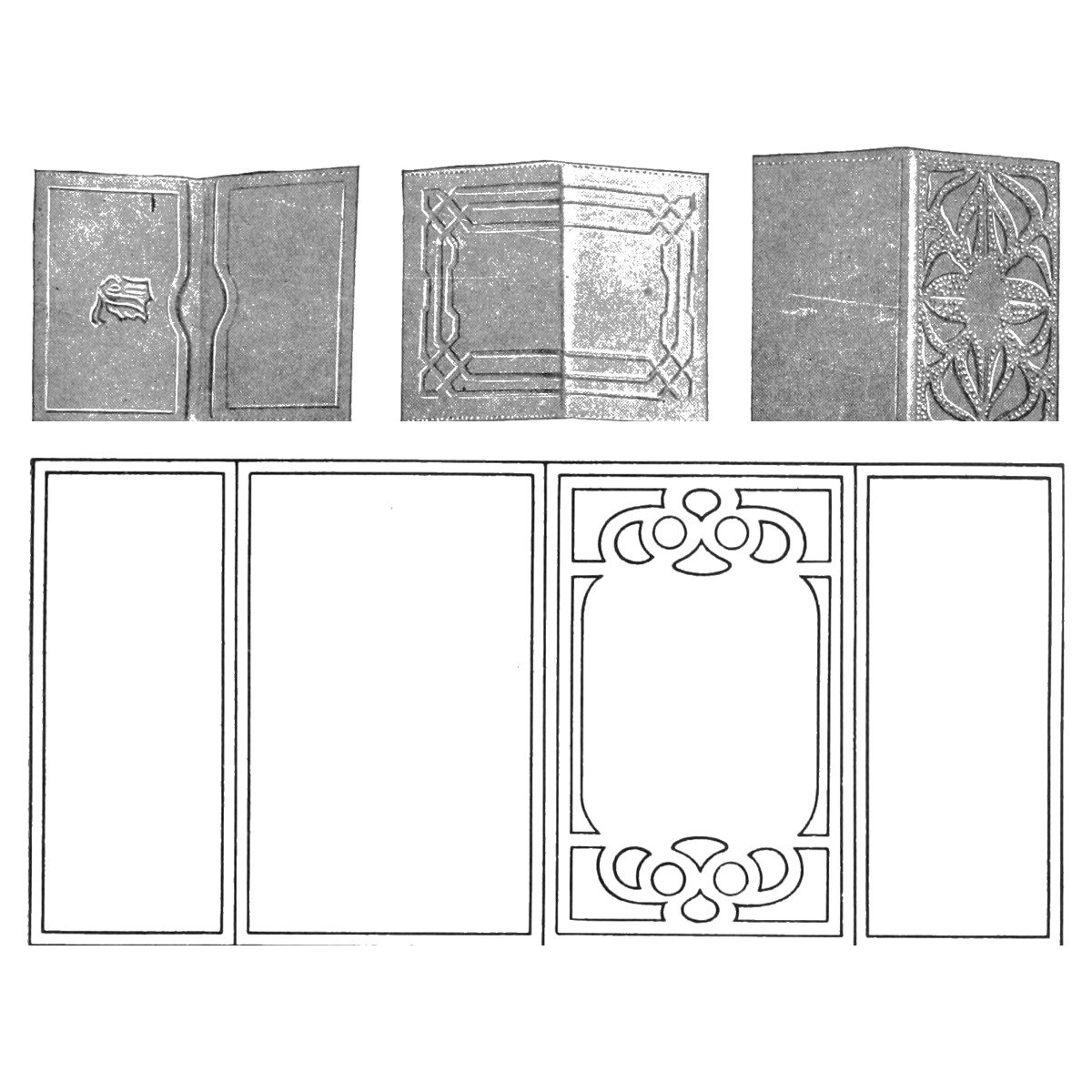


Tooled Calfskin Card Case: Folded Pockets, Lined Centre and a Border Design (Boy Mechanic, 1915)
Mary C. Scovel's card case (The Boy Mechanic, Book 2, 1915): a 10 by 4-3/4 in pattern folded in the middle, with 2 in turned in at each end to make the pockets, tooled on one of the wide panels, lined at the centre with skiver or silk, and sewn at top and bottom.
Olùbẹ̀rẹ̀
About 3 hours
Ìlànà
1
1
Print your template
Print your template
Draft and print her card case template at 100 % (check the 10 cm square on page 1), cut it out on the solid line and trace it onto the leather, leaving the 1/4 in margin (the dotted line) for pinning down.
Àwọn ohun èlò fún ìgbésẹ̀ yìí:
 Bébà1 as required
Àwọn irinṣẹ́ tí a nílò:
 Ẹ̀rọ ìtẹ̀wé olùfún tádì
 Ìṣẹ́ná
2
2
Her pattern in centimetres
Her pattern in centimetres
Ń ṣí ìwé Jupyter…
3
3
Read The Boy Mechanic, Book 2
Read The Boy Mechanic, Book 2
Her outfit: "two special tools costing 50 cents each, one with a narrow edge for lining patterns, and one with broad ends for tooling; and a piece of tin, plate glass, or very smooth hard wood, which should not be smaller than 9 by 12 in. A soft sponge, a triangle, a rule, tracing paper and a hard pencil are also needed." Russian calfskin is best for tooling and stamping.
4
4
Make the paper pattern
Make the paper pattern
Take paper 10 by 4-3/4 in and fold it in the middle, 5 in each side, then fold in 2 in at each outside edge toward the centre to make the pockets (a longer paper and deeper fold for deeper pockets). Cut the leather to the pattern with at least 1/4 in margin.
Àwọn ohun èlò fún ìgbésẹ̀ yìí:
 Awọ ọmọ màlúù1 ẹyọ
Àwọn irinṣẹ́ tí a nílò:
 Tracing Paper
 GègéÌṣẹ́ná
 Ìdíwọ̀n
5
5
Line out the folds
Line out the folds
Damp the leather on the rough side. Lay the folded paper on the right side and, with ruler, triangle and lining tool, draw the vertical lines where it is to fold at the centre and at each pocket, and line all round the four sides. There are now four panels, two wide and two narrow.
Àwọn irinṣẹ́ tí a nílò:
 KànìnkànìnÌdíwọ̀n
 Set Square
 Leather Modeling Tool
6
6
Damp the leather and transfer the design
Damp the leather and transfer the design
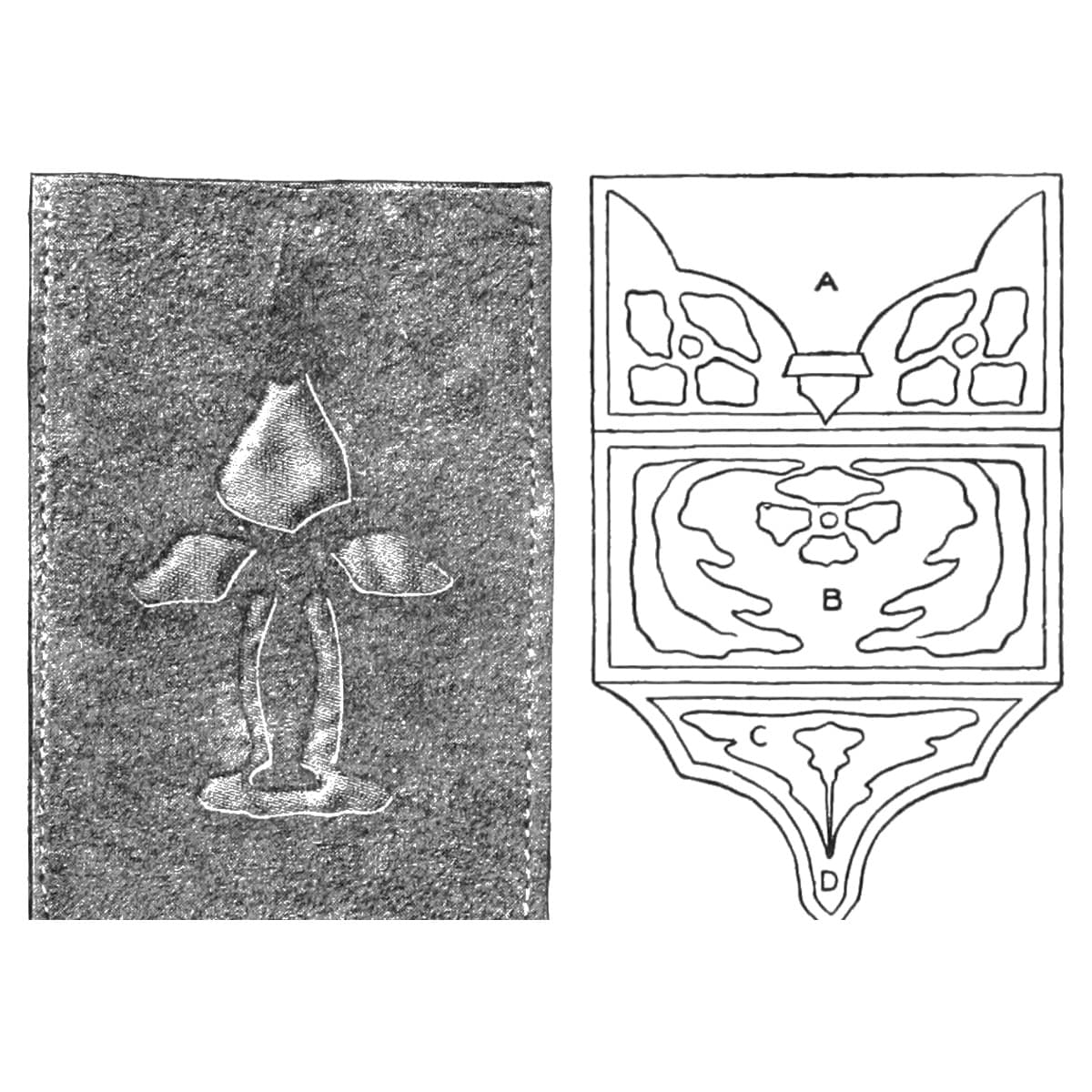
Draw the whole design for the front (one of the wide panels) on tracing paper. Wet the leather on the wrong (unfinished) side with a soft sponge: pat it to moisten, not soak, it; too wet and the tool sticks and leaves an uneven background. Pin the design firmly on the leather, tack the leather down on its outer margin to the glass or board, and go over every line with a hard pencil, with firm, even pressure. Lift the paper and go over the lines with the narrow lining tool, with a strong, firm stroke. A line design can stop here.
Àwọn ohun èlò fún ìgbésẹ̀ yìí:
Awọ ọmọ màlúù1 ẹyọÀwọn irinṣẹ́ tí a nílò:
KànìnkànìnTracing PaperGègé Ìṣó ìyàwòrán (àpótí 50)
 Àwo dígíLeather Modeling Tool
7
7
Tool or stamp the background
Tool or stamp the background
Leave at least 1/8 in between the edge of the pattern and the design. To tool, press the background down with the broad end in even, long strokes; if it will not go down, the leather is too dry, so take it off and damp the back again. Keep the edges sharp between pressed and raised parts. To stamp instead, strike a small carpenter's nail set lightly with a wooden mallet in rows of circles; too hard a blow cuts the leather.
Àwọn irinṣẹ́ tí a nílò:
Leather Modeling Tool Nail Set
 Òòlù IgiKànìnkànìn
8
8
Line, fold and sew
Line, fold and sew
Line only the two centre rectangles, with skiver leather or silk cut about 1/16 in less at top and bottom and 1/4 in wider on each side. Leather: paste its back with library paste, smooth it down and dry it under a heavy weight. Silk: paste only about 1/4 in round its edges, and weight it. Fold the case and sew it at top and bottom; cut off the surplus leather about 1/8 in from the stitches. Stitch on a sewing machine with a long stitch, a large needle and silk as heavy as the needle takes; try it on a scrap first, and put tissue paper over the leather if the foot marks it. Without a machine, prick holes with an awl and sew with needle and silk, running or over-and-over; going over-and-over to the end and back gives an X stitch.
Àwọn ohun èlò fún ìgbésẹ̀ yìí:
 Aṣọ Sílíìkì1 ẹyọ
 Ìdí ìyẹ̀fun àlìkámà1 ẹyọ
 Silk Thread1 ẹyọ
Àwọn irinṣẹ́ tí a nílò:
Ìṣẹ́ná Ẹ̀rọ ìránṣọ
 Ọ̀kọ̀ Ìlùhò
 Abẹ́rẹ́ ìránṣọ awọ méjì
 Ọ̀bẹ Iṣẹ́ Ọwọ́
9
9
Troubleshooting
Troubleshooting
Card case troubleshooting.
Flow
Loading...
10
10
History and honest limits
History and honest limits
From Mary C. Scovel, "Arts-Crafts Leather Work", in **The Boy Mechanic, Book 2**, Popular Mechanics, 1915 (Project Gutenberg 44585; checked on the archive.org scan boymechanicbook200chic2, pp. 432-441), Part II. The tools and metric figures are ours.
Àwọn ohun-èlò
5- 1 as requiredÀyè
- 2 ẹyọÀyè
- 1 ẹyọÀyè
- 1 ẹyọÀyè
- 1 ẹyọÀyè
Àwọn irinṣẹ́ tó nílò
16- Àyè
- 1 vendor sell this, none ship to you yetÀyè
- Àyè
- Àyè
- Àyè
- Àyè
- Àyè
- Àyè
- Àyè
- Àyè
Ìtọ́nisọ́nà yìí ń ṣe
Blueprint tó jọra
Àwọn blueprint wọ̀nyí pín ìmọ̀ — ọ̀nà, ohun-èlò tàbí ìlànà
CC0 Àgbègbè Gbogbogbò
Blueprint yìí ti jáde lábẹ́ CC0. O lè ṣe àdàkọ, yí padà, pín, àti lò láìsí ìyọ̀ǹda.
Ṣàtìlẹ́yìn Olùṣẹ́dá nípa rírà àwọn ọjà nipasẹ̀ Blueprint wọn Ẹ̀san Olùṣẹ́dá tí àwọn Olùtajà gbé kalẹ̀, tàbí ṣẹ̀dá àtúnṣe tuntun ti Blueprint yìí kí o sì fi sínú Blueprint rẹ gẹ́gẹ́ bí ìsopọ̀ láti pín owó-wíwọlé.