IṢẸ́ ỌNÀ
ẸWÀ ÀTI ÌLERA
IṢẸ́ ỌWỌ́
ÀṢÀ ÀTI ÌTÀN
ÌṢERÉ
ÀYÍKÁ
OÚNJẸ ÀTI OHUN MÍMU
REVERSE ENGINEERING
SÁYẸ́ǸSÌ
ERÉ ÌDÁRAYÁ
ÌMỌ̀-Ẹ̀RỌ
ÀWỌN OHUN WÍWỌ̀
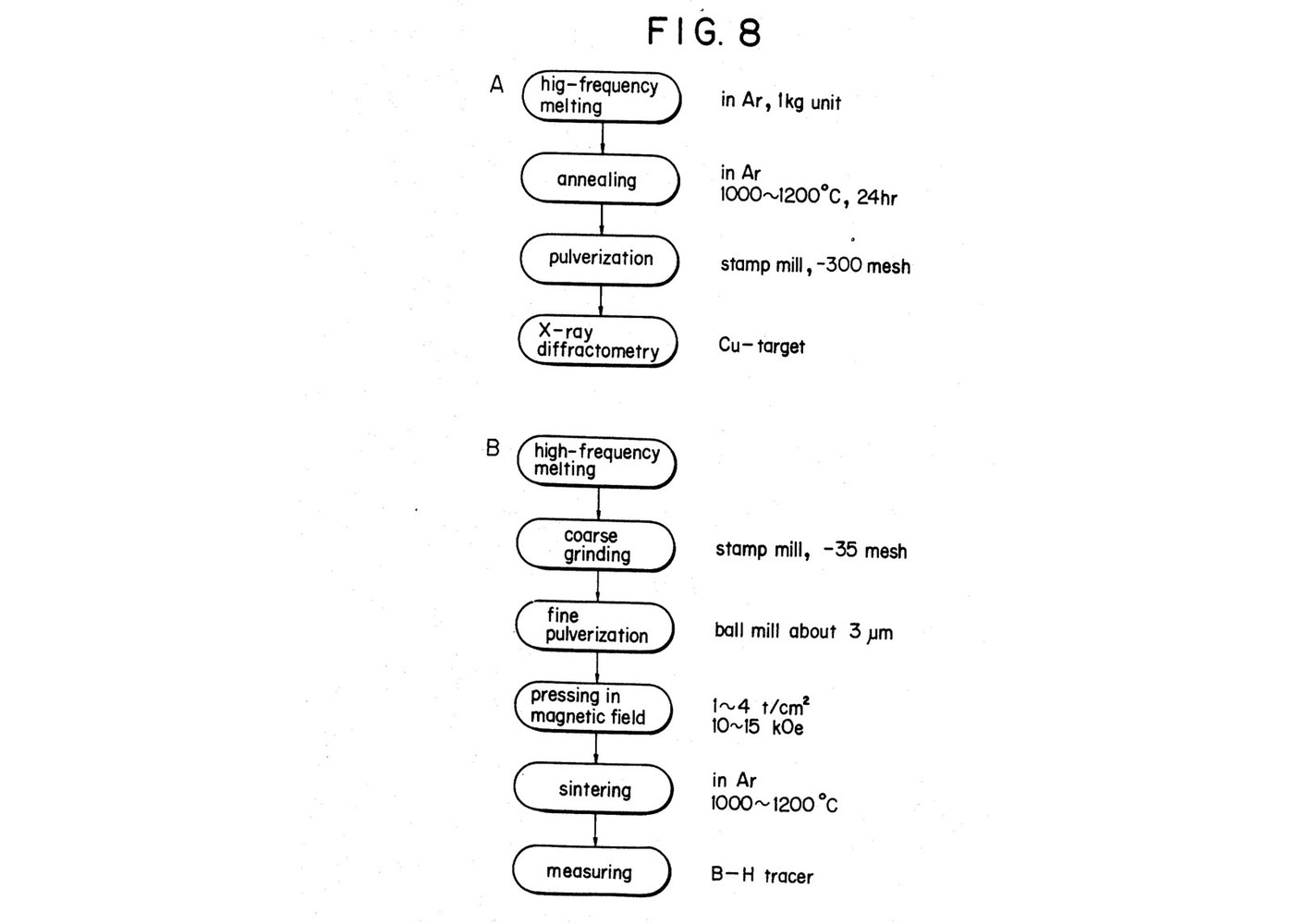


Neodymium Magnets: Nd-Fe-B Alloy Milled, Pressed in a Field and Sintered (Sagawa 1988)
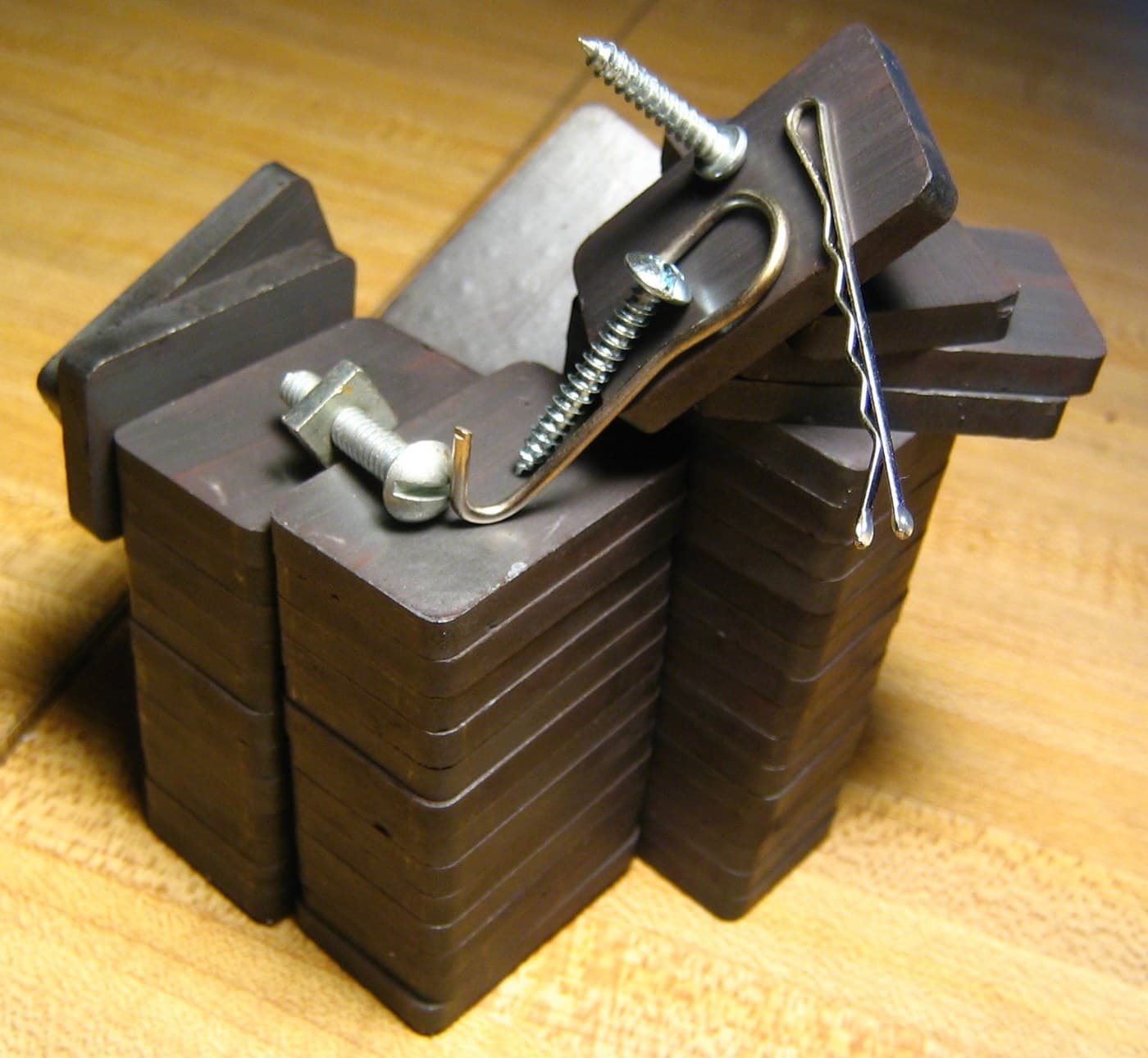
Neodymium magnets are iron, boron and neodymium. Sagawa's team at Sumitomo melted the three together, ground the casting to a powder finer than 10 µm, lined the grains up in a magnetic field while pressing them, and sintered the compact in argon. Their sample 5, 79 % iron, 6 % boron and 15 % neodymium by atoms, reached 36.5 MGOe, higher than the best samarium-cobalt magnets of the day.
Source: M. Sagawa et al. (Sumitomo Special Metals), US 4,770,723 (1988). Unknown: how the pure iron, the ferroboron and the neodymium metal are made, and how the finished magnets are magnetised; the patent does not say. The 1 kg weights are our arithmetic from the patent's atomic percentages. Picture: the patent's Fig. 8.
Ògbóǹtarìgì
2 days
Ìlànà
1
1
Weigh sample 5: 79 Fe, 6 B, 15 Nd
Weigh sample 5: 79 Fe, 6 B, 15 Nd
Sample 5 is 79 % iron, 6 % boron and 15 % neodymium by atoms. Use 99.9 % electrolytic iron, ferroboron (19.38 % B, 5.32 % Al, 0.74 % Si, 0.03 % C, the rest iron) and neodymium of 99.7 % or better. Ours: a 1 kg melt, by arithmetic: 626.8 g iron, 50.4 g ferroboron, 325.8 g neodymium. Unknown: how these three are made.
Àwọn ohun èlò fún ìgbésẹ̀ yìí:
 Irin elekitirolitiki626.8 g
 Ferroboron50.4 g
 Irin neodymium325.8 g
Àwọn irinṣẹ́ tí a nílò:
 Òǹwọ̀n ìdọ́gba
2
2
Melt by high frequency in argon and cast
Melt by high frequency in argon and cast
Melt the charge in a high-frequency (induction) furnace under argon and pour it into a water-cooled copper mould.
Àwọn irinṣẹ́ tí a nílò:
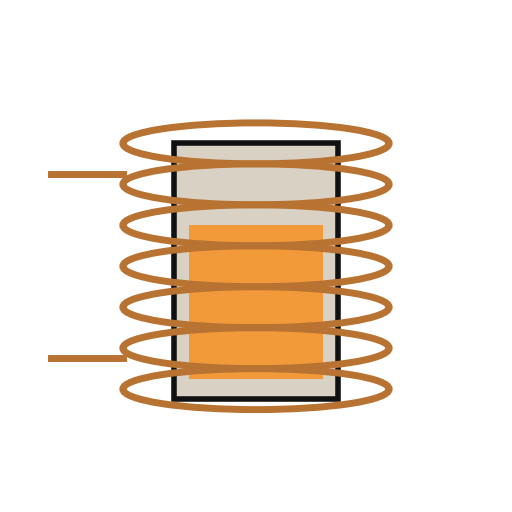 Ìléru induction
 Ìkòkò Amọ̀ Tí Ń Kojú Iná
 Argon
 Àgbá gáàsì tí a fi ìfúnpá kún
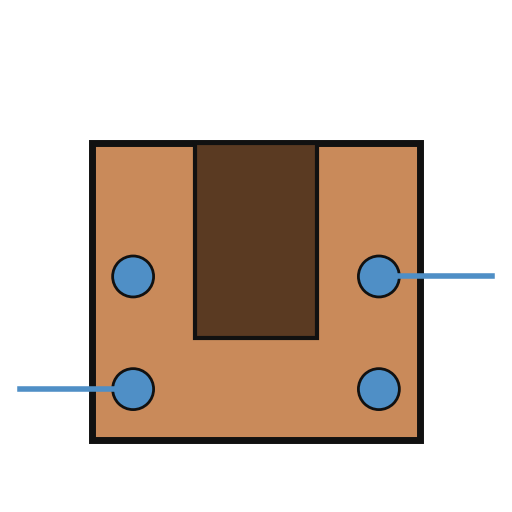 Mọ́ọ̀dù bàbà tí a fi omi tutù
 Ìbọ̀wọ́ Tí Ń Fara Da Ooru
3
3
Stamp to 35 mesh, ball-mill to 3-10 µm
Stamp to 35 mesh, ball-mill to 3-10 µm
Crush the casting in a stamp mill until it passes a 35-mesh sieve. Then grind it in a ball mill for 3 hours, to 3-10 µm.
Àwọn irinṣẹ́ tí a nílò:
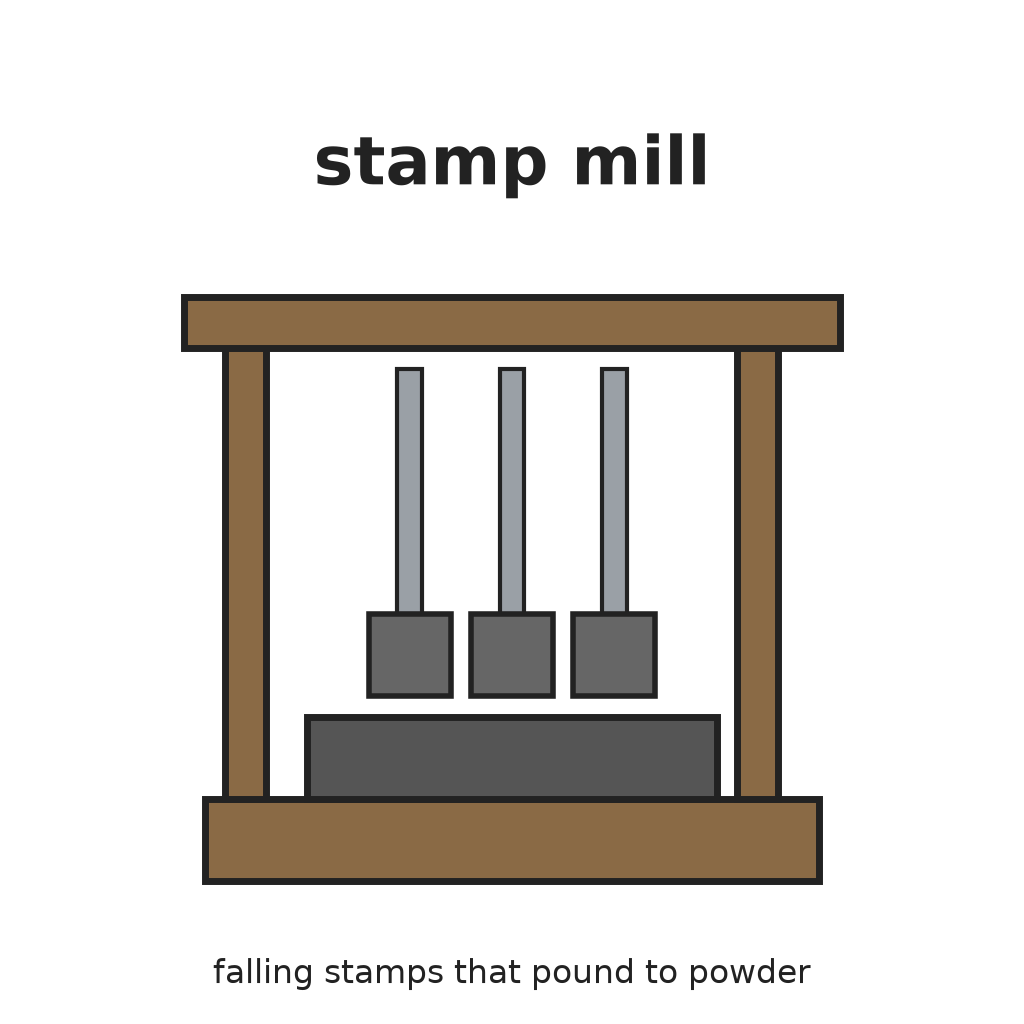 Ẹ̀rọ Lílù Òkúta
 Àkójọ ajọ̀ (ihò onípele)
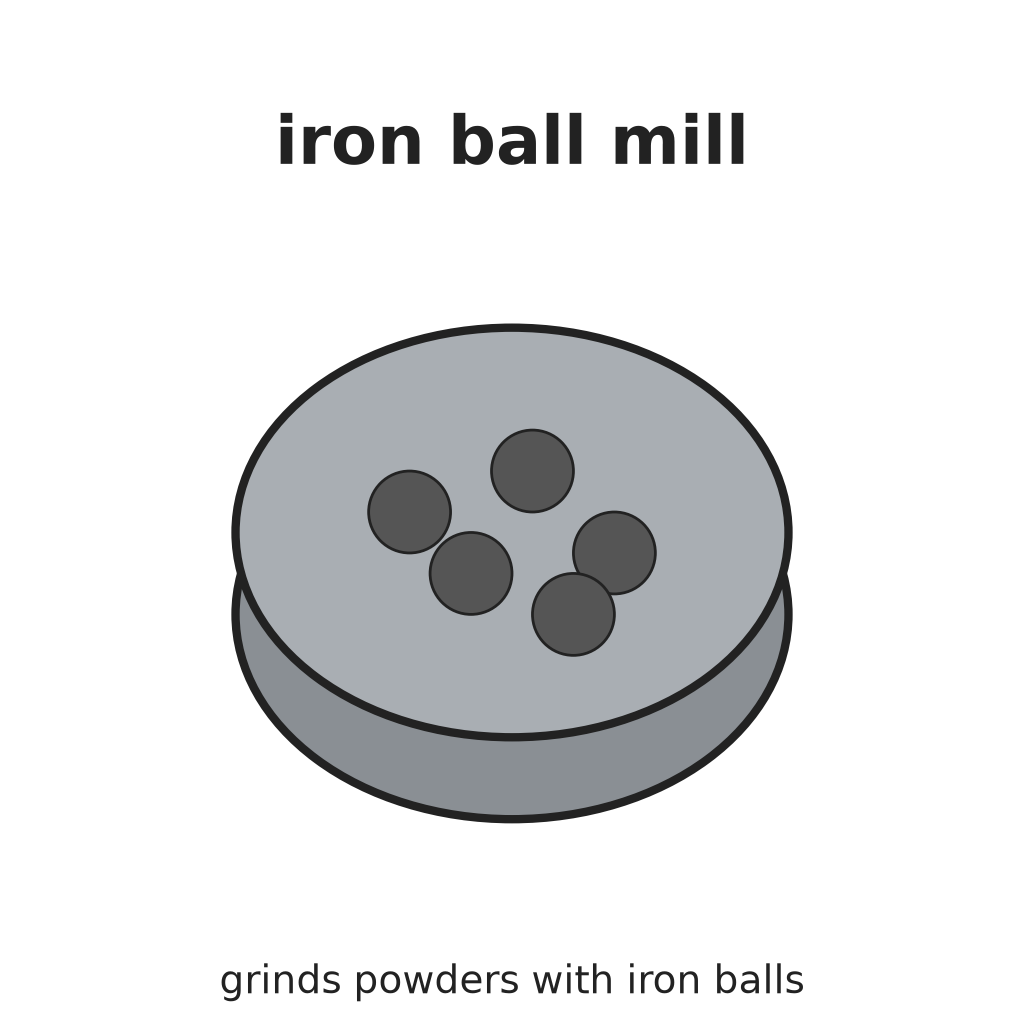 Ẹ̀rọ Lílọ Bọ́ọ̀lù Irin
 Gíláàsì ààbò
4
4
Press in a 10 kOe field at 1.5 t/cm²
Press in a 10 kOe field at 1.5 t/cm²
Line the powder up in a magnetic field of 10 kOe and press it at 1.5 tonnes per cm². Unknown: the size and shape of the magnets.
Àwọn irinṣẹ́ tí a nílò:
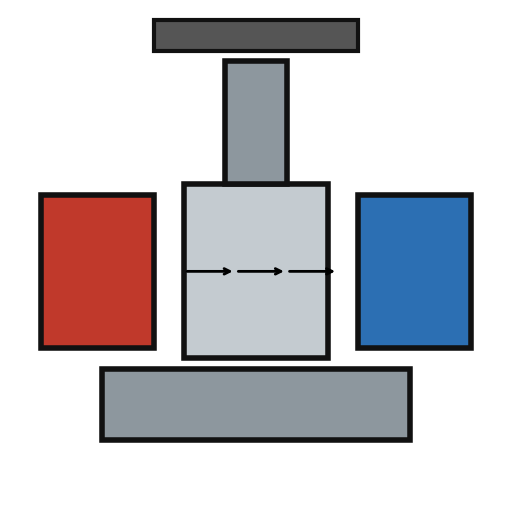 Ẹ̀rọ ìtẹ̀ pẹ̀lú pápá òòfà
5
5
Sinter in argon at 1000-1200 °C
Sinter in argon at 1000-1200 °C
Sinter the compacts at 1000-1200 °C for about one hour in argon, then let them cool. Sample 5 measured 13.0 kG remanence, 8.0 kOe coercivity and 36.5 MGOe.
Àwọn irinṣẹ́ tí a nílò:
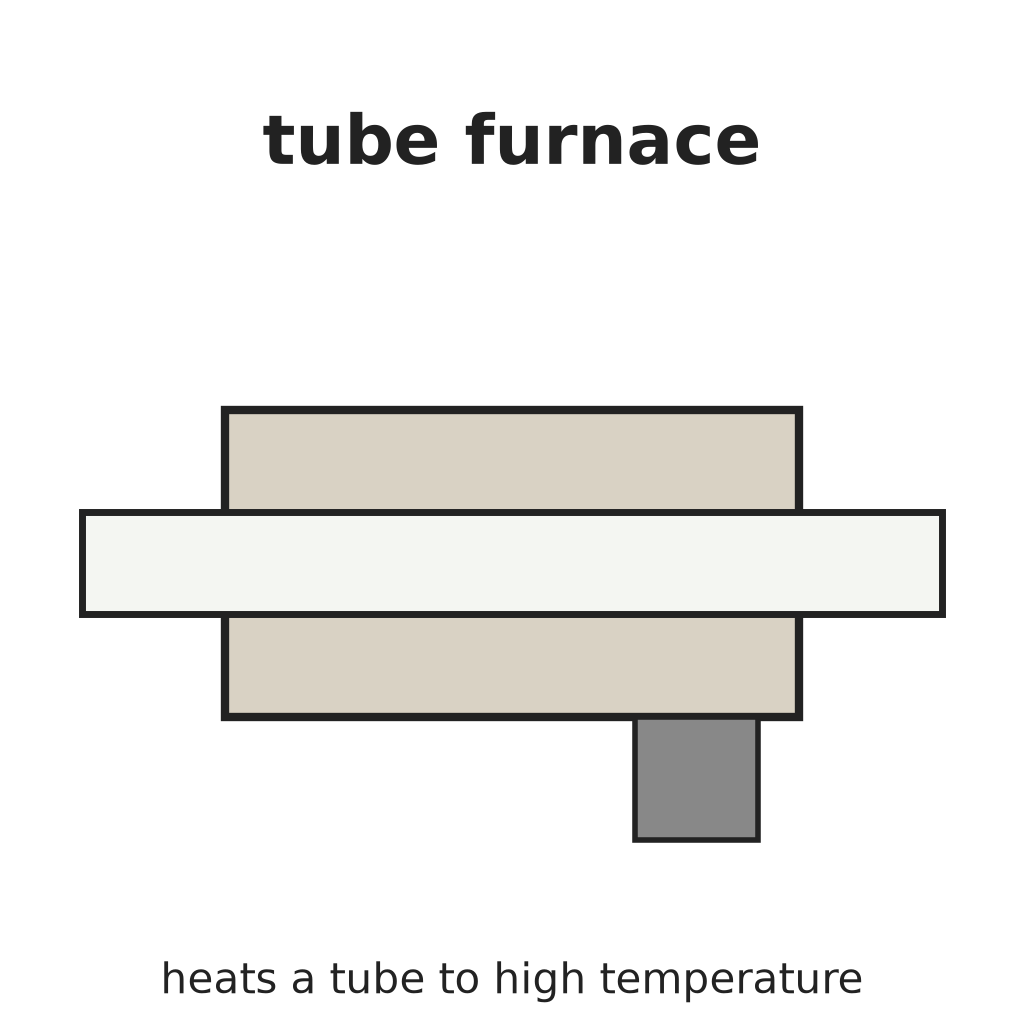 Ààrò Ọ̀pọ́nArgonÀgbá gáàsì tí a fi ìfúnpá kúnÌbọ̀wọ́ Tí Ń Fara Da Ooru
6
6
Magnetise the magnets
Magnetise the magnets
Unknown: how the sintered magnets are magnetised. Sagawa measures them on a B-H tracer but gives no magnetising field or apparatus.
Àwọn irinṣẹ́ tí a nílò:
 Ọ̀nà ìfòòfà tí a kò mọ̀
Àwọn ohun-èlò
3- 626.8 gÀyè
- 50.4 gÀyè
- 325.8 gÀyè
Àwọn irinṣẹ́ tó nílò
14- Àyè
- Àyè
- Àyè
Ìtọ́nisọ́nà yìí ń ṣe

Blueprint tó jọra
Àwọn blueprint wọ̀nyí pín ìmọ̀ — ọ̀nà, ohun-èlò tàbí ìlànà

CC0 Àgbègbè Gbogbogbò
Blueprint yìí ti jáde lábẹ́ CC0. O lè ṣe àdàkọ, yí padà, pín, àti lò láìsí ìyọ̀ǹda.
Ṣàtìlẹ́yìn Olùṣẹ́dá nípa rírà àwọn ọjà nipasẹ̀ Blueprint wọn Ẹ̀san Olùṣẹ́dá tí àwọn Olùtajà gbé kalẹ̀, tàbí ṣẹ̀dá àtúnṣe tuntun ti Blueprint yìí kí o sì fi sínú Blueprint rẹ gẹ́gẹ́ bí ìsopọ̀ láti pín owó-wíwọlé.