IṢẸ́ ỌNÀ
ẸWÀ ÀTI ÌLERA
IṢẸ́ ỌWỌ́
ÀṢÀ ÀTI ÌTÀN
ÌṢERÉ
ÀYÍKÁ
OÚNJẸ ÀTI OHUN MÍMU
REVERSE ENGINEERING
SÁYẸ́ǸSÌ
ERÉ ÌDÁRAYÁ
ÌMỌ̀-Ẹ̀RỌ
ÀWỌN OHUN WÍWỌ̀


Glass Wool
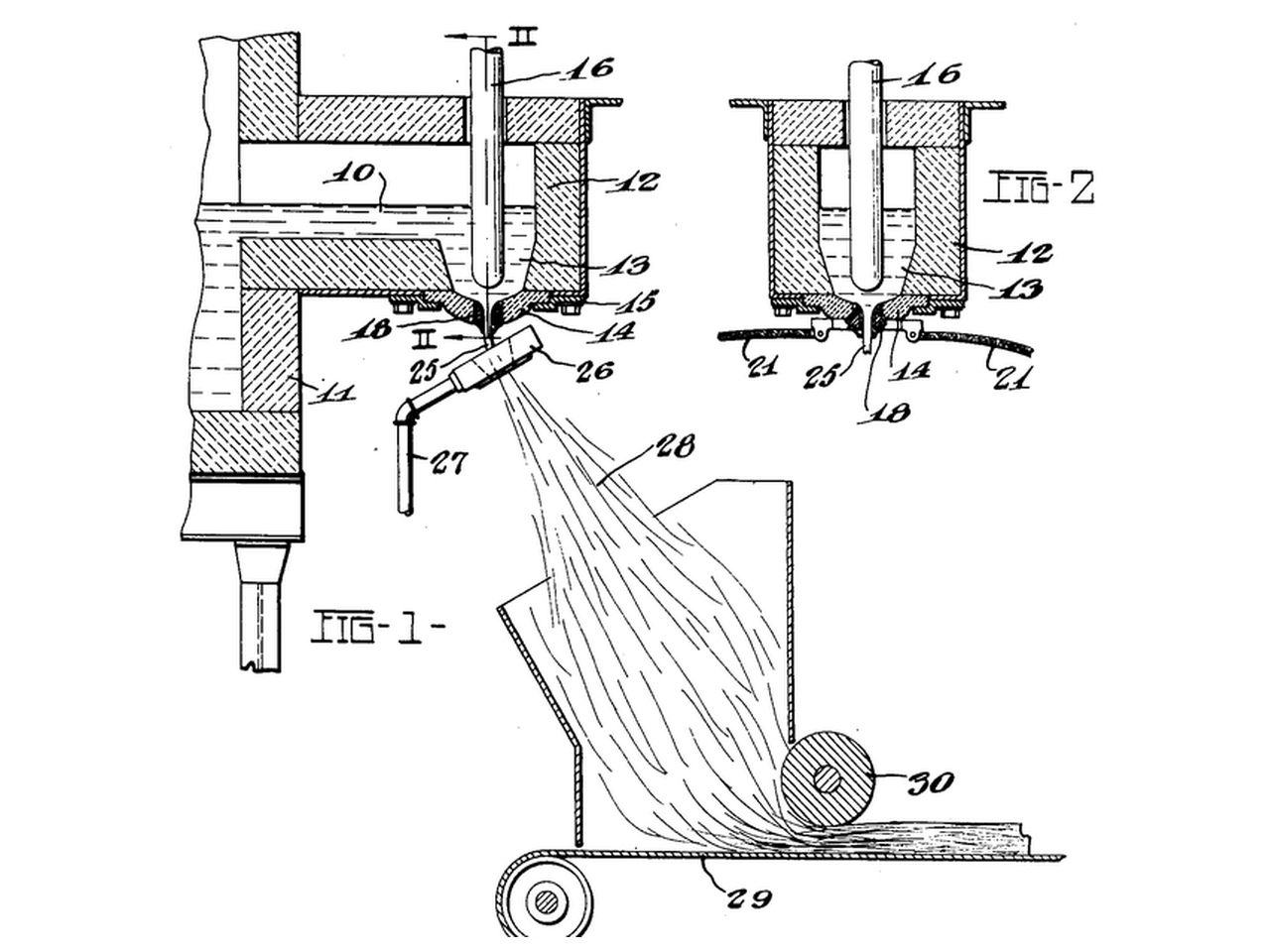
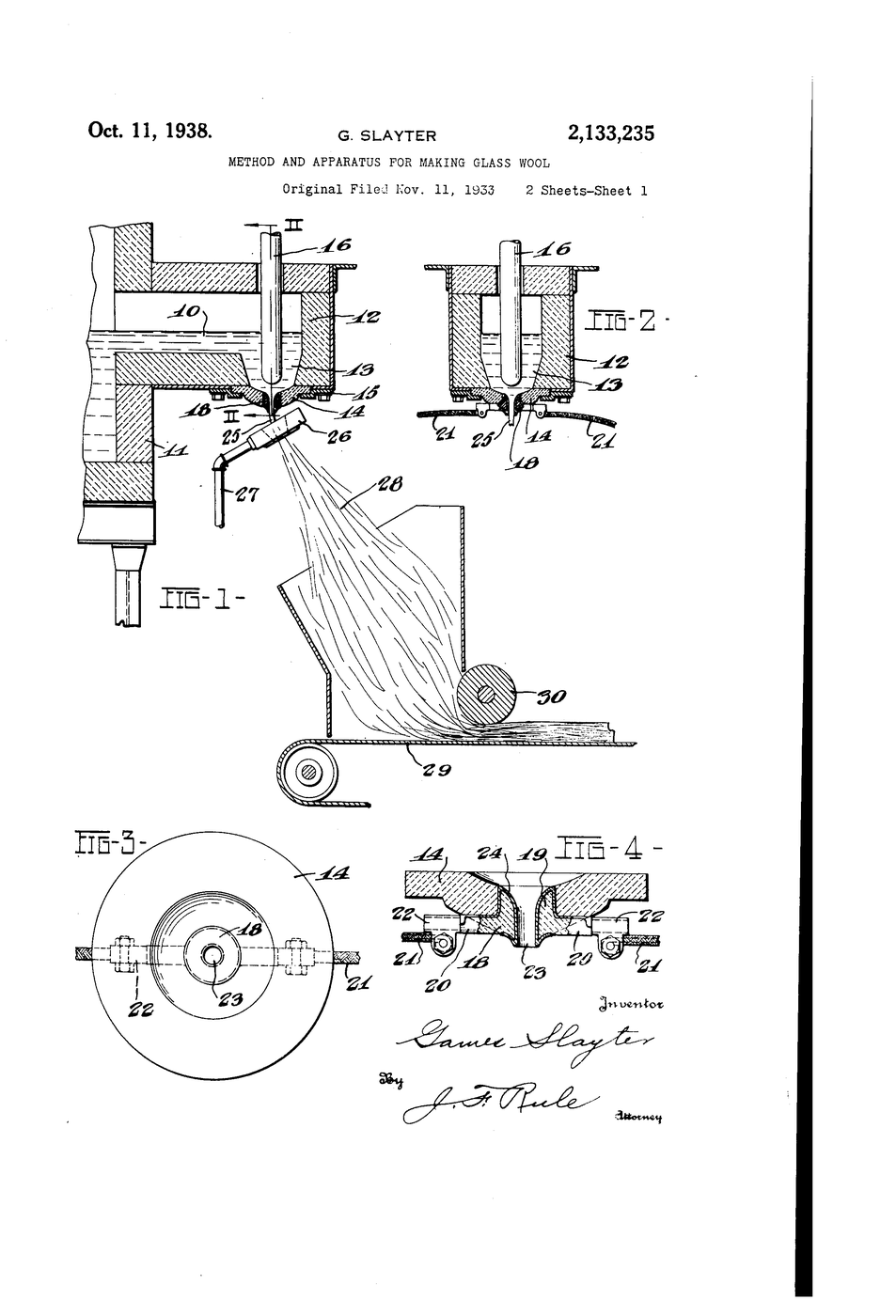
Glass wool was made before the 1930s by blowing steam at a falling thread of molten glass, but by the time the glass reached the blast it had cooled too far to draw really fine fibres. Games Slayter at Owens-Illinois brought the blast right up to the bushing the glass leaves the furnace through, while it was still at furnace heat.
**US 2,133,235**, "Method and apparatus for making glass wool", Slayter, assigned to Owens-Illinois, filed 11. November 1933, granted 11. October 1938. Its FIGURE 1 (the picture above) shows the furnace, the bushing, the steam blast and the wool piling onto a conveyor. The same work led to Owens-Corning Fiberglas in 1938.
**You measure what it is for**: three jars of hot water - bare, in glass wool, in cotton wool - logged by an Arduino, and the cooling curves turned into heat-loss figures.
Olùbẹ̀rẹ̀
2 hours
Ìlànà
1
1
Wire the logger
Wire the logger
Probes' red to 5V, black to GND, data (yellow) together to D2, with a 4.7 kΩ resistor from D2 to 5V. Install the OneWire and DallasTemperature libraries. Warm each probe in your hand in turn to learn which index is which.
three_jar_cooling_logger.inocpp
Àwọn ohun èlò fún ìgbésẹ̀ yìí:
 Sensọ̀ ooru DS18B203 ẹyọ
 Àkójọ Rẹsístà1 ohun èlò
 Ìdìpọ̀ okùn Dupont (akọ-abo)1 ìtò
Àwọn irinṣẹ́ tí a nílò:
 Arduino Uno R3
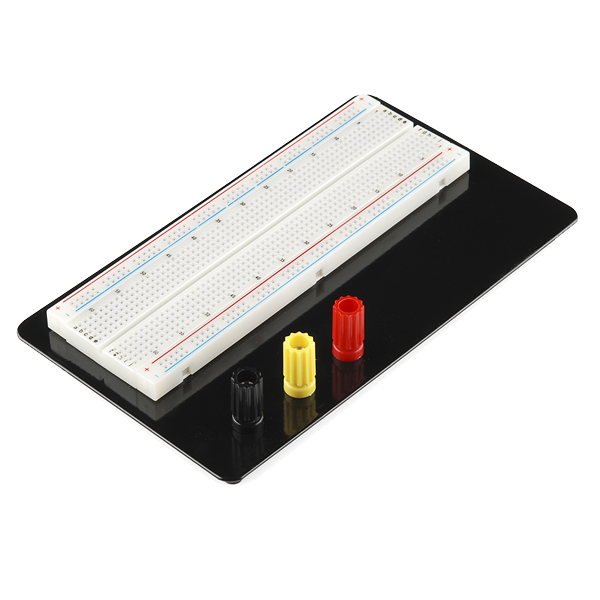 Breadboard - Classic
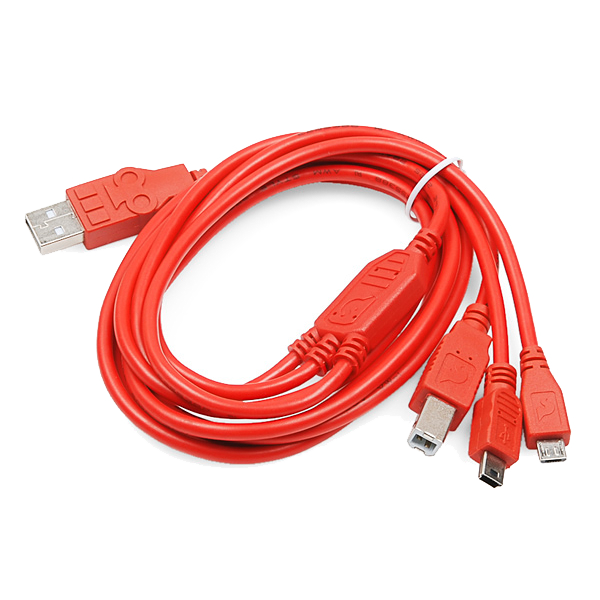 SparkFun Cerberus USB Cable - 1.8 meter
2
2
Prepare three jars
Prepare three jars
Drill a 7 mm hole in each of three identical lids. Push a probe through each so its tip sits mid-jar. Seal the hole with tape.
Àwọn ohun èlò fún ìgbésẹ̀ yìí:
 Ìgò Gílásì Onídìí3 ẹyọ
 Tépù ìbòmọ́lẹ̀1 ìyípo
Àwọn irinṣẹ́ tí a nílò:
 Ẹ̀rọ Ìlùkòkò Aláìlókùn
 Àkójọ Orí Ìlùkòkò
3
3
Wrap two of them
Wrap two of them
Gloves, long sleeves, mask, glasses. Put glass wool inside a plastic bag, then wrap jar 2 in it 30 mm thick all round and under, and tape. Wrap jar 3 the same way in cotton wool. Leave jar 1 bare.
Àwọn ohun èlò fún ìgbésẹ̀ yìí:
 Ohun ìdènà ooru láti inú òwú dígí1 ìyípo
 Òwú ìmu omi1 àkópọ̀
 Àwọn àpò pulasitiki4 ẹyọTépù ìbòmọ́lẹ̀1 ìyípo
Àwọn irinṣẹ́ tí a nílò:
 Ìbọ̀wọ́ Iṣẹ́ Awọ
 Ìbòjú Eruku
 Gílásì Ààbò Tí Ó Mọ́
 Ìṣẹ́ná
4
4
Fill and log
Fill and log
Boil water. Pour 500 ml into each jar, one after another, and close the lids. Start the serial monitor and log for 90 minutes. Note the room temperature.
Àwọn irinṣẹ́ tí a nílò:
 Kẹ́tùlù iná dígí
 Silinda òǹwọ̀n
5
5
Fit the curves
Fit the curves
Ń ṣí ìwé Jupyter…
6
6
History & Context
History & Context
**What the patent specifies:** a steam blast applied at the bushing itself, so the glass stream is drawn while still at furnace temperature, giving very fine wool. **Modern build (derived):** commercial glass-wool insulation, handled wrapped.
Continuous glass filament for textiles and reinforcement followed from the same laboratory. Its limits: loose fibres irritate skin, eyes and lungs, so it is always handled covered, and like any fibrous insulation it loses most of its value when wet or compressed.
Àwọn ohun-èlò
8- 3 ẹyọÀyè
- Àyè
- Àyè
- 3 ẹyọÀyè
- 2 ìyípoÀyè
- Àyè
- 1 àkópọ̀Àyè
- 4 ẹyọÀyè
Àwọn irinṣẹ́ tó nílò
11- 1 vendor sell this, none ship to you yetÀyè
- Breadboard - Classicìdá 10%$9.38
- $5.61
- 1 vendor sell this, none ship to you yetÀyè
- Àyè
- Àyè
Blueprint tó jọra
Àwọn blueprint wọ̀nyí pín ìmọ̀ — ọ̀nà, ohun-èlò tàbí ìlànà
CC0 Àgbègbè Gbogbogbò
Blueprint yìí ti jáde lábẹ́ CC0. O lè ṣe àdàkọ, yí padà, pín, àti lò láìsí ìyọ̀ǹda.
Ṣàtìlẹ́yìn Olùṣẹ́dá nípa rírà àwọn ọjà nipasẹ̀ Blueprint wọn Ẹ̀san Olùṣẹ́dá tí àwọn Olùtajà gbé kalẹ̀, tàbí ṣẹ̀dá àtúnṣe tuntun ti Blueprint yìí kí o sì fi sínú Blueprint rẹ gẹ́gẹ́ bí ìsopọ̀ láti pín owó-wíwọlé.