IṢẸ́ ỌNÀ
ẸWÀ ÀTI ÌLERA
IṢẸ́ ỌWỌ́
ÀṢÀ ÀTI ÌTÀN
ÌṢERÉ
ÀYÍKÁ
OÚNJẸ ÀTI OHUN MÍMU
REVERSE ENGINEERING
SÁYẸ́ǸSÌ
ERÉ ÌDÁRAYÁ
ÌMỌ̀-Ẹ̀RỌ
ÀWỌN OHUN WÍWỌ̀
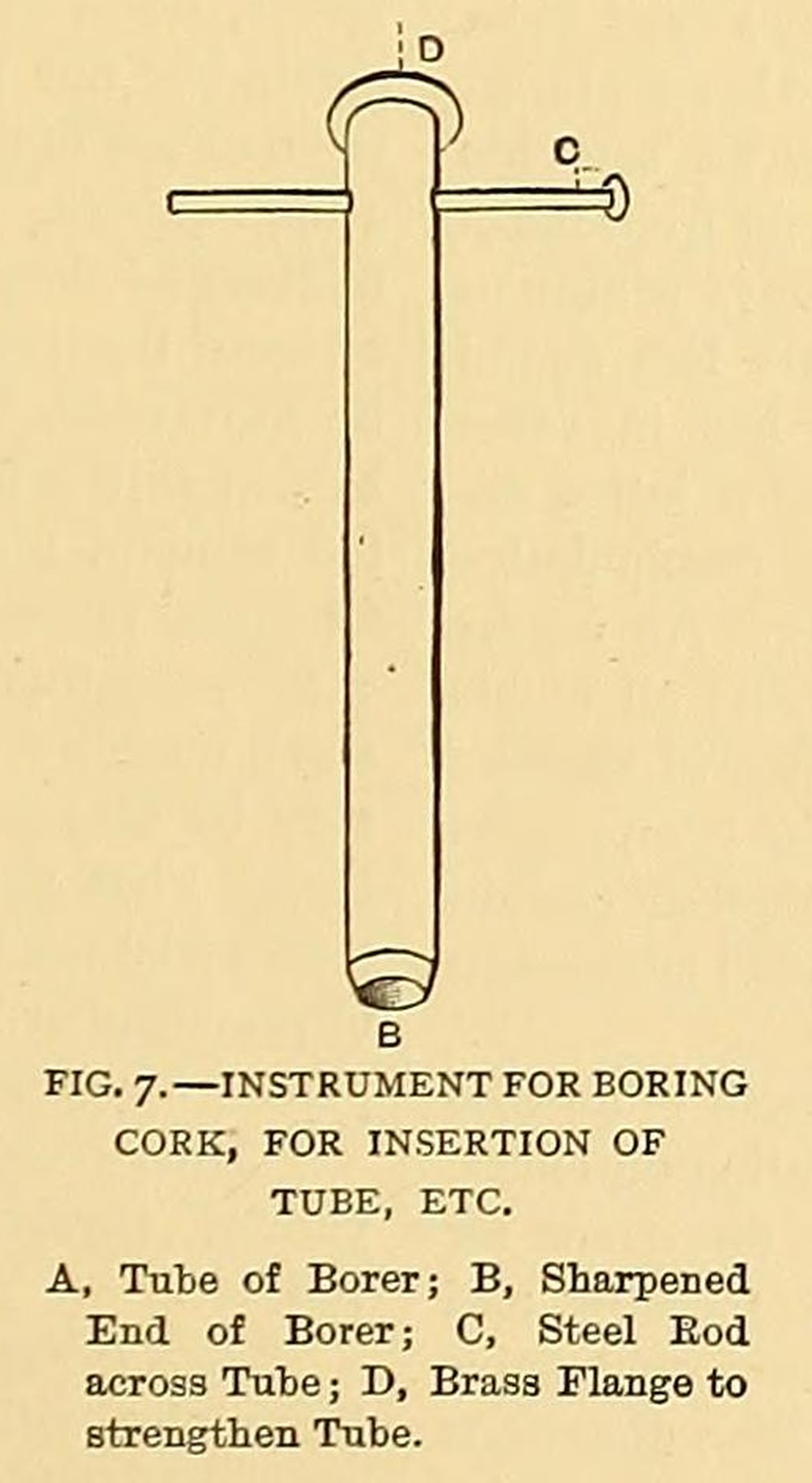


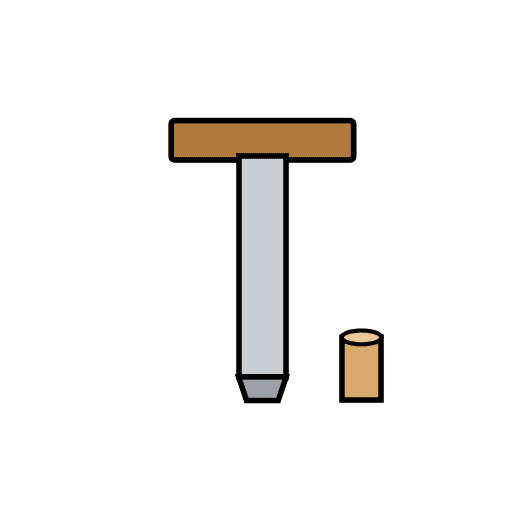
Cork Borer from Brass Tube: Edge Filed Like Two Gouges Back to Back, Steel Wire Handle (Soward, Amateur Work, 1881)
Alfred Soward's laboratory cork-borer from Amateur Work (1881): about 4 in. of brass tube the size of the hole, one end filed on the outside to a ring-shaped cutting edge, a brass flange on the other end to strengthen it, and a steel wire pushed through a cross hole as a handle. Turned like a gimlet, it cuts a clean, centred hole for a glass tube.
Olùbẹ̀rẹ̀
An hour
Ìlànà
1
1
Read Soward
Read Soward
"This latter instrument is simply a piece of brass tube about 4 in. long, and of a diameter suited to the hole required."
2
2
Cut the tube
Cut the tube
Cut about 4 in. (100 mm) of brass tube whose outside diameter matches the hole you need (he takes 3/8 in., about 10 mm, for a glass tube). Square both ends.
Àwọn ohun èlò fún ìgbésẹ̀ yìí:
 Ọ̀pá idẹ1 ẹyọ
Àwọn irinṣẹ́ tí a nílò:
 Ìdìmú Tábìlì
 Ayùn Irin
 Àwọn Ìfá (Ìfá Ọwọ́)
3
3
File the cutting edge
File the cutting edge
File one end on the outside only, all round, to a thin cutting edge: like two gouges put together with their hollow sides facing (B in his fig. 7). Leave the bore untouched.
Àwọn irinṣẹ́ tí a nílò:
Ìdìmú TábìlìÀwọn Ìfá (Ìfá Ọwọ́) Àwọn ìlé abẹ́rẹ́
4
4
Fit the flange
Fit the flange
Fit a small brass ring or flange round the other end to strengthen it (D in fig. 7). Ours: cut it from brass sheet and soft-solder it on.
Àwọn ohun èlò fún ìgbésẹ̀ yìí:
 Pẹlẹbẹ Bronse1 ẹyọ
 Wáyà Sọ́ldà1 ẹyọ
 Fúlọ́ksì1 ẹyọ
Àwọn irinṣẹ́ tí a nílò:
 Ìlàǹkàn irin
 Ẹ̀rọ Ìlùkòkò Onídúró
 Àkójọ Orí Ìlùkòkò
 Irin ìsúdì
5
5
Cross hole and handle
Cross hole and handle
Below the flange, drill a hole straight across the tube for a piece of steel wire. Push the wire through so it stands at right angles to the tube as a handle (C in fig. 7, drawn with a head on one end).
Àwọn ohun èlò fún ìgbésẹ̀ yìí:
 Okun waya irin1 ẹyọ
Àwọn irinṣẹ́ tí a nílò:
Ẹ̀rọ Ìlùkòkò OnídúróÀkójọ Orí ÌlùkòkòÀwọn Ìfá (Ìfá Ọwọ́)6
6
Troubleshooting
Troubleshooting
Cork borer troubleshooting.
Flow
Loading...
7
7
History and honest limits
History and honest limits
From Alfred W. Soward, "Filters: Their Construction and Maintenance" I, **Amateur Work, Illustrated**, vol. I (1881), pp. 131-133 and fig. 7 (checked on the archive.org scan amateurworkillus11881lond). To use it, hold the cork's small end against a wall or the bench edge, press on the centre of the large end and turn like a gimlet, giving the cork a quarter turn left after each quarter turn of the borer right. A bought set of four then cost 1s. He does not say how the flange is fixed: soft solder, the metric figures and the tools are ours.
Àwọn ohun-èlò
5- 1 ẹyọÀyè
- 1 ẹyọÀyè
- 1 ẹyọÀyè
- 1 ẹyọÀyè
- 1 ẹyọÀyè
Àwọn irinṣẹ́ tó nílò
8- Àyè
- Àyè
- Àyè
- 2 vendors sell this, none ship to you yetÀyè
Ìtọ́nisọ́nà yìí ń ṣe
Blueprint tó jọra
Àwọn blueprint wọ̀nyí pín ìmọ̀ — ọ̀nà, ohun-èlò tàbí ìlànà

CC0 Àgbègbè Gbogbogbò
Blueprint yìí ti jáde lábẹ́ CC0. O lè ṣe àdàkọ, yí padà, pín, àti lò láìsí ìyọ̀ǹda.
Ṣàtìlẹ́yìn Olùṣẹ́dá nípa rírà àwọn ọjà nipasẹ̀ Blueprint wọn Ẹ̀san Olùṣẹ́dá tí àwọn Olùtajà gbé kalẹ̀, tàbí ṣẹ̀dá àtúnṣe tuntun ti Blueprint yìí kí o sì fi sínú Blueprint rẹ gẹ́gẹ́ bí ìsopọ̀ láti pín owó-wíwọlé.