IṢẸ́ ỌNÀ
ẸWÀ ÀTI ÌLERA
IṢẸ́ ỌWỌ́
ÀṢÀ ÀTI ÌTÀN
ÌṢERÉ
ÀYÍKÁ
OÚNJẸ ÀTI OHUN MÍMU
REVERSE ENGINEERING
SÁYẸ́ǸSÌ
ERÉ ÌDÁRAYÁ
ÌMỌ̀-Ẹ̀RỌ
ÀWỌN OHUN WÍWỌ̀
Hooked Breaker-Frame Churn: Breakers Held Still From the Lid, Then Hooked to the Dasher to Gather
Buttercup

Ṣẹ́dá nipasẹ̀

Buttercup

10. Oṣù Kọkànlá 2026IE
8
0
0
0
0

Hooked Breaker-Frame Churn: Breakers Held Still From the Lid, Then Hooked to the Dasher to Gather

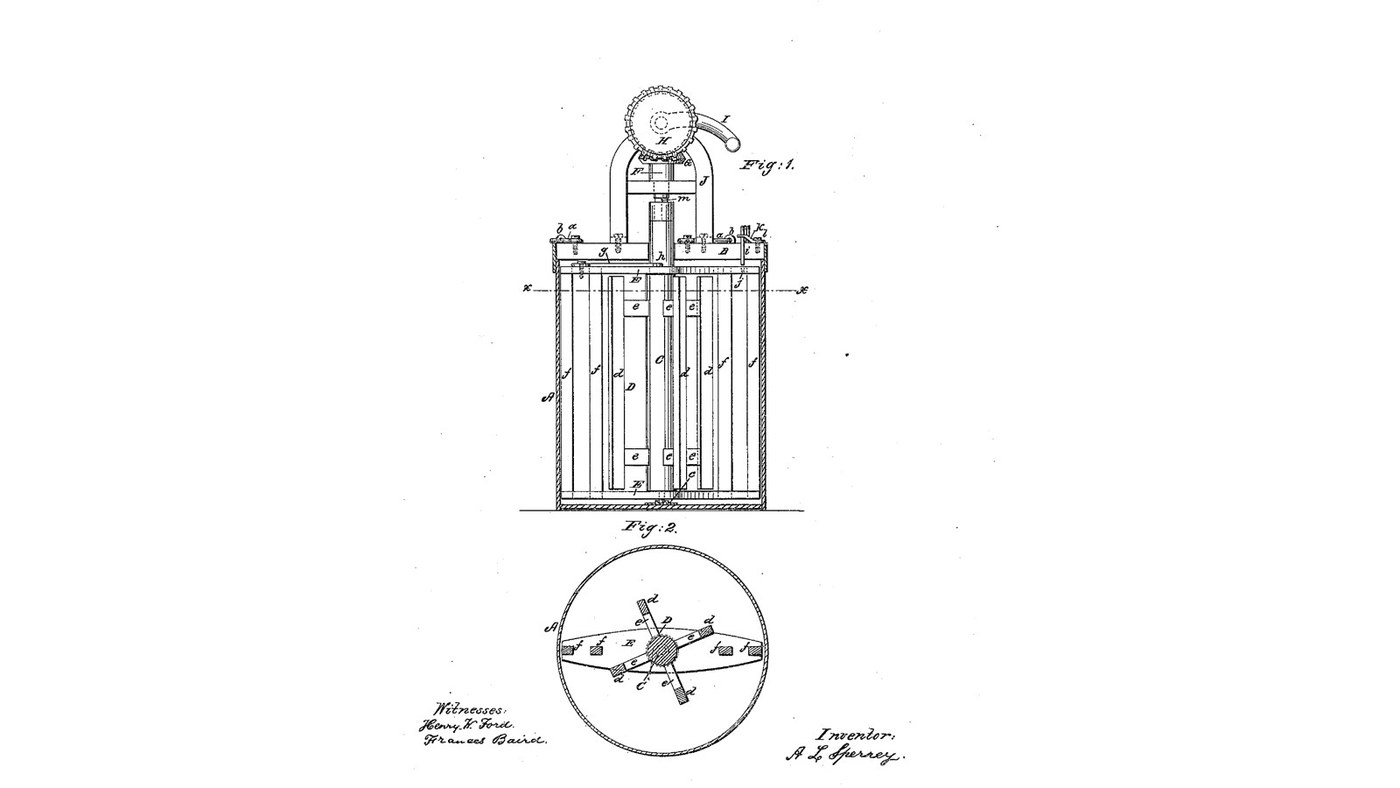
A. L. Sperry of Auburn, Indiana, received US 25,285, dated 30 August 1859, for a dasher churn whose breakers can stand still or turn with the dasher, both worked from the top. A spring hook pressed through the lid and held by a button stops the breaker frame while the four-paddle dasher churns. After the butter comes, a hook on the frame is pushed into the dasher's shaft and the button is turned back, so the whole sweep turns together and gathers the butter as the crank goes back and forth. Sperry gives no sizes; every size here is ours.
Àárín
About 2 days, plus printing

Ìlànà

1

Paddles past the breakers

Ń ṣí ìwé Jupyter…
2

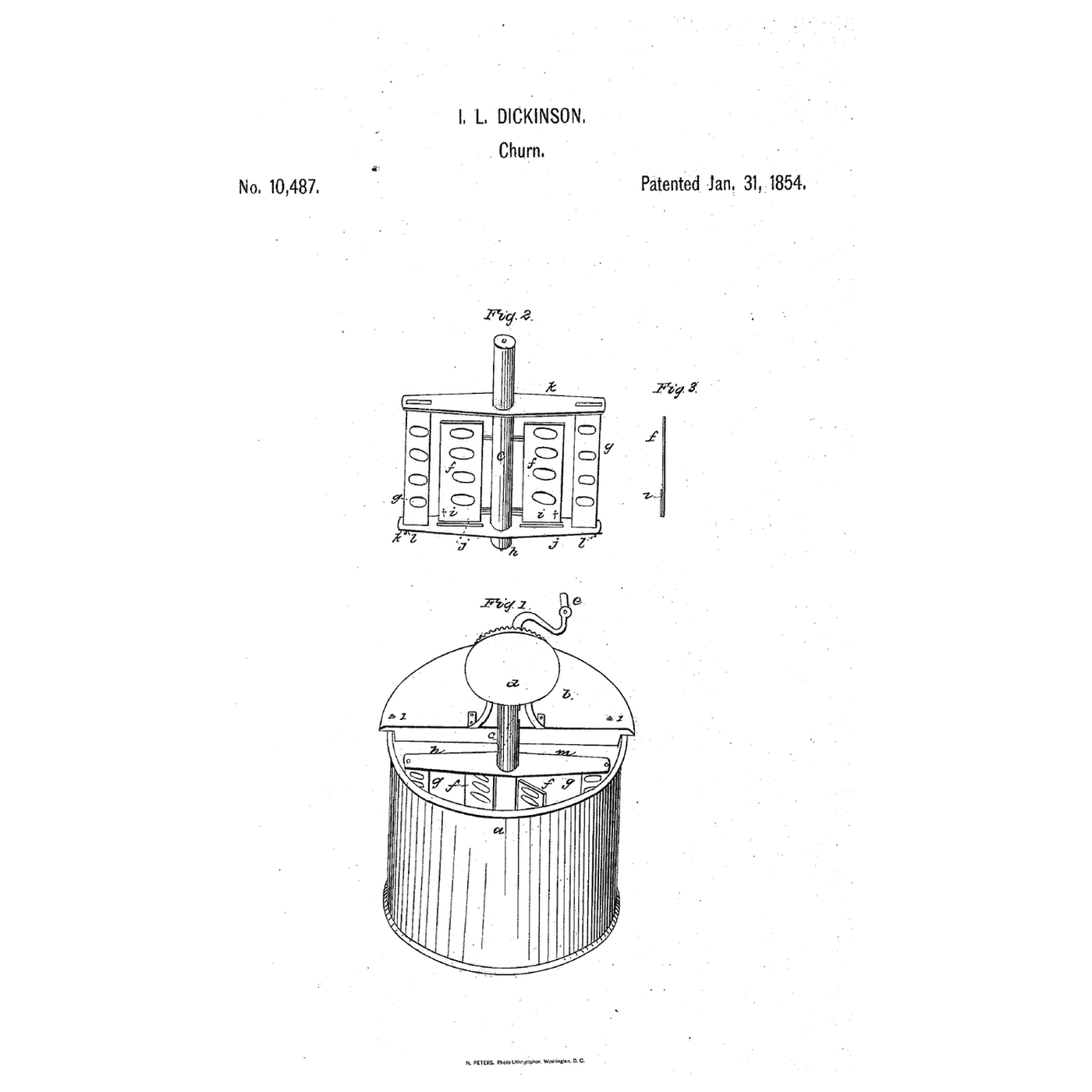
Dickinson's churn, which Sperry names

Dickinson's breakers were freed and caught by pins and spring catches at the bottom of the churn. Sperry moved both to the top.
3

Read US 25,285

"In order to break the cream, the breakers are arrested by depressing the spring hook i, and the dasher is rotated independent from the breaker frame, the hook g, being disconnected from the hole h, in the dasher shaft. After the butter has been separated from the milk, the hook g is pressed into the hole h, in the shaft, thereby connecting the breaker frame and the dasher, and the button k, is turned back, releasing the spring hook i".
4

Print the socket c

The 60 mm cup with a cone recess for the shaft's point, an M6 nut trap underneath and an O-ring groove. PETG, 0.2 mm layers, 40 % infill, 4 walls.
Fáìlì ÀpẹrẹSTLCC0 - Free
5

Print the wheel G

The 12-tooth spur pinion (module 2) for shaft F, bored 12.4 mm and cross-drilled for a pin. PETG, 0.2 mm layers, 40 % infill, 4 walls.
Fáìlì ÀpẹrẹSTLCC0 - Free
6

Print the wheel H

The 36-tooth crown wheel (module 2) for the crank shaft n, bored 12.4 mm and cross-drilled for a pin. Print it teeth up. PETG, 0.2 mm layers, 40 % infill, 4 walls.
Fáìlì ÀpẹrẹSTLCC0 - Free
7

Socket c in the tub's floor

Drill a 6.5 mm hole in the middle of the bucket's floor. Push an M6 nut into the cup's trap, lay an O-ring in its groove and bolt the cup over the hole from underneath with a stainless M6 x 16 bolt and a washer. Fill the bucket with water to check it does not leak, then empty it.

Àwọn ohun èlò fún ìgbésẹ̀ yìí:

Bàkẹ́ẹ̀tì Lítà 20Bàkẹ́ẹ̀tì Lítà 201 ẹyọ
Àkójọ bọ́ọ̀lù onígun mẹ́fàÀkójọ bọ́ọ̀lù onígun mẹ́fà1 ẹyọ
Nọ́ọ̀tì Onígun Mẹ́fàNọ́ọ̀tì Onígun Mẹ́fà1 ẹyọ
Wáṣà PẹrẹsẹWáṣà Pẹrẹsẹ1 ẹyọ
Òrùka O rọ́bàÒrùka O rọ́bà1 ẹyọ
Okùn PETGOkùn PETG1 ẹyọ

Àwọn irinṣẹ́ tí a nílò:

Ẹ̀rọ ìtẹ̀ 3D oníwàyà (FDM)Ẹ̀rọ ìtẹ̀ 3D oníwàyà (FDM)
Ẹ̀rọ Ìlùkòkò AláìlókùnẸ̀rọ Ìlùkòkò Aláìlókùn
Àkójọ Orí ÌlùkòkòÀkójọ Orí Ìlùkòkò
Kọ́kọ́rọ́ tí a lè ṣàtúnṣeKọ́kọ́rọ́ tí a lè ṣàtúnṣe
OmiOmi
8

Shaft C and dasher D

Cut a 32 mm hardwood dowel 357 mm long. Whittle 14 mm of its foot to a point that sits in the cup and chisel a 16.4 mm square socket 15 mm deep in its top. Bore a 9 mm hole h across it 20 mm below the top. Mortise two hardwood arms 16 x 24 mm through it at 70 and 300 mm above the floor's level, at right angles, so they reach 88 mm from the middle, and screw four hardwood paddles 30 x 12 mm, 270 mm long, upright across their ends.

Àwọn ohun èlò fún ìgbésẹ̀ yìí:

Àwọn dowel igi líleÀwọn dowel igi líle1 ẹyọ
Pátákó Igi LílePátákó Igi Líle1 ẹyọ
Ìdìpọ̀ IgiÌdìpọ̀ Igi1 ẹyọ
Ìṣó igiÌṣó igi16 ẹyọ

Àwọn irinṣẹ́ tí a nílò:

Ayùn Ọwọ́Ayùn Ọwọ́
Àwọn ìgbẹ́ igiÀwọn ìgbẹ́ igi
Ẹ̀rọ Ìlùkòkò AláìlókùnẸ̀rọ Ìlùkòkò Aláìlókùn
Àkójọ orí kànnàkànnàÀkójọ orí kànnàkànnà
Àkójọ Orí ÌlùkòkòÀkójọ Orí Ìlùkòkò
Igun-òsùwọ̀n tí ó dúróIgun-òsùwọ̀n tí ó dúró
Okùn Ìdíwọ̀nOkùn Ìdíwọ̀n
9

Breaker frame E and hook g

Cut two hardwood bars 60 x 15 mm, rounded at the ends to fit inside the bucket at 30 and 332 mm up, and bore each 35 mm in the middle so they turn loosely on the shaft. Join them with four hardwood breakers 20 x 20 mm, two each side, their middles 102 and 124 mm from the shaft. Bore an 8 mm hole j in the top bar 115 mm from the middle. Bend a hook g from 6 mm stainless rod and pivot it on the top bar so it swings into hole h.

Àwọn ohun èlò fún ìgbésẹ̀ yìí:

Pátákó Igi LílePátákó Igi Líle1 ẹyọ
Ìdìpọ̀ IgiÌdìpọ̀ Igi1 ẹyọ
Ìṣó igiÌṣó igi8 ẹyọ
Ọ̀pá irin tí kò ń yáỌ̀pá irin tí kò ń yá1 ẹyọ
Àkójọ bọ́ọ̀lù onígun mẹ́fàÀkójọ bọ́ọ̀lù onígun mẹ́fà1 ẹyọ
Ẹ̀kù Ìdìmú Onínáílọ́ọ̀nùẸ̀kù Ìdìmú Onínáílọ́ọ̀nù1 ẹyọ

Àwọn irinṣẹ́ tí a nílò:

Ayùn Ọwọ́Ayùn Ọwọ́

Ayùn JígísòAyùn Jígísò
Ẹ̀rọ Ìlùkòkò AláìlókùnẸ̀rọ Ìlùkòkò Aláìlókùn
Àkójọ orí kànnàkànnàÀkójọ orí kànnàkànnà
Àkójọ Orí ÌlùkòkòÀkójọ Orí Ìlùkòkò
Ìdìmú TábìlìÌdìmú Tábìlì
Ayùn IrinAyùn Irin
Àwọn Ìfá (Ìfá Ọwọ́)Àwọn Ìfá (Ìfá Ọwọ́)
10

Lid B, framing J, gearing and spring hook i

Cut a 320 mm disc of 12 mm plywood, saw it in half and notch both halves for a 34 mm hole in the middle. Screw a hardwood block 80 x 56 x 30 mm on the front half over the middle, bored 13 mm, and two bearing blocks 44 x 30 mm, 114 mm tall, bored 12.6 mm through 94 mm up. Shape a 16 mm square pin m on the end of a 12 mm stainless shaft F, drop it through the block into C's socket and pin the wheel G on it above the block. Slide the crank shaft n through the bearing blocks, pin the wheel H on its inner end meshing with G, and fit a crank and handle. Drill a 9 mm hole through the lid over hole j, rivet a spring-steel strip with a 7 mm pin over it so the pin can be pressed into j, and pivot a hardwood button k beside it to hold it down. Fit hooks and eyes to hold the lid halves to the bucket.

Àwọn ohun èlò fún ìgbésẹ̀ yìí:

Àwo igi tí a lẹ̀ pọ̀Àwo igi tí a lẹ̀ pọ̀1 ẹyọ
Pátákó Igi LílePátákó Igi Líle1 ẹyọ
Ọ̀pá irin tí kò ń yáỌ̀pá irin tí kò ń yá1 ẹyọ
Ọ̀pá irin orísunỌ̀pá irin orísun1 ẹyọ
Okùn irin aláìjẹrùnOkùn irin aláìjẹrùn1 ẹyọ
Ìkọ̀ àti ojúÌkọ̀ àti ojú4 ẹyọ
Àkójọ bọ́ọ̀lù onígun mẹ́fàÀkójọ bọ́ọ̀lù onígun mẹ́fà2 ẹyọ
Ìṣó igiÌṣó igi12 ẹyọ
Okùn PETGOkùn PETG1 ẹyọ

Àwọn irinṣẹ́ tí a nílò:

Ẹ̀rọ ìtẹ̀ 3D oníwàyà (FDM)Ẹ̀rọ ìtẹ̀ 3D oníwàyà (FDM)
Ayùn JígísòAyùn Jígísò
Ẹ̀rọ Ìlùkòkò AláìlókùnẸ̀rọ Ìlùkòkò Aláìlókùn
Àkójọ orí kànnàkànnàÀkójọ orí kànnàkànnà
Àkójọ Orí ÌlùkòkòÀkójọ Orí Ìlùkòkò
Ayùn IrinAyùn Irin
Àwọn Ìfá (Ìfá Ọwọ́)Àwọn Ìfá (Ìfá Ọwọ́)
Ìlàǹkàn irinÌlàǹkàn irin
Ẹ̀mú Olórí YíkáẸ̀mú Olórí Yíká
Ìṣù àwọn ohun ìyí skurúÌṣù àwọn ohun ìyí skurú
Kọ́kọ́rọ́ tí a lè ṣàtúnṣeKọ́kọ́rọ́ tí a lè ṣàtúnṣe
11

The build in 3D

FreeCAD model of this build, cut open: the cup in the floor, the dasher's four paddles inside the breaker frame, hook g into hole h, the spring hook i and button k on the lid, the framing with shaft F, wheels G and H and the crank. The dasher was turned alone and with the frame through 16 angles.
Fáìlì ÀpẹrẹBLENDCC0 - Free
12

Churn, then gather

Pour about 8 litres of heavy cream at about 15 °C into the bucket, checked with the thermometer. With hook g out of hole h, press the spring hook i into hole j and turn the button over it. Turn the crank steadily, timing it. When the butter comes, take off the back half of the lid, push hook g into h, turn the button back to free the spring hook, and turn the crank back and forth to gather the butter. Lift it out, wash it in cold water until it runs clear, work in a pinch of salt and weigh it.

Àwọn ohun èlò fún ìgbésẹ̀ yìí:

Ọ̀rá wàrà tó nípọnỌ̀rá wàrà tó nípọn8 l
Iyọ̀ Òkun RúkèrúdòIyọ̀ Òkun Rúkèrúdò1 ẹyọ
OmiOmi1 ẹyọ

Àwọn irinṣẹ́ tí a nílò:

Ẹ̀rọ ìwọ̀n ooru oníhun tí ó dúró sí inúẸ̀rọ ìwọ̀n ooru oníhun tí ó dúró sí inú
Aago ÌdúróAago Ìdúró
Òṣùwọ̀n Díjítà Ilé ÌdánáÒṣùwọ̀n Díjítà Ilé Ìdáná
Àwo ìdàpọ̀ ńlá ti irin tí kò ń yáÀwo ìdàpọ̀ ńlá ti irin tí kò ń yá
13

Troubleshooting

Hooked breaker-frame churn troubleshooting.

Flow

Loading...
14

History and honest limits

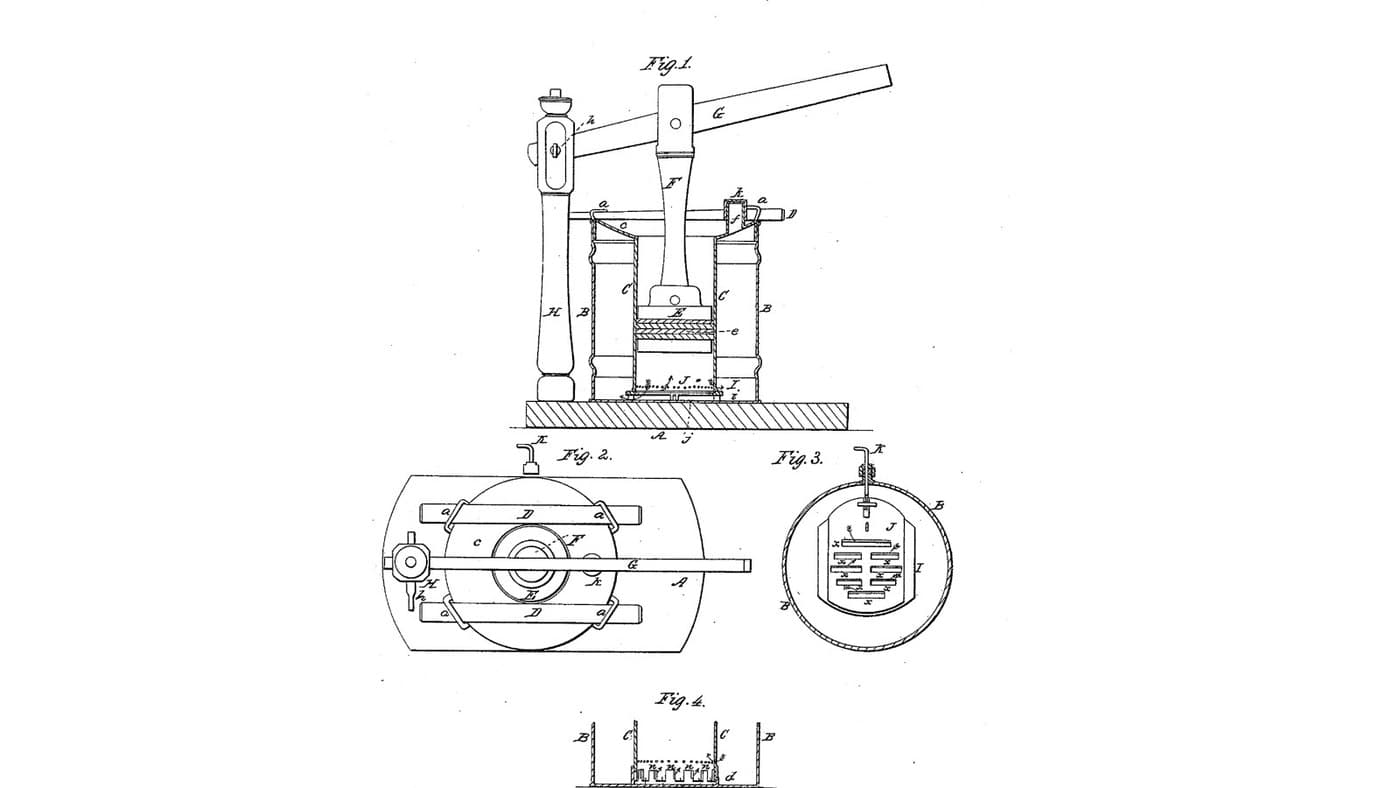
**A. L. Sperry** of Auburn, Indiana, US 25,285, 30 August 1859, "Churn". He claimed the arrangement of the hook i and button k with the dasher D and breaker frame E. He named Dickinson's churn of 31 January 1854 and T. B. Harper's of 27 April 1858 and disclaimed what they claimed. He gives no sizes, so every size here is ours. He calls his wheels G and H two similar bevel wheels; his Fig. 1 draws a large wheel and a small one, and we use a printed crown wheel and pinion in their place.

Àwọn ohun-èlò

19

Àwọn irinṣẹ́ tó nílò

21

Àwọn fáìlì àpẹrẹ

4

Ìtọ́nisọ́nà yìí ń ṣe

CC0 Àgbègbè Gbogbogbò

Blueprint yìí ti jáde lábẹ́ CC0. O lè ṣe àdàkọ, yí padà, pín, àti lò láìsí ìyọ̀ǹda.

Ṣàtìlẹ́yìn Olùṣẹ́dá nípa rírà àwọn ọjà nipasẹ̀ Blueprint wọn Ẹ̀san Olùṣẹ́dá tí àwọn Olùtajà gbé kalẹ̀, tàbí ṣẹ̀dá àtúnṣe tuntun ti Blueprint yìí kí o sì fi sínú Blueprint rẹ gẹ́gẹ́ bí ìsopọ̀ láti pín owó-wíwọlé.

Ìfọ̀rọ̀wérọ̀

(0)

Wọlé láti dara pọ̀ mọ́ ìfọ̀rọ̀wérọ̀

Ń gbé àwọn ọ̀rọ̀ wọlé...