IṢẸ́ ỌNÀ
ẸWÀ ÀTI ÌLERA
IṢẸ́ ỌWỌ́
ÀṢÀ ÀTI ÌTÀN
ÌṢERÉ
ÀYÍKÁ
OÚNJẸ ÀTI OHUN MÍMU
REVERSE ENGINEERING
SÁYẸ́ǸSÌ
ERÉ ÌDÁRAYÁ
ÌMỌ̀-Ẹ̀RỌ
ÀWỌN OHUN WÍWỌ̀
Friction Plunger Churn: Cream Pumped Through Openings You Close a Little More as It Thickens
Buttercup

Ṣẹ́dá nipasẹ̀

Buttercup

10. Oṣù Kọkànlá 2026IE
7
0
0
0
0

Friction Plunger Churn: Cream Pumped Through Openings You Close a Little More as It Thickens

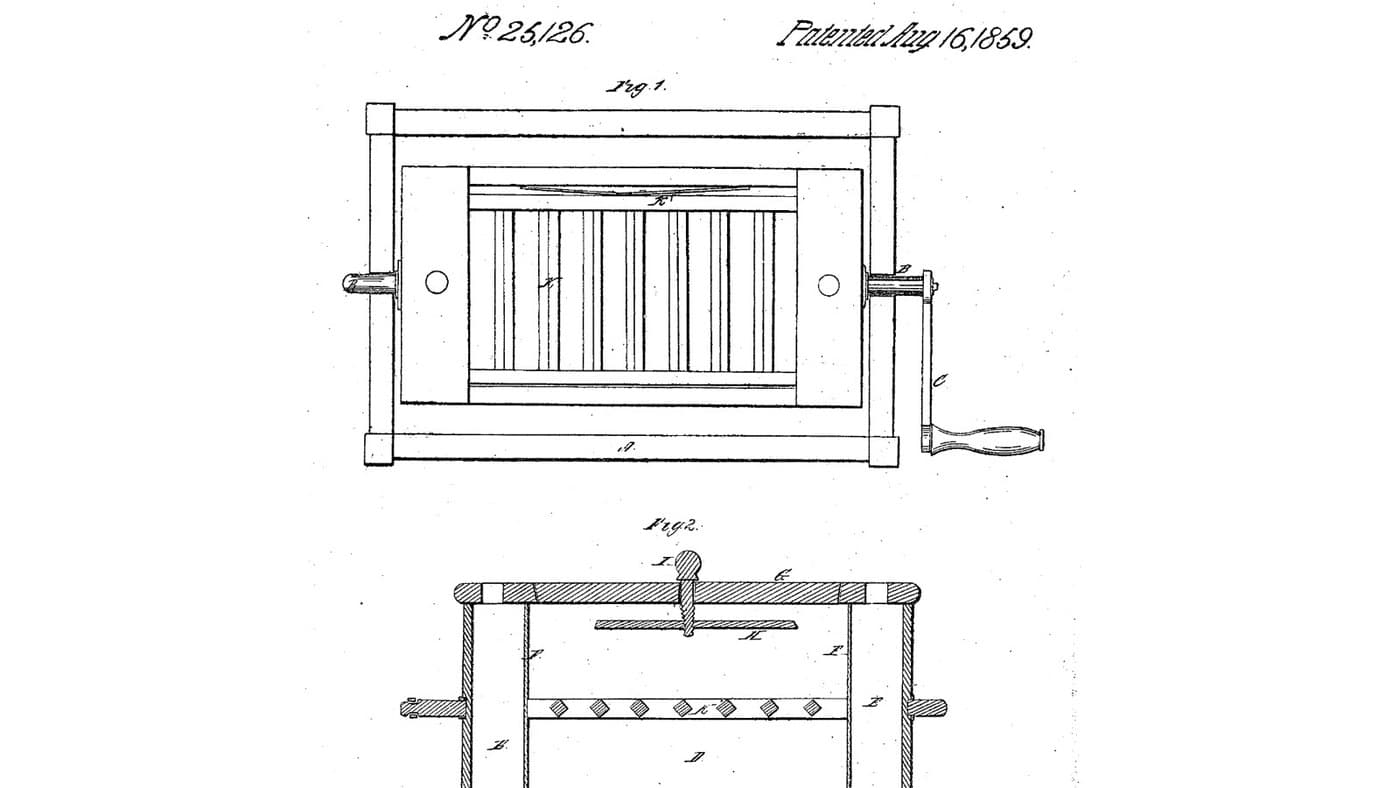
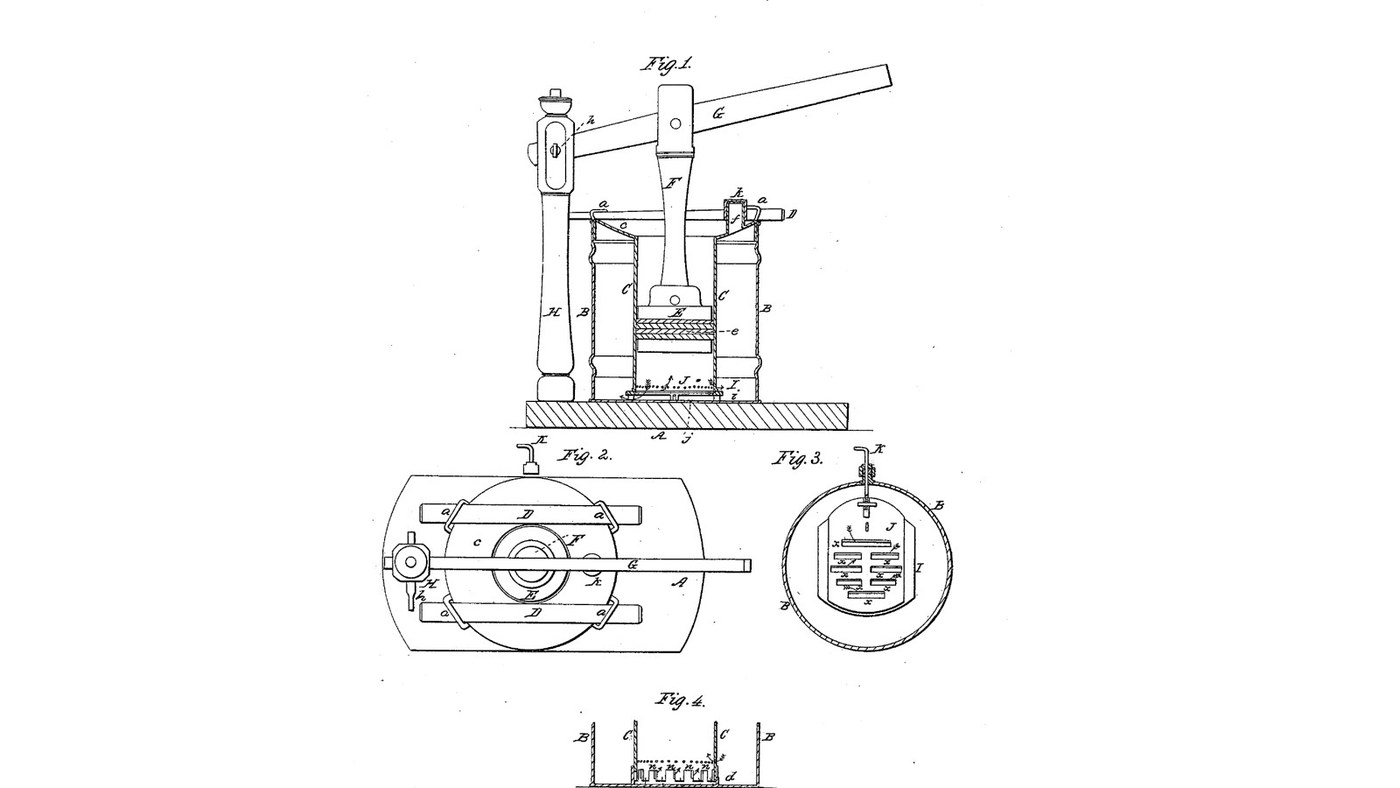
John J. Lehaye of Reading, Pennsylvania, received US 25,162, dated 16 August 1859, for a churn that works by friction. A hollow cylinder stands inside the cream vessel on two slotted plates. A packed plunger, worked by a long lever, draws the cream from the vessel into the cylinder through the slots and drives it back. A screw rod through a stuffing box in the vessel's side slides the upper plate, so the openings can be narrowed as the churning goes on. Lehaye gives no sizes; every size here is ours.
Àárín
About 2 days, plus printing

Ìlànà

1

How hard the cream is rubbed through the openings

Ń ṣí ìwé Jupyter…
2

A piston that draws through a grate, the week before

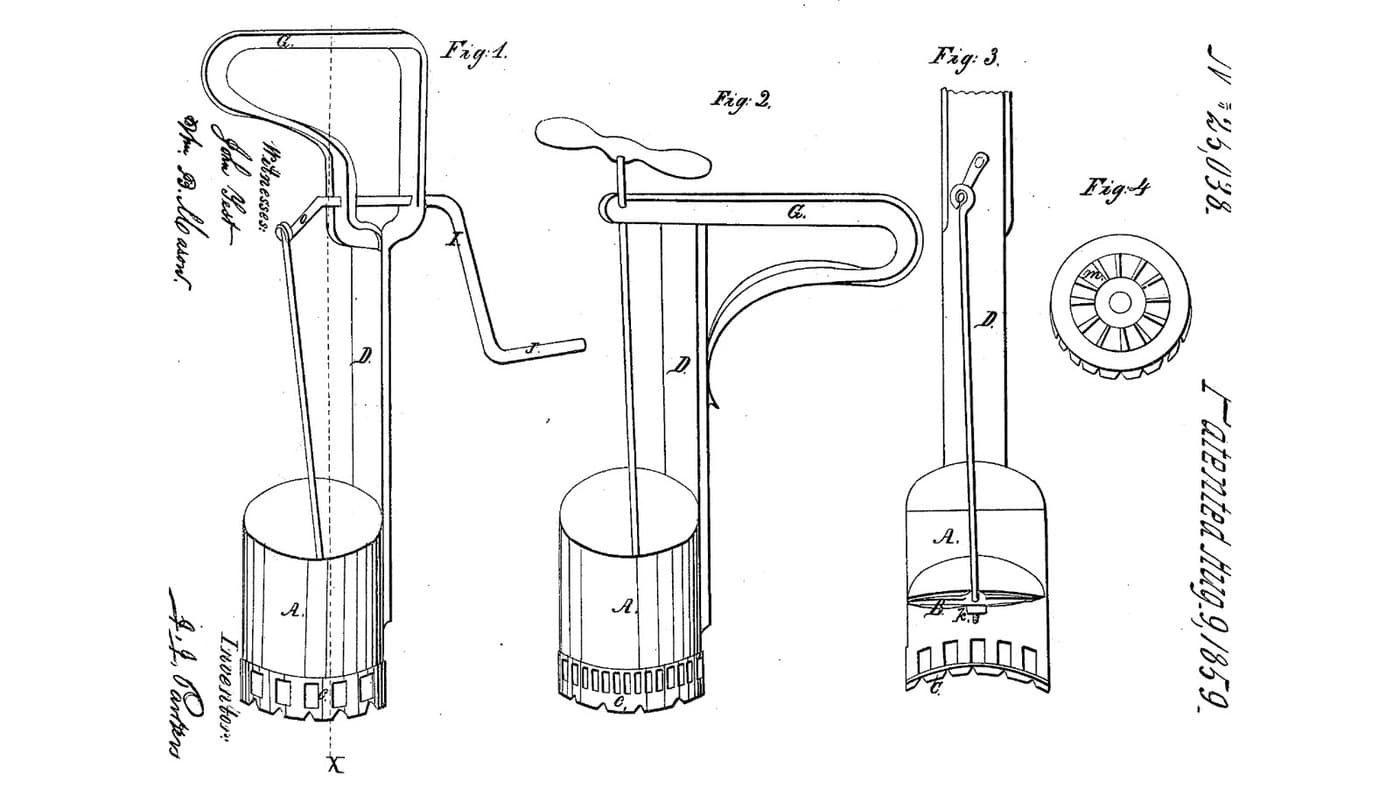
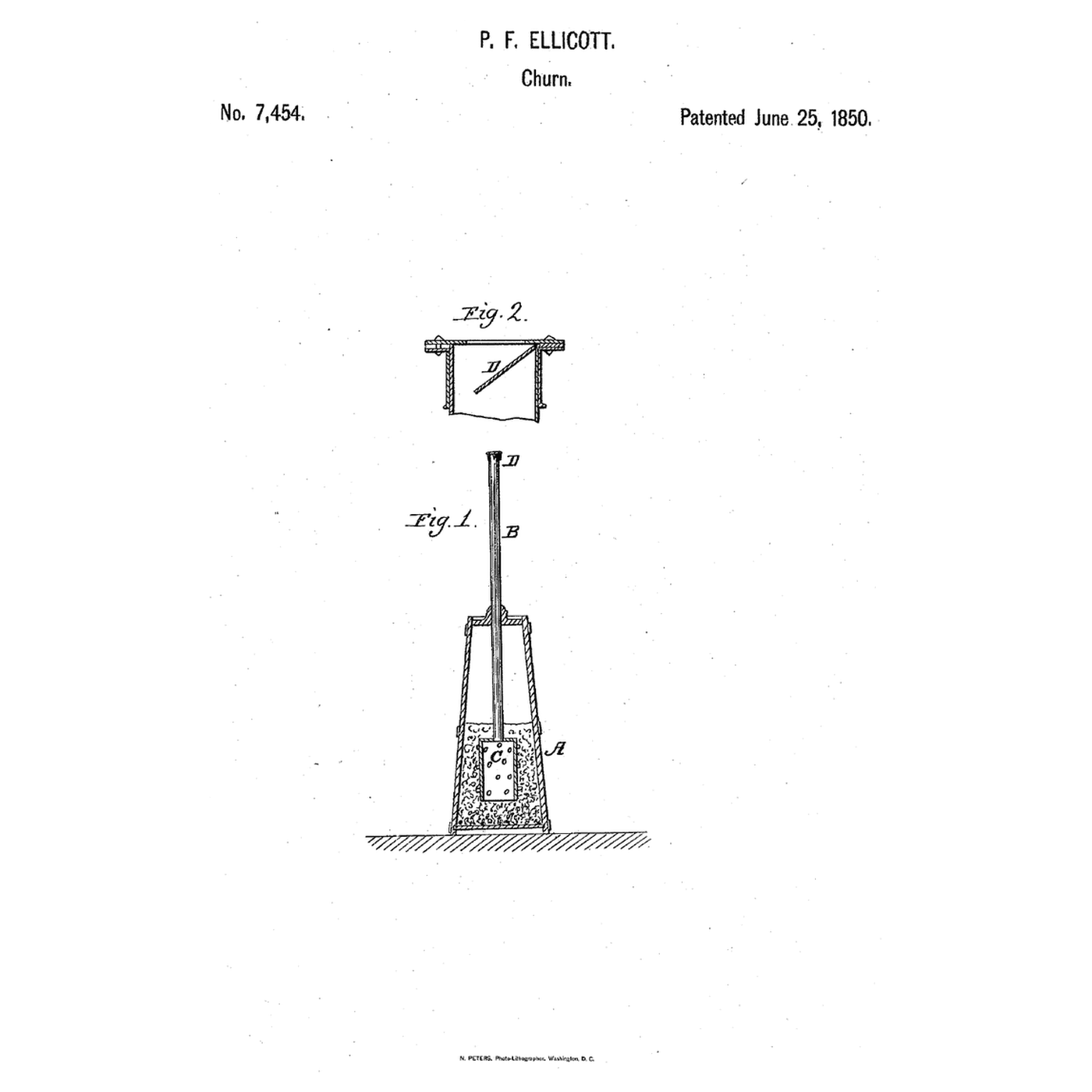
Parker's beater pumped eggs through fixed openings. Lehaye's openings close a little more as the cream thickens.
3

Read US 25,162

"By causing the cream to pass and repass through contracted openings, and with considerable force, the friction of the cream against the edges of the openings has the effect of rapidly separating the butter from the whey at the same time the constant change in the course of the cream agitates the latter as effectually as the ordinary dashers."
4

Print the plate I

The 200 mm lower plate on four 20 mm legs i, with six 8 x 50 mm openings 18 mm apart and two guide flanges for plate J. Print it legs up. PETG, 0.2 mm layers, 30 % infill, 4 walls.
Fáìlì ÀpẹrẹSTLCC0 - Free
5

Print the plate J

The 116 x 64 mm sliding plate with six openings matching plate I's and a boss at one end for rod K's nut. PETG, 0.2 mm layers, 30 % infill, 4 walls.
Fáìlì ÀpẹrẹSTLCC0 - Free
6

Print the cylinder rings

One 86.5 mm ring of the cylinder C, 160 mm across with a 3 mm wall and a spigot on top. Print three. PETG, 0.2 mm layers, 30 % infill, 4 walls.
Fáìlì ÀpẹrẹSTLCC0 - Free
7

Print the bottom cylinder ring

The bottom ring, with an 18 mm notch in its lower edge for rod K. PETG, 0.2 mm layers, 30 % infill, 4 walls.
Fáìlì ÀpẹrẹSTLCC0 - Free
8

Print the plunger's upper plate

A 152 mm plate with a hub bored 6.4 mm across for rod F's pin. PETG, 0.2 mm layers, 30 % infill, 4 walls.
Fáìlì ÀpẹrẹSTLCC0 - Free
9

Print the plunger's lower plate

The plain 152 mm plate with a 6.4 mm hole in the middle. PETG, 0.2 mm layers, 30 % infill, 4 walls.
Fáìlì ÀpẹrẹSTLCC0 - Free
10

Print the stuffing box's inner half

The flanged boss that sits inside the bucket, with an O-ring groove in its face and two 4.4 mm screw holes. PETG, 0.2 mm layers, 30 % infill, 4 walls.
Fáìlì ÀpẹrẹSTLCC0 - Free
11

Print the stuffing box's outer half

The flanged boss outside the bucket, with a groove in its bore for a 6 mm O-ring round rod K. PETG, 0.2 mm layers, 30 % infill, 4 walls.
Fáìlì ÀpẹrẹSTLCC0 - Free
12

Print the vent tube

The 20 mm tube through the flange that lets the gases out. PETG, 0.2 mm layers, 30 % infill, 4 walls.
Fáìlì ÀpẹrẹSTLCC0 - Free
13

Print the vent's cover k

The push-on cover for the vent tube. PETG, 0.2 mm layers, 30 % infill, 4 walls.
Fáìlì ÀpẹrẹSTLCC0 - Free
14

Base A and column H

Cut an 18 mm plywood base 750 x 400 mm. Stand a hardwood column 70 x 70 mm, 643 mm tall, on it 290 mm from where the bucket's middle will be, glued and screwed from under the base. Saw a slot 24 mm wide and 100 mm deep in its top and bore it 12.4 mm across 40 mm below the top for the pin h.

Àwọn ohun èlò fún ìgbésẹ̀ yìí:

Àwo igi tí a lẹ̀ pọ̀Àwo igi tí a lẹ̀ pọ̀1 ẹyọ
Pátákó Igi LílePátákó Igi Líle1 ẹyọ
Ìdìpọ̀ IgiÌdìpọ̀ Igi1 ẹyọ
Ìṣó igiÌṣó igi6 ẹyọ

Àwọn irinṣẹ́ tí a nílò:

Ayùn JígísòAyùn Jígísò
Ayùn Ọwọ́Ayùn Ọwọ́
Àwọn ìgbẹ́ igiÀwọn ìgbẹ́ igi
Ẹ̀rọ Ìlùkòkò AláìlókùnẸ̀rọ Ìlùkòkò Aláìlókùn
Àkójọ orí kànnàkànnàÀkójọ orí kànnàkànnà
Àkójọ Orí ÌlùkòkòÀkójọ Orí Ìlùkòkò
Igun-òsùwọ̀n tí ó dúróIgun-òsùwọ̀n tí ó dúró
Okùn Ìdíwọ̀nOkùn Ìdíwọ̀n
15

Bucket B and the stuffing box

Screw the bucket's floor to the base. Drill a 20.4 mm hole in its side 30 mm above the floor, facing away from the column, and two 4.4 mm holes 19 mm either side of it. Lay a 30 x 2 mm O-ring in the inner half's groove, fit the halves inside and outside the wall and draw them together with two stainless M4 screws and lock nuts. Fill the bucket with water to check the box does not leak, then empty it.

Àwọn ohun èlò fún ìgbésẹ̀ yìí:

Bàkẹ́ẹ̀tì Lítà 20Bàkẹ́ẹ̀tì Lítà 201 ẹyọ
Ìṣó igiÌṣó igi4 ẹyọ
Òrùka O rọ́bàÒrùka O rọ́bà2 ẹyọ
Skurú ẹ̀rọSkurú ẹ̀rọ2 ẹyọ
Ẹ̀kù Ìdìmú Onínáílọ́ọ̀nùẸ̀kù Ìdìmú Onínáílọ́ọ̀nù2 ẹyọ
Okùn PETGOkùn PETG1 ẹyọ

Àwọn irinṣẹ́ tí a nílò:

Ẹ̀rọ ìtẹ̀ 3D oníwàyà (FDM)Ẹ̀rọ ìtẹ̀ 3D oníwàyà (FDM)
Ẹ̀rọ Ìlùkòkò AláìlókùnẸ̀rọ Ìlùkòkò Aláìlókùn
Àkójọ orí kànnàkànnàÀkójọ orí kànnàkànnà
Àkójọ Orí ÌlùkòkòÀkójọ Orí Ìlùkòkò
Ìṣù àwọn ohun ìyí skurúÌṣù àwọn ohun ìyí skurú
Kọ́kọ́rọ́ tí a lè ṣàtúnṣeKọ́kọ́rọ́ tí a lè ṣàtúnṣe
OmiOmi
16

Plates I and J, and rod K

Press an M6 nut into plate J's boss. Lay J on plate I between its flanges and stand I on its legs in the middle of the bucket's floor. Cut 170 mm of M6 stainless threaded rod, bend 40 mm of one end to an L for a handle, push the straight end in through the stuffing box with a 6 mm O-ring in its bore and screw it into J's nut. Turn K both ways: J slides until its openings line up with I's, and closes them after 8 mm.

Àwọn ohun èlò fún ìgbésẹ̀ yìí:

Nọ́ọ̀tì Onígun Mẹ́fàNọ́ọ̀tì Onígun Mẹ́fà1 ẹyọ
Ọ̀pá oníṣọ̀kanỌ̀pá oníṣọ̀kan1 ẹyọ
Òrùka O rọ́bàÒrùka O rọ́bà1 ẹyọ

Àwọn irinṣẹ́ tí a nílò:

Ayùn IrinAyùn Irin
Ìdìmú TábìlìÌdìmú Tábìlì
Kọ́kọ́rọ́ tí a lè ṣàtúnṣeKọ́kọ́rọ́ tí a lè ṣàtúnṣe
17

Cylinder C, flange c, staples and wedges

Stack the four rings on plate I, the notched one at the bottom over rod K. Cut the flange from 12 mm plywood, a ring 304 mm across with a 154 mm hole, and bore a 16 mm hole 125 mm from its middle for the vent. Set it on the bucket's rim over the cylinder's top. Fit four stainless U-bolts through the bucket wall just under the rim, two each side, and drive two tapered hardwood wedges, 340 x 30 mm and 16 mm at their thick end, through them over the flange so it presses the cylinder down on the plates. Push the vent tube into its hole and its cover on top.

Àwọn ohun èlò fún ìgbésẹ̀ yìí:

Àwo igi tí a lẹ̀ pọ̀Àwo igi tí a lẹ̀ pọ̀1 ẹyọ
Bọ́ọ̀tù UBọ́ọ̀tù U4 ẹyọ
Pátákó Igi LílePátákó Igi Líle1 ẹyọ
Okùn PETGOkùn PETG1 ẹyọ

Àwọn irinṣẹ́ tí a nílò:

Ayùn JígísòAyùn Jígísò
Àkójọ orí kànnàkànnàÀkójọ orí kànnàkànnà
Ẹ̀rọ Ìlùkòkò AláìlókùnẸ̀rọ Ìlùkòkò Aláìlókùn
Àkójọ Orí ÌlùkòkòÀkójọ Orí Ìlùkòkò
Ayùn Ọwọ́Ayùn Ọwọ́
Kọ́kọ́rọ́ tí a lè ṣàtúnṣeKọ́kọ́rọ́ tí a lè ṣàtúnṣe
18

Plunger E, rod F and arm G

Cut two 153.9 mm discs of 3 mm food-grade silicone sheet and bolt them between the plunger plates through the middle, hub up; the silicone's edge is the packing e and should slide in the cylinder with a light drag. Saw a slot in each end of a 22 mm hardwood dowel 470 mm long between pin centres and pin its lower end to the plunger's hub with a 6 mm stainless bolt. Make the arm G from hardwood 40 x 22 mm, 930 mm long, bore it 12.4 mm 30 mm from one end for the pin h and 6.4 mm 290 mm from that for rod F, then bolt it into the column's slot with a 12 mm bolt and pin rod F to it.

Àwọn ohun èlò fún ìgbésẹ̀ yìí:

Àwo rọ́bà siliconeÀwo rọ́bà silicone1 ẹyọ
Àkójọ bọ́ọ̀lù onígun mẹ́fàÀkójọ bọ́ọ̀lù onígun mẹ́fà4 ẹyọ
Ẹ̀kù Ìdìmú Onínáílọ́ọ̀nùẸ̀kù Ìdìmú Onínáílọ́ọ̀nù4 ẹyọ
Wáṣà PẹrẹsẹWáṣà Pẹrẹsẹ4 ẹyọ
Àwọn dowel igi líleÀwọn dowel igi líle1 ẹyọ
Pátákó Igi LílePátákó Igi Líle1 ẹyọ

Àwọn irinṣẹ́ tí a nílò:

Ìṣẹ́náÌṣẹ́ná
Ayùn Ọwọ́Ayùn Ọwọ́
Ẹ̀rọ Ìlùkòkò AláìlókùnẸ̀rọ Ìlùkòkò Aláìlókùn
Àkójọ Orí ÌlùkòkòÀkójọ Orí Ìlùkòkò
Kọ́kọ́rọ́ tí a lè ṣàtúnṣeKọ́kọ́rọ́ tí a lè ṣàtúnṣe
Okùn Ìdíwọ̀nOkùn Ìdíwọ̀n
19

The build in 3D

FreeCAD model of this build, cut open: the bucket on its base, the slotted plates I and J with rod K through the stuffing box, the cylinder of four rings under the flange, the wedges and staples, the vent, and the plunger on rod F worked by the arm G from the column H. Checked over the lever's whole travel and with plate J slid fully.
Fáìlì ÀpẹrẹBLENDCC0 - Free
20

Churn

With plate J slid so all the openings are open, pour about 10 litres of heavy cream at about 15 °C into the bucket, checked with the thermometer. Work the arm about once a second, timing it. As the cream thickens, give rod K a turn now and then to close the openings a little. Lift the vent's cover now and then to let the gas out. When the butter comes, knock the wedges out, lift out the flange, the cylinder and the plunger, pour off the buttermilk, wash the butter in cold water until it runs clear, work in a pinch of salt and weigh it.

Àwọn ohun èlò fún ìgbésẹ̀ yìí:

Ọ̀rá wàrà tó nípọnỌ̀rá wàrà tó nípọn10 l
Iyọ̀ Òkun RúkèrúdòIyọ̀ Òkun Rúkèrúdò1 ẹyọ
OmiOmi1 ẹyọ

Àwọn irinṣẹ́ tí a nílò:

Ẹ̀rọ ìwọ̀n ooru oníhun tí ó dúró sí inúẸ̀rọ ìwọ̀n ooru oníhun tí ó dúró sí inú
Aago ÌdúróAago Ìdúró
Òṣùwọ̀n Díjítà Ilé ÌdánáÒṣùwọ̀n Díjítà Ilé Ìdáná
Àwo ìdàpọ̀ ńlá ti irin tí kò ń yáÀwo ìdàpọ̀ ńlá ti irin tí kò ń yá
21

Troubleshooting

Friction plunger churn troubleshooting.

Flow

Loading...
22

History and honest limits

**John J. Lehaye** of Reading, Pennsylvania, assignor to himself and John Tucker of Philadelphia, US 25,162, 16 August 1859, "Churn". He claimed the vessel B, cylinder C and plunger E in combination with means for enlarging or contracting the openings between the cylinder and the vessel. He gives no sizes, so every size here is ours; the U-bolts are his staples a, the O-ring box his stuffing box, and silicone his packing. His Fig. 4 alternative, projections on the cylinder's foot and on a ring in the vessel's bottom, turned to open or close the gaps, is not built. He also offered the machine as an egg beater and for mixing curds.

Àwọn ohun-èlò

19

Àwọn irinṣẹ́ tó nílò

19

Àwọn fáìlì àpẹrẹ

11

Ìtọ́nisọ́nà yìí ń ṣe

CC0 Àgbègbè Gbogbogbò

Blueprint yìí ti jáde lábẹ́ CC0. O lè ṣe àdàkọ, yí padà, pín, àti lò láìsí ìyọ̀ǹda.

Ṣàtìlẹ́yìn Olùṣẹ́dá nípa rírà àwọn ọjà nipasẹ̀ Blueprint wọn Ẹ̀san Olùṣẹ́dá tí àwọn Olùtajà gbé kalẹ̀, tàbí ṣẹ̀dá àtúnṣe tuntun ti Blueprint yìí kí o sì fi sínú Blueprint rẹ gẹ́gẹ́ bí ìsopọ̀ láti pín owó-wíwọlé.

Ìfọ̀rọ̀wérọ̀

(0)

Wọlé láti dara pọ̀ mọ́ ìfọ̀rọ̀wérọ̀

Ń gbé àwọn ọ̀rọ̀ wọlé...