IṢẸ́ ỌNÀ
ẸWÀ ÀTI ÌLERA
IṢẸ́ ỌWỌ́
ÀṢÀ ÀTI ÌTÀN
ÌṢERÉ
ÀYÍKÁ
OÚNJẸ ÀTI OHUN MÍMU
REVERSE ENGINEERING
SÁYẸ́ǸSÌ
ERÉ ÌDÁRAYÁ
ÌMỌ̀-Ẹ̀RỌ
ÀWỌN OHUN WÍWỌ̀
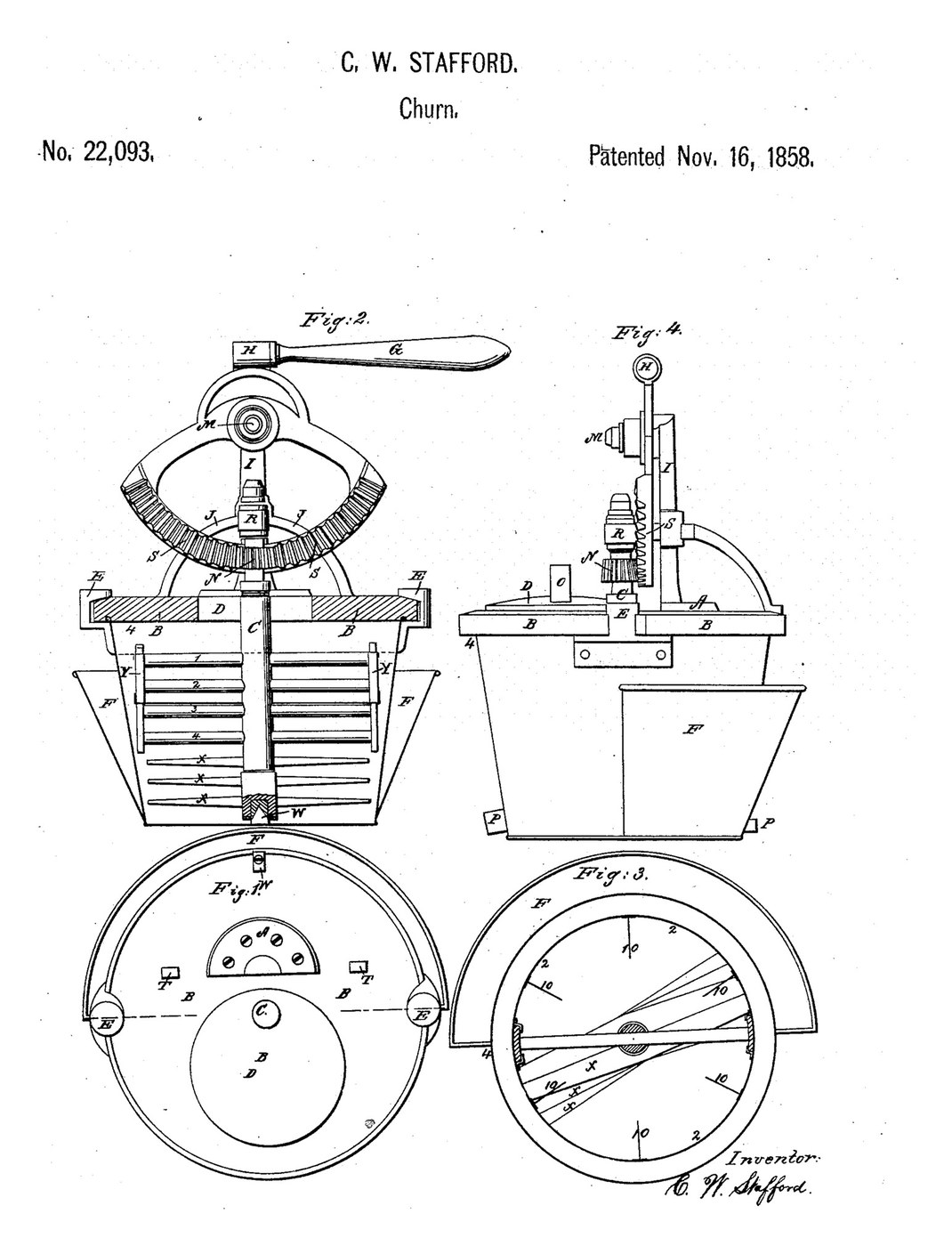

Segment-Rack Zone Churn: A Lever Rocks the Dasher Shaft, a Toothed Tin Band Gathers the Butter at the Surface
Charles W. Stafford of Burlington, Iowa, received US 22,093, dated 16 November 1858, for a churn worked by a lever: a toothed segment on a pivot turns a pinion on the upright dasher shaft back and forth. Four level arms and three slanted floats beat the cream. A tin band with ten tabs on its inside rides on slides at the arms' ends and is set with its top edge at the cream's surface, where the tabs gather the butter as it forms. The cover twists onto two ears on the rim and has a small hatch.
This rung builds it in a 20-litre bucket with printed gears.
Ilọsíwájú
About 8 hours, plus printing
Ìlànà
1
1
Swing, fill and the zone's height
Swing, fill and the zone's height
Ń ṣí ìwé Jupyter…
2
2
A toothed segment working a dasher, before it
A toothed segment working a dasher, before it
That segment drove a dasher up and down. Stafford's turns the dasher shaft back and forth.
3
3
Read US 22,093
Read US 22,093
"This zone is intended to be raised or lowered along the slide so as to accommodate itself to the quantity of cream in the churn—the upper edge being intended to rise to the surface of the cream or a little higher so that the radial proportions may gather the butter as it is formed."
4
4
Print the segment S
Print the segment S
The toothed segment with its socket H for the lever. Print it flat, teeth up. PETG, 0.2 mm layers, 40 % infill, 4 walls; wash before first use.
5
5
Print the pinion N
Print the pinion N
The 12-tooth pinion for the shaft's top. PETG, 0.2 mm layers, 40 % infill, 4 walls; wash before first use.
6
6
Print the ear E
Print the ear E
An ear hook for the bucket's rim. Print two. PETG, 0.2 mm layers, 40 % infill, 4 walls; wash before first use.
7
7
Print the socket W
Print the socket W
The foot socket the shaft stands in. PETG, 0.2 mm layers, 40 % infill, 4 walls; wash before first use.
8
8
Print the zone clip
Print the zone clip
A clip that holds the zone on a slide. Print two. PETG, 0.2 mm layers, 40 % infill, 4 walls; wash before first use.
9
9
Cover B, ears and hatch D
Cover B, ears and hatch D
Cut an 18 mm plywood disc 350 mm across for cover B, with a 17 mm hole in the middle and a 110 mm hole 106 mm off centre. Glue two 12 mm plywood rings under it, 292/264 mm and 350/312 mm across: the gap between them is the groove that takes the bucket's rim. Screw the two ears to the bucket's wall on opposite sides, hooks over the rim, and cut two 44 mm notches in the cover's edge and outer ring to pass them: drop the cover on and turn it 45 degrees to lock. Cut a 130 mm hatch D from 6 mm plywood with a dowel knob.
Àwọn ohun èlò fún ìgbésẹ̀ yìí:
 Àwo igi tí a lẹ̀ pọ̀2 ẹyọ
 Ìdìpọ̀ Igi1 ẹyọ
 Ìṣó igi8 ẹyọ
 Àwọn dowel igi líle1 ẹyọ
 Okùn PETG1 ẹyọ
Àwọn irinṣẹ́ tí a nílò:
 Ẹ̀rọ ìtẹ̀ 3D oníwàyà (FDM)
 Ayùn Jígísò
 Ìṣètò ayùn ihò
 Ẹ̀rọ Ìlùkòkò Aláìlókùn
 Àkójọ Orí Ìlùkòkò
 Àwọn clamp
 Bébà Ìfá
 Ìṣù àwọn ohun ìyí skurú
10
10
Shaft, arms, floats and zone
Shaft, arms, floats and zone
Screw the socket to the middle of the bucket's floor with an M4 screw and lock nut. Cut the stainless tube (16 mm) to 433 mm. Cut four hardwood arms 248 x 30 x 10 mm and three floats 216 x 40 x 8 mm; bore each 16.5 mm at its middle and the arms 8.4 mm at 118 mm each side. Fix the arms on the shaft 115, 140, 165 and 190 mm above its foot, all in line, and the floats 35, 60 and 85 mm up, each an eighth of a turn round more than the last and slanted 25 degrees, with M4 screws across. Push an 8 mm stainless rod 200 mm long through each end of the arms as the slides. Cut a tinplate strip 60 x 810 mm, roll it into a 253 mm band and screw the lap with M3 screws; screw ten tinplate tabs 26 x 50 mm inside it, evenly spaced. Clip it to the slides at the height the notebook gives.
Àwọn ohun èlò fún ìgbésẹ̀ yìí:
 Tọ́ọ̀bù irin tí kò ń yá1 ẹyọ
 Pátákó Igi Líle1 ẹyọ
 Ọ̀pá irin tí kò ń yá1 ẹyọ
 Pátákó irin funfun1 ẹyọ
 Skurú ẹ̀rọ22 ẹyọ
 Ẹ̀kù Ìdìmú Onínáílọ́ọ̀nù22 ẹyọ
Àwọn irinṣẹ́ tí a nílò:
 Ohun èlò ìgé òpó
 Ayùn Irin
 Ayùn Ọwọ́Ẹ̀rọ Ìlùkòkò AláìlókùnÀkójọ Orí Ìlùkòkò
 Ìlàǹkàn irin
 Àwọn Ìfá (Ìfá Ọwọ́)Ìṣù àwọn ohun ìyí skurú
 Kọ́kọ́rọ́ tí a lè ṣàtúnṣe
 Okùn Ìdíwọ̀n
11
11
Gears, upright and lever
Gears, upright and lever
Stand the shaft in its socket, lay the cover on and lock it. Fix the pinion on the shaft's top with an M4 screw across. Screw a hardwood upright I 44 x 30 mm, 162 mm tall, to the cover from below, its front face 38 mm behind the shaft's centre. Bolt the segment to it with an M12 bolt as pivot M so its teeth mesh with the pinion, and screw a hardwood lever G 340 x 30 x 14 mm on top of its socket.
Àwọn ohun èlò fún ìgbésẹ̀ yìí:
Pátákó Igi Líle1 ẹyọÌṣó igi4 ẹyọSkurú ẹ̀rọ1 ẹyọẸ̀kù Ìdìmú Onínáílọ́ọ̀nù1 ẹyọ Àkójọ bọ́ọ̀lù onígun mẹ́fà1 ẹyọ
 Wáṣà Pẹrẹsẹ2 ẹyọ
Àwọn irinṣẹ́ tí a nílò:
Ayùn Ọwọ́Ẹ̀rọ Ìlùkòkò AláìlókùnÀkójọ Orí ÌlùkòkòKọ́kọ́rọ́ tí a lè ṣàtúnṣeÌṣù àwọn ohun ìyí skurú12
12
The build in 3D
The build in 3D
FreeCAD model of this build, the near quarter of the bucket, cover and zone cut away: the shaft with four arms, three slanted floats, the slides and the toothed zone, the cover with its rings, ears and hatch, the upright, the segment and pinion, and the lever.
13
13
Churn
Churn
Stand the bucket in a tub of ice water in warm weather or warm water in cold weather (ours, for his receptacle at the side) until the cream is about 15 °C. Pour in about 12 litres of heavy cream and set the zone's top edge at its surface. Lock the cover and rock the lever back and forth steadily; time it. Look through the hatch: the tabs gather the butter at the surface. When it has come, lift the cover and shaft out, pour off the buttermilk, wash the butter in cold water until it runs clear, work in a pinch of salt and weigh it.
Àwọn ohun èlò fún ìgbésẹ̀ yìí:
 Ọ̀rá wàrà tó nípọn12 l
 Yìnyín tí a gún2 kg
 Iyọ̀ Òkun Rúkèrúdò1 ẹyọ
 Omi1 ẹyọ
Àwọn irinṣẹ́ tí a nílò:
 Àgọ́ ìtọ́jú ti ìpele oúnjẹ
 Ẹ̀rọ ìwọ̀n ooru oníhun tí ó dúró sí inú
 Aago Ìdúró
 Òṣùwọ̀n Díjítà Ilé Ìdáná
 Àwo ìdàpọ̀ ńlá ti irin tí kò ń yá
14
14
Troubleshooting
Troubleshooting
Segment-rack churn troubleshooting.
Flow
Loading...
15
15
History and honest limits
History and honest limits
**Charles W. Stafford** of Burlington, Iowa, US 22,093, 16 November 1858, "Churn". He preferred a tin body, light, cheap and quick to warm or cool, and claimed the general arrangement, the adjustable zone with its projections, the grooved cover with slots and ears, and the two covers. He gave no sizes. Every size and material is ours. His Fig. 4 draws S toothed on its face and N bevelled; ours is a crown-toothed segment with a straight pinion. His water receptacle hangs on the body's side; ours is a tub the bucket stands in.
Àwọn ohun-èlò
17- 2 ẹyọÀyè
- 1 ẹyọÀyè
- 12 ẹyọÀyè
- 1 ẹyọÀyè
- 1 ẹyọÀyè
- Àyè
- 1 ẹyọÀyè
- 1 ẹyọÀyè
- 1 ẹyọÀyè
- 23 ẹyọÀyè
- 23 ẹyọÀyè
- Àyè
- 2 ẹyọÀyè
- Àyè
- 2 kgÀyè
- 1 ẹyọÀyè
- 1 ẹyọÀyè
Àwọn irinṣẹ́ tó nílò
20- 1 vendor sell this, none ship to you yetÀyè
- 1 vendor sell this, none ship to you yetÀyè
- Àyè
- Àyè
- Àyè
- Àyè
- Àyè
- 1 vendor sell this, none ship to you yetÀyè
- Àyè
Àwọn fáìlì àpẹrẹ
6Ìtọ́nisọ́nà yìí ń ṣe

Blueprint tó jọra
Àwọn blueprint wọ̀nyí pín ìmọ̀ — ọ̀nà, ohun-èlò tàbí ìlànà
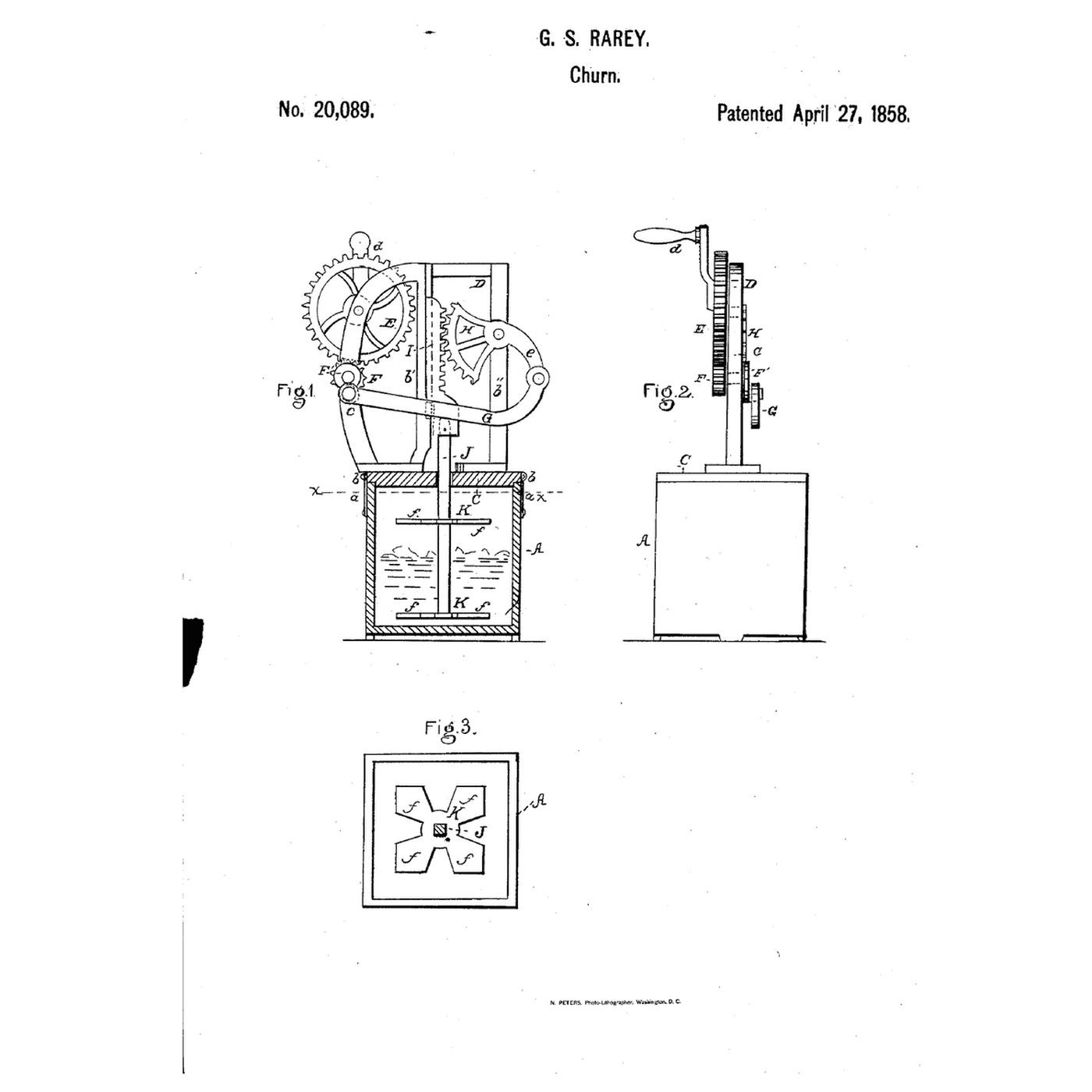
Rack-and-Segment Crank Churn: A Crank Rocks a Toothed Segment That Drives the Dasher Up and Down
láti ọwọ́ Buttercup
OÚNJẸ ÀTI OHUN MÍMU
43
0
0
0
0
0
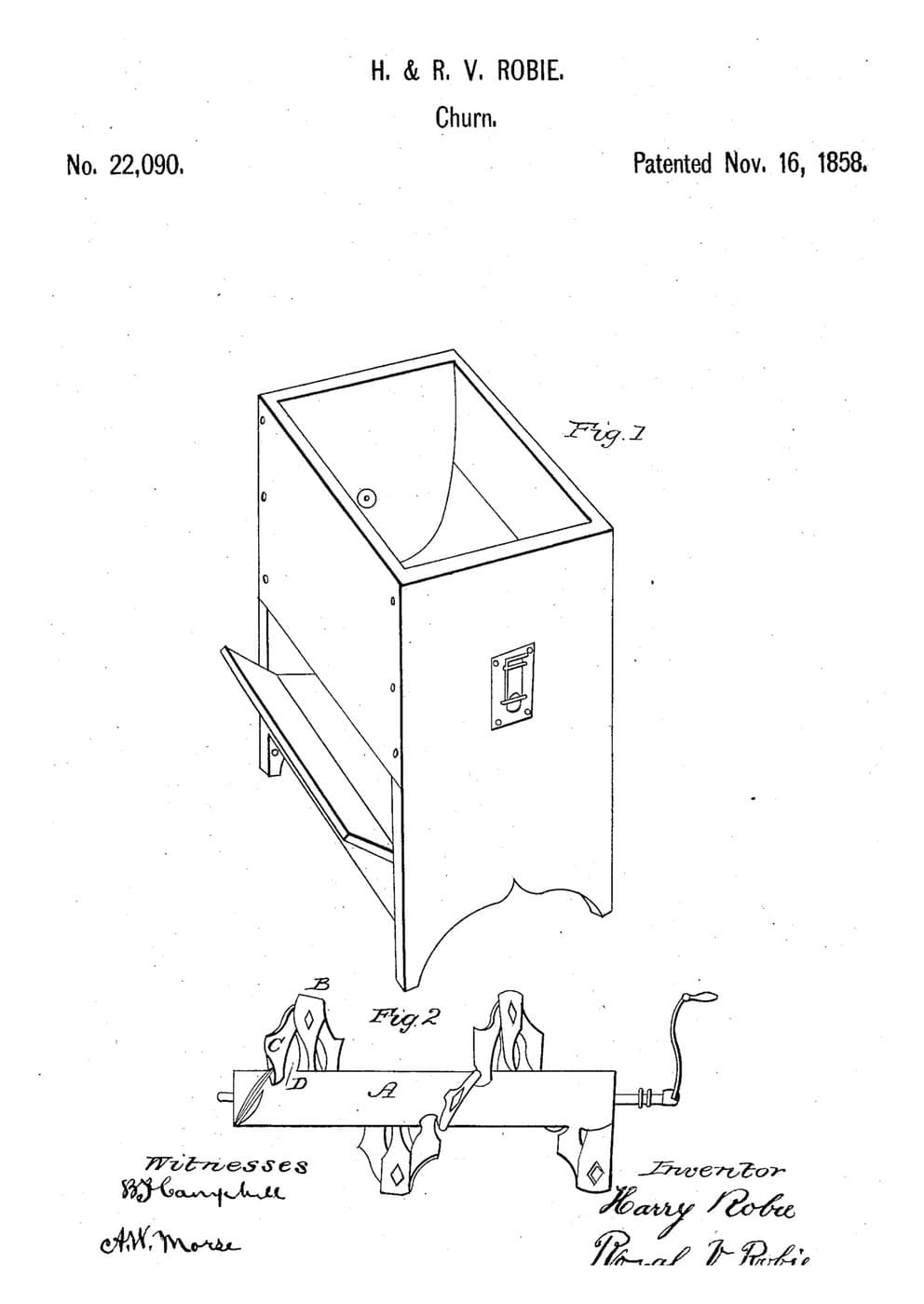
Spiral-Beater Box Churn: Diamond-Holed and Hollow-Ended Beaters Drive the Cream End to End
láti ọwọ́ Buttercup
Iṣẹ́ Igi
9
0
0
0
0
0

Churning Butter from Cream — The 5,000-Year-Old Fat Separation
láti ọwọ́ TheChef
IṢẸ́ ỌWỌ́
63
0
0
0
0
0
CC0 Àgbègbè Gbogbogbò
Blueprint yìí ti jáde lábẹ́ CC0. O lè ṣe àdàkọ, yí padà, pín, àti lò láìsí ìyọ̀ǹda.
Ṣàtìlẹ́yìn Olùṣẹ́dá nípa rírà àwọn ọjà nipasẹ̀ Blueprint wọn Ẹ̀san Olùṣẹ́dá tí àwọn Olùtajà gbé kalẹ̀, tàbí ṣẹ̀dá àtúnṣe tuntun ti Blueprint yìí kí o sì fi sínú Blueprint rẹ gẹ́gẹ́ bí ìsopọ̀ láti pín owó-wíwọlé.