IṢẸ́ ỌNÀ
ẸWÀ ÀTI ÌLERA
IṢẸ́ ỌWỌ́
ÀṢÀ ÀTI ÌTÀN
ÌṢERÉ
ÀYÍKÁ
OÚNJẸ ÀTI OHUN MÍMU
REVERSE ENGINEERING
SÁYẸ́ǸSÌ
ERÉ ÌDÁRAYÁ
ÌMỌ̀-Ẹ̀RỌ
ÀWỌN OHUN WÍWỌ̀
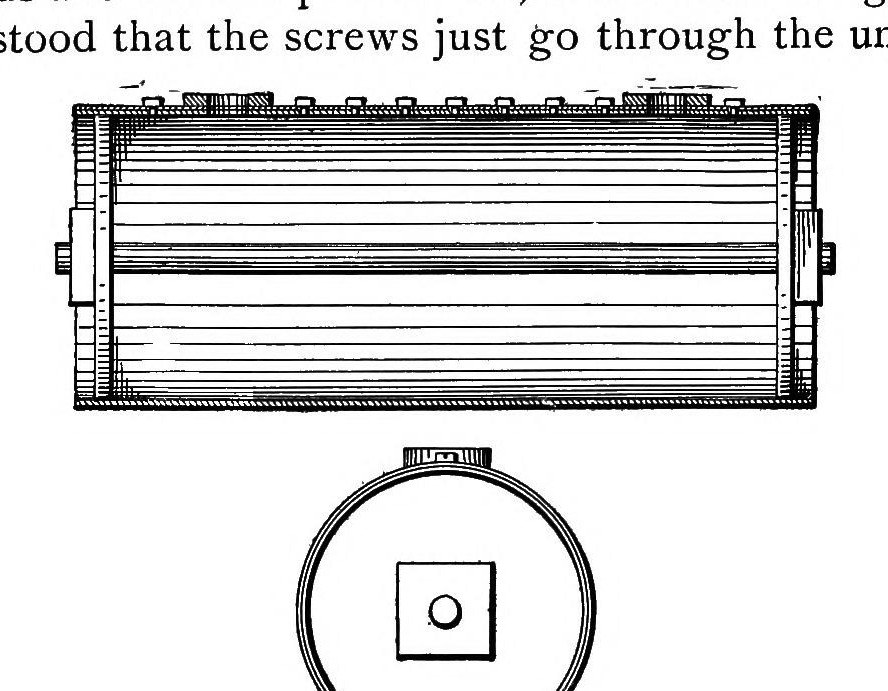

Steam Boiler: Small Brass Shell Boiler, Screwed and Soldered (Hopkins, Model Engines and Small Boats, 1898)
A small steam boiler for model engines and boats: a brass cylinder 4 in across, closed by two brass heads tied together by a brass stay rod, its seam held by two rows of brass screws and sealed with solder. It sits in a russia-iron jacket over an alcohol lamp, with a weighted safety valve and fusible plugs that put the lamp out if the water runs low.
Result: a strong little shell boiler, 6 to 12 in long to suit the engine.
Source: N. M. Hopkins, Model Engines and Small Boats (1898), ch. III. Unknown: the working pressure and the valve's sizes. Picture: the book's Fig. 33.
Àárín
Unknown
Ìlànà
1
1
Make the heads and stay
Make the heads and stay
Cut two brass disks 4 in across and about 1/8 in thick, each with a 1/4 in hole in the centre, and true them up in the lathe. Pass a 1/4 in brass rod through both and solder it, with plenty of solder inside the heads to make them steam-tight. Screw heavy brass disks (round nuts are better than square) onto the rod ends against the heads. Set the heads 10 in apart over their outsides; about 6 in will do for a small single-acting engine, 7 in for a double engine, up to 12 in for a larger one.
Àwọn ohun èlò fún ìgbésẹ̀ yìí:
 Ọ̀pá Róbótó Bronse1 two heads, two nuts
 Ọ̀pá Bàbà Ofeefee1 1/4 in stay
 Wẹ́là tìnì-lédì1 as needed
 Fúlọ́ksì1 as needed
Àwọn irinṣẹ́ tí a nílò:
 Ẹ̀rọ Ìyí Irin
 Ọ̀gọ̀ Bunsen
2
2
Roll and screw the shell
Roll and screw the shell
Cut soft sheet brass at least 1/32 in thick (1/16 in for boilers over 8 in long), about 14 in long and 1/2 in longer than the heads so it overhangs 1/4 in each end. Roll it round the heads on tinner's rollers, never by hand, so it laps about 1 in. Slip it over the heads and rod and bind it tight with heavy twine. Drill two rows of holes along the lap, tap them and turn in little brass screws that go just through the under plate without projecting. Do not use iron screws: their rust pits the seams.
Àwọn ohun èlò fún ìgbésẹ̀ yìí:
 Pẹlẹbẹ Bronse1 shell
 Skurú ẹ̀rọ1 small brass screws
 Okùn ìdì1 binding
Àwọn irinṣẹ́ tí a nílò:
 Àwọn rólà ìtẹ̀ páànù
 Ìlù ọwọ́
 Ìtò irinṣẹ́ ìgé ihá
3
3
Solder it up
Solder it up
Push the heads and rod out, hold the shell in a Bunsen flame and run solder well along the seam. Push the heads back and solder them all round the edge, and screw the nuts tight: the screws and stay take the strain, the solder keeps in the steam. Drill two or three 1/4 in holes in the top and bush them with heavy brass disks soldered on. For fusible plugs, drill two 1/4 in holes near the bottom and solder them shut with little brass caps.
Àwọn ohun èlò fún ìgbésẹ̀ yìí:
Wẹ́là tìnì-lédì1 as neededFúlọ́ksì1 as neededỌ̀pá Róbótó Bronse1 bushes and plug capsÀwọn irinṣẹ́ tí a nílò:
Ọ̀gọ̀ BunsenÌlù ọwọ́4
4
Fit the jacket and safety valve
Fit the jacket and safety valve
Cut end supports from russia sheet iron to hold the boiler by its ends, with an opening for the alcohol lamp, and bend a russia-iron cover over it, riveted to the ends by little ears. Punch a row of small holes along the cover's lower edge to let air in for the lamp; the cover keeps in the heat and keeps draughts off the flame. Turn a small safety valve true in the lathe, grind it to its seat with emery and oil, and fit a lead weight on its bar. Not given: the valve's sizes.
Àwọn ohun èlò fún ìgbésẹ̀ yìí:
 Pẹpẹ irin Russia1 ends and cover
 Ìṣó irin1 smallỌ̀pá Róbótó Bronse1 valve
 Òjé1 weight
Àwọn irinṣẹ́ tí a nílò:
 Ìlàǹkàn irin
 Àkójọ ìsoẸ̀rọ Ìyí Irin
 Aṣọ emery
5
5
Fire and set it
Fire and set it
Fill the boiler two-thirds full, connect the engine and light the alcohol lamp under it. If the valve blows off before the engine turns over, move the weight a little farther out until the engine runs without steam escaping; well made, the valve will then blow off soon after the engine stops if the fire is left. If the water ever runs very low, the fusible plugs melt and the steam puts out the lamp. Do not try to burst a boiler to test it.
Àwọn irinṣẹ́ tí a nílò:
 Fìtílà ọtí (fìtílà spirit)
Àwọn ohun-èlò
10- 1 valveÀyè
- 1 1/4 in stayÀyè
- 2 as neededÀyè
- 2 as neededÀyè
- 1 shellÀyè
- 1 small brass screwsÀyè
- 1 bindingÀyè
- 1 ends and coverÀyè
- 1 smallÀyè
- 1 weightÀyè
Àwọn Ohun Èlò Ìtọ́nisọ́nà Tí A So Pọ̀


Ìtọ́nisọ́nà yìí ń ṣe
CC0 Àgbègbè Gbogbogbò
Blueprint yìí ti jáde lábẹ́ CC0. O lè ṣe àdàkọ, yí padà, pín, àti lò láìsí ìyọ̀ǹda.
Ṣàtìlẹ́yìn Olùṣẹ́dá nípa rírà àwọn ọjà nipasẹ̀ Blueprint wọn Ẹ̀san Olùṣẹ́dá tí àwọn Olùtajà gbé kalẹ̀, tàbí ṣẹ̀dá àtúnṣe tuntun ti Blueprint yìí kí o sì fi sínú Blueprint rẹ gẹ́gẹ́ bí ìsopọ̀ láti pín owó-wíwọlé.