IṢẸ́ ỌNÀ
ẸWÀ ÀTI ÌLERA
IṢẸ́ ỌWỌ́
ÀṢÀ ÀTI ÌTÀN
ÌṢERÉ
ÀYÍKÁ
OÚNJẸ ÀTI OHUN MÍMU
REVERSE ENGINEERING
SÁYẸ́ǸSÌ
ERÉ ÌDÁRAYÁ
ÌMỌ̀-Ẹ̀RỌ
ÀWỌN OHUN WÍWỌ̀


Straining Bag: a Cloth Bag on a Banded, Hooked Wire Hoop (after Milks, 1913)
A cloth straining bag for jelly, juice, wine and vinegar, with its own hanger: the bag is sewn to a band of heavy cloth with eyelets, which hangs on hooks round a wire hoop. The hoop, its arm and its wall hook are one wire. Kate Milks patented it in 1913 so the bag could be lifted off to wash and mended without the frame.
Olùbẹ̀rẹ̀
About 3 hours
Ìlànà
1
1
How a jelly bag is used
How a jelly bag is used
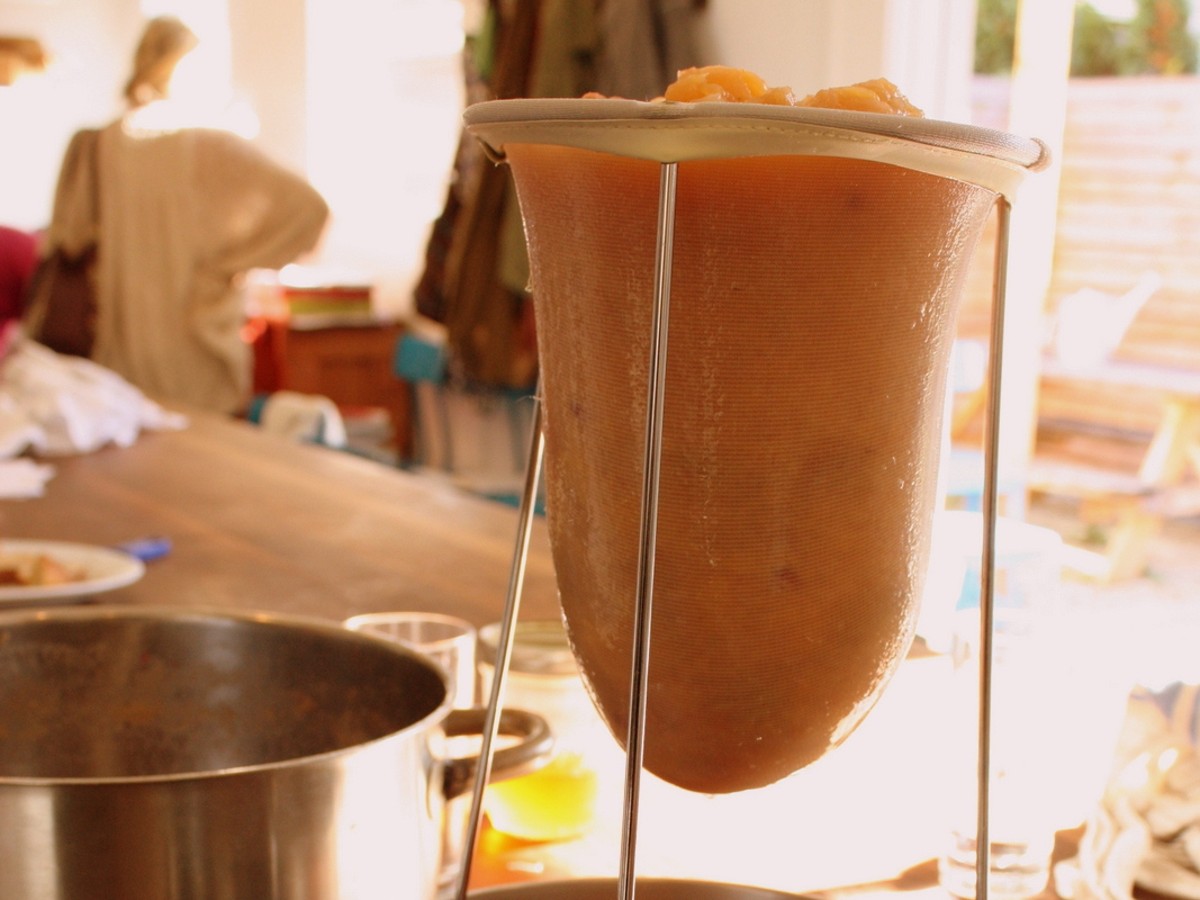
Cooked fruit poured into a jelly bag and left to drip (Homemakers101).
2
2
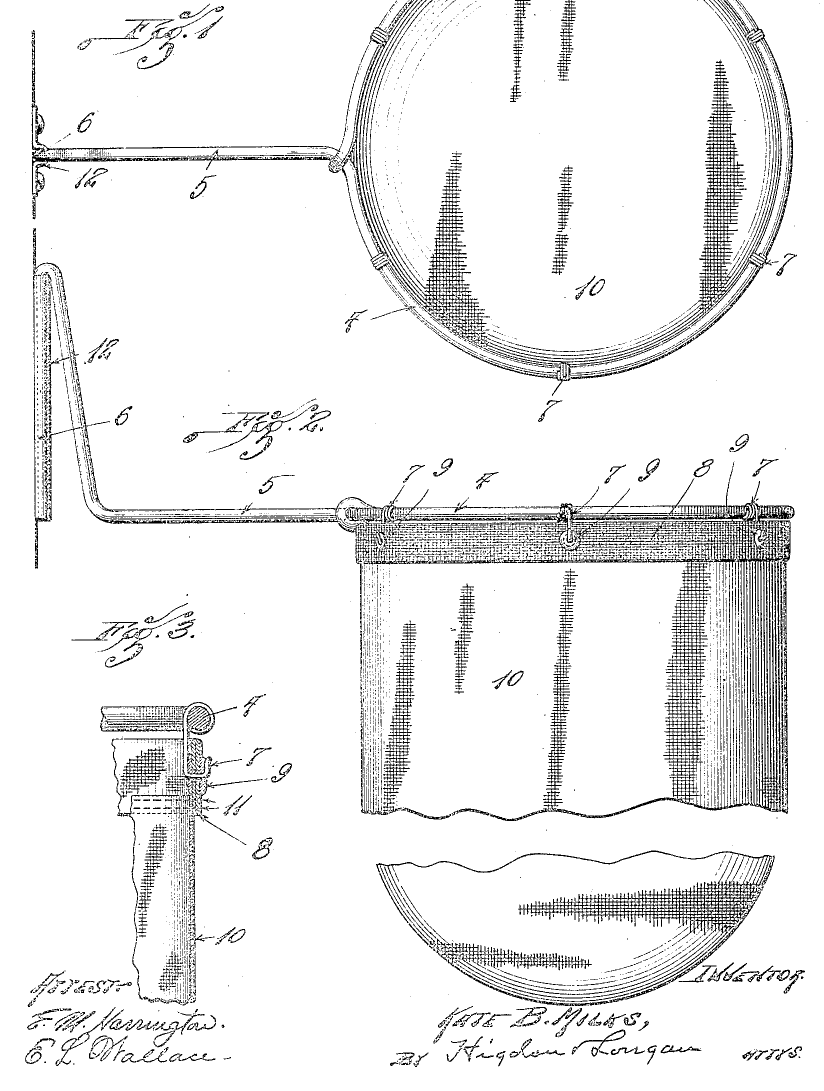
Milks's jelly strainer, 1913
Milks's jelly strainer, 1913
US 1,053,850: a hoop 4, its stem 5 and hook 6 are one piece of wire; hooks 7 hang from the hoop. A band 8 of heavy fabric with eyelets 9 hangs on the hooks, and the open bag 10 is stitched to the band, so it can be taken off to mend. A bracket 12 on the wall holds the hook.
3
3
Print the layout
Print the layout
Sizes for the bag, band, wire and bracket (not to scale).
4
4
Sew the bag
Sew the bag
Wash and iron the cloth. Cut a piece 660 x 330 mm and a circle 224 mm across. Sew the long edges into a tube, 10 mm seam, then sew the circle into one end; it hangs round when full. Sew every seam twice so no juice runs past it.
Àwọn ohun èlò fún ìgbésẹ̀ yìí:
 Aṣọ Mọ́sìlínì Òwú0.4 m2
 Òwú ìránṣọ10 m
Àwọn irinṣẹ́ tí a nílò:
 Ìkẹ́rẹ́ aṣọ
 Okùn Ìdíwọ̀n
 Ẹ̀rọ ìránṣọ
 Irin Ìfọṣọ Aṣọ
5
5
Make the band
Make the band
Cut canvas 660 x 100 mm, fold it to 50 mm wide and sew the ends into a ring with 20 mm overlap. Punch six 5 mm holes 15 mm below the fold, 107 mm apart, and work each as an eyelet with close buttonhole stitches. Slip the bag's top edge into the band and stitch round twice.
Àwọn ohun èlò fún ìgbésẹ̀ yìí:
 Aṣọ kánfásì0.07 m2Òwú ìránṣọ6 m
Àwọn irinṣẹ́ tí a nílò:
Ìkẹ́rẹ́ aṣọ Ohun èlò ìlu ihò ìwé
 Abẹ́rẹ́ ìránṣọẸ̀rọ ìránṣọ
6
6
Bend the hoop and hooks
Bend the hoop and hooks
From one 1050 mm length of 3 mm stainless wire: bend the hook (60 mm down, over, 100 mm up), turn 90 degrees, run the 150 mm arm, then bend a 200 mm hoop and wrap the end twice round the arm. Cut six 60 mm pieces of 2 mm wire; wrap the top of each twice round the hoop, evenly spaced, and turn the lower 10 mm up as a hook.
Àwọn ohun èlò fún ìgbésẹ̀ yìí:
 Okùn irin aláìjẹrùn1 piece (3 mm, 1050 mm)Okùn irin aláìjẹrùn1 piece (2 mm, 360 mm)
Àwọn irinṣẹ́ tí a nílò:
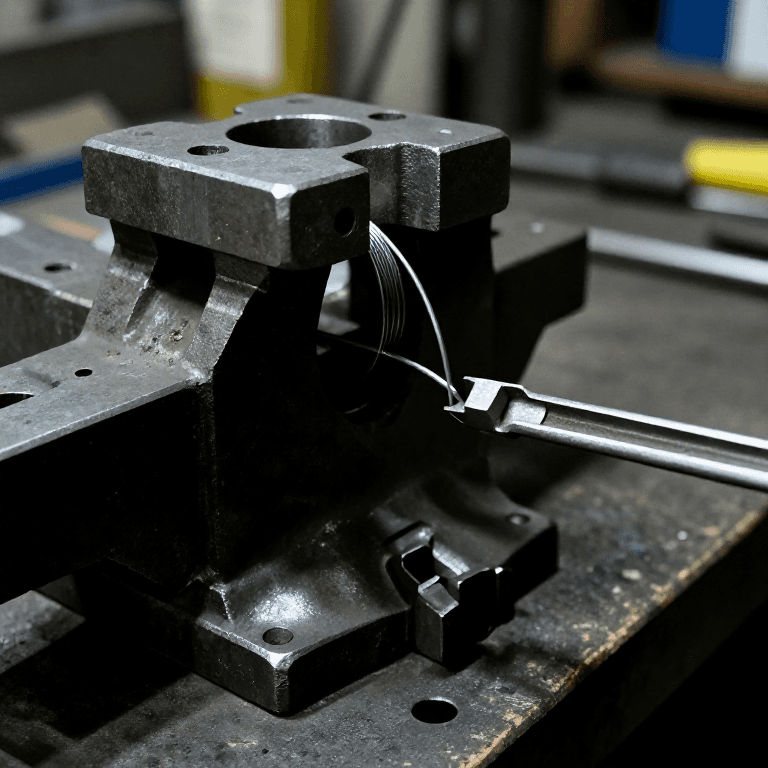
 Ẹ̀mú ìgé okùn oníkọ̀rọ̀
 Ẹ̀mú Olórí Yíká
 Ẹmú Ẹnu Pẹrẹsẹ
 Ìdìmú Tábìlì
7
7
Make the bracket
Make the bracket
Cut a 15 x 120 mm strip of 1 mm stainless sheet, file the edges, drill a screw hole 15 mm from each end and bend the middle out 5 mm. Screw it to a wall or cupboard side above where the bowl will stand.
Àwọn ohun èlò fún ìgbésẹ̀ yìí:
 Àwo irin tí kò ń yá1 piece (1 mm, 15 x 120 mm)
 Ìṣó igi2 ẹyọ
Àwọn irinṣẹ́ tí a nílò:
 Ayùn Irin
 Ìfá Irin
 Àkójọ Orí ÌlùkòkòÌdìmú Tábìlì
 Ìṣù àwọn ohun ìyí skurú
8
8
Hang and strain
Hang and strain
Slip the hook down behind the bracket, hang the band's eyelets on the six hooks and set a bowl under the bag. Wet the bag, pour in the cooked fruit or mash and let it drip. Wash the bag in hot water after use and dry it.
9
9
Troubleshooting
Troubleshooting
Strainer problems and fixes.
Flow
Loading...
10
10
History and honest limits
History and honest limits
Kate B. Milks, St. Louis, Missouri: US 1,053,850, "Jelly-Strainer", filed 10 June 1912, granted 18 February 1913. She names no cloth and gives no sizes: the cotton bag, canvas band, stainless wire and all sizes are ours. The picture shows a modern jelly bag on a wire stand (photo Leslie Seaton, CC BY 2.0, Wikimedia Commons). Not made by us yet.
Àwọn ohun-èlò
6- 0.4 m2Àyè
- 16 mÀyè
- 0.07 m2Àyè
- 1 piece (2 mm, 360 mm)Àyè
- 1 piece (1 mm, 15 x 120 mm)Àyè
- 2 ẹyọÀyè
Àwọn irinṣẹ́ tó nílò
14- Àyè
- 1 vendor sell this, none ship to you yetÀyè
- Àyè
- Àyè
- Àyè
- Àyè
Àwọn fáìlì àpẹrẹ
1Àwọn Ohun Èlò Ìtọ́nisọ́nà Tí A So Pọ̀

Ìtọ́nisọ́nà yìí ń ṣe
Blueprint tó jọra
Àwọn blueprint wọ̀nyí pín ìmọ̀ — ọ̀nà, ohun-èlò tàbí ìlànà
CC0 Àgbègbè Gbogbogbò
Blueprint yìí ti jáde lábẹ́ CC0. O lè ṣe àdàkọ, yí padà, pín, àti lò láìsí ìyọ̀ǹda.
Ṣàtìlẹ́yìn Olùṣẹ́dá nípa rírà àwọn ọjà nipasẹ̀ Blueprint wọn Ẹ̀san Olùṣẹ́dá tí àwọn Olùtajà gbé kalẹ̀, tàbí ṣẹ̀dá àtúnṣe tuntun ti Blueprint yìí kí o sì fi sínú Blueprint rẹ gẹ́gẹ́ bí ìsopọ̀ láti pín owó-wíwọlé.