IṢẸ́ ỌNÀ
ẸWÀ ÀTI ÌLERA
IṢẸ́ ỌWỌ́
ÀṢÀ ÀTI ÌTÀN
ÌṢERÉ
ÀYÍKÁ
OÚNJẸ ÀTI OHUN MÍMU
REVERSE ENGINEERING
SÁYẸ́ǸSÌ
ERÉ ÌDÁRAYÁ
ÌMỌ̀-Ẹ̀RỌ
ÀWỌN OHUN WÍWỌ̀
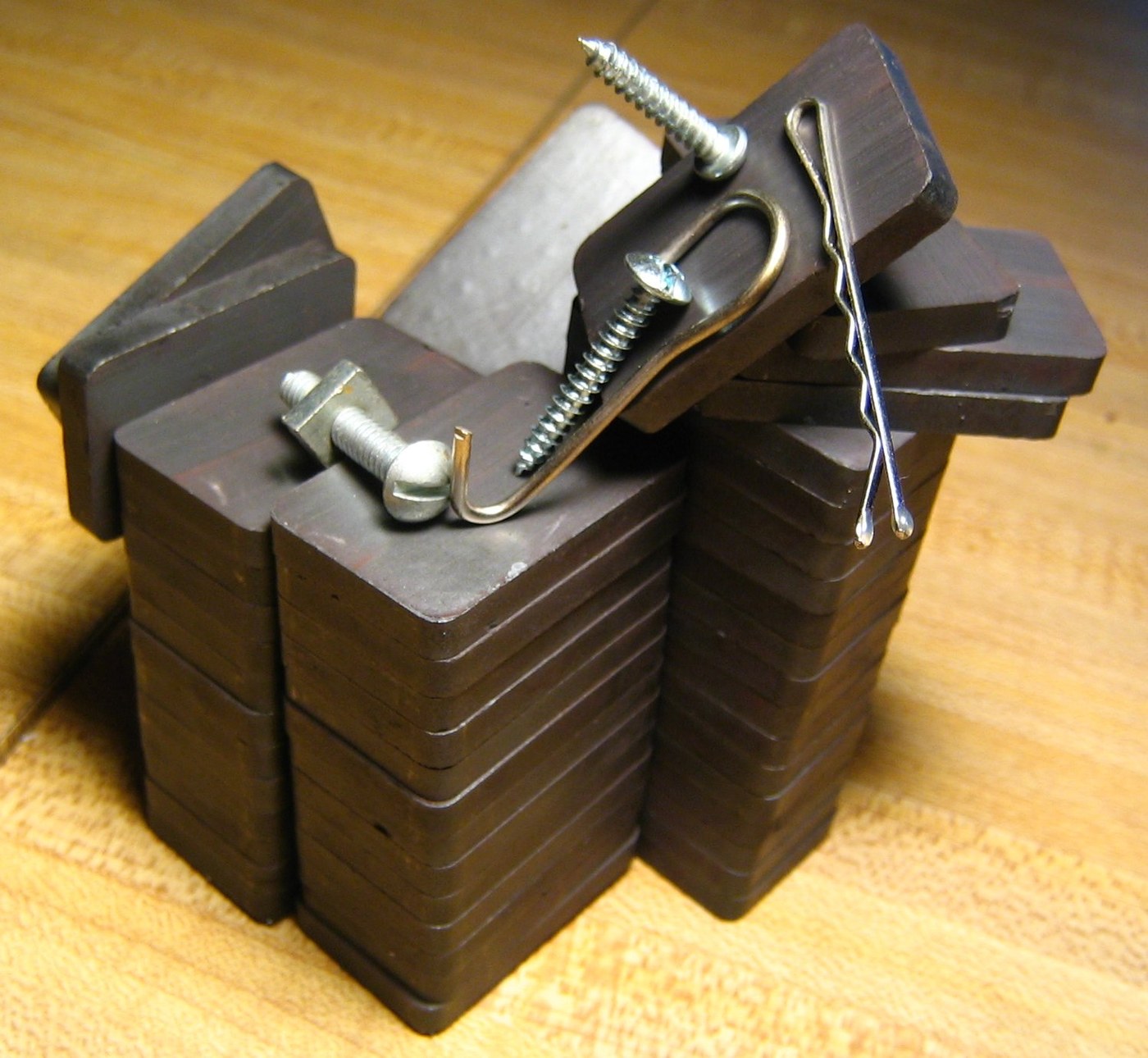

Strontium Ferrite Disc Magnet, Sintered 4 Hours at 1300 °C (Went, Philips 1956, Ex. 34)
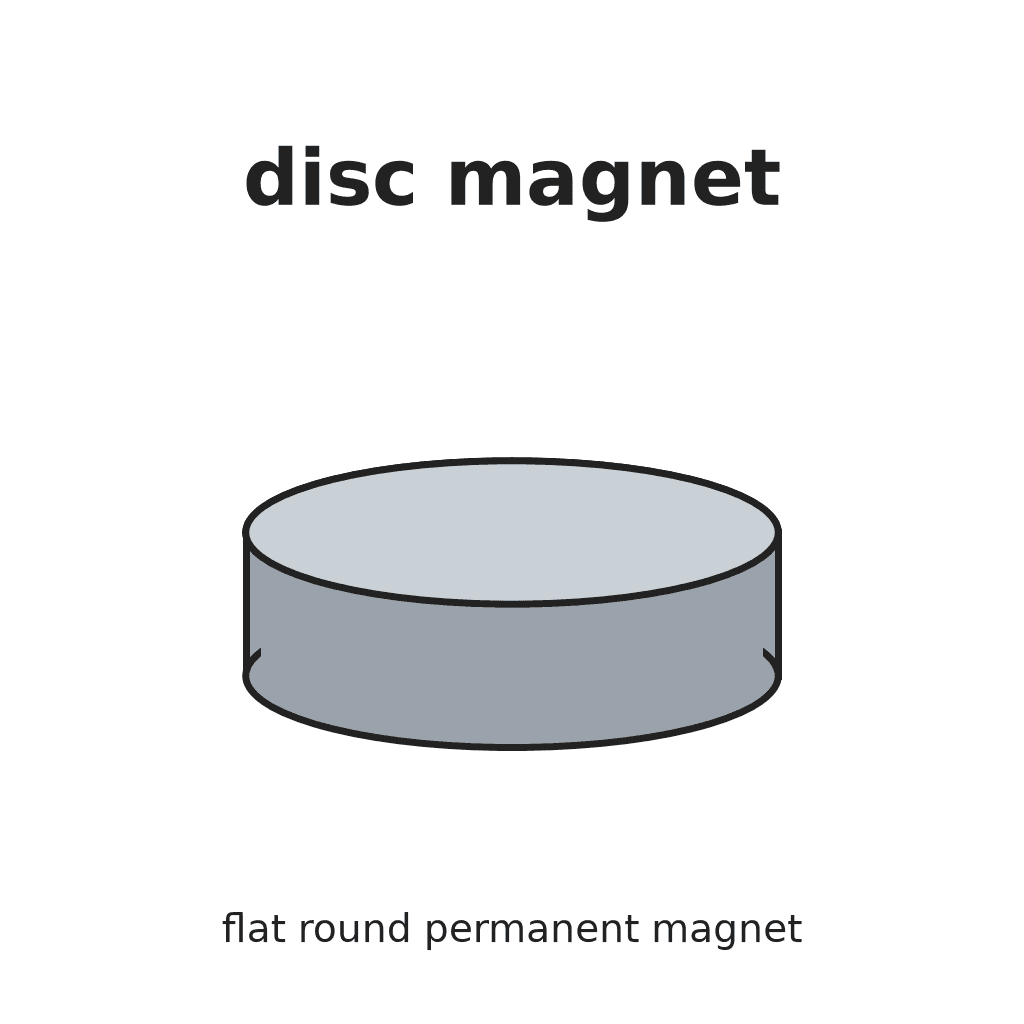
A strontium ferrite magnet made exactly like Went's barium ferrite of Example 34, with strontium carbonate in place of barium carbonate: 29.5 g of it to 191.7 g iron oxide, milled, fired, milled again, pressed and sintered for 4 hours. This iteration sinters at 1300 °C, where his rod held 1,850 gauss with a coercive force of 2,130 oersted.
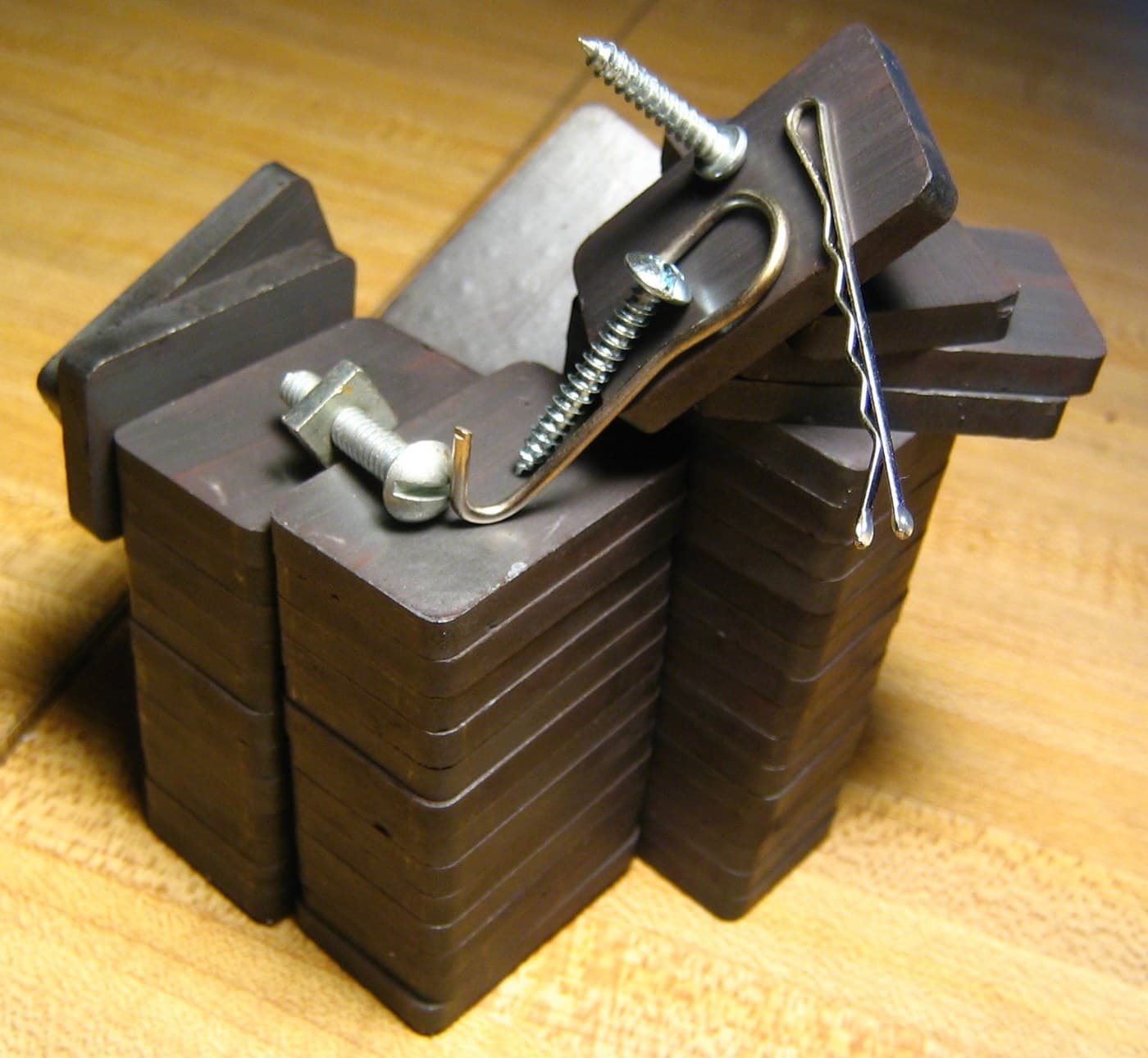
Source: J. J. Went, G. W. van Oosterhout and E. W. Gorter (Philips), US 2,762,777 (1956), Example 34. They pressed rods; the disc size is ours. The patent does not say how to magnetise it; our way is stated. Picture: ferrite magnets, Omegatron, Wikimedia Commons, CC BY-SA 3.0.
Ilọsíwájú
2 days
Ìlànà
1
1
Weigh strontium carbonate and iron oxide
Weigh strontium carbonate and iron oxide
Weigh 29.5 g of strontium carbonate and 191.7 g of ferric oxide, Fe2O3. The patent makes this second mixture "in exactly the same manner" as the barium one.
Àwọn ohun èlò fún ìgbésẹ̀ yìí:
 Strontium carbonate29.5 g
 Ọ́kísáìdì irin (III)191.7 g
Àwọn irinṣẹ́ tí a nílò:
 Òǹwọ̀n ìdọ́gba
 Ìbọ̀wọ́ rọ́bà
 Ẹ̀rọ Ìmí P100
2
2
Mill with ethanol for 4 hours
Mill with ethanol for 4 hours
Grind the mixture with ethanol in an iron ball mill for 4 hours. Let the ethanol evaporate, then dry the powder in a drying oven.
Àwọn irinṣẹ́ tí a nílò:
 Ẹ̀rọ Lílọ Bọ́ọ̀lù Irin
 Ethanol - ìpele ilé-ìwádìí, 95 %
 Ààrò ìgbẹ̀
3
3
Presinter at 1000 °C for 4 hours
Presinter at 1000 °C for 4 hours
Fire the dry powder in air at 1000 °C for 4 hours (ours: in a lidded porcelain crucible in a muffle furnace). Let it cool.
Àwọn irinṣẹ́ tí a nílò:
 Ààrò muffle
 Ìkòkò ìyọ́ pẹ̀lú ìdérí (porcelain)
 Ẹmú Ìkòkò Ìyọ́
 Ìbọ̀wọ́ Tí Ń Fara Da Ooru
4
4
Mill again for 4 hours
Mill again for 4 hours
Grind the presintered product with ethanol in the ball mill for another 4 hours. Let the ethanol evaporate.
Àwọn irinṣẹ́ tí a nílò:
Ẹ̀rọ Lílọ Bọ́ọ̀lù IrinEthanol - ìpele ilé-ìwádìí, 95 %Ààrò ìgbẹ̀Ẹ̀rọ Ìmí P1005
5
Press discs at 1.5 tons per cm²
Press discs at 1.5 tons per cm²
Press the powder at 1.5 tons/cm². The patent pressed rods; we press discs. Ours: a die 20 mm across, so about 4.7 tonnes on the punch (our arithmetic: 1.5 × 3.14 cm²).
Àwọn irinṣẹ́ tí a nílò:
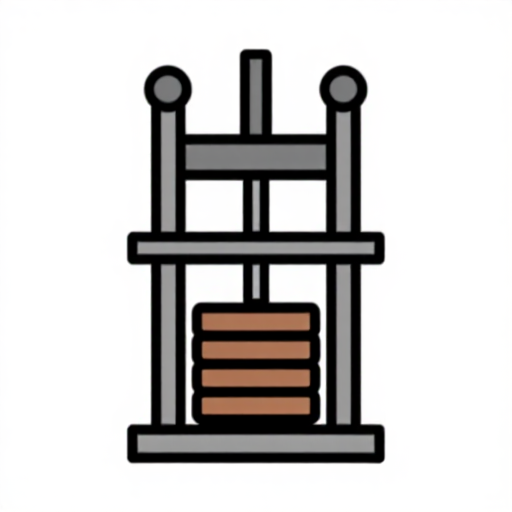 Ẹ̀rọ ìtẹ̀ háídírọ́líìkì
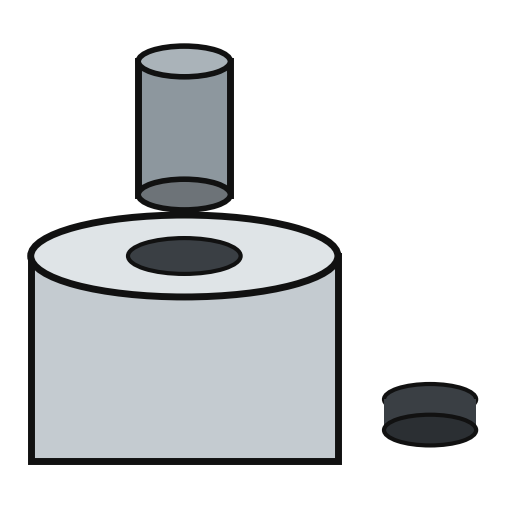 Mọ́ọ̀dù títẹ díìsì
6
6
Sinter 4 hours at 1300 °C
Sinter 4 hours at 1300 °C
Sinter the discs for 4 hours at 1300 °C in oxygen or in air. The patent's strontium rod at 1300 °C: 1,850 gauss and 2,130 oersted.
Àwọn irinṣẹ́ tí a nílò:
Ààrò muffleẸmú Ìkòkò Ìyọ́Ìbọ̀wọ́ Tí Ń Fara Da Ooru7
7
Magnetise the discs
Magnetise the discs
The patent gives no magnetising method. Ours: lay a disc with its faces against the poles of a strong electromagnet, switch the current on, then off. Find which face is north with a compass.
Àwọn irinṣẹ́ tí a nílò:
 Òòfà iná-mànàmáná
 Kọ́mpasi
Àwọn ohun-èlò
2- 29.5 gÀyè
- 191.7 gÀyè
Àwọn irinṣẹ́ tó nílò
14- Àyè
- Àyè
- Àyè
Ìtọ́nisọ́nà yìí ń ṣe
Blueprint tó jọra
Àwọn blueprint wọ̀nyí pín ìmọ̀ — ọ̀nà, ohun-èlò tàbí ìlànà
Barium Ferrite Disc Magnet: Barium Carbonate and Iron Oxide Sintered (Went, Philips 1956)
láti ọwọ́ Charlie
Ti Ilé-iṣẹ́
5
0
0
0
0
0

Strontium Carbonate: Powdered Celestine Boiled with Soda Solution (Thorpe 1912)
láti ọwọ́ Charlie
Ti Ilé-iṣẹ́
9
0
0
0
0
0

Léwu
Ferrite Toroid Core: Nickel-Zinc Ferrite Sintered at 1300 °C in Oxygen (Snoek)
láti ọwọ́ Charlie
Ti Ilé-iṣẹ́
15
0
0
0
0
0
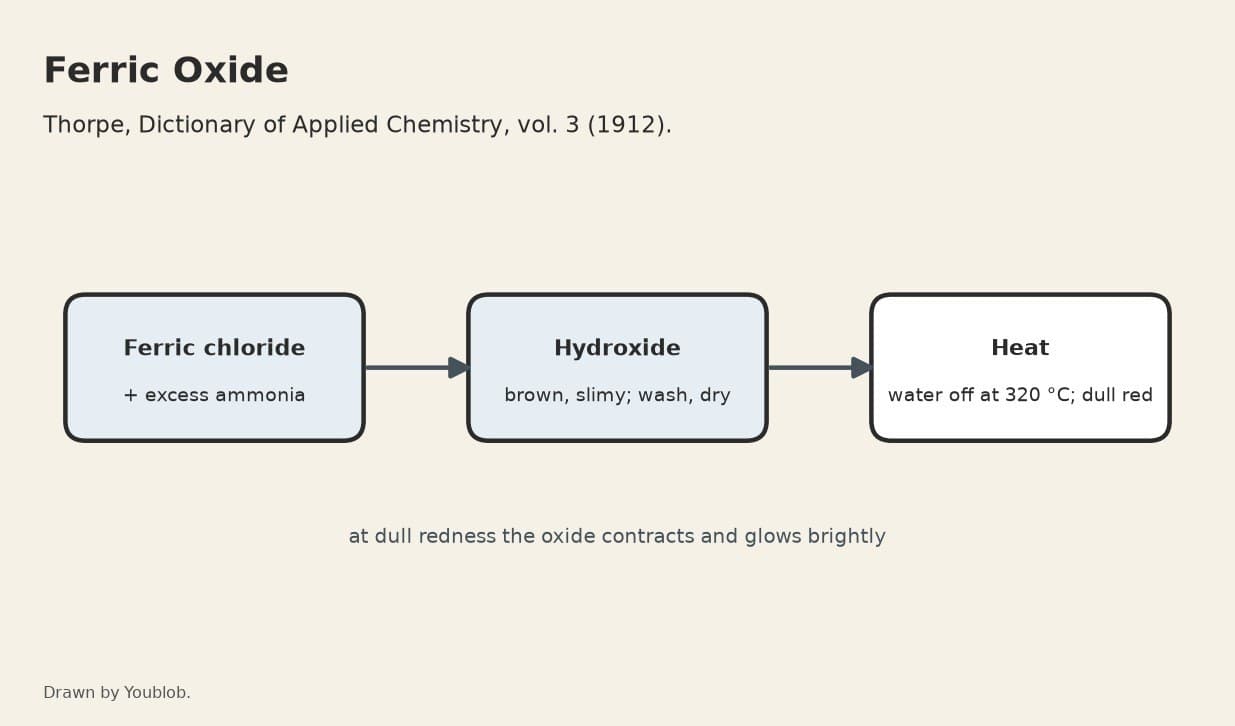
Ferric Oxide: Hydroxide Precipitated from Ferric Chloride with Ammonia, Then Heated
láti ọwọ́ Charlie
Inorganic
11
0
0
0
0
0
CC0 Àgbègbè Gbogbogbò
Blueprint yìí ti jáde lábẹ́ CC0. O lè ṣe àdàkọ, yí padà, pín, àti lò láìsí ìyọ̀ǹda.
Ṣàtìlẹ́yìn Olùṣẹ́dá nípa rírà àwọn ọjà nipasẹ̀ Blueprint wọn Ẹ̀san Olùṣẹ́dá tí àwọn Olùtajà gbé kalẹ̀, tàbí ṣẹ̀dá àtúnṣe tuntun ti Blueprint yìí kí o sì fi sínú Blueprint rẹ gẹ́gẹ́ bí ìsopọ̀ láti pín owó-wíwọlé.