IṢẸ́ ỌNÀ
ẸWÀ ÀTI ÌLERA
IṢẸ́ ỌWỌ́
ÀṢÀ ÀTI ÌTÀN
ÌṢERÉ
ÀYÍKÁ
OÚNJẸ ÀTI OHUN MÍMU
REVERSE ENGINEERING
SÁYẸ́ǸSÌ
ERÉ ÌDÁRAYÁ
ÌMỌ̀-Ẹ̀RỌ
ÀWỌN OHUN WÍWỌ̀
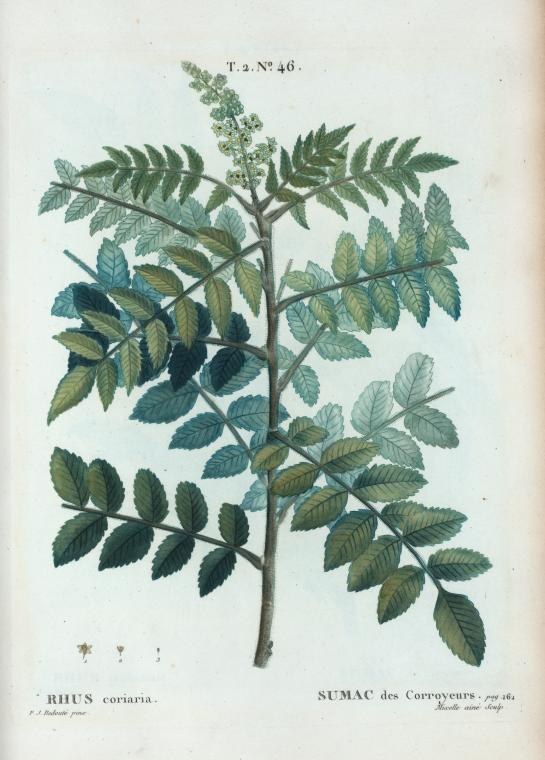


Sumac Leaves: Cut, Dried and Ground for Tanning and Dyeing
Sumach, the tanner's sumac, is the leaves, leaf stalks and young shoots of Rhus coriaria, dried and ground. Andrew Ure (1839): it is rich in tannin with a little yellow colour, and tans light-coloured leathers such as morocco.
The picture: Rhus coriaria, "sumac des corroyeurs" (the curriers' sumac), painted by Pierre-Joseph Redouté.
Olùbẹ̀rẹ̀
A day's cutting, a week or two drying
Ìlànà
1
1
Cut the young shoots
Cut the young shoots
Cut the leafy young shoots of the sumac in summer with a knife or shears, leaving the old wood to grow again.
Àwọn ohun èlò fún ìgbésẹ̀ yìí:
 Sumac àwọn oníṣẹ́ awọ (Rhus coriaria)1 ẹyọ
Àwọn irinṣẹ́ tí a nílò:
 Ọ̀bẹ ìgégé
 Ìlàǹkàn ìgé ẹ̀ka ọlọ́wọ́ kan
 Òǹwọ̀n ìdọ́gba
2
2
Dry in the shade
Dry in the shade
Spread the shoots thin on racks in an airy, shaded place and turn them until the leaves crumble (our choice: shade keeps the colour pale).
Àwọn irinṣẹ́ tí a nílò:
 Àká Ìgbẹ
3
3
Strip and grind
Strip and grind
Strip the leaves and leaf stalks off the dry shoots, grind them on the quern and sift. Keep the powder dry in sacks.
Àwọn irinṣẹ́ tí a nílò:
 Òkúta ọlọ ọwọ́
 Ajọ̀
 Àpò ọ̀gbọ̀ rẹ́gẹdẹ
4
4
Your drying ratio
Your drying ratio
Ń ṣí ìwé Jupyter…
Àwọn ohun-èlò
1Àwọn irinṣẹ́ tó nílò
7- Àyè
- Àyè
- Àyè
Ìtọ́nisọ́nà yìí ń ṣe

CC0 Àgbègbè Gbogbogbò
Blueprint yìí ti jáde lábẹ́ CC0. O lè ṣe àdàkọ, yí padà, pín, àti lò láìsí ìyọ̀ǹda.
Ṣàtìlẹ́yìn Olùṣẹ́dá nípa rírà àwọn ọjà nipasẹ̀ Blueprint wọn Ẹ̀san Olùṣẹ́dá tí àwọn Olùtajà gbé kalẹ̀, tàbí ṣẹ̀dá àtúnṣe tuntun ti Blueprint yìí kí o sì fi sínú Blueprint rẹ gẹ́gẹ́ bí ìsopọ̀ láti pín owó-wíwọlé.