
IṢẸ́ ỌNÀ
ẸWÀ ÀTI ÌLERA
IṢẸ́ ỌWỌ́
ÀṢÀ ÀTI ÌTÀN
ÌṢERÉ
ÀYÍKÁ
OÚNJẸ ÀTI OHUN MÍMU
REVERSE ENGINEERING
SÁYẸ́ǸSÌ
ERÉ ÌDÁRAYÁ
ÌMỌ̀-Ẹ̀RỌ
ÀWỌN OHUN WÍWỌ̀
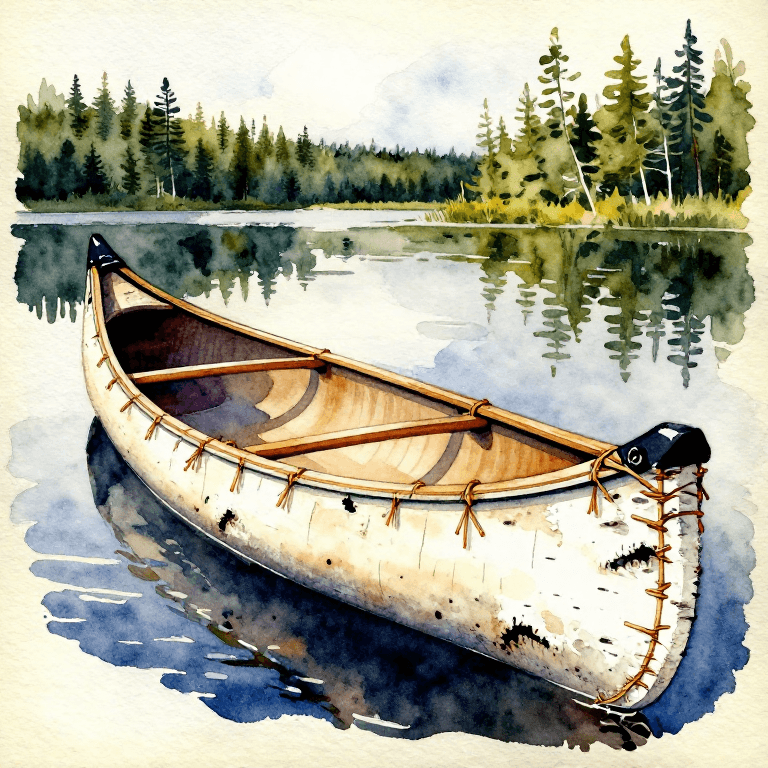
16 ft Canvas-Covered Cedar Canoe: Backbone, Seven Molds, Cedar Ribs and Planking, Glued Canvas (Boy Mechanic, 1919)
Woody

Ṣẹ́dá nipasẹ̀

Woody

13. Oṣù Kọkànlá 2026NO
14
0
0
0
0

16 ft Canvas-Covered Cedar Canoe: Backbone, Seven Molds, Cedar Ribs and Planking, Glued Canvas (Boy Mechanic, 1919)

Stillman Taylor's open Canadian canoe from The Boy Mechanic, Book 3 (1919): about 16 ft long, 31 in beam, 60 to 70 lb. Built upside down over a backbone and seven paper-pattern molds, with oak or ash stems, keelson and gunwales, 1/8 in cedar ribs and planking fastened with copper clout nails, then covered with No. 6 canvas laid in melted marine glue, painted, and varnished. Every layout dot and width is his, as printed.
Ilọsíwájú
Several weeks

Ìlànà

1

His layout data

Ń ṣí ìwé Jupyter…
2

Read The Boy Mechanic, Book 3

"Working with light materials, the canoe builder must pay particular attention to the workmanship ... the work must not be hurried, but plenty of time taken to do each and every part well."
3

Get the materials

Stem: oak or ash 6 ft x 3/4 in square. Keelson: oak or ash 14 ft x 3-1/2 x 3/8 in. Gunwales: 2 of oak or ash 16 ft x 7/8 x 1/2 in. Seat risings: 2 of oak or ash 1/2 in square. Fenderwales: 34 ft of 1/2 in half-round molding. Outside keel (optional): oak 14 ft x 1 x 1/2 in. Deck beams: 2 of oak or ash 8 x 1-1/8 x 3/8 in. Seat frames: 2 at 30 x 3 x 3/4 and 2 at 12 x 2-1/4 x 3/4 in. Planking: cedar or pine, 100 sq ft, 1/8 in (25 ft of 1 in lumber dressed to 1/8 in, in 12, 14 and 16 ft lengths). Ribs: 360 running ft of cedar 1-3/4 x 1/8 in. Breast hooks: cedar or oak 32 x 9 x 3/4 in. Backbone, molds and ribbands from any cheap stuff. Fastenings: 1 lb 2 in wire nails; 1 lb 5/8 in and 1/2 lb 3/4 in copper clout nails; 18 brass screws 1-1/4 in No. 8 and 24 brass screws 1 in No. 6; 4 lb marine glue; 3 oz No. 2 copper tacks; 11-3/4 yd No. 6 canvas; 1 lb 3/8 in copper tacks. Rock elm or fir may replace oak or ash; spruce, pine, cypress or fir may replace cedar.

Àwọn ohun èlò fún ìgbésẹ̀ yìí:

Pátákò oak funfunPátákò oak funfun4 ẹyọ
Pákó igi sídàPákó igi sídà6 ẹyọ
Pákó igi pinePákó igi pine3 ẹyọ

Àwọn irinṣẹ́ tí a nílò:

Ayùn ìlà gígùn (rip saw)Ayùn ìlà gígùn (rip saw)
Ayùn Ọwọ́Ayùn Ọwọ́
Ohun èlò ìfárí igi (pìlánì)Ohun èlò ìfárí igi (pìlánì)
Okùn Ìdíwọ̀nOkùn Ìdíwọ̀n
4

Lay out the backbone and molds

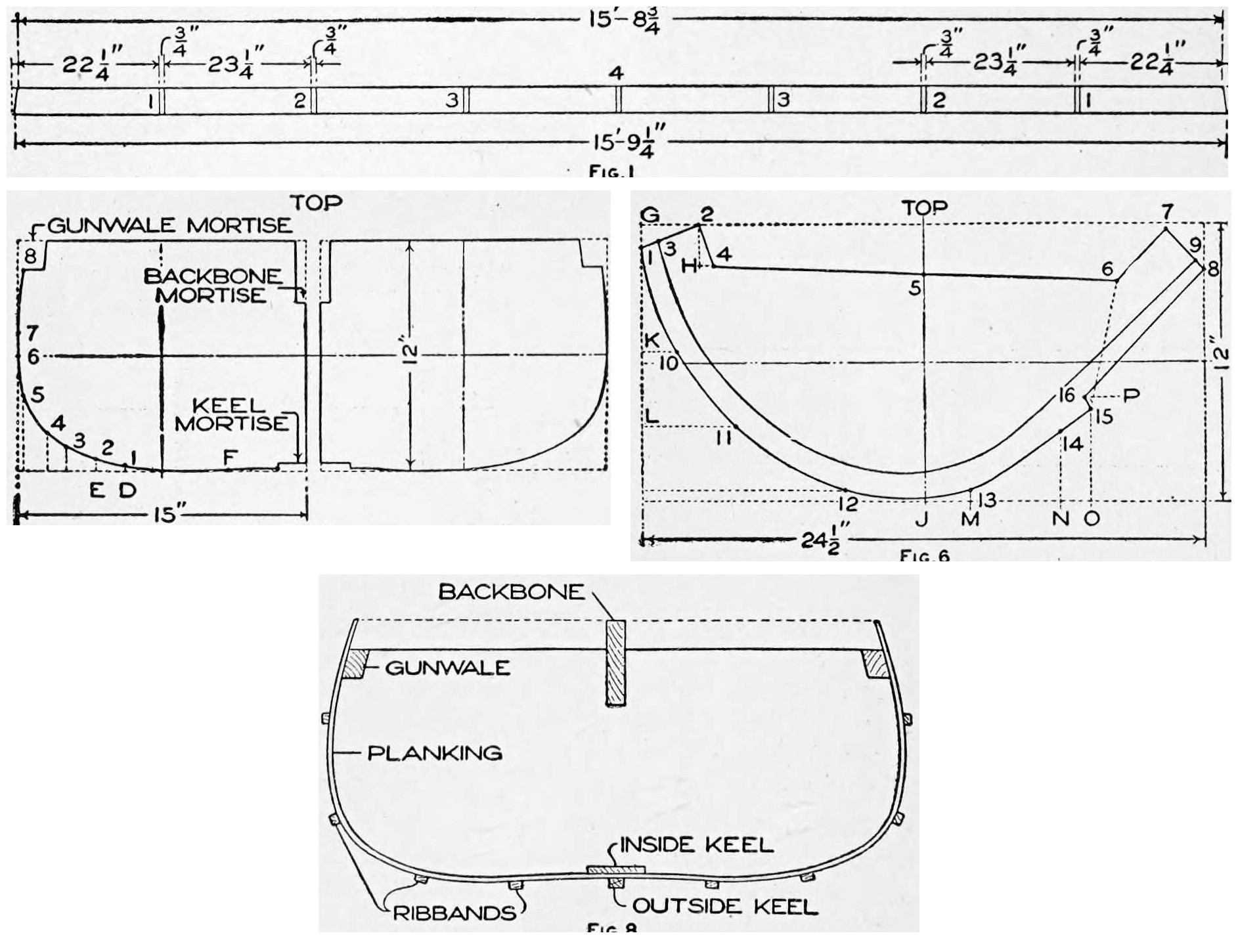
Cut the backbone from a 16 ft x 4 x 7/8 in board, top edge 15 ft 8-3/4 in, and mark the mold stations from each end: 22-1/4 in to mold 1, then 23-1/4 in to mold 2 and 23-1/4 in to mold 3, each mold space 3/4 in thick; mold 4 sits at the centre; cut the ends off on the bevel (Fig. 1). Draw each mold on stiff paper from his rectangles, mortises and dots (notebook), trace the curve through the dots, cut out the half, fold and draw the other side, and cut the molds from 7/8 in stock: seven in all, numbered alike from each end: two No. 1, two No. 2 (each in halves), two No. 3 and one No. 4; nail battens across the halves.

Àwọn ohun èlò fún ìgbésẹ̀ yìí:

Pákó igi pinePákó igi pine2 ẹyọ
Ìwé pátákó nípọnÌwé pátákó nípọn1 ẹyọ
ÌṣóÌṣó1 ẹyọ

Àwọn irinṣẹ́ tí a nílò:

Ayùn Ọwọ́Ayùn Ọwọ́
Ayùn KópìngìAyùn Kópìngì
Ìdíwọ̀nÌdíwọ̀n
GègéGègé
Ìṣẹ́náÌṣẹ́ná
ÒòlùÒòlù
5

Bend the stems and shape the keelson

Make the stem mold from his Fig. 6 pattern (24-1/2 x 12 in rectangle, dots in the notebook) and bend the straight-grained 3/4 in square oak or ash stems on it. Cut the keelson 13 ft 11 in long, tapering from 3-1/2 in at the centre: 3-1/2 in at 1 and 2 ft, 3-1/4, 2-5/8, 2 and 1-1/4 in at 3 to 6 ft, and 15/16 in at the ends (Fig. 7). Fasten each stem to the keelson with a couple of 3/4 in No. 10 screws.

Àwọn ohun èlò fún ìgbésẹ̀ yìí:

Pátákò oak funfunPátákò oak funfun2 ẹyọ
Brass Wood ScrewsBrass Wood Screws4 ẹyọ

Àwọn irinṣẹ́ tí a nílò:

Ọ̀bẹ Ìfàsẹ́yìnỌ̀bẹ Ìfàsẹ́yìn
Ohun èlò ìfárí igi (pìlánì)Ohun èlò ìfárí igi (pìlánì)
Ayùn Ọwọ́Ayùn Ọwọ́
Ìlù ọwọ́ pẹ̀lú oríÌlù ọwọ́ pẹ̀lú orí
Ìlọ̀sí olójú pẹlẹbẹÌlọ̀sí olójú pẹlẹbẹ
Ìdìmú onídàbí CÌdìmú onídàbí C
6

Set up the frame

Build it upside down: set the backbone on boxes about 1 ft or more off the floor and the molds in their numbered places, the backbone resting in their top mortises. True the molds with a square and toenail them. Lay the keelson in its mortises, fit the stems to the backbone angle and nail through the mold tops into them. Bevel the stem splice from the inside, leaving the outer edge about 1/8 in wide. Put on the gunwales at the sheer line with nails left proud, then four ribbands a side at 5 in centres from the keel, fastened with 1-1/4 in brads.

Àwọn ohun èlò fún ìgbésẹ̀ yìí:

Pátákò oak funfunPátákò oak funfun2 ẹyọ
Pákó igi pinePákó igi pine1 ẹyọ
ÌṣóÌṣó1 ẹyọ

Àwọn irinṣẹ́ tí a nílò:

Igun-òsùwọ̀n tí ó dúróIgun-òsùwọ̀n tí ó dúró
ÒòlùÒòlù
Àwọn ìgbẹ́ igiÀwọn ìgbẹ́ igi
Ohun èlò ìfárí igi (pìlánì)Ohun èlò ìfárí igi (pìlánì)
7

Rib the hull

Saw cedar ribs 1-3/4 in wide and 1/8 in thick, cut to length gunwale to gunwale over the ribbands. Space them 3 in apart on centres along the keelson, one over each mold. Fasten each rib to the outside of the keelson with two 5/8 in copper clout nails, spring it in under the ribbands and fasten it to the gunwales. Then remove the ribbands.

Àwọn ohun èlò fún ìgbésẹ̀ yìí:

Pákó igi sídàPákó igi sídà2 ẹyọ
Copper Clout NailsCopper Clout Nails1 ẹyọ

Àwọn irinṣẹ́ tí a nílò:

Ayùn Ọwọ́Ayùn Ọwọ́
ÒòlùÒòlù
Okùn Ìdíwọ̀nOkùn Ìdíwọ̀n
8

Plank the hull

Plank with 1/8 in cedar, bent cold, full length stem to stem, butted edge to edge without bevel, about 3 in wide; begin with the garboard strake at the keel and end with the sheer strake level with the gunwale. Punch nail holes with an awl, staggered along the ribs; clamp the plank, drive copper clout nails and clinch them inside on a clinch iron. Trim the plank ends to the stems and gunwales, saw the backbone in two to take out the frame, tack strips across the gunwales against sagging, and nail where the molds were.

Àwọn ohun èlò fún ìgbésẹ̀ yìí:

Pákó igi sídàPákó igi sídà4 ẹyọ
Copper Clout NailsCopper Clout Nails1 ẹyọ
Copper TacksCopper Tacks1 ẹyọ

Àwọn irinṣẹ́ tí a nílò:

Ọ̀kọ̀ ÌlùhòỌ̀kọ̀ Ìlùhò
Ìdìmú onídàbí CÌdìmú onídàbí C
Clinch IronClinch Iron
ÒòlùÒòlù
Ayùn Ọwọ́Ayùn Ọwọ́
9

Fit risings, seats, decks and thwarts

Nail 1/2 in square oak or ash seat risings, 14 ft long, about 4 in below the gunwale, boring first and clinching inside. Make the seat frames as Fig. 10 and cane them or tack on canvas (a kneeling paddler may use a 4 or 5 in seat bar instead). Notch the 8 x 1-1/8 x 3/8 in deck beams to wedge about 1/2 in against the gunwales (Fig. 11) and fix each with a 1-1/4 in No. 10 screw through the gunwale. Shape the decks 16 x 8 in (Fig. 12) and fix them with three 1-1/4 in No. 10 screws into the beam and three along each gunwale. Screw a centre thwart of oak or ash, 3/8 in thick, 2 in tapering to 1 in, under the gunwales amidships; extra thwarts behind the forward seat and about 3 ft forward of the rear seat stiffen it.

Àwọn ohun èlò fún ìgbésẹ̀ yìí:

Pátákò oak funfunPátákò oak funfun2 ẹyọ
Pákó igi sídàPákó igi sídà1 ẹyọ
Copper Clout NailsCopper Clout Nails1 ẹyọ
Brass Wood ScrewsBrass Wood Screws30 ẹyọ
Aṣọ kánfásìAṣọ kánfásì1 ẹyọ

Àwọn irinṣẹ́ tí a nílò:

Ìlù ọwọ́ pẹ̀lú oríÌlù ọwọ́ pẹ̀lú orí
Ìlọ̀sí olójú pẹlẹbẹÌlọ̀sí olójú pẹlẹbẹ
Ayùn Ọwọ́Ayùn Ọwọ́
Àwọn ìgbẹ́ igiÀwọn ìgbẹ́ igi
ÒòlùÒòlù
10

Lay the canvas

Lay the No. 6 canvas smoothly on the hull and trim it to fold at the stems (Fig. 13). Melt the black marine glue in a can over a moderately hot fire and spread a fairly heavy coat over one side of the canvas with a stiff brush. Lay it on and iron it with a moderately hot flatiron so the glue melts into the planking. Tack the edges along the gunwales and fold the canvas smoothly at the stems, tacking exactly down the stem centre line.

Àwọn ohun èlò fún ìgbésẹ̀ yìí:

Aṣọ kánfásìAṣọ kánfásì1 ẹyọ
Marine GlueMarine Glue1 ẹyọ
Copper TacksCopper Tacks1 ẹyọ

Àwọn irinṣẹ́ tí a nílò:

Ìgò irinÌgò irin
Búrọ́ọ̀ṣì fífẹ̀Búrọ́ọ̀ṣì fífẹ̀
Irin ayọ́ aṣọ olójú pẹlẹbẹIrin ayọ́ aṣọ olójú pẹlẹbẹ
Ìṣẹ́náÌṣẹ́ná
ÒòlùÒòlù
11

Fenders, stem bands and keel

Tack 1/2 in round molding over the canvas edge (or a 1 in strip of planking with 1-1/4 in brads every 2 or 3 in). Put on stem bands of wood about 3/8 in square, rounded, with 1-1/4 in brads, or better, 3/8 in brass oval stem band with 3/4 in screws. An outside keel is optional: about 1 x 1/2 in of oak or ash tapered to the stem bands, or a flat keel about 2-1/2 in wide of 3/8 in oak or ash, which turns more easily and guards the bottom.

Àwọn ohun èlò fún ìgbésẹ̀ yìí:

Half-Round MoldingHalf-Round Molding1 ẹyọ
Brass Stem BandBrass Stem Band2 ẹyọ
Brass Wood ScrewsBrass Wood Screws12 ẹyọ
Pátákò oak funfunPátákò oak funfun1 ẹyọ
ÌṣóÌṣó1 ẹyọ

Àwọn irinṣẹ́ tí a nílò:

ÒòlùÒòlù
Ìlọ̀sí olójú pẹlẹbẹÌlọ̀sí olójú pẹlẹbẹ
Ohun èlò ìfárí igi (pìlánì)Ohun èlò ìfárí igi (pìlánì)
Ìlù ọwọ́Ìlù ọwọ́
12

Paint and finish

Give the canvas a coat of shellac to waterproof it, then four coats of paint to fill the fibres, rubbing down the second and third with fine sandpaper. Finish all woodwork with three coats of good outside spar varnish. A removable slatted grating of soft-pine lattice, about 1-1/8 in wide and 1-1/4 in thick as printed, screwed to curved cross strips (not the ribs), protects the bottom.

Àwọn ohun èlò fún ìgbésẹ̀ yìí:

Fánníṣì sẹ́làkìFánníṣì sẹ́làkì1 ẹyọ
Àwọ̀ olóròróÀwọ̀ olóròró1 ẹyọ
Bébà ÌfáBébà Ìfá1 ẹyọ
Spar VarnishSpar Varnish1 ẹyọ
Pákó igi pinePákó igi pine1 ẹyọ

Àwọn irinṣẹ́ tí a nílò:

Búrọ́ọ̀ṣì fífẹ̀Búrọ́ọ̀ṣì fífẹ̀
Ìlọ̀sí olójú pẹlẹbẹÌlọ̀sí olójú pẹlẹbẹ
13

Troubleshooting

Canoe troubleshooting.

Flow

Loading...
14

History and honest limits

From "How to Build a Canoe, Part I" by Stillman Taylor, in **The Boy Mechanic, Book 3**, Popular Mechanics, 1919 (Project Gutenberg 71856; checked on the archive.org scan boymechanic0003unse, pp. 77-84). As printed, his text differs in places: the backbone's lower edge is 1/2 in longer in one sentence and 1 in in the next; the list gives No. 8 deck screws, the text No. 10; the list's seat frames (30 x 3 and 12 x 2-1/4 in) differ from Fig. 10 (29 x 9 in); the fenders are half-round in the list and round in the text. The metric figures are ours.

Àwọn ohun-èlò

16

Àwọn irinṣẹ́ tó nílò

21

Ìtọ́nisọ́nà yìí ń ṣe

CC0 Àgbègbè Gbogbogbò

Blueprint yìí ti jáde lábẹ́ CC0. O lè ṣe àdàkọ, yí padà, pín, àti lò láìsí ìyọ̀ǹda.

Ṣàtìlẹ́yìn Olùṣẹ́dá nípa rírà àwọn ọjà nipasẹ̀ Blueprint wọn Ẹ̀san Olùṣẹ́dá tí àwọn Olùtajà gbé kalẹ̀, tàbí ṣẹ̀dá àtúnṣe tuntun ti Blueprint yìí kí o sì fi sínú Blueprint rẹ gẹ́gẹ́ bí ìsopọ̀ láti pín owó-wíwọlé.

Ìfọ̀rọ̀wérọ̀

(0)

Wọlé láti dara pọ̀ mọ́ ìfọ̀rọ̀wérọ̀

Ń gbé àwọn ọ̀rọ̀ wọlé...