IṢẸ́ ỌNÀ
ẸWÀ ÀTI ÌLERA
IṢẸ́ ỌWỌ́
ÀṢÀ ÀTI ÌTÀN
ÌṢERÉ
ÀYÍKÁ
OÚNJẸ ÀTI OHUN MÍMU
REVERSE ENGINEERING
SÁYẸ́ǸSÌ
ERÉ ÌDÁRAYÁ
ÌMỌ̀-Ẹ̀RỌ
ÀWỌN OHUN WÍWỌ̀
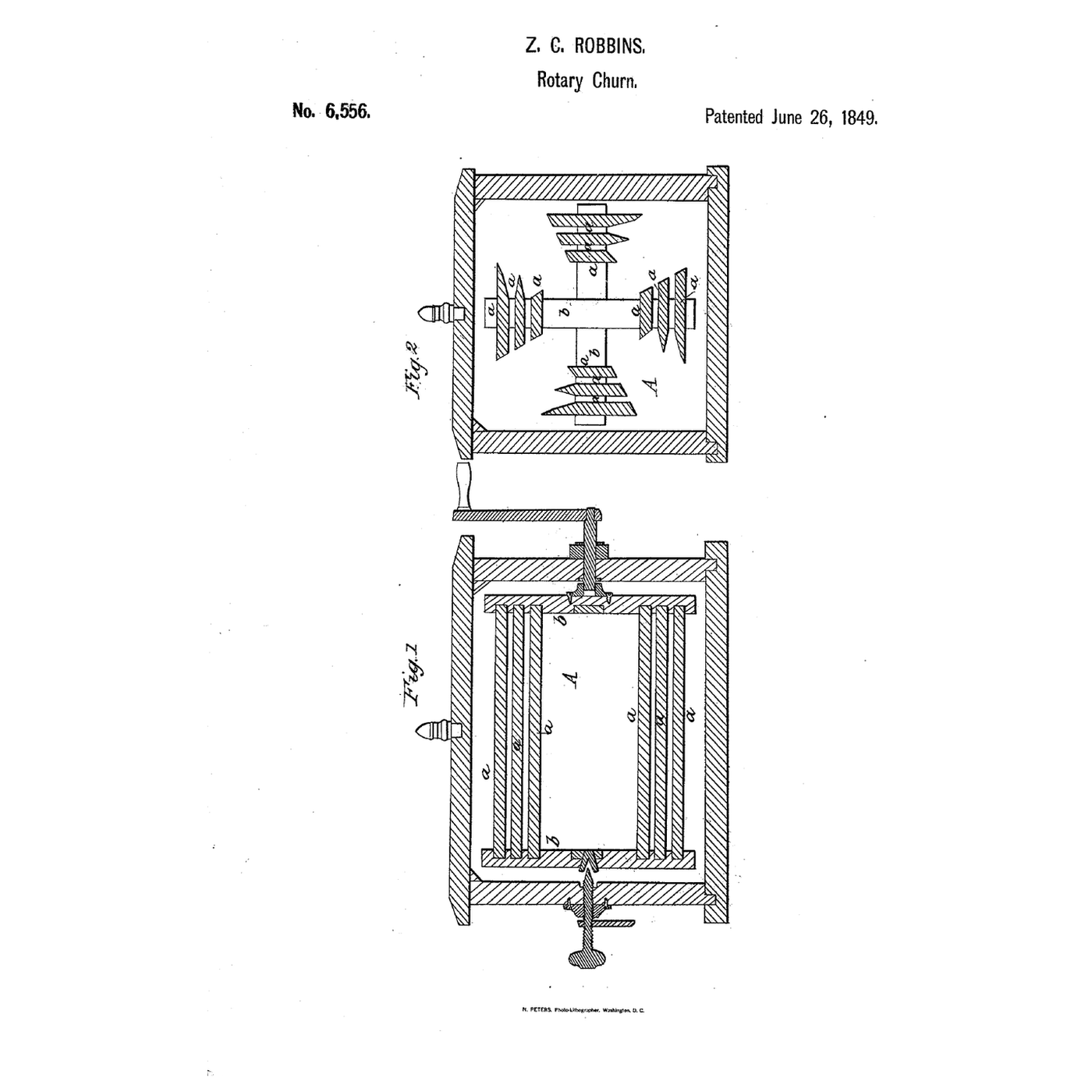

Telegraph Beater Churn: Nested Knife-Edged Beaters That Whip the Cream
Robbins compared his agitator's work on cream to that "produced by knives upon the whites of eggs, during the process of what is called whipping them up."
Z. C. Robbins of St. Louis, Missouri, received US 6,556, dated 26 June 1849 (antedated 1 June 1849, reissued as No. 159), for what he called the Telegraph Churn: a rotating agitator of four series of thin beaters on radial arms, each series of two, three or more slats one within another with narrow spaces between, narrowing inward. Their front edges are bevelled sharp, their rear edges blunt; reversed, "the butter will be collected into the center."
This rung works out when the cream would fly off, then prints the beater series and spiders, fits them in a box, and makes butter.
Àárín
About 3 hours, plus printing
Ìlànà
1
1
When the cream flies off
When the cream flies off
Ń ṣí ìwé Jupyter…
2
2
Bevelled beaters on a crank before it
Bevelled beaters on a crank before it
The embedded blueprint bevels its buckets to drive the cream inward. Robbins nests thin knife-edged slats and reverses them to gather the butter.
3
3
Read US 6,556
Read US 6,556
"When the agitator is rotated in milk or cream placed in the churn box, the sharp edges of the beaters cut into and divide the particles, and gather the milk or cream between them by their converging surfaces; and as the beaters ascend, they carry up quantities of milk or cream in the spaces between them, which is discharged in their curved sheets at their rear edges in the atmosphere in the upper part of the churn."
4
4
Print the parts
Print the parts
Print four beater series on end (/uploads/blueprints/telegraph-beater-churn-beater-series.stl): three nested slats, narrowing inward, sharp at the front and blunt at the rear, joined at both ends. Print two spiders (/uploads/blueprints/telegraph-beater-churn-spider.stl) and the crank arm (/uploads/blueprints/telegraph-beater-churn-crank-arm.stl). Print in PETG at 0.2 mm layers, 30 % infill, 4 walls; wash before first use.
Àwọn ohun èlò fún ìgbésẹ̀ yìí:
 Okùn PETG1 ẹyọ
Àwọn irinṣẹ́ tí a nílò:
 Ẹ̀rọ ìtẹ̀ 3D oníwàyà (FDM)
5
5
Assemble the agitator
Assemble the agitator
Glue the two spiders on a 10 mm square hardwood axle 130 mm apart, arms in line. Screw a beater series between each pair of arms with M3 screws, all with their sharp edges leading the same way.
Àwọn ohun èlò fún ìgbésẹ̀ yìí:
 Àwọn dowel igi líle1 ẹyọ
 Skurú ẹ̀rọ1 ẹyọ
 Ìdìpọ̀ Igi1 ẹyọ
Àwọn irinṣẹ́ tí a nílò:
 Ayùn Ọwọ́
 Ìṣù àwọn ohun ìyí skurú
6
6
The box
The box
Take a food-safe box about 200 × 170 × 170 mm. Drill both ends on the axis 85 mm up, round the axle where it runs, pass it through, and glue the crank arm and a dowel handle on its outer end. He found it could run uncovered.
Àwọn ohun èlò fún ìgbésẹ̀ yìí:
 Àgọ́ ìtọ́jú ti ìpele oúnjẹ1 ẹyọÌdìpọ̀ Igi1 ẹyọ
Àwọn irinṣẹ́ tí a nílò:
 Ẹ̀rọ Ìlùkòkò Aláìlókùn
 Àkójọ Orí Ìlùkòkò
 Bébà Ìfá
7
7
The build in 3D
The build in 3D
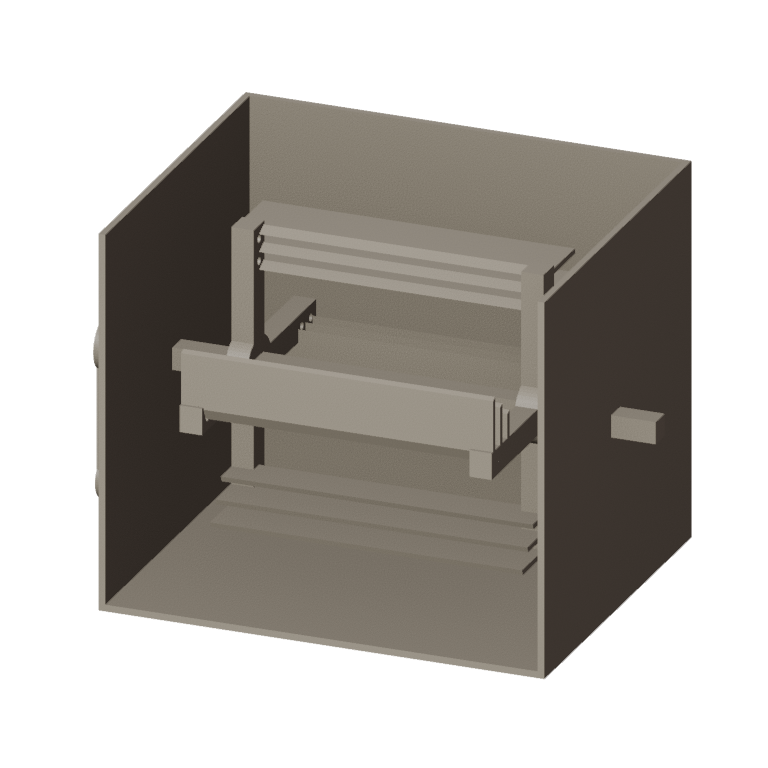
FreeCAD model of this build, not of the patent: the box with one side off to show the agitator of two spiders and four series of nested beaters on the axle, and the crank.
8
8
Crank, then reverse to gather
Crank, then reverse to gather
Let the heavy cream stand until it reaches about 15 °C, checked with the thermometer. Pour in 1.5 litres. Crank steadily, sharp edges leading; time until the butter comes. Then crank backward a while so the blunt rear edges gather it to the centre. Pour off the buttermilk, add cold water, churn a little and pour off again until it runs clear; work in a pinch of salt and weigh the butter.
Àwọn ohun èlò fún ìgbésẹ̀ yìí:
 Ọ̀rá wàrà tó nípọn1500 ml
 Iyọ̀ Òkun Rúkèrúdò1 ẹyọ
 Omi1 ẹyọ
Àwọn irinṣẹ́ tí a nílò:
 Ẹ̀rọ ìwọ̀n ooru oníhun tí ó dúró sí inú
 Aago Ìdúró
 Òṣùwọ̀n Díjítà Ilé Ìdáná
 Àwo ìdàpọ̀ ńlá ti irin tí kò ń yá
9
9
Cream thrown out, butter not gathered
Cream thrown out, butter not gathered
Telegraph beater churn troubleshooting.
Flow
Loading...
10
10
History and honest limits
History and honest limits
**Z. C. Robbins** of St. Louis, Missouri, received US 6,556, dated 26 June 1849; antedated by request 1 June 1849; reissued as No. 159. He wrote that "butter has been produced from milk at the usual churning temperature with this churn, in two minutes"; that is his claim, not our measurement. He did not limit himself to the number or proportions of the parts, nor to any material. He claimed the series of floats or beaters so formed that their thick inclined rear edges gather the butter toward the centre when the motion is reversed.
**Honest limits.** A food-safe box and printed beaters stand in for his. FDM prints hold food in their layer lines, so wash well and replace when worn. Your times and weights are the result.
Àwọn ohun-èlò
8- 1 ẹyọÀyè
- 1 ẹyọÀyè
- 1 ẹyọÀyè
- 2 ẹyọÀyè
- Àyè
- 1500 mlÀyè
- 1 ẹyọÀyè
- 1 ẹyọÀyè
Àwọn irinṣẹ́ tó nílò
10- Àyè
- 1 vendor sell this, none ship to you yetÀyè
- Àyè
- Àyè
Àwọn fáìlì àpẹrẹ
1Ìtọ́nisọ́nà yìí ń ṣe

Blueprint tó jọra
Àwọn blueprint wọ̀nyí pín ìmọ̀ — ọ̀nà, ohun-èlò tàbí ìlànà
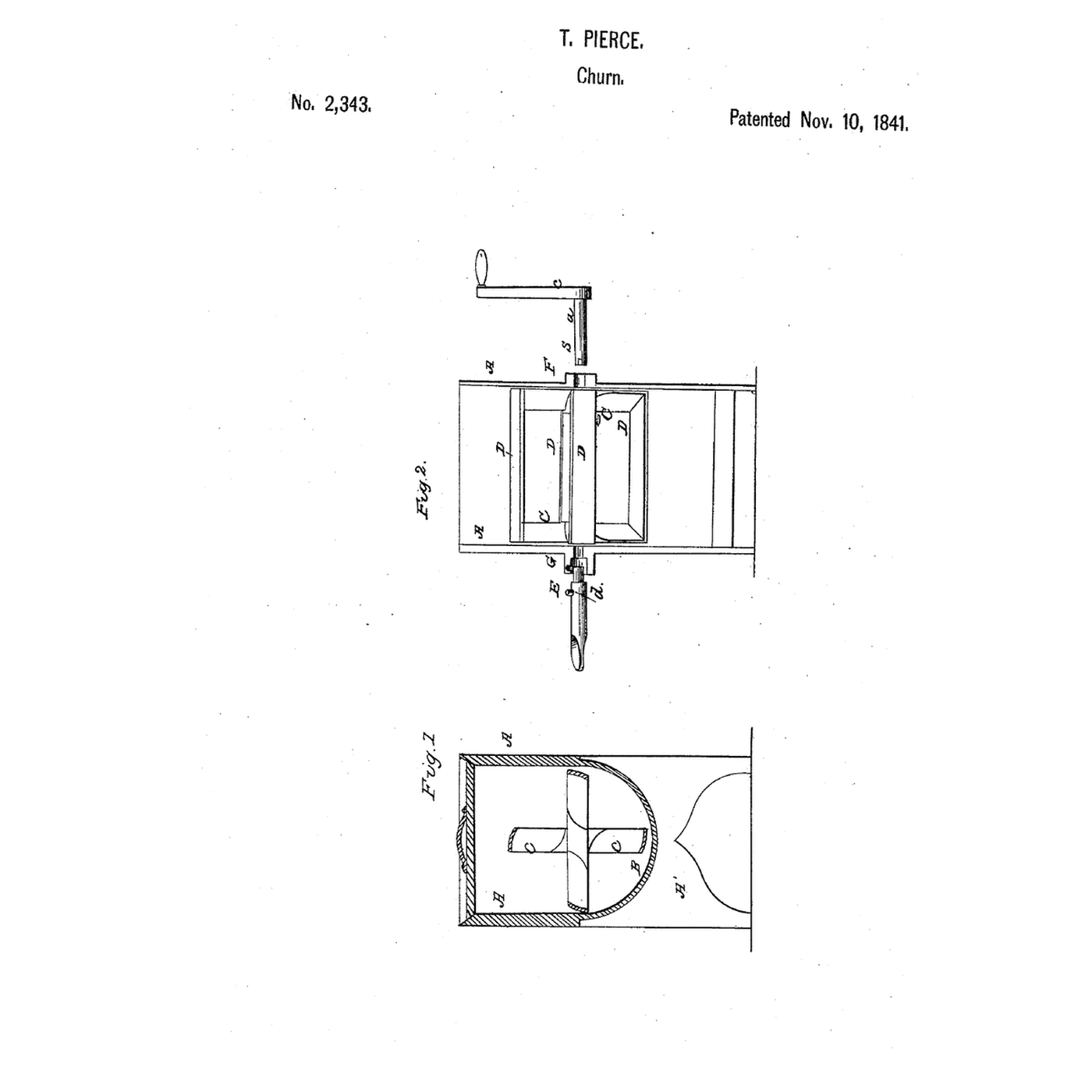
Shaftless Dasher-Wheel Churn: Bevelled Buckets Drive the Cream to the Centre
láti ọwọ́ Martin
OÚNJẸ ÀTI OHUN MÍMU
26
0
0
0
0
0
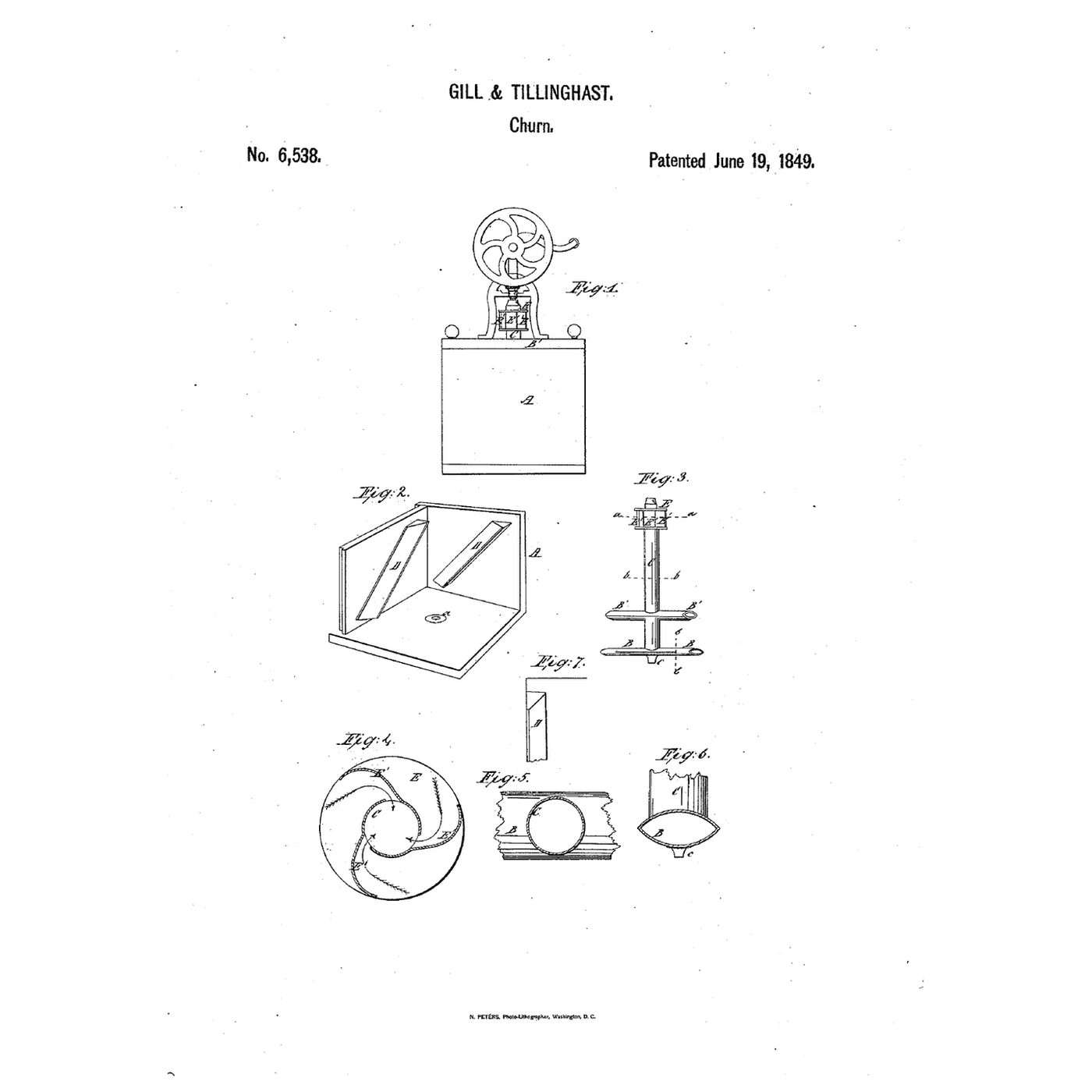
Inclined-Stop Air Churn: Diagonal Stops That Hold the Cream and Gather the Butter
láti ọwọ́ Karen
OÚNJẸ ÀTI OHUN MÍMU
8
0
0
0
0
0
Air-Bucket Churn: Buckets That Carry Air Down and Cream Up
láti ọwọ́ Karen
OÚNJẸ ÀTI OHUN MÍMU
26
0
0
0
0
0
CC0 Àgbègbè Gbogbogbò
Blueprint yìí ti jáde lábẹ́ CC0. O lè ṣe àdàkọ, yí padà, pín, àti lò láìsí ìyọ̀ǹda.
Ṣàtìlẹ́yìn Olùṣẹ́dá nípa rírà àwọn ọjà nipasẹ̀ Blueprint wọn Ẹ̀san Olùṣẹ́dá tí àwọn Olùtajà gbé kalẹ̀, tàbí ṣẹ̀dá àtúnṣe tuntun ti Blueprint yìí kí o sì fi sínú Blueprint rẹ gẹ́gẹ́ bí ìsopọ̀ láti pín owó-wíwọlé.